

When I open my inbox to review international project inquiries, I frequently see emails that simply say: "Please quote 80kN uniaxial geogrid." Embora eu certamente possa fornecer um preço com base nesse número único, comprar materiais de reforço estrutural com base em um parâmetro é uma receita para o fracasso catastrófico do projeto.
Este guia explica como ler com precisão as especificações e folhas de dados da geogrelha uniaxial para garantir que você obtenha o material correto. Ao compreender parâmetros como resistência à fluência, alongamento, tamanho da abertura e tipo de polímero, as equipes de compras evitam orçamentos desalinhados e falhas estruturais nos muros de contenção.
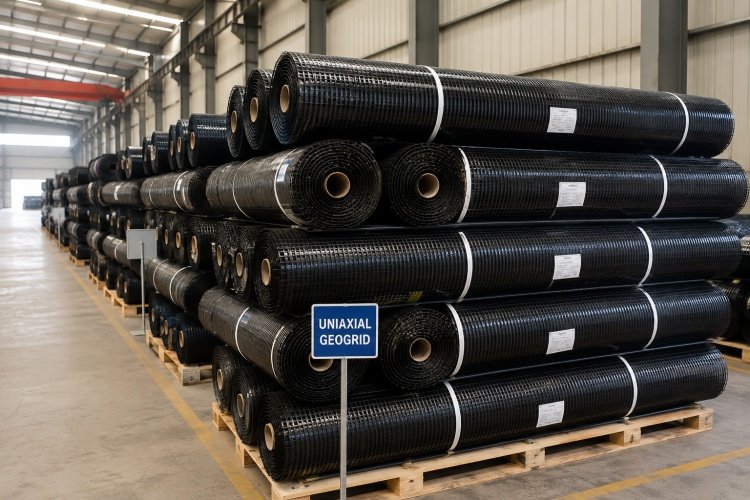
No comércio de exportação, especificar antecipadamente os requisitos exatos do material evita que você importe contêineres de plástico inutilizáveis.
Por que a leitura das especificações da geogrelha é importante
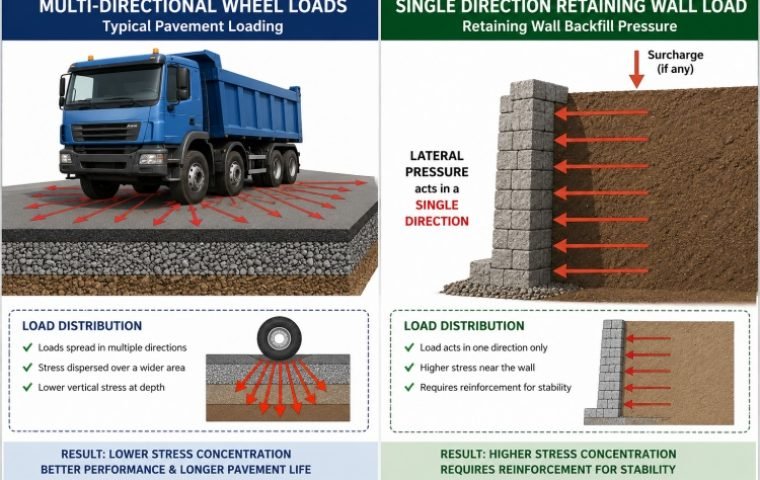
Ao fornecer geossintéticos para projetos de infraestrutura internacionais, preencher a lacuna entre o que um gerente de compras deseja e o que o local realmente precisa é minha principal tarefa. Geogrelhas uniaxiais são materiais altamente especializados. Ao contrário das geogrelhas biaxiais que estabilizam bases de estradas planas, as geogrelhas uniaxiais são projetado para lidar com cargas enormes em uma direção primária. Eles são a espinha dorsal dos muros de contenção de terra mecanicamente estabilizada (MSE), encostas íngremes e pilares de pontes.
Diferentes projetos exigem desempenhos de geogrelhas muito diferentes. Obter um produto que atenda tecnicamente aos requisitos de resistência, mas falhe no alongamento ou no intertravamento do solo pode fazer com que os muros de contenção inchem, deformem ou, por fim, desmoronem. Especificações incorretas comprometem diretamente a segurança do projeto e multiplicam a sua responsabilidade a longo prazo.
By thoroughly understanding a manufacturer’s datasheet, buyers move from blindly comparing prices to actively choosing the most suitable product. Evaluating the full specification sheet allows you to verify if the manufacturer is using premium virgin resins or cheap recycled plastics, ensuring the materials you import will perform safely for the intended 50-to-100-year design life of the structure.
Um problema comum em consultas sobre geogrelhas
O problema mais comum que enfrento ao trabalhar com compradores estrangeiros é receber informações técnicas incompletas. Isso desperdiça tempo, atrasa cotações precisas e abre a porta para mal-entendidos significativos durante a aquisição.
Os clientes geralmente fornecem apenas um parâmetro
Many buyers reach out with inquiries that only list a single piece of information. I regularly see requests that ask for "tensile strength 100 kN/m," "HDPE grid," or simply "50-meter rolls of retaining wall grid." Embora isso nos dê um ponto de partida, equivale a tentar comprar um caminhão comercial especificando apenas a cor. Isso limita minha capacidade de recomendar o produto certo para suas condições específicas de solo e requisitos de engenharia.
Por que a resistência à tração por si só não é suficiente
Eu sempre tenho que explicar aos compradores que produtos com exatamente a mesma classificação de resistência à tração podem ter desempenho totalmente diferente no local. For example, two factories might both produce a 120 kN/m uniaxial geogrid. However, Factory A’s product might stretch by 15% before reaching that strength, while Factory B’s product only stretches by 8%. If you use Factory A’s grid in a retaining wall, the wall will deform significantly as the grid stretches under load.
Além disso, geogrelhas com a mesma resistência final muitas vezes têm resistências à fluência muito diferentes, tamanhos de abertura variados que determinam quão bem o solo local se fixa na gradee diferentes estruturas de costelas. Comprar apenas com base na força ignora tudo o que realmente faz a geogrelha funcionar dentro da Terra.
Principais especificações da geogrelha uniaxial explicadas
Para tomar decisões de compra mais inteligentes, você precisa saber ler a ficha técnica (TDS). Estas são as especificações críticas que você deve avaliar antes de autorizar uma compra.
Resistência à tração (kN/m)
Este é o requisito básico. Ele mede a força máxima de tração que a geogrelha pode suportar em sua direção primária da máquina (MD) antes do snap. Para geogrelhas uniaxiais, a resistência é altamente concentrada em uma direção. Geralmente expresso em quiloNewtons por metro (kN/m), este valor determina a principal capacidade de reforço da rede. No entanto, verifique sempre se o fabricante está listando os Resistência à tração final (um ponto de ruptura de curto prazo em um laboratório) ou o Resistência do projeto a longo prazo (a carga de trabalho segura).
Alongamento na ruptura
O alongamento mede o quanto a geogrelha se estende sob tensão extrema. Este parâmetro é absolutamente crítico para muros de contenção. Se o alongamento for muito alto, a massa do solo se moverá, fazendo com que os painéis de concreto de uma parede se desloquem e rachem. Geogrelhas uniaxiais de alta qualidade geralmente apresentam baixo alongamento (geralmente em torno de 10% ou menos na carga máxima), o que garante um controle rígido de deformação para estruturas rígidas.
Tamanho da abertura
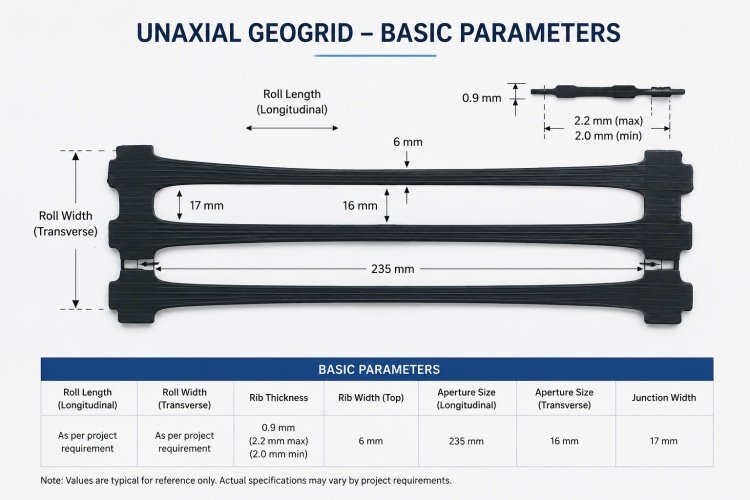
The aperture is the open hole in the geogrid. When buyers ignore this, they risk severe installation failure. The aperture size dictates the soil interaction performance. If you are backfilling a wall with large crushed rock, but purchase a geogrid with small apertures, the rock simply sits on top of the plastic rather than locking into the holes. The interlocking capability is what transfers the soil’s weight into the geogrid; therefore, the aperture must be suitably sized for the project’s specific backfill material.
Espaçamento e espessura das costelas
As faixas plásticas sólidas entre as aberturas são as costelas. Compreender o espaçamento das nervuras longitudinais (direção da carga principal) e o espaçamento das nervuras transversais (a direção transversal) é vital para o desempenho da distribuição de carga. Uma grelha com nervuras espessas e bem definidas oferece enorme estabilidade estrutural contra danos na instalação. Quando uma escavadeira passa sobre um agregado colocado no topo da grade, as nervuras grossas sobrevivem ao forte impacto da pedra britada muito melhor do que os materiais extrudados finos e frágeis.
Material Polimérico
O tipo de matéria-prima altera completamente a aplicação da grade.
- HDPE (polietileno de alta densidade): Altamente rígido, incrivelmente resistente ao ataque químico e excelente em solos naturalmente agressivos ou altamente alcalinos.
- PET (poliéster): Muitas vezes revestidas com PVC ou betume, as geogrelhas PET proporcionam uma resistência à tração muito elevada e uma fluência extraordinariamente baixa.
- PP (polipropileno): Geralmente usado mais para grades biaxiais, mas às vezes encontrado em aplicações uniaxiais para serviços leves.
Compreender as diferenças de aplicação desses polímeros evita que você compre um material que apodrecerá ou se degradará nos solos específicos do seu local.
Largura e comprimento do rolo
Embora não seja uma métrica de engenharia, as dimensões dos rolos impactam drasticamente o planejamento do projeto, a logística de transporte e a eficiência da instalação. Os rolos uniaxiais padrão podem ter de 1m a 3m de largura e 50m de comprimento. Se você comprar rolos muito estreitos, sua equipe de instalação perderá muito tempo amarrando ou sobrepondo juntas. Certifique-se de que os tamanhos dos rolos caibam perfeitamente nos contêineres de transporte padrão para maximizar o valor do frete de sua importação.
Resistência à fluência
Fluência é o estiramento lento e contínuo de um material plástico colocado sob tensão constante de longo prazo. Para estruturas permanentes, como um encontro de rodovia com 10 metros de altura, o desempenho do reforço a longo prazo é fundamental. Uma geogrelha barata pode ostentar uma elevada resistência inicial, mas a sua fraca estrutura molecular significa que se estenderá indefinidamente ao longo dos próximos 20 anos, derrubando a parede. As planilhas de dados premium indicarão fatores específicos de redução de fluência testados em durações de 10.000 horas.
Riscos, limitações e quando geogrelhas específicas falham
Como fornecedor, tenho que ser completamente honesto sobre quando esses materiais falharão se forem especificados incorretamente. A limitação catastrófica mais comum está relacionada à química do polímero e ao pH do solo.
As geogrelhas uniaxiais de poliéster (PET) fornecem grande resistência e fantástica resistência à fluência a um ótimo preço. No entanto, sua principal limitação é um processo químico denominado hidrólise. Se você especificar uma geogrelha PET em um projeto onde o material de aterro inclui concreto triturado, solo estabilizado com cal ou naturalmente altamente alcalino-terroso (pH > 9), a umidade alcalina irá literalmente dissolver as fibras de poliéster com o tempo. Em ambientes altamente alcalinos, o PET nunca é recomendado; você deve mudar para um extrudado Geogrelha uniaxial HDPE, que é quimicamente inerte a altos níveis de pH.
Por outro lado, as grades uniaxiais de HDPE são excepcionalmente duráveis, mas podem ser altamente rígido e difícil de desenrolar e assentar em ambientes de clima frio extremo em comparação com fios PET revestidos mais flexíveis. Não confie cegamente em números de força; sempre combine as limitações estruturais do polímero com a realidade química e física do local de trabalho.
Erros comuns na compra de geogrelhas uniaxiais
Quando analiso tentativas de aquisição fracassadas ou recebo ligações de empreiteiros estrangeiros em busca de materiais de reposição, as causas básicas geralmente remontam a três grandes erros de compra.
Escolhendo apenas pela resistência à tração
As discussed, stopping your evaluation at "100 kN/m" ignora o alongamento, o tamanho da abertura e a estabilidade do polímero. Assumir que todas as redes de 100 kN/m são estruturalmente idênticas é a suposição mais perigosa que um comprador industrial pode fazer.
Ignorando o desempenho a longo prazo
Muitos compradores ignoram os fatores de redução listados na folha de dados. Uma geogrelha sofrerá danos de instalação causados por máquinas pesadas, degradação pela exposição aos raios UV e fluência a longo prazo. Se uma rede começa com uma resistência máxima de 100 kN/m, a sua resistência de projeto a longo prazo permitida para um projeto de 100 anos pode ser de apenas 45 kN/m. Comprar uma grade com base apenas em seu ponto de ruptura de laboratório de curto prazo significa que você está subestimando gravemente a segurança da parede.
Focando apenas no preço
Regularmente perdemos licitações para fornecedores que oferecem preços que são logicamente impossíveis, dados os atuais custos da resina bruta. Quando os compradores se concentram exclusivamente em conseguir o menor custo por metro quadrado, quase sempre acabam comprando geogrelhas fabricadas a partir de plásticos reciclados e de qualidade inferior. As grades recicladas têm notoriamente péssima resistência à fluência e espessura inconsistente das nervuras. Você economiza cinco por cento no custo de importação de material, mas arrisca milhões de dólares em responsabilidades quando o muro de contenção mudar dois anos após a construção.

Que informações os compradores devem fornecer ao enviar uma consulta?
Para garantir que fornecemos o material exato e correto ao preço mais preciso, os compradores devem elevar suas comunicações iniciais. Quando você nos envia uma consulta clara e abrangente, isso sinaliza imediatamente que você é um profissional sério e permite que nossa equipe técnica cite exatamente o que seu engenheiro exige.
Aqui está um resumo simples das informações que você deve sempre fornecer:
| Categoria de Requisito | O que fornecer na consulta | Por que isso é importante para os fornecedores |
|---|---|---|
| Especificações de materiais | Resistência à tração (MD), limite máximo de alongamento, tipo de polímero (HDPE ou PET). | Garante que citamos a classe de resistência exata e a resistência química necessária. |
| Aplicação do Projeto | Parede MSE, encontro de ponte, declive acentuado ou base de aterro. | Ajuda-nos a verificar se são necessárias grelhas resistentes à fluência padrão ou premium. |
| Condições do local | Altura da parede, nível de pH do solo, tamanho máximo do agregado. | Dita nossa recomendação para tamanhos de abertura e fatores de redução de danos na instalação. |
| Detalhes Comerciais | Quantidade (m²), dimensões preferidas do rolo, padrão de teste exigido (ASTM, CE). | Permite-nos otimizar o carregamento de contentores e garantir o cumprimento dos limites alfandegários locais. |
Fornecer essa lista de verificação elimina semanas de idas e vindas de e-mails e reduz enormemente o risco de solicitar a especificação errada.
Conclusão
Compreender as principais especificações em uma folha de dados de geogrelha uniaxial ajuda os compradores a ignorar as reivindicações de marketing e a escolher produtos estruturalmente adequados para seus projetos específicos. A resistência à tração é apenas o começo; a verdadeira segurança do projeto depende da avaliação resistência à fluência, limites de alongamento e química correta do polímero. No futuro, os compradores devem sempre comunicar claramente o projeto completo e os requisitos de solo ao fabricante. Se você não tiver certeza de qual especificação corresponde ao seu projeto de muro de arrimo, entre em contato diretamente com nossa equipe de engenharia de exportação para obter suporte técnico e seleção precisa de material.