


Geomembrana de PVC — Revestimento Flexível Impermeável para Construção & Projetos Ambientais
Revestimentos de geomembrana de cloreto de polivinila (PVC) para projetos de construção, ambientais e impermeabilizantes. Liso ou texturizado, 0,5–3,0 mm, fornecimento direto da fábrica em todo o mundo.
Referência ASTM/GRI/ISO
Diretamente da fábrica
Exportar globalmente

Propriedades de Geomembrana de PVC
A geomembrana de PVC permanece flexível mesmo em ambientes de baixa temperatura (-20°C a -40°C), sem se tornar quebradiça.
Com uma taxa de alongamento de 300% a 500%, a geomembrana de PVC pode se adaptar a assentamentos e deformações irregulares, reduzindo o risco de rachaduras causadas pelo movimento do solo.
Estabilizada com aditivos UV e antioxidantes, a geomembrana de PVC oferece desempenho confiável contra intempéries e antienvelhecimento, com uma vida útil de mais de 20 anos.
A geomembrana de PVC suporta soldagem por ar quente ou de alta frequência, garantindo alta resistência à costura e excelente impermeabilidade.
A geomembrana de PVC pode ser produzida nos tipos transparente ou opaco. Os revestimentos transparentes permitem a penetração da luz, útil para a agricultura ou projetos relacionados com a energia solar.
Comparado com a geomembrana HDPE, o PVC oferece melhor flexibilidade e desempenho de soldagem a um custo menor, proporcionando excelente relação custo-benefício.
Conheça Geomembrana de PVC
A geomembrana de PVC é um revestimento flexível e impermeável feito de resina de cloreto de polivinila com adição de plastificantes e estabilizantes. É amplamente utilizado para aplicações de impermeabilização e anti-infiltração em projetos civis, agrícolas e de construção.
O material da geomembrana de PVC é baseado em cloreto de polivinila, misturado com estabilizadores UV, antioxidantes e plastificantes ecológicos. Comparado ao HDPE, oferece maior flexibilidade e soldagem mais fácil, tornando-o ideal para impermeabilização subterrânea e de telhados.
A espessura típica da geomembrana de PVC varia de 00,5 mm a 3,0 mm. Os tamanhos padrão incluem 0,75 mm, 1,0 mm, 1,5 mm e 2,0 mm, disponíveis em rolos ou folhas de até 8 metros de largura.
Sim, a geomembrana de PVC é um revestimento impermeável com baixíssima permeabilidade. Ele fornece impermeabilização confiável para porões, túneis, reservatórios e lagoas.
A geomembrana de PVC é usada principalmente para controle de infiltração e impermeabilização em vários setores:
Projetos de conservação de água: reservatórios, represas, canais
Engenharia ambiental: coberturas de aterros sanitários, lagoas de tratamento de esgoto
Impermeabilização de edifícios: porões, telhados, túneis
Projetos agrícolas: lagoas de aquicultura, canais de irrigação
Engenharia paisagística: lagos artificiais, lagoas decorativas
⚠️ Não recomendado para:
Condições extremas de baixa temperatura (abaixo de -40°C)
Contato prolongado com produtos químicos altamente corrosivos
A vida útil da geomembrana de PVC é normalmente 15–25 anos, dependendo da espessura, qualidade da instalação e condições de exposição. Em projetos subterrâneos ou cobertos, a vida útil pode ser ainda maior.

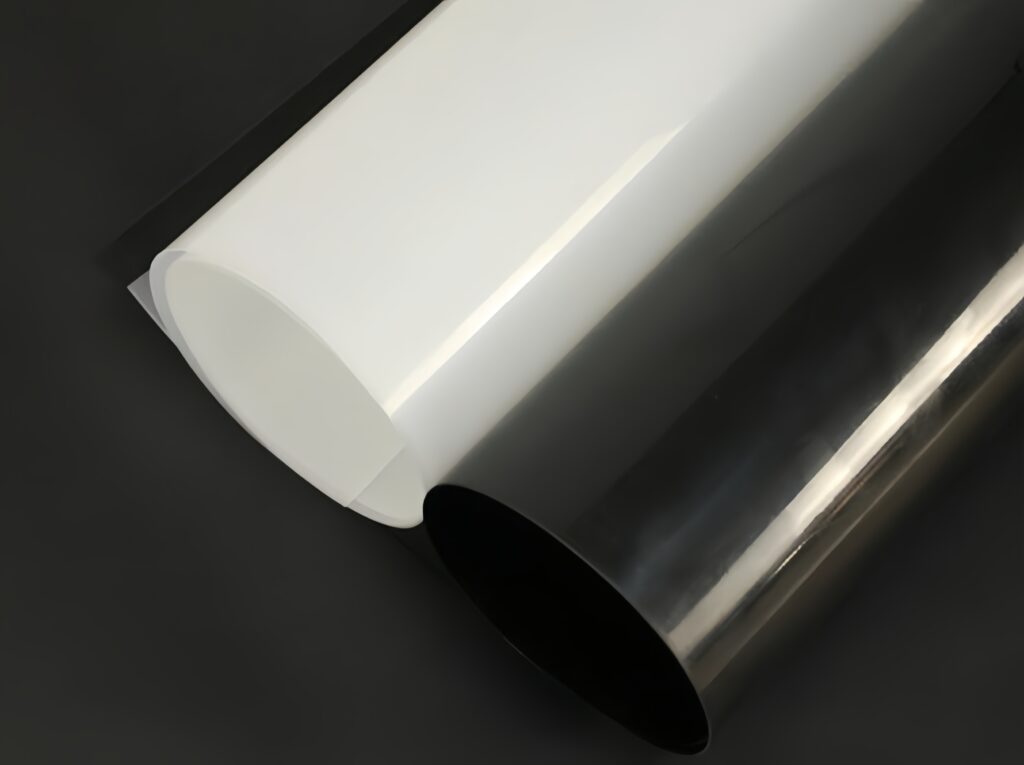
Opções de cores de Geomembrana de PVC
Superfície: A geomembrana de PVC é normalmente produzida com superfícies lisas para fácil limpeza e soldagem. Opções texturizadas estão disponíveis mediante solicitação para projetos que exigem fricção extra.
Cores:
Geomembrana de PVC cinza – comumente usada em impermeabilizações e coberturas subterrâneas.
Geomembrana de PVC preto – aplicações gerais de impermeabilização.
Geomembrana de PVC branco – reflete a luz solar, ajuda a reduzir a temperatura da superfície, adequada para climas quentes e projetos que exigem controle térmico.
Guia de espessura de geomembrana de PVC & Aplicações
| Espessura (mm) | Principais recursos de desempenho | Aplicações Típicas | Especificações e notas recomendadas |
|---|---|---|---|
| 00,50mm Folha de geomembrana de PVC. |
Impermeabilidade básica, alta flexibilidade, adapta-se a terrenos complexos | Pequenas lagoas ecológicas, canais agrícolas, armazenamento temporário de água | Utilizar com proteção geotêxtil não tecido; evite contato direto com cargas pontiagudas |
| 00,75mm Rolo de geomembrana de PVC |
Impermeabilidade melhorada, resistência média à perfuração, boa resistência aos raios UV | Lagoas de aquicultura (revestimento de lagoa com geomembrana de PVC), pequenas valas de drenagem, aterros de baixa inclinação | Opção de textura única disponível; pode ser colocado diretamente em fundações planas |
| 1,00 mm Espessura padrão da geomembrana de PVC |
Escolha comum, econômica, forte impacto e resistência a perfurações | Sistemas agrícolas de irrigação e drenagem, pequenos tanques de lixiviação de aterros sanitários, reservatórios municipais de águas pluviais | Geomembrana de PVC lisa ou texturizada; recomendo almofada de areia ou isolamento geotêxtil |
| 1,20 mm Forro de geomembrana de PVC |
Boa resistência à perfuração, melhor resistência química e ao envelhecimento | Lagoas de tratamento de esgoto, impermeabilização de subsolos, revestimento de base de barragens de rejeitos | Combine com geotêxtil para proteção extra; coloque a superfície texturizada contra o solo para estabilidade da encosta |
| 1,50 mm Folha de geomembrana de PVC. |
Alta resistência à tração, resistente ao impacto e à penetração da raiz | Paredes laterais de aterros de tamanho médio (geomembrana de PVC para aterro), grandes bacias de rejeitos, bacias de resíduos químicos | Geomembrana de PVC com textura dupla recomendada para inclinações de 5 a 15°; costuras exigem detecção rigorosa de vazamentos |
| 2,00mm Rolo de geomembrana de PVC |
Espessura de nível de engenharia, alta resistência a perfurações e produtos químicos, suporta UV e altas temperaturas | Grandes lagoas de lodo, contenção de resíduos perigosos, ambientes expostos a altas temperaturas | Use com geotêxtil de alta resistência para anti-infiltração multicamadas; soldagem automatizada recomendada |
| 2,50–3,00 mm Forro de geomembrana de PVC resistente |
Desempenho extremo, resistência superior à perfuração, resistência à propagação de fissuras, longa vida útil | Armazenamento de resíduos nucleares, impermeabilização de fundações profundas, grandes barragens de rejeitos industriais | Geomembrana de PVC reforçada multicamadas; requer instalação profissional; vida útil de mais de 30 anos |
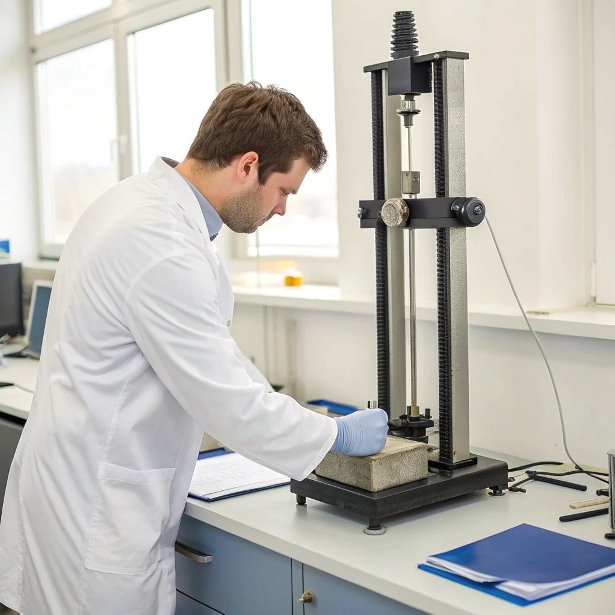
Especificações da geomembrana de PVC, Teste e folha de dados
| Propriedade | Método de teste (ref.) | Valor típico/mínimo | Observação |
|---|---|---|---|
| Densidade | ASTM D1505 | 1,20–1,35 g/cm³ | Densidade da geomembrana de PVC |
| Resistência à tracção | ASTM D638 | ≥ 15–20MPa | resistência da folha de geomembrana de PVC |
| Alongamento na ruptura | ASTM D638 | ≥ 300%–500% | alta flexibilidade, adapta-se ao assentamento |
| Resistência ao rasgo | ASTM D1004 | ≥ 80N | resistência ao rasgo do forro de PVC |
| Resistência à perfuração | ASTM D4833 | ≥ 200N | resistência ao impacto e à perfuração |
| Negro de Fumo / Aditivos | ASTM D4218 | 2–3% (se preto) | Estabilizadores UV para geomembrana de PVC externa |
| Estabilidade Dimensional | ASTM D1204 | ±2% | estabilidade térmica durante a instalação |
| Permeabilidade à Água | ASTM D5084 | ≤ 1,0 × 10⁻¹³ cm/s | Impermeabilidade da geomembrana de PVC |
| Temperatura de serviço | - | -20℃ a +60℃ | faixa de operação do forro de geomembrana de PVC |
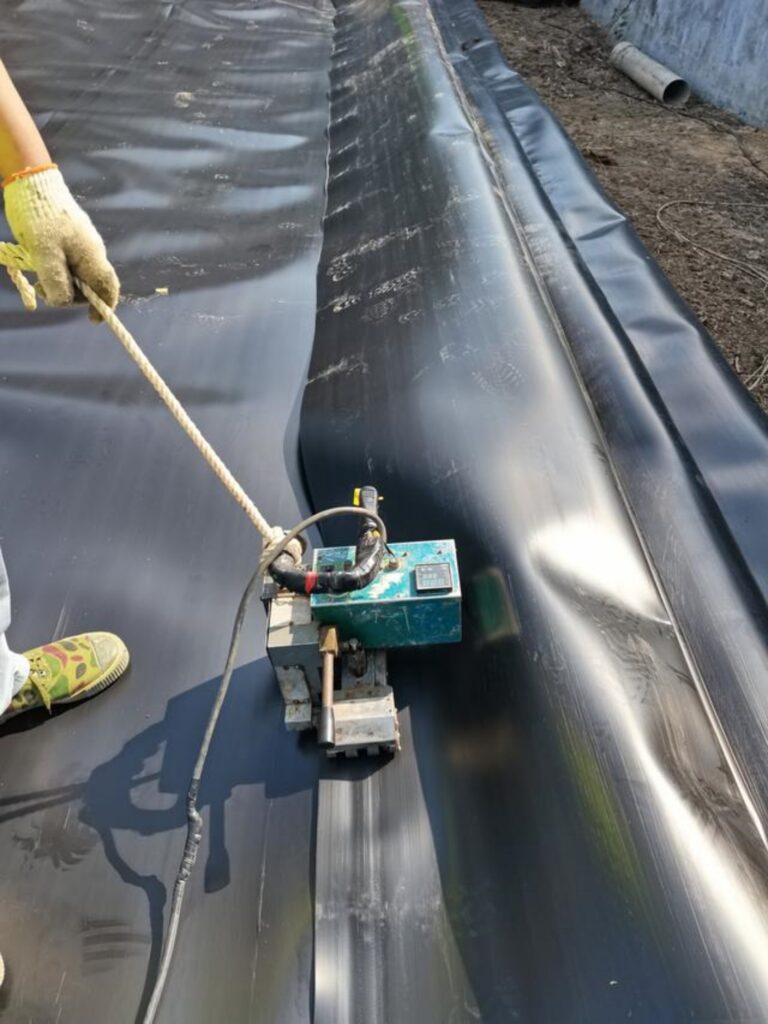
Instalação de Geomembrana de PVC, Soldagem e CQA
Métodos de soldagem
As geomembranas de PVC são materiais termoplásticos, o que significa que podem ser soldadas usando métodos baseados em calor para criar costuras fortes e estanques. Abaixo estão as técnicas de soldagem comumente usadas:
Soldagem a ar quente
Ideal para materiais de PVC, especialmente em aplicações de campo. Este método usa uma corrente de ar quente para aquecer as superfícies da costura e um rolo para pressioná-las. É adequado para trabalhos detalhados e pequenos reparos.Soldagem com Solvente
Comumente usado para costuras de fábrica ou painéis pré-fabricados. Um solvente químico suaviza a superfície do PVC, permitindo que ele se funda sem adição de calor. Este método garante a ligação molecular, mas requer condições controladas.Soldagem em cunha (modificada para PVC)
Menos comum do que com HDPE, mas alguns instaladores usam soldadores de cunha modificados com temperaturas mais baixas para criar costuras contínuas para instalações de revestimento de PVC em grande escala.Soldagem por extrusão (não recomendado para PVC)
Ao contrário do HDPE, a soldagem por extrusão é normalmente não é recomendado para geomembranas de PVC devido à sensibilidade do material a altas temperaturas e risco de degradação.
Preparação de costura & Requisitos de sobreposição
Limpeza de superfície: As folhas de PVC devem estar secas, limpas e livres de poeira, óleo ou detritos antes da soldagem. Use panos sem fiapos e agentes de limpeza próprios para PVC.
Largura da sobreposição: Uma sobreposição mínima de 100–150 mm (4–6 polegadas) é necessário para garantir uma fusão adequada e juntas sem vazamentos.
Aderência: A aderência temporária com ar quente ou adesivo leve pode ser usada antes da soldagem de costura completa para evitar desalinhamento em condições de vento ou irregularidades.
Considerações importantes para soldagem de PVC
Temperatura ambiente: A soldagem de PVC é sensível às condições ambientais. Os melhores resultados são alcançados entre 5°C–35°C (41°F–95°F).
Flexibilidade do PVC: O PVC permanece flexível em baixas temperaturas, tornando-o ideal para instalações em climas frios em comparação com o HDPE.
Proteção UV: Se exposto, considere usar PVC estabilizado contra UV ou cobrir com camadas protetoras para evitar degradação ao longo do tempo.
Geomembrana HDPE vs PVC — Principais diferenças, aplicações e guia de seleção
| Item de comparação | Geomembrana de PVC | HDPE Geomembrana |
|---|---|---|
| Composição de materiais | Resina de cloreto de polivinila com plastificantes, estabilizantes, aditivos UV | Resina de polietileno de alta densidade com antioxidantes e negro de fumo |
| Densidade | 1,30–1,45 g/cm³ | 00,941–0,965 g/cm³ |
| Resistência à tracção | 25–35 MPa | 30–40 MPa |
| Alongamento | 200–400% (alta flexibilidade) | ≤ 500% |
| Resistência à perfuração estática | 150–300 N (ASTM D4833) | 300–400 N (ASTM D4833) |
| Resistência ao Impacto Dinâmico | 800–1200 J (teste de queda de peso) | 400–800J |
| Resistência ao rasgo | 120–200N | 100–180N |
| Resistência química | Excelente, resistente à maioria dos ácidos, álcalis e solventes | Excelente, altamente resistente a ácidos fortes, álcalis e óleos |
| Resistência ao envelhecimento UV | Bom, requer estabilizantes e aditivos | Excelente e alto teor de negro de fumo proporciona estabilidade UV a longo prazo |
| Resistência de raiz | Moderado | Bom |
| Temperatura de serviço | –30°C a +70°C | –50°C a +60°C |
| Método de soldagem | Soldagem por fusão a quente, soldagem por ar quente | Soldagem por extrusão, soldagem por cunha quente, soldagem por fusão |
| Resistência da costura | ≥ 80% do material original | ≥ 90% do material original |
| Conveniência de instalação | Fácil de soldar, flexível, adapta-se a estruturas complexas | Rígido, requer pré-aquecimento e equipamento de soldagem profissional |
| Faixa de espessura comum | 00,5–2,0 mm | 00,5–3,0 mm |
| Cores Comuns | Preto, branco, cinza, verde (personalizado disponível) | Preto (mainstream), branco, verde, azul (personalizado disponível) |
| Nível de preço | Médio | Mais alto |
| Vida útil | 15–30 anos | 25–50 anos |
| Principais aplicações | Reservatórios, impermeabilização de telhados, coberturas de aterros, porões, lagos decorativos | Grandes projetos hidráulicos (barragens, canais), lagoas químicas, locais de resíduos perigosos, barragens de rejeitos |
| Recomendação de seleção | Melhor para flexibilidade, estruturas complexas e áreas de alto impacto dinâmico | Melhor para alta resistência, resistência à perfuração estática e projetos expostos a longo prazo |
Por que escolher Especialista WP?
Ao longo dos anos, nos estabelecemos entre fabricantes confiáveis de geomembranas de PVC e distribuidores globais de geomembranas de PVC. Nosso foco é fornecer revestimentos confiáveis que atendam a projetos críticos de engenharia.
- Amostras grátis de folha de geomembrana de PVC
- Suporte especializado a projetos
- Garantia de qualidade confiável
- Mais de 10 anos de experiência em fabricação
- Fornecimento direto da fábrica
Noções básicas de Casa Geomembrana De PVC
Inclua o tipo de projeto (lagoa, aterro, mineração, reservatório), espessura necessária, superfície (lisa/texturizada), preferência de tamanho de rolo e condições de entrega (FOB/CIF + porto).
Sim, amostras gratuitas de folhas de geomembrana de PVC estão disponíveis para avaliação antes da compra em massa.
O prazo de entrega típico é de 15 a 25 dias para produção, mais o cronograma de envio, dependendo do porto de destino.
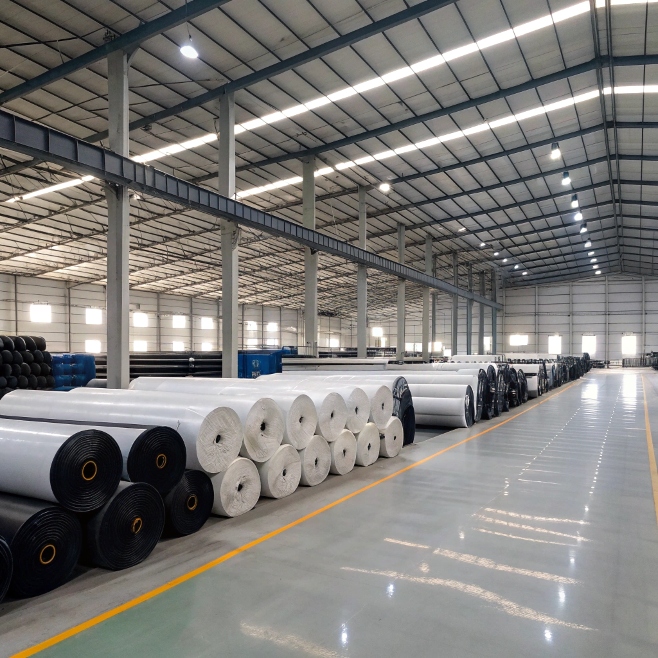
A largura padrão do rolo para exportação é 5,8m, que é otimizado para carregamento de contêineres. Larguras maiores, como 1–6 metros também estão disponíveis, dependendo das condições reais de carregamento do contêiner. O comprimento do rolo geralmente varia de 50–150 metros, ajustado por espessura. Painéis pré-fabricados personalizados podem ser fornecidos, se necessário.
O peso de um revestimento de geomembrana de PVC é calculado por:
Weight (kg)=Thickness (mm)×Width (m)×Length (m)×Density (g/cm³)÷1000\text{Weight (kg)} = \text{Thickness (mm)} \times \text{Width (m)} \times \text{Length (m)} \times \text{Density (g/cm³)} \div 1000Peso (kg)=Espessura (mm)×Largura (m)×Comprimento (m)×Densidade (g/cm³)÷1000
👉 Por exemplo, um rolo de geomembrana de PVC de 1,0 mm (densidade ~1,35 g/cm³, tamanho 7 m × 50 m):
1.0×7×50×1.35=472.5 kg/roll1.0 \times 7 \times 50 \times 1.35 = 472.5 \, kg/roll1,0×7×50×1,35=472,5kg/rotudo
A capacidade é calculada com base em 40HQ ≈ 25 toneladas carregando peso. A contagem exata do rolo depende da espessura e largura do rolo; calculamos pelo peso do liner por m² e limite de peso do container.
O pedido mínimo recomendado é 5.000 m². Como a geomembrana é volumosa e pesada, sugerimos pelo menos uma Contêiner 20GP para um envio eficiente. Também podemos ajudar em consolidando com outras cargas se necessário.
Nós somos um Fabricante de geomembrana na China, e as remessas podem ser organizadas a partir de qualquer grande porto chinês como Qingdao, Xangai ou Ningbo.
Pronto para especificar uma geomembrana?
- Mais de 15 anos de experiência direta na fábrica
- Soluções de engenharia personalizadas para suas necessidades
- Envio global & Suporte logístico
- Uma citação transparente e sem obrigação
- 100% de confdencialidade garantida
Suas informações de e -mail serão mantidas estritamente confdenciais e nossa equipe de negócios garantirá que suas informações privadas sejam absolutamente seguras!
Contato
- info@waterproofSpecialist.com
Responder dentro de 12 horas!
Por favor, preste atenção ao e -mail com o sufixo “@WaterproofSpecialist.com”.