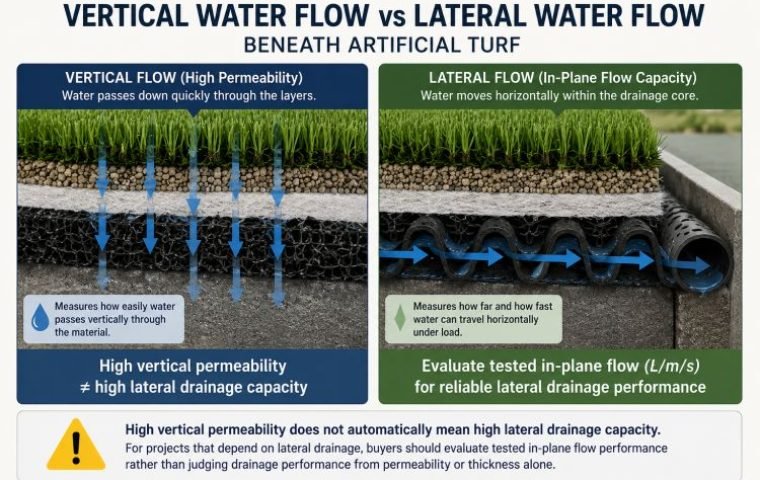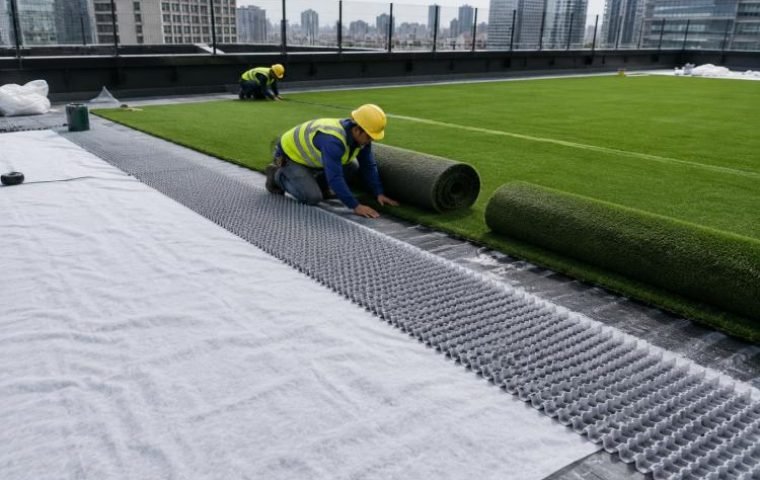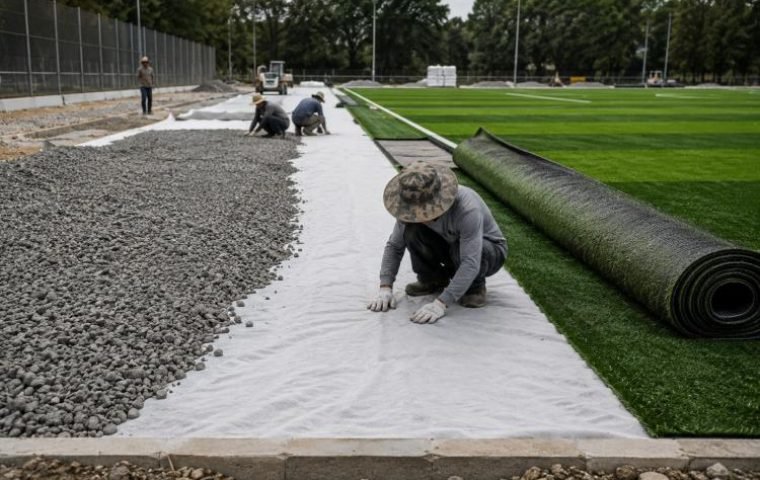


Construir um lago artificial é um investimento caro em estética. Se a água penetrar no solo após a construção, sua peça central cara se tornará uma feia bacia de lama, e mantê-la cheia garante enormes contas de serviços públicos. Um revestimento de geomembrana profissional interrompe completamente essa perda de água.
Este guia ajuda arquitetos paisagistas, desenvolvedores de campos de golfe e empreiteiros municipais a selecionar os melhores revestimentos de geomembrana para lagos artificiais. Você aprenderá como criar retenção permanente de água, escolher entre HDPE rígido e LLDPE flexível, projetar ocultações seguras de bordas e proteger o revestimento de pedras decorativas pesadas.
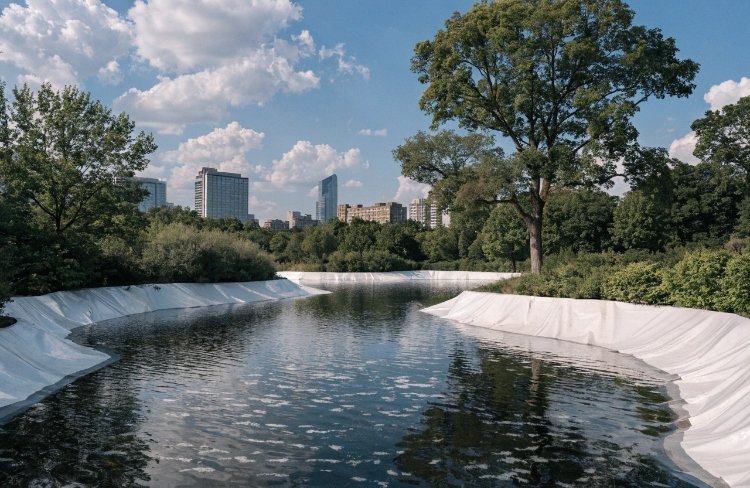
Como um fornecedor de geossintéticos exportando para desenvolvedores globais de resorts e parques municipais, sei que projetar um lago paisagístico é fundamentalmente diferente de construir um lago de contenção industrial. Devemos projetar perfeitamente as camadas impermeáveis invisíveis para que as características da água altamente visíveis pareçam perfeitas. Veja como os profissionais constroem belas paisagens aquáticas à prova de vazamentos.
A crescente demanda por lagos artificiais no design urbano
No desenvolvimento imobiliário moderno, uma grande massa de água aumenta drasticamente o valor das propriedades. Comunidades residenciais de alto padrão, resorts de luxo e parques urbanos municipais dependem de lagos construídos para criar pontos focais, resfriar o microclima local e gerenciar o escoamento de águas pluviais de maneira elegante.
No entanto, os promotores frequentemente constroem estes recursos hídricos em terrenos que nunca foram concebidos naturalmente para reter água. Fornecemos rotineiramente grandes quantidades de geomembranas a projetos situados em solo arenoso altamente permeável, rocha fraturada ou lotes industriais abandonados. Nestes ambientes, o solo natural tem uma taxa de percolação que drena milhares de litros de água por hora.
Além disso, à medida que os custos globais da água aumentam, os municípios e os promotores privados já não podem dar-se ao luxo de bombear, legal ou financeiramente, milhões de galões de água doce para um buraco com fugas apenas para manter uma vista panorâmica. Os regulamentos de conservação de água exigem agora que qualquer lago paisagístico recém-construído seja um sistema fechado e controlado. Para conseguir isso, a instalação de uma camada de geomembrana de alto desempenho na base da escavação é a única solução de engenharia viável.
Por que os revestimentos são essenciais para corpos d'água artificiais
Quando um cliente me pergunta se pode simplesmente compactar argila nativa para reter a água, quase sempre desaconselho isso para aplicações paisagísticas de alta qualidade. Depender apenas do solo cria grandes falhas operacionais para as características estéticas da água a longo prazo.
Primeiro, o solo padrão permite infiltração contínua e dispendiosa. Mesmo um fundo de argila bem compactado irá secar e rachar se o nível do lago for temporariamente reduzido para manutenção. Quando você reabastece o tanque, a água escapa por essas rachaduras. Uma geomembrana fornece uma barreira física com permeabilidade essencialmente zero, bloqueando o volume de água estritamente ao que é perdido através da evaporação natural da superfície.
Em segundo lugar, os lagos de terra sem revestimento destroem clareza da água. Os lagos paisagísticos geralmente dependem de sistemas caros de filtragem mecânica ou skimmers para manter a água cristalina e livre de algas. Se você não tiver um forro, a ação das ondas e o movimento natural dos peixes agitarão constantemente o fundo lamacento. A água permanecerá permanentemente marrom e turva, obstruindo os filtros de entrada com lodo suspenso. Um revestimento de plástico separa a coluna de água da terra bruta, permitindo que suas bombas de filtração realmente façam seu trabalho e mantenham a clareza da água cristalina.
Finalmente, uma margem de lago sem revestimento irá sofrer erosão rapidamente. A esteira gerada pelo vento ou por pequenos barcos decorativos irá minar a linha costeira ao longo do tempo, fazendo com que muros de contenção caros ou paisagismo adjacente desmoronem na água. Um revestimento fixa permanentemente a geometria do solo.
Requisitos principais para forros de lagos paisagísticos
Quando fazemos a transição do armazenamento de águas residuais industriais para o paisagismo estético, as exigências técnicas impostas ao plástico mudam significativamente. Não podemos simplesmente estabelecer plástico grosso padrão; devemos atender a projetos complexos.
Extrema Flexibilidade para Geometrias Complexas
Industrial ponds are usually simple squares or rectangles with uniform, straight slopes. Landscape lakes, however, feature meandering shorelines, artificial islands, varying water depths, and underwater planting shelves. The liner must contour aggressively to tight corners and irregular shapes. If the material is too stiff, it will create "bridging" nos cantos – espaços ocos onde o plástico não toca o chão. Quando o peso da água é aplicado a um vazio em ponte, o material estica e eventualmente rompe.
Ocultação Visual e Cor
Nenhum arquiteto paisagista quer que os visitantes do parque vejam uma borda feia de plástico preto brilhante ao redor de seu lago de aparência natural. O forro deve estar completamente oculto. O projeto do subleito deve permitir que solo, areia ou paralelepípedos decorativos sejam colocados diretamente no topo da membrana. Embora ocasionalmente forneçamos revestimentos verdes ou azuis para espelhos d'água rasos, os empreiteiros profissionais preferem revestimentos de carbono preto padrão porque a cor preta cria a ilusão de ótica de águas profundas, mesmo em uma bacia rasa de 1 metro.
Resistência UV para a zona de rebaixamento
Embora o objetivo seja ocultar totalmente o revestimento, a realidade prática significa que durante o pico de calor do verão, o nível da água do lago pode cair alguns centímetros devido à rápida evaporação. Isto expõe um pequeno anel do revestimento à luz solar direta. O material deve ser fabricado com resinas virgens premium e estabilizadores UV rigorosos para que esta exposição ocasional não faça com que o plástico se torne quebradiço e quebre ao longo de uma vida útil de vinte anos.

Opções de materiais para aplicações paisagísticas
A escolha do tipo específico de polímero determina como sua equipe de instalação gerenciará a implantação. Exportamos exclusivamente dois tipos principais de plásticos de alto desempenho para lagos artificiais permanentes.
Polietileno Linear de Baixa Densidade (LLDPE)
For $80\%$ of landscape and golf course lake projects, I strongly recommend LLDPE. It is softer, far more pliable, and stretches significantly better than rigid alternatives. This flexibility allows the installation crew to mold the plastic tightly around decorative boulders, concrete fountain pedestals, and meandering shorelines without stressing the material. We typically supply LLDPE in 1,0 mm (40 mil) a 1,5 mm (60 mil) espessuras, que equilibram perfeitamente a proteção contra furos com a elasticidade necessária.
Polietileno de alta densidade (HDPE)
Fornecemos HDPE para lagos urbanos maciços e uniformes, onde a forma fundamental é relativamente simples e o fundo é completamente plano. O HDPE tem maior resistência à tração e resistência química, mas é rígido. Requer um subleito perfeitamente liso. Se você tentar forçar o HDPE forte em um canto decorativo apertado e irregular, ele irá combater os instaladores e criar pontos de tensão perigosos ao longo do tempo.
Por que evitamos o PVC padrão
Muitos empreiteiros residenciais inexperientes pedem PVC barato porque é muito flexível e fácil de colar. No entanto, o PVC comercial padrão depende de plastificantes líquidos para permanecer macio. Ao longo de alguns anos debaixo de água, estes plastificantes infiltram-se no ecossistema. Depois que eles desaparecem, o PVC se torna uma folha rígida e quebradiça que racha facilmente sob a pressão do gelo ou do solo. Aconselhamos apenas o uso de polietileno (HDPE/LLDPE) porque naturalmente não requer plastificantes, garantindo-lhe uma verdadeira vida útil de várias décadas.
Risco, limitações e quando um revestimento exposto NÃO é recomendado
Este é o aviso de design mais crítico que dou aos novos arquitetos paisagistas. Nunca deixe um revestimento de geomembrana totalmente exposto em um parque público e nunca deixe cair pedras decorativas pesadas diretamente sobre o plástico descoberto.
Se você deixar o fundo de plástico preto exposto, você falha esteticamente. Parece um poço de processamento industrial, não um lago natural. Além disso, em espaços públicos, um revestimento exposto convida ao vandalismo. Uma vara afiada, uma garrafa de vidro descartada ou uma pedra atirada por um visitante do parque podem facilmente perfurar a membrana em zonas de águas rasas.
If you are building a lake that incorporates heavy limestone boulders or concrete artificial reef structures to create a "natural" borda, você não pode colocar esses pesos ásperos e enormes diretamente em um revestimento LLDPE de 1,0 mm. As pontas afiadas das rochas irão empurrar o plástico sob o seu imenso peso, criando dezenas de vazamentos invisíveis na costa.
To safely build a rocky shoreline, you must implement a "protective sandwich." Fornecemos uma almofada geotêxtil não tecida pesada e espessa (geralmente 400g/m² ou mais espessa) para ser colocada diretamente sobre a geomembrana instalada. Em seguida, você despeja uma camada de areia sobre o geotêxtil e só então sequencia suas pesadas pedras decorativas. Se o seu projeto não acomodar espaço para essa camada protetora profunda, um sistema de membrana inevitavelmente falhará devido a perfurações físicas.
Considerações de projeto para instalações profissionais
Para fazer com que o lago funcione perfeitamente a longo prazo, os empreiteiros devem prestar muita atenção à forma como o revestimento interage com o solo, as plantas e as características concretas circundantes.
Escondendo a borda com trincheiras de âncora
A falha número um de projeto em lagos amadores é uma borda de plástico visível balançando ao vento. Instalações profissionais utilizam um enterrado trincheira de âncora. Cerca de um metro atrás da borda final da água, uma escavadeira cava uma trincheira. O revestimento LLDPE é colocado sobre a borda, colocado na vala e depois preenchido com solo compactado. O empreiteiro paisagista então coloca grama, cascalho decorativo ou grandes pedras angulares sobre a borda enterrada para que a água atinja o paisagismo naturalmente, escondendo completamente a estrutura plástica abaixo.
Apoiando Plantas Aquáticas com Geocélulas
Muitos lagos artificiais são projetados para hospedar lótus, nenúfares ou canaviais naturais ao longo das bordas rasas para administrar nutrientes e fornecer habitat. As plantas não conseguem criar raízes em plástico escorregadio e descoberto.
Para resolver isso, frequentemente emparelhamos nossos revestimentos com um sistema Geocell sobreposto – uma grade plástica tridimensional semelhante a um favo de mel. Os instaladores colocam a geocélula cuidadosamente sobre a geomembrana (com um geotêxtil protetor entre elas) e depois preenchem as bolsas celulares com solo superficial. A geocélula evita que o solo deslize pelas encostas escorregadias do lago até o centro profundo. Isto permite que as plantas aquáticas criem raízes com segurança nas encostas, enquanto a geomembrana abaixo protege silenciosamente a água de escoar.
Penetrações de concreto para fontes e skimmers
High-end fountains and waterfall recirculation pumps require large PVC intake pipes to pass straight through the pond bottom. These pipes are the most likely places to leak. You cannot simply cut a hole in the membrane and slide the pipe through. The installation crew must use identical LLDPE material to craft customized "pipe boots," que deslizam firmemente sobre o encanamento. Eles então extrudam e soldam a capa permanentemente ao revestimento plano e usam braçadeiras de aço inoxidável e mástiques à prova d'água para unir o pescoço da capa de plástico ao tubo rígido.
Estudo de caso: um lago resort no deserto de 40.000 metros quadrados
Para demonstrar o impacto no mundo real da seleção correta de materiais, considere um enorme projeto de resort que fornecemos no Oriente Médio. O desenvolvedor estava construindo um campo de golfe profissional em torno de um lago artificial central de 40.000 metros quadrados.
Como o solo nativo era inteiramente de areia desértica altamente porosa, a retenção de água sem revestimento era fisicamente impossível. O intenso calor ambiente também significava que a evaporação por si só consumiria diariamente enormes volumes de água municipal dessalinizada e dispendiosa. Qualquer perda adicional devido à infiltração do solo levaria à falência o orçamento de manutenção do resort. Além disso, o arquiteto projetou o lago com dezenas de canais estreitos e curvos, zonas rasas de plantio e ilhas para o percurso do campo de golfe.
Aconselhamos o uso de HDPE rígido devido às curvas complexas. Em vez disso, exportamos vários contêineres de 1,5 mm PEBDL flexível, juntamente com geotêxtil não tecido de 300g/m² para proteção do subleito contra cascalho afiado do deserto.
A equipe de instalação conseguiu manipular facilmente o LLDPE em torno dos complexos contornos da ilha. Também exportamos grandes painéis de confinamento celular (Geocélulas) para as bordas rasas, permitindo aos paisagistas reter a areia de forma eficaz nas encostas para recriar praias naturalmente inclinadas e apoiar a vegetação aquática emergente.
O resultado foi a contenção total. O resort agora mantém uma fonte de água enorme e esteticamente espetacular, sem perder uma única gota de água na sedenta areia do deserto abaixo. O investimento inicial no sistema de revestimento LLDPE garantiu a viabilidade econômica de todo o projeto paisagístico da propriedade.
Resumo de comparação de materiais
Ao consultar sua equipe de engenharia, use esta tabela de referência para entender como diferentes plásticos se comportam no projeto paisagístico.
| Parâmetro | PEBDL de 1,0 mm | PEAD de 1,0 mm | Recomendação Profissional |
|---|---|---|---|
| Flexibilidade de materiais | Extremamente alto | Baixo (Rígido) | O LLDPE é superior para margens curvas e complexas. |
| Facilidade de instalação | Fácil em curvas apertadas | Requer espaços abertos grandes e planos | Use LLDPE se tiver ilhas ou fontes. |
| Resistência à perfuração | Bom (rendimento elástico) | Muito Alta (Dureza) | Ambos requerem proteção geotêxtil sob as rochas. |
| Resistência a UV | Excelente (com negro de fumo) | Excelente (com negro de fumo) | Ambos sobreviverão por décadas se forem fabricados adequadamente. |
Conclusão
Um lago artificial é a joia da coroa do paisagismo urbano e turístico moderno. Ao projetar um sistema de geomembrana oculto e altamente durável, você interrompe permanentemente a infiltração do solo, estabiliza os níveis de água limpa e estabelece um ecossistema aquático próspero que requer reabastecimento municipal mínimo.
Nunca arrisque seu projeto paisagístico multimilionário em plásticos baratos ou sujeira sem forro. Entre em contato com o Waterproof Specialist hoje mesmo para informar as dimensões do seu lago e objetivos estéticos. Forneceremos as especificações exatas de LLDPE, geotêxteis de proteção e aconselhamento técnico necessário para construir uma paisagem deslumbrante e à prova de vazamentos.