

In biogas projects, "liner failure" rarely looks like a catastrophic rupture on day one. Instead, it manifests as the silent hemorrhage of profits: gradual gas loss, plummeting digestion efficiency, and maintenance costs that slowly bleed the project dry.
Most anaerobic digester failures are not accidental; they are predictable systematic errors caused by treating the liner as a simple waterproofing sheet rather than a gas-tight chemical reactor. True reliability depends on selecting materials engineered specifically for methane containment, chemical resistance, and thermal fatigue.
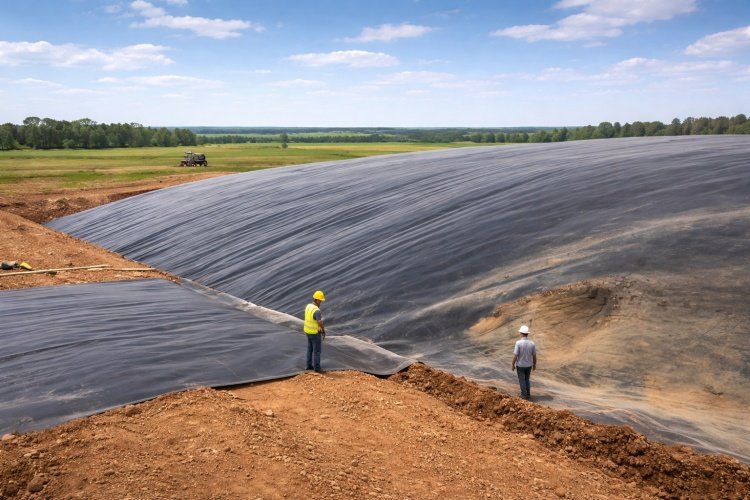
While many operators are quick to blame the installation crew when leaks occur, my experience in supplying materials for these projects suggests the root cause often lies upstream—in the procurement office. We repeatedly see the same five mistakes in material selection and system design that doom projects before the first roll is even deployed.
1. Gas-Tightness Is Treated Like Waterproofing
The most fundamental error I encounter is buying a liner designed to hold water and expecting it to hold methane.
In general civil engineering, a "good liner" is one that stops liquid seepage. However, the physics of a biogas reactor are entirely different. Methane ($CH_4$) is a significantly smaller molecule than water ($H_2O$), and it behaves differently under pressure.
The Permeability Trap
Many buyers specify a liner based solely on potential water leakage, ignoring gas permeability.
Standard HDPE (High-Density Polyethylene) has excellent barrier properties, but not all HDPE is created equal. Low-quality or general-purpose resins often have a lower crystalline density. While they might hold water perfectly, they can allow methane to diffuse through the molecular matrix of the membrane itself—especially over large surface areas like a 5-hectare lagoon cover.
We call this "diffusive loss." You won't see bubbles, but you will see a yield meter that never quite hits the target. Over 10 years, a material with poor gas barrier properties can lose a significant percentage of potential energy revenue simply through the "skin" of the cover.
The Structure of the Membrane
To achieve true gas tightness, the material selection must prioritize density and crystallinity.
We recommend specific resin formulations that maximize the density of the polymer chain packing. In some advanced floating cover applications, we even discuss co-extruded barriers (like EVOH layers) or specific bimodal HDPE resins that tighten the molecular gaps.
The Lesson: If your datasheet only lists "Hydraulic Conductivity" but ignores "Methane Permeability Coefficient" (ASTM D1434), you are buying a pond liner, not a gas holder.
2. Material Selection Ignores Chemical and Biological Exposure
An anaerobic digester is not a clean water reservoir; it is a hostile chemical environment.
The slurry inside a digester is a biologically active soup containing organic acids, ammonia ($NH_3$), and hydrogen sulfide ($H_2S$). The liner material is subjected to constant "chemical stress" that attempts to extract the stabilizers from the plastic, leading to embrittlement.
The H₂S and Acid Factor
Hydrogen Sulfide is particularly aggressive. It can permeate the surface of the liner. Typical general-purpose geomembranes often use standard antioxidant packages designed primarily to resist oxidation during manufacturing. They are not designed to resist the specific corrosive nature of sulfur compounds found in biogas.
When these chemical agents attack a generic liner, they strip away the protective antioxidants. Once the antioxidants are depleted (OIT depletion), the polymer chains begin to break down. We see this as "stress cracking"—tiny spiderweb cracks that appear on the surface after 3–5 years.
Temperature Accelerates Attack
Digesters operate at elevated temperatures (mesophilic at ~35-40°C or thermophilic at ~50-55°C). Chemical reaction rates roughly double for every 10°C increase in temperature. A material that survives 20 years in a cold landfill might fail in 5 years in a hot digester because the heat accelerates the chemical extraction of the stabilizers.
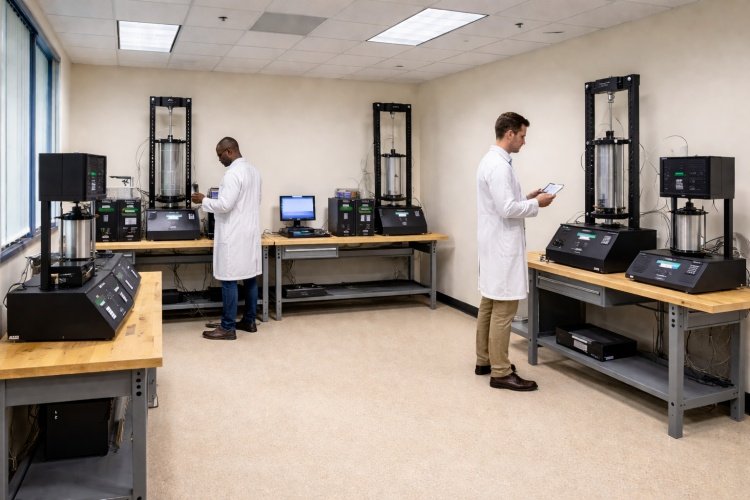
The Solution: We advise clients to select strictly virgin resin geomembranes with a specialized High-Pressure OIT (Oxidative Induction Time) package. This specification ensures the material retains its flexibility and integrity even after years of cooking in hot, acidic sludge.
3. Critical Interfaces Are Treated as Secondary Details
When we analyze forensic data from failed projects, the leaks are rarely in the middle of a flat sheet. They are almost always at the connections: pipe penetrations, concrete attachments, and sumps.
While installation skill plays a role, material weldability is the hidden factor that dictates whether these connections survive.
The Weldability of the Material
Making a complex shape, like a "pipe boot" (the cone-shaped seal around a pipe), requires the installer to heat-weld small pieces of material in difficult positions.
If the geomembrane material is inconsistent—for example, if it uses recycled content with varying melt flow indices—it becomes a nightmare to weld. The installer will find that at a standard temperature, one section burns while another doesn't stick.
- Cheap Material = Inconsistent Welds: The installer cannot create a reliable molecular bond if the material formulation varies from roll to roll.
- Premium Material = Wide Weld Window: High-quality resins offer a verifiable "weld window." This means the material accepts heat consistently, allowing the installer to create connections that are stronger than the sheet itself.
Stiffness vs. Flexibility
Another material failure is choosing the wrong stiffness for the connection. Using a rigid 2.0mm HDPE for a complex, tight-corner detail often leads to failure because the material fights the shape, creating constant stress on the weld.
For these interface zones, we often recommend compatible materials with higher flexibility (like LLDPE) or specifically formulated flexible-HDPE that can mold around obstructions without creating permanent internal stress points.
The Lesson: The success of the complex details is determined by the workability of the material you buy. If the material fights the welder, the gas will eventually escape.
4. Thermal Expansion and Operating Temperature Are Underestimated
A biogas liner system is a dynamic, moving organism. It is never static.
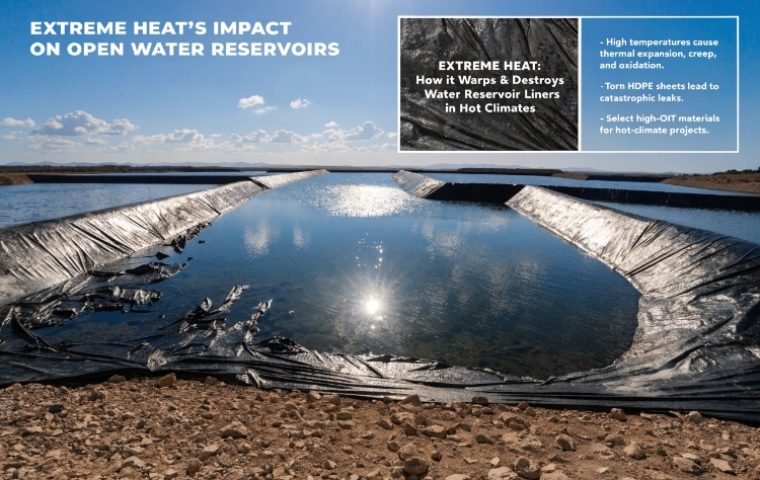
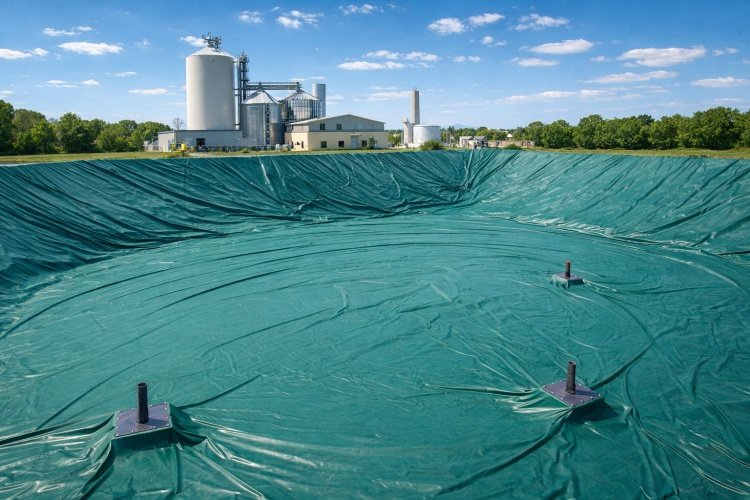
Floating covers, in particular, face a brutal thermal cycle. The sun beats down on the black surface, raising temperatures to 60°C+, while the internal slurry might be 35°C, and the night air drops to 10°C. This cycle causes the material to expand and contract significantly every single day.
Thermal Pumping and Fatigue
This constant movement is called "thermal pumping."
- Expansion: On a hot day, a large cover can expand by several meters. This creates wrinkles and folds.
- Contraction: At night, it pulls tight, creating tension at the anchor trenches and weld seams.
If the material has poor Multiaxial Strain Resistance or low Environmental Stress Crack Resistance (ESCR), this daily cycle essentially bends the plastic back and forth until it snaps—like a paperclip bent too many times. We see failures where the liner has cracked right next to a seam, not because of a bad weld, but because the material fatigued under tension.
Estabilidade Dimensional
Low-quality geomembranes often have poor dimensional stability. After repeated heating cycles, they may shrink permanently, pulling away from the edges and tearing the mechanical anchors.
High-quality resins are heat-set during manufacturing to ensure they maintain their dimensions. We urge buyers to look at the ESCR values in the technical datasheet. A standard value of 500 hours is acceptable for a water pond. For a biogas system, where failure means an explosion risk or revenue loss, we recommend materials exceeding 2000 or even 3000 hours of ESCR.
5. Failure Prevention Is Not Built Into the Project Early Enough
The final, and perhaps most frustrating, reason for failure is the timing of risk management. In too many projects, the "liner" is treated as a commodity purchase at the very end of the construction timeline.
The "All Black Plastic is the Same" Fallacy
Project buyers often send out an RFQ for "2.0mm HDPE" and award the contract to the lowest bidder. This completely ignores the nuances of resin density, OIT packages, and rework percentages discussed above.
By the time the material arrives on site, the failure is already baked into the cake. No amount of skilled installation can fix a material that will chemically degrade in 3 years or leak gas through its molecular structure.
Lack of System-Level QA/QC
Failure prevention requires a Quality Assurance (QA) plan that dictates the material inputs, not just the onsite testing.
- Reactive: Testing the seams after welding (Air pressure test).
- Proactive: Testing the resin before extrusion. Ensuring the Masterbatch is compatible with the project chemistry. Verifying that the roll-to-roll consistency allows for reliable automated welding.
When we work with EPCs early in the design phase, we can match the material to the specific feedstock of the digester. For example, a digester processing slaughterhouse waste (high fats and oils) needs a different liner formulation than one processing corn silage. Ignoring this consultation phase is a primary driver of system failure.
Risks, Limitations, and When Liners Are NOT the Answer
While high-quality geomembranes are the industry standard for biogas containment, it is important to acknowledge where they have limitations. An honest assessment of these risks is part of professional material selection.
1. Positive Pressure Limits:
Flexible liners (especially floating covers) are not pressure vessels. They typically operate at very low pressures (e.g., <5 mbar). If the operational design requires high-pressure storage, a flexible liner is not suitable due to the risk of "ballooning" and over-stressing the anchor points. In these cases, steel or concrete tanks with double-membrane gas holders are required.
2. Physical Damage Risks:
No matter how good the resin is, a 2.0mm sheet can be punctured. Agitators (mixers) falling, sharp tools dropped during maintenance, or even animal intrusion can breach the seal. Materials selected for exposed covers must have high physical puncture resistance, but they rely on strict site management protocols.
3. "Impossible" Geometries:
In extremely complex tank geometries with excessive penetrations, trusses, and internal supports, creating a sealed liner system becomes exceptionally difficult. Each penetration is a leak risk. In such designs, relying solely on a liner for gas tightness may be chemically sound but mechanically risky. The material cannot compensate for a tank design that makes sealing impossible.
Conclusão
Biogas liner failure is rarely a single catastrophic event; it is a system failure that begins with the assumption that "plastic is plastic."
A reliable anaerobic digester system relies on a containment barrier that can withstand the invisible enemies: gas diffusion, chemical extraction, interface stress, and thermal fatigue.
For the procurement officer or project engineer, the takeaway is clear:
- Demand Data: Look for ESCR > 2000 hours and High-Pressure OIT values.
- Verify Weldability: Choose virgin resins with consistent melt indices to ensure your installer can succeed.
- Respect the Chemistry: Match the liner formulation to your specific slurry composition.
No Especialista em Impermeabilidade, we don't just sell rolls of black plastic. We provide the gas barrier technology that secures your project's revenue stream. Preventing failure is always cheaper than repairing it. If you are in the planning stage of a biogas project, contact us to discuss the material specifications that will ensure your system stays gas-tight for the long haul.