

In biogas projects, "liner failure" da wuya ya zama kamar fashewar bala'i a rana ɗaya. Madadin haka, yana bayyana a matsayin zubar da jini mai shiru na riba: asarar iskar iskar gas a hankali, raguwar ingancin narkewar abinci, da farashin kulawa wanda sannu a hankali ya bushe aikin.
Yawancin gazawar digester anaerobic ba na haɗari ba ne; kurakurai ne na tsari wanda ake iya tsinkaya ta hanyar ɗaukar layin a matsayin takarda mai sauƙi na hana ruwa maimakon ma'aunin sinadarai mai ɗaure da iskar gas. Amintaccen gaskiya ya dogara da zaɓin kayan aikin da aka kera musamman don ƙunshewar methane, juriyar sinadarai, da gajiyar zafi.
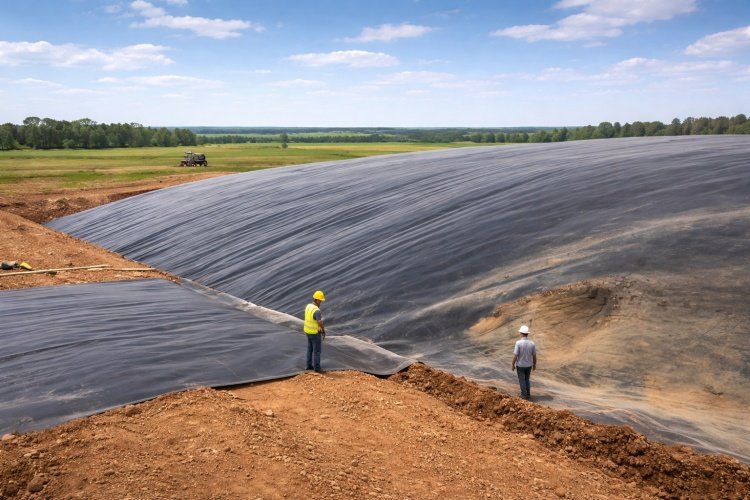
Duk da yake yawancin masu aiki suna saurin ɗora alhakin ma'aikatan shigarwa lokacin da leaks ya faru, ƙwarewata a cikin samar da kayan don waɗannan ayyukan yana nuna tushen tushen galibi yakan ta'allaka ne - a cikin ofishin saye. Mun yi ta ganin kura-kurai guda biyar iri ɗaya a cikin zaɓin kayan abu da ƙirar tsarin waɗanda ke aiwatar da halaka kafin ma a tura nadi na farko.
1. Gas-Tightness Ana Magance Kamar Ruwa
Babban kuskuren da na ci karo da shi shine siyan layin da aka ƙera don ɗaukar ruwa da tsammanin ya riƙe methane.
In general civil engineering, a "good liner" shine wanda ke dakatar da zubar ruwa. Duk da haka, ilimin lissafi na reactor biogas ya bambanta gaba ɗaya. Methane ($ CH_4$) shi ne mafi ƙarancin ƙwayar ƙwayar cuta fiye da ruwa ($ H_2O$), kuma yana ɗabi'a daban a ƙarƙashin matsin lamba.
Tarkon Permeability
Yawancin masu siye sun ƙididdige layin layi bisa yuwuwar ɗigon ruwa kawai, yin watsi da su gas permeability.
Standard HDPE (Maɗaukaki Polyethylene) yana da kyawawan kaddarorin shinge, amma ba duka HDPE aka halicce su daidai ba. Rawanin inganci ko maƙasudin maƙasudi na gaba ɗaya sau da yawa suna da ƙarancin ƙima. Yayin da za su iya riƙe ruwa daidai, za su iya ƙyale methane ya yadu ta hanyar matrix na kwayoyin halitta na membrane kanta-musamman a kan manyan wurare kamar murfin lagoon mai hectare 5.
We call this "diffusive loss." You won't see bubbles, but you will see a yield meter that never quite hits the target. Over 10 years, a material with poor gas barrier properties can lose a significant percentage of potential energy revenue simply through the "skin" na murfin.
Tsarin Matsala
Don cimma daidaiton gas na gaskiya, zaɓin kayan dole ne ya ba da fifiko yawa da kuma crystallinity.
Muna ba da shawarar ƙayyadaddun ƙayyadaddun ƙirar guduro waɗanda ke haɓaka ƙimar sarkar polymer. A cikin wasu aikace-aikacen murfin ci gaba na iyo, har ma muna tattauna shingen haɗin gwiwa (kamar yadudduka na EVOH) ko takamaiman resins HDPE na bimodal waɗanda ke ƙarfafa gibin kwayoyin.
Darasi: If your datasheet only lists "Hydraulic Conductivity" amma yayi biris "Methane Permeability Coefficient" (ASTM D1434), kuna siyan layin kandami, ba mai riƙe da iskar gas ba.
2. Zaɓin Abu yana watsi da Bayyanar Sinadarai da Halitta
Mai narkewar anaerobic ba tafki mai tsabta ba ne; muhallin sinadari ne na gaba.
The slurry inside a digester is a biologically active soup containing organic acids, ammonia ($NH_3$), and hydrogen sulfide ($H_2S$). The liner material is subjected to constant "chemical stress" wanda ke ƙoƙarin cire stabilizers daga filastik, yana haifar da ɓarna.
H₂S da Acid Factor
Hydrogen sulfide musamman m. Zai iya mamaye saman layin. Maƙasudin maƙasudin geomembranes galibi suna amfani da daidaitattun fakitin antioxidant waɗanda aka tsara da farko don tsayayya da iskar shaka yayin masana'antu. Ba a ƙera su don tsayayya da takamaiman yanayin gurɓataccen mahaɗan sulfur da aka samu a cikin gas ba.
When these chemical agents attack a generic liner, they strip away the protective antioxidants. Once the antioxidants are depleted (OIT depletion), the polymer chains begin to break down. We see this as "stress cracking"—tiny spiderweb cracks that appear on the surface after 3–5 years.
Zazzabi Yana Haɗa Harin
Digesters suna aiki a yanayin zafi mai girma (mesophilic a ~ 35-40 ° C ko thermophilic a ~ 50-55 ° C). Adadin halayen sinadarai kusan ninki biyu na kowane karuwar zafin jiki na 10°C. Abun da ya rayu tsawon shekaru 20 a cikin shara mai sanyi zai iya kasawa a cikin shekaru 5 a cikin narke mai zafi saboda zafi yana haɓaka hako sinadarai na stabilizers.
Magani: Muna ba abokan ciniki shawara da su zaɓa sosai Gudun budurwa geomembranes tare da na musamman Babban Matsi OIT (Lokacin Induction Oxidative) kunshin. Wannan ƙayyadaddun yana tabbatar da kayan yana riƙe da sassauci da amincinsa ko da bayan shekaru na dafa abinci a cikin zafi, sludge acid.
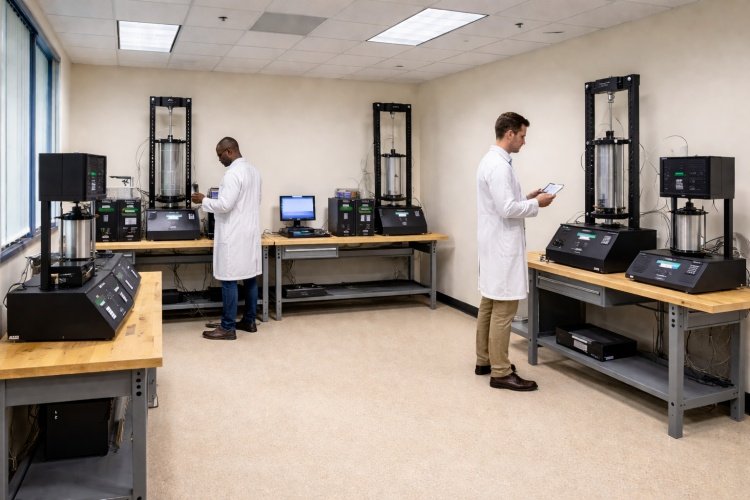
3. Ana ɗaukar Mahimman hanyoyin sadarwa azaman cikakkun bayanai na sakandare
Lokacin da muka bincika bayanan bincike daga ayyukan da ba su yi nasara ba, ba kasafai ake samun yoyon fitsari a tsakiyar takardar ba. Kusan koyaushe suna cikin haɗin gwiwa: shigar da bututu, abubuwan da aka makala, da sumps.
Yayin da fasahar shigarwa ke taka rawa, kayan weldability shine ɓoyayyiyar abin da ke nuna ko waɗannan haɗin gwiwar sun wanzu.
Weldability na Material
Making a complex shape, like a "pipe boot" (hatimin siffar mazugi a kusa da bututu), yana buƙatar mai sakawa don walda ƙananan kayan abu a wurare masu wahala.
Idan kayan aikin geomembrane bai dace ba-misali, idan yana amfani da abun cikin da aka sake fa'ida tare da fihirisar narkewar ruwa daban-zai zama mafarki mai ban tsoro don walda. Mai sakawa zai ga cewa a daidaitaccen zafin jiki, wani sashe yana konewa yayin da wani kuma baya tsayawa.
- Cheap Material = Inconsistent Welds: The installer cannot create a reliable molecular bond if the material formulation varies from roll to roll.
- Premium Material = Wide Weld Window: High-quality resins offer a verifiable "weld window." This means the material accepts heat consistently, allowing the installer to create connections that are stronger than the sheet itself.
Stiffness vs. Flexibility
Another material failure is choosing the wrong stiffness for the connection. Using a rigid 2.0mm HDPE for a complex, tight-corner detail often leads to failure because the material fights the shape, creating constant stress on the weld.
For these interface zones, we often recommend compatible materials with higher flexibility (like LLDPE) or specifically formulated flexible-HDPE that can mold around obstructions without creating permanent internal stress points.
Darasi: The success of the complex details is determined by the workability of the material you buy. If the material fights the welder, the gas will eventually escape.
4. Thermal Expansion and Operating Temperature Are Underestimated
A biogas liner system is a dynamic, moving organism. It is never static.
Floating covers, in particular, face a brutal thermal cycle. The sun beats down on the black surface, raising temperatures to 60°C+, while the internal slurry might be 35°C, and the night air drops to 10°C. This cycle causes the material to expand and contract significantly every single day.
Thermal Pumping and Fatigue
This constant movement is called "thermal pumping."
- Expansion: On a hot day, a large cover can expand by several meters. This creates wrinkles and folds.
- Contraction: At night, it pulls tight, creating tension at the anchor trenches and weld seams.
If the material has poor Multiaxial Strain Resistance or low Resistance Crack Resistance Mahalli (ESCR), this daily cycle essentially bends the plastic back and forth until it snaps—like a paperclip bent too many times. We see failures where the liner has cracked right next to a seam, not because of a bad weld, but because the material fatigued under tension.
Girman Kwanciyar hankali
Low-quality geomembranes often have poor dimensional stability. After repeated heating cycles, they may shrink permanently, pulling away from the edges and tearing the mechanical anchors.
High-quality resins are heat-set during manufacturing to ensure they maintain their dimensions. We urge buyers to look at the ESCR values in the technical datasheet. A standard value of 500 hours is acceptable for a water pond. For a biogas system, where failure means an explosion risk or revenue loss, we recommend materials exceeding 2000 or even 3000 hours of ESCR.
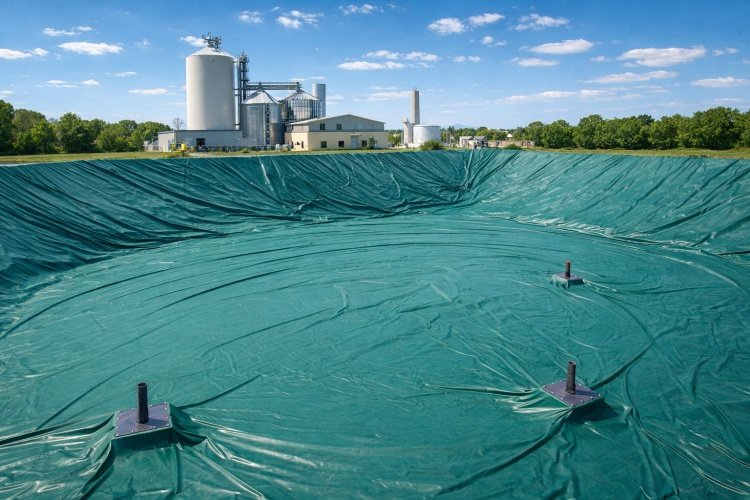
5. Failure Prevention Is Not Built Into the Project Early Enough
The final, and perhaps most frustrating, reason for failure is the timing of risk management. In too many projects, the "liner" is treated as a commodity purchase at the very end of the construction timeline.
The "All Black Plastic is the Same" Fallacy
Project buyers often send out an RFQ for "2.0mm HDPE" and award the contract to the lowest bidder. This completely ignores the nuances of resin density, OIT packages, and rework percentages discussed above.
By the time the material arrives on site, the failure is already baked into the cake. No amount of skilled installation can fix a material that will chemically degrade in 3 years or leak gas through its molecular structure.
Lack of System-Level QA/QC
Failure prevention requires a Quality Assurance (QA) plan that dictates the material inputs, not just the onsite testing.
- Reactive: Testing the seams after welding (Air pressure test).
- Proactive: Testing the resin before extrusion. Ensuring the Masterbatch is compatible with the project chemistry. Verifying that the roll-to-roll consistency allows for reliable automated welding.
When we work with EPCs early in the design phase, we can match the material to the specific feedstock of the digester. For example, a digester processing slaughterhouse waste (high fats and oils) needs a different liner formulation than one processing corn silage. Ignoring this consultation phase is a primary driver of system failure.
Risks, Limitations, and When Liners Are NOT the Answer
While high-quality geomembranes are the industry standard for biogas containment, it is important to acknowledge where they have limitations. An honest assessment of these risks is part of professional material selection.
1. Positive Pressure Limits:
Flexible liners (especially floating covers) are not pressure vessels. They typically operate at very low pressures (e.g., <5 mbar). If the operational design requires high-pressure storage, a flexible liner is not suitable due to the risk of "ballooning" and over-stressing the anchor points. In these cases, steel or concrete tanks with double-membrane gas holders are required.
2. Physical Damage Risks:
No matter how good the resin is, a 2.0mm sheet can be punctured. Agitators (mixers) falling, sharp tools dropped during maintenance, or even animal intrusion can breach the seal. Materials selected for exposed covers must have high physical puncture resistance, but they rely on strict site management protocols.
3. "Impossible" Geometries:
In extremely complex tank geometries with excessive penetrations, trusses, and internal supports, creating a sealed liner system becomes exceptionally difficult. Each penetration is a leak risk. In such designs, relying solely on a liner for gas tightness may be chemically sound but mechanically risky. The material cannot compensate for a tank design that makes sealing impossible.
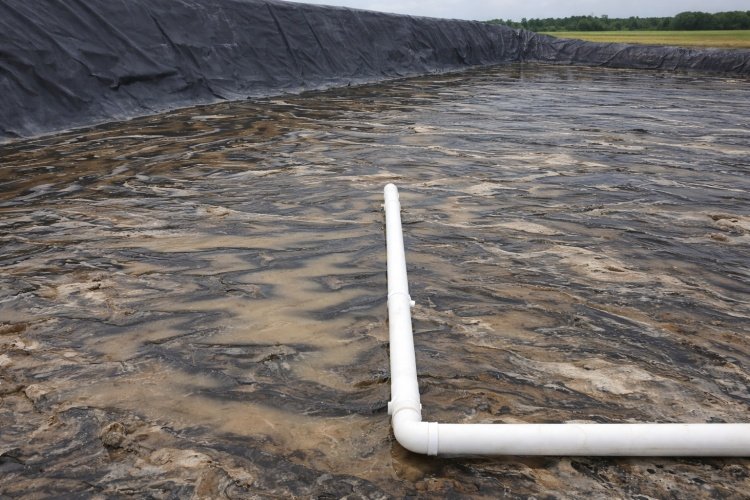
Ƙarshe
Biogas liner failure is rarely a single catastrophic event; it is a system failure that begins with the assumption that "plastic is plastic."
A reliable anaerobic digester system relies on a containment barrier that can withstand the invisible enemies: gas diffusion, chemical extraction, interface stress, and thermal fatigue.
For the procurement officer or project engineer, the takeaway is clear:
- Demand Data: Look for ESCR > 2000 hours and High-Pressure OIT values.
- Verify Weldability: Choose virgin resins with consistent melt indices to ensure your installer can succeed.
- Mutunta Ilimin Kimiyya: Match the liner formulation to your specific slurry composition.
A da Kwararre mai hana ruwa ruwa, we don't just sell rolls of black plastic. We provide the gas barrier technology that secures your project's revenue stream. Preventing failure is always cheaper than repairing it. If you are in the planning stage of a biogas project, contact us to discuss the material specifications that will ensure your system stays gas-tight for the long haul.