

عندما يخطو اللاعبون إلى ملعب غولف نظيف، فإنهم يرون العشب المشذب والمخابئ الصعبة ومخاطر المياه المتلألئة. ومع ذلك، باعتباري موردًا صناعيًا وشريكًا هندسيًا، أرى شيئًا مختلفًا تمامًا. أرى آلة هيدروليكية ضخمة ومعقدة.
يعد ملعب الجولف واحدًا من أكثر مشاريع الهندسة المدنية تطلبًا للتنفيذ بشكل صحيح. فهو يتطلب القدرة على التعامل مع كميات هائلة من مياه الري وهطول الأمطار دون أن تصبح مستنقعًا، والقوة اللازمة لدعم آلات الصيانة الثقيلة على مسارات العربات، والقدرة على الاحتفاظ بالمياه في البحيرات الاصطناعية دون تسريب موارد ثمينة.
إذا فشلت الهندسة الأساسية، يموت العشب، وتغسل المخابئ، وتنفجر ميزانية الصيانة.
لذلك، المواد الاصطناعية الجيولوجية are not just "optional extras" في بناء ملاعب الجولف. إنها البنية التحتية غير المرئية التي تجعل إمكانية اللعب ممكنة. في هذا الدليل، سأقوم بتفصيل التركيبات الجيولوجية المحددة المستخدمة في تصميم المقرر الدراسي الحديث، من منظور اختيار المواد والأداء على المدى الطويل.
1. المتطلبات الهندسية لبناء ملاعب الجولف
لماذا نحتاج إلى مواد بوليمرية متقدمة لزراعة العشب؟ يتعلق الأمر بالسيطرة.
في المجال الطبيعي، ظروف التربة غير متناسقة. تستنزف المياه بسرعة في مكان واحد وتتجمع في مكان آخر. في ملعب الجولف، الاتساق هو المنتج.
يواجه مقاول EPC الذي يقوم ببناء دورة تدريبية أربعة تحديات حاسمة:
- متطلبات الصرف الصارمة: The "Green" يجب أن تكون ثابتة بما يكفي للمشي عليها بعد وقت قصير من حدوث عاصفة ممطرة. يتطلب ذلك تشكيلات تربة هندسية (مواصفات USGA) تستنزف بسرعة ولكنها تحتاج إلى فصلها عن الطبقة السفلية الطبيعية.
- شروط الركيزة المعقدة: غالبًا ما يتم بناء الدورات على الأراضي المستصلحة أو مدافن النفايات أو التربة غير المستقرة. التسوية غير المتساوية على منطقة اللعب الخضراء تجعلها غير قابلة للعب.
- المتانة تحت حركة المرور: في حين أننا نعتبر لعبة الجولف رياضة للمشي، إلا أن معدات الصيانة (الجزازات، وأجهزة التهوية، والموزعات) ثقيلة. تحتاج مسارات العربات وطرق الخدمة إلى التعزيز.
- إدارة المياه: وفي العديد من المناطق، تكون المياه باهظة الثمن ومُنظمة. لا يمكن للبحيرات الصناعية أن تعتمد على الاحتفاظ بالطين الطبيعي؛ أنها تتطلب السيطرة المطلقة على التسرب.
توفر علم الجيولوجيا اليقين الهندسي الذي يفصل بشكل فعال الأرض الطبيعية غير المستقرة عن سطح اللعب المصمم بدقة.
2. المواد الاصطناعية شائعة الاستخدام في بناء ملاعب الجولف ووظائفها
We typically supply four main categories of geosynthetics for these projects. Each serves a distinct function in the "layer cake" من بناء الدورة.
2.1 المنسوجات الأرضية المستخدمة في ملاعب الغولف
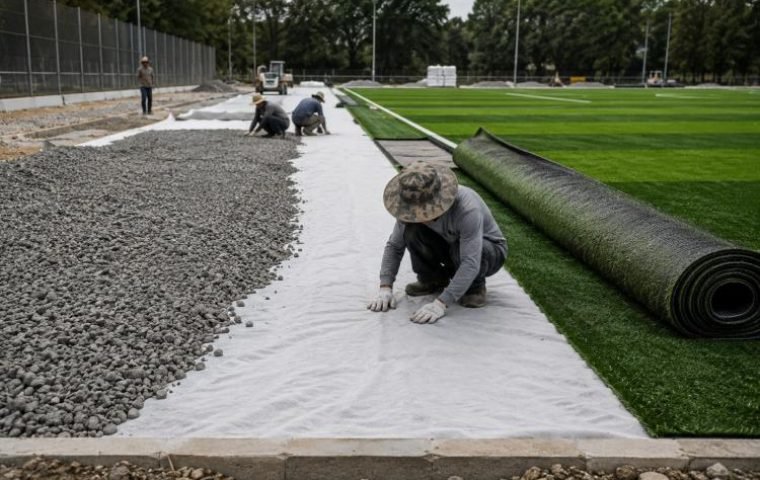
تعتبر المنسوجات الأرضية، وخاصة الأصناف غير المنسوجة المثقوبة بالإبرة، هي العامل الرئيسي في ملعب الجولف. وهي تستخدم في المقام الأول ل الانفصال و الترشيح.
The "Sand-Soil" صراع:
تستخدم ملاعب الجولف والمخابئ أحجامًا محددة ومكلفة من جزيئات الرمل. إذا اختلط هذا الرمل مع الطين الأساسي أو الطمي، فإن مسام الصرف تسد، وتفشل الميزة. تعمل طبقة التكسية الأرضية كحاجز منفذ، مما يسمح بمرور المياه مع الحفاظ على الرمال باهظة الثمن نظيفة ومنفصلة عن الطبقة السفلية.
المواصفات النموذجية:
بالنسبة لملاعب الجولف، نادرًا ما نستخدم المنسوجات الأرضية المنسوجة (المخصصة للتقوية) تحت العشب. نحن نستخدم الأقمشة غير المنسوجة بسبب معدلات تدفق المياه العالية.
| المعلمة | النطاق النموذجي المحدد | ملاحظات عملية |
|---|---|---|
| مادة | مادة البولي بروبيلين (PP) أو البوليستر (PET) غير المنسوجة | يفضل PP للمقاومة الكيميائية (الأسمدة). |
| وزن | 150 جم/م² – 300 جم/م² | خفيف بما يكفي للتدفق، وثقيل بما يكفي لمقاومة الثقب بواسطة الركام. |
| نفاذية | > 0.1 سم/ثانية | يجب أن يتجاوز معدل التسلل لملف التربة. |
| الاستيلاء على قوة الشد | 600 ن – 1000 ن | يحتاج إلى البقاء على قيد الحياة حركة التثبيت (مقود انزلاقي). |
مشاكل بدون التكسية الأرضية:
I have seen older courses where geotextiles were skipped to save money. After 3-5 years, the bunker sand becomes contaminated with mud (turning it brown and hard), and the drainage pipes in the greens clog with silt, leading to "dead spots" من تعفن العشب.
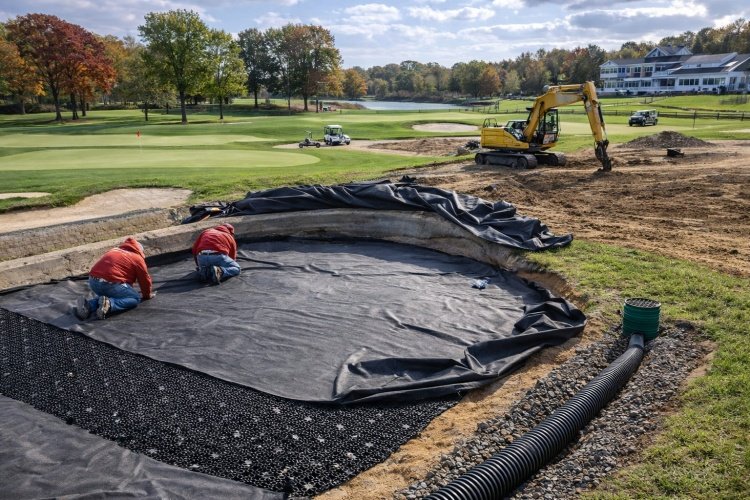
2.2 التركيبات الأرضية وألواح الصرف الصحي
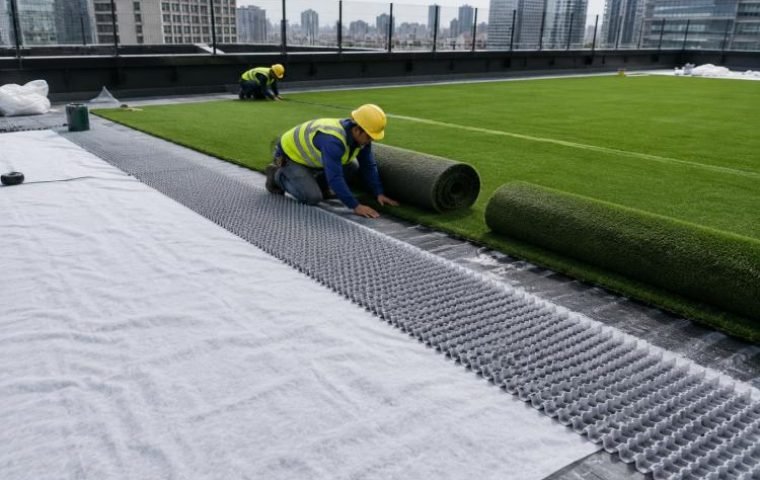
ويعتمد الصرف التقليدي على المصارف الفرنسية، وهي خنادق مملوءة بالحصى والأنابيب. ومع ذلك، فإن الحصى ثقيل النقل ويتطلب تركيبه عمالة كثيفة. الدورات الحديثة تتجه نحو طبقات الصرف الجيوكومبوسيت.
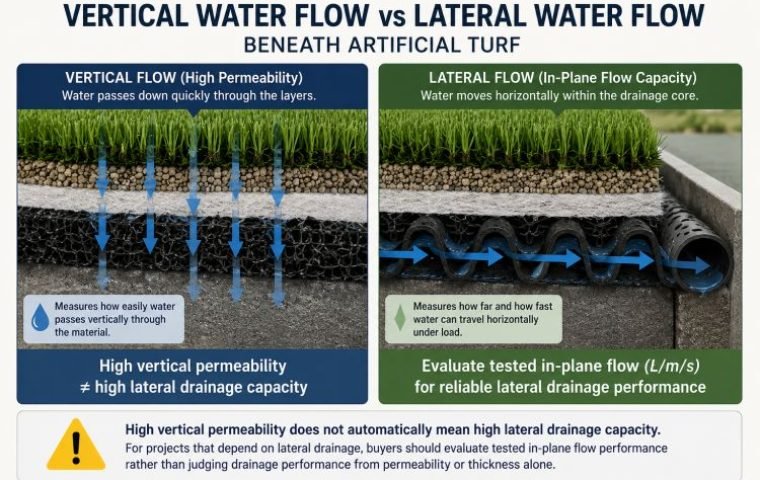
وهي عادة ما تكون عبارة عن قلب بلاستيكي ثلاثي الأبعاد (مدمل أو شبكي) محصور بين طبقتين من النسيج الأرضي.
Typical Application Areas:
- Bunker Liners: Rapidly evacuating water from sand traps to prevent "washouts" (where sand slides down the face of the bunker after rain).
- Subsurface Drainage on Greens: Placed directly under the root zone in low-lying areas.
- الجدران الاستنادية: Behind landscape walls to prevent hydrostatic pressure buildup.
Performance Advantage:
A 5mm thick geocomposite often carries as much water as 300mm of crushed stone. This allows designers to maintain the contours of the course without excavating deep trenches for gravel.
2.3 Geogrids for Subgrade Reinforcement
While geotextiles separate, geogrids fit the "stabilization" role. They are used in the non-playing areas that support the infrastructure.
Typical Application Areas:
- Cart Paths: To prevent rutting and reduce the thickness of the aggregate base.
- Parking Areas: For the clubhouse and maintenance facility.
- المنحدرات الحادة: Reinforcing soil veneers on steep embankments or artificial hills.
Functions:
The geogrid locks the aggregate in its apertures, creating a stiffened composite layer. This distributes the load of heavy mowers or golf carts over a wider area, preventing the subgrade from deforming.
| المعلمة | المواصفات المشتركة | Application note |
|---|---|---|
| يكتب | Biaxial (PP) or Triaxial | Biaxial is standard for distributing load in two directions. |
| قوة الشد | 20 kN/m – 40 kN/m | Higher strength used for soft subgrades (CBR < 3). |
| Aperture Size | 25mm – 40mm | Must match the size of the aggregate used in the road base. |
2.4 Geomembranes in Artificial Lakes and Water Features
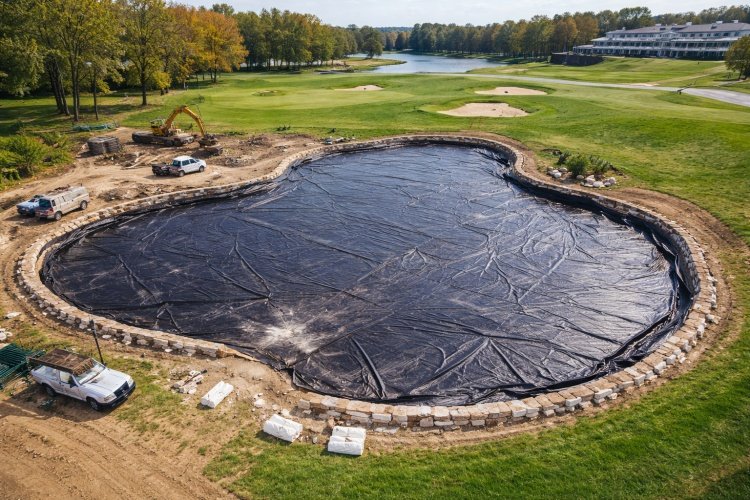
Water hazards are aesthetically pleasing, but operationally, they are reservoirs. A typical 18-hole course might have 3 to 5 hectares of water surface. Without a liner, water loss into the ground can be financially ruinous.
اختيار المواد:
Unlike landfill projects where chemical resistance is king, golf course liners prioritize المرونة و مقاومة الثقب (for irregular shapes).
- HDPE (البولي إيثيلين عالي الكثافة): The cheapest option, excellent durability, but stiff. Hard to install in small, curvy ponds. Best for large, simple reservoirs.
- LLDPE (البولي إيثيلين الخطي منخفض الكثافة): More flexible than HDPE. It conforms better to the complex bottom contours of natural-looking lakes.
- PVC (Polyvinyl Chloride): Highly flexible, easy to pre-fabricate into large panels, but less UV resistant. Must be covered with soil.
Typical Specs:
- سماكة: 0.75mm – 1.0mm is common for decorative ponds; 1.5mm for deep irrigation storage.
- Surfacing: Textured surfaces are often used on the slopes to hold soil cover (so the black plastic is hidden).
3. Combined Use of Geosynthetic Materials in Golf Course Projects
In high-standard projects, we rarely supply a single material in isolation. The materials work as an integrated system. Understanding these combinations is what separates a professional supplier from a generic trader.
Common Combined Solutions:
-
The "Liner Sandwich" (For Lakes):
- Bottom: جيوتكستيل غير منسوج (Cushion against stones).
- Middle: غشاء أرضي LLDPE (Waterproofing).
- Top: جيوتكستيل غير منسوج (Protection against cover soil sliding).
- وظيفة: This prevents punctures from below and above, ensuring a 20+ year lifespan for the lake.
-
The "Bunker System":
- Base: طبقة الصرف الجيوكومبوسيت (to move water).
- Top: Specialized Bunker Liner (often a polymer-sprayed geotextile or synthetic turf).
- وظيفة: This keeps the sand clean, drains it instantly, and prevents the maintenance crew from digging up the subgrade when raking the sand.
Why Integration Matters:
Using a liner without a cushion geotextile often leads to leaks during the first year. Using a drainage board without a filter fabric leads to clogging in the second year. The initial savings are lost to repair costs almost immediately.
4. Risks, Limitations, and When NOT to Use Certain Materials
As a practitioner, I must be honest about where geosynthetics can fail if misapplied in golf courses.
1. Exposed Liners and تدهور الأشعة فوق البنفسجية
It is tempting to leave geomembranes exposed at the water's edge to save money on rock or soil cover. However, standard liners (especially PVC or thin PE) degrade under UV radiation. Furthermore, exposed black plastic looks terrible and gets slippery, creating a safety hazard for players retrieving balls.
- Advice: Always design a "safety shelf" with soil cover or rock armor over the liner.
2. The "Impermeable Bunker" Trap
Some designers use heavy geotextiles in bunkers to separate sand. If the geotextile is too thick or gets clogged with organic fines (grass clippings), it turns into a bowl.
- Advice: Use purpose-built, high-flow bunker liners, not generic road-building geotextiles.
3. Root Penetration
While geomembranes stop water, aggressive tree roots (like Willow or Poplar) can puncture thinner liners (0.5mm - 0.75mm) over time.
- Advice: If trees are planted near the water feature, use a root barrier or increase liner thickness to 1.5mm HDPE.
5. Reference Value of Golf Course Projects for Other Applications
The engineering solutions developed for golf courses are highly transferable. A golf course is essentially a masterful landscape design combined with heavy-duty stormwater management.
We often apply "Golf Course Grade" solutions to:
- Luxury Resorts: Large biological pools and landscape features.
- Municipal Parks: High-traffic lawn areas that need to resist compaction.
- Roof Gardens: Where lightweight drainage (geocomposites) is critical to reduce structural load.
If a material system can withstand the scrutiny of a televised PGA tournament, it is more than capable of handling the demands of residential or commercial landscaping.

خاتمة
Golf course construction is an art form supported by rigorous engineering. The selection of geosynthetic materials—whether it is a 300g geotextile for separation or a 1.0mm LLDPE liner for a lake—depends entirely on the site-specific soil conditions and the budget for long-term maintenance.
Summary of Best Practices:
- Don't Skimp on Filtration: Protecting the sand profile is the most important investment for turf health.
- Match Liner to Shape: Use flexible materials (LLDPE/PVC) for intricate water features, not stiff HDPE.
- Think in Systems: Always pair drainage products with filtration fabrics and liners with protective cushions.
في متخصص في المياه, we understand that you aren't just buying rolls of plastic; you are building a playing surface that needs to perform perfectly rain or shine. By selecting the right combination of materials early in the design phase, you ensure that the course remains playable and profitable for decades to come.