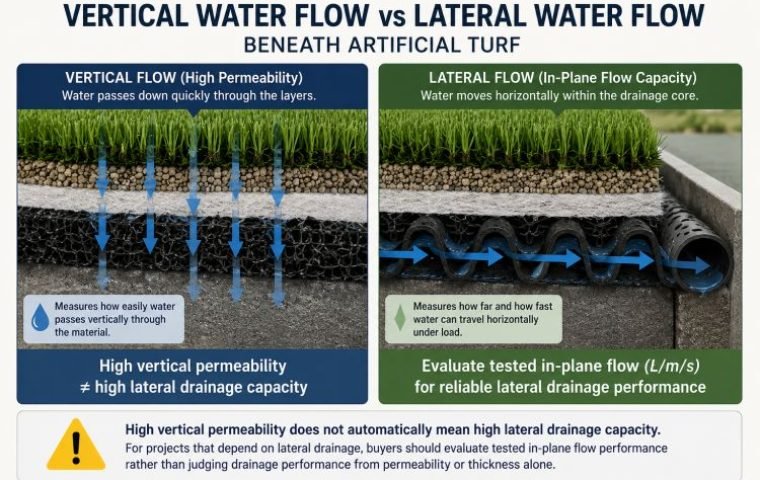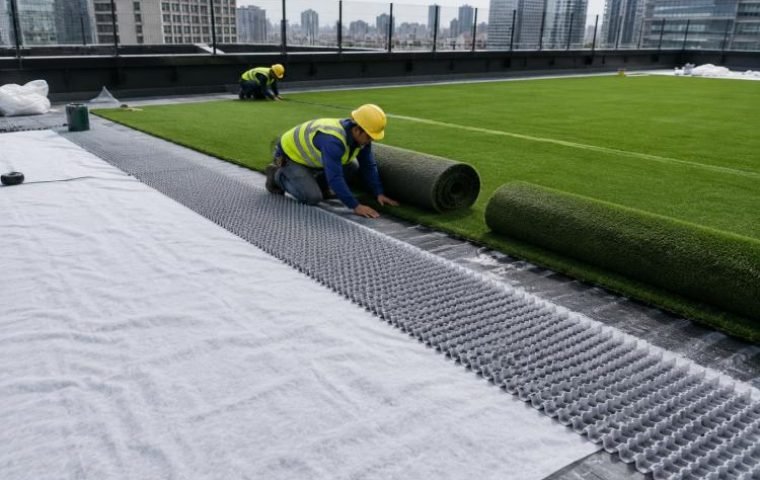


يتضمن اختيار مادة تكسية أرضية لمشروع العشب الصناعي أكثر بكثير من مجرد الإشارة إلى الوزن بالجرام (GSM) في قائمة الأسعار. عندما أراجع الاستفسارات الواردة من المقاولين والموزعين الدوليين، غالبًا ما يفترضون أن جميع الأقمشة الأساسية متماثلة. لكن المواصفات المناسبة تعتمد بشكل كبير على تطبيق الموقع، وحالة الطبقة التحتية، وتصميم الصرف المطلوب، وأحمال البناء المتوقعة.
يساعد هذا الدليل فرق المشتريات في المشروع على النظر إلى ما هو أبعد من فئات الوزن الأساسية. سنشرح كيفية تقييم أنواع البوليمر (PET مقابل PP)، والخواص الميكانيكية، والأداء الهيدروليكي، وأبعاد اللفة لضمان أداء النسيج الأرضي المحدد بشكل صحيح في الحقل دون تضخيم تكلفة الهبوط بشكل غير ضروري.

ماذا يفعل المموه تحت العشب الاصطناعي؟
التكسية الأرضية ليست مطلوبة لكل عملية تركيب للعشب الاصطناعي. إذا كان المقاول يقوم بلصق العشب مباشرة على لوح خرساني أو ساحة صلبة موجودة، فإن طبقة التكسية الأرضية ليست ضرورية على الإطلاق؛ عادة ما يتم وضع وسادة الصدمات بدلاً من ذلك. ومع ذلك، إذا كنت تقوم ببناء نظام عشب صناعي فوق طبقة ترابية طبيعية، فإن النسيج الأرضي يكون إلزاميًا من الناحية الهيكلية.
إذا تخطيت النسيج الأرضي، فإن القاعدة الحجرية الثقيلة المكسرة ستغرق ببطء في الطين الرطب بمرور الوقت، مما يؤدي إلى انخفاضات سطحية، وتجميع المياه، وحقل العشب المدمر.
عند تركيبه تحت العشب الصناعي، يوفر النسيج الأرضي أربع وظائف متميزة:
| وظيفة | لماذا يهم في المشاريع الحقيقية |
|---|---|
| الانفصال | يمنع الطين المضغوط والتربة الطبيعية من الاختلاط والاختلاط بقاعدة الركام النظيفة. |
| الترشيح | يحافظ على جزيئات التربة في مكانها مع السماح لمياه الأمطار وبول الحيوانات الأليفة بالمرور عموديًا إلى الأسفل دون سد الطبقة الحجرية. |
| حماية | يعزل الحواف الحادة لقاعدة الحجر المسحوق، ويحمي أي طبقات أساسية أكثر ليونة أو طبقات علوية مستقبلية من التلف الناتج عن الثقب. |
| قمع الحشائش | يعمل كحاجز مادي ضد جذور الأعشاب التي تحاول الدفع لأعلى من التربة من خلال فتحات تصريف العشب الصناعي. |
أمر التثبيت الحاسم:
من الأخطاء الشائعة بين القائمين على التركيب عديمي الخبرة وضع القماش بالترتيب الخاطئ. يجب أن يكون أمر التثبيت القياسي فوق الطبقة السفلية الترابية:
- التربة العارية المضغوطة
- جغرافية (مع تداخل بمقدار 20-30 سم، ومثبت بدبابيس على شكل حرف U)
- قاعدة من الحجر المسحوق (5-10 سم، مضغوطة بشدة)
- طبقة تسوية الرمل الناعم
- العشب الصناعي
يجب أن يذهب التكسية الأرضية تحت الحجر المسحوق، وليس بين الحجر والعشب. سيؤدي وضعه مباشرة تحت العشب إلى سد قنوات الصرف الأفقية للقاعدة الحجرية.

لماذا مطلوب مواد تكسية أرضية غير منسوجة (غير منسوجة أو فيلم بلاستيكي)
عند اختيار نوع القماش، يجب على المشترين تحديد نسيج أرضي غير منسوج ذو ألياف قصيرة أو خيوط مستمرة ومثقوب بإبرة.
المنسوجات الأرضية المنسوجة، على الرغم من أنها تمتلك قوة شد عالية جدًا، إلا أنها غالبًا ما تكون مقيدة لتدفق المياه العمودي. يمكن للأقمشة المنسوجة ذات الأغشية المشقوقة أن تحبس الماء، مما يتسبب في غمر قاعدة العشب أثناء هطول الأمطار الغزيرة. على النقيض من ذلك، فإن الجيوتكستيل غير المنسوج يتميز بنفاذية عالية. إنه يعمل كمرشح صناعي قوي، مما يضمن تصريف المياه بسرعة بينما تظل الأوساخ منفصلة بقوة عن الحجر النظيف.
والأهم من ذلك، يجب ألا تستخدم أبدًا طبقة بلاستيكية غير منفذة (مثل طبقة PE ذات البناء القياسي) تحت العشب الصناعي. يحبس الغشاء البلاستيكي الرطوبة، ويمنع التصريف الطبيعي تمامًا، وسيتسبب في تشبع الأرض أسفل العشب بالمياه، وانبعاث روائح كريهة، ونمو العفن، وإنشاء فقاعات على السطح. يعتبر النسيج الأرضي غير المنسوج عالي التهوية والنفاذ للماء هو الاختيار الصحيح الوحيد لقاعدة التربة.
PET مقابل PP Geotextile: ما هي المواد التي يجب أن تختارها؟
يتم تصنيع المنسوجات الأرضية غير المنسوجة بشكل أساسي من اثنين من البوليمرات: البوليستر (PET) والبولي بروبيلين (PP). عندما يسألني المشترون أيهما أفضل، تعتمد الإجابة كليًا على كيمياء التربة في موقع العمل وميزانية المشروع.
البوليستر (PET) المموه
يعتبر النسيج الأرضي PET شائعًا جدًا في بناء قواعد العشب الصناعي، ويرجع ذلك في المقام الأول إلى أنه يوفر قوة ميكانيكية ممتازة بتكلفة تنافسية للغاية.
- المزايا: يتمتع PET عمومًا بمقاومة متأصلة أفضل لتدهور الأشعة فوق البنفسجية مقارنة بالـ PP. في مواقع البناء الحقيقية، غالبًا ما يتم فرد المنسوجات الأرضية وتركها معرضة للشمس لمدة أسبوع قبل وصول الشاحنات المجمعة. يحتفظ PET بقوته جيدًا خلال فترة التعرض هذه. عند أوزان GSM المكافئة، غالبًا ما ينتج PET قوة شد أعلى، ومقاومة أفضل للزحف، ومقاومة أعلى للثقب CBR، مما يجعله مناسبًا للغاية لتحمل الضغط الكلي الثقيل في الملاعب الرياضية.
- الخلل القاتل (الخطر): PET معرض بشدة للتحلل المائي القلوي القوي. إذا كانت الطبقة الأساسية لمشروعك تتكون من تربة عالية القلوية، أو ردم الحجر الجيري، أو حطام الخرسانة المسحوقة (حيث يكون الرقم الهيدروجيني للتربة > 9) إن وضع مواد تكسية أرضية من مادة PET في الأرض القلوية الرطبة سيؤدي إلى تحللها كيميائيًا وهشاشتها وانكسارها بسرعة. سيتم قطع عمرها الافتراضي بشدة.
بالنسبة للمناظر الطبيعية القياسية أو الساحات السكنية أو الملاعب الرياضية المبنية على تربة محايدة أو حمضية قليلاً (الرقم الهيدروجيني 4-9)، يعد PET خيارًا ممتازًا وفعالاً من حيث التكلفة. كمصدر، عندما يطلب العميل مادة PET للعشب، أنصحه دائمًا بالتأكد من: "Suitable for neutral soil; avoid high-alkaline sub-soils."

مادة البولي بروبيلين (PP) جيوتكستايل
يعتبر النسيج الأرضي PP هو الخيار الأكثر أمانًا والأكثر تحفظًا عندما تكون ظروف الأرض غير معروفة تمامًا أو خطرة.
- المزايا: PP مقاوم بشكل استثنائي لكل من الأحماض والبيئات عالية القلوية. إذا كانت كيمياء التربة غير معروفة، أو إذا كان المشروع يقع بالقرب من منطقة ساحلية مالحة وقلوية، أو إذا تم بناؤه فوق حطام البناء وردم الحجر الجيري، فإن PP إلزامي لضمان عمر دفن طويل الأمد دون تدهور كيميائي.
- العيوب: يتحلل PP بشكل طبيعي بشكل أسرع عند التعرض للأشعة فوق البنفسجية مقارنة بالـ PET. في حين أن الشركات المصنعة تضيف مثبتات الأشعة فوق البنفسجية إلى PP عالي الجودة، إلا أنه لا يزال من الضروري تغطية المنسوجات الأرضية PP بالقاعدة المجمعة في أسرع وقت ممكن أثناء البناء لمنع الأضرار الناجمة عن أشعة الشمس. علاوة على ذلك، فإن PP المثبت بالأشعة فوق البنفسجية غالبًا ما يحمل تكلفة مواد خام أعلى من PET القياسي.
إذا كانت مواصفات المشروع لا تتطلب صراحة PP، فيجب على المشترين تقييم ظروف التربة الخاصة بهم. إذا كانت التربة محايدة، فإن PET يقدم أداء ميكانيكيًا متفوقًا بميزانية أقل.
ما هي المنسوجات الأرضية GSM المناسبة للعشب الصناعي؟
يعد وزن الجرام (GSM - الكتلة لكل وحدة مساحة) من أكثر المواصفات التي تمت مناقشتها بشكل متكرر في الاستفسارات الدولية بين الشركات. ومع ذلك، فإن نظام GSM وحده لا يحدد الأداء العام.
فيما يلي تفصيل عملي لمتطلبات GSM النموذجية بناءً على تطبيق العشب على الطبقات الفرعية الترابية الطبيعية:
| سيناريو التطبيق | أوصى جي إس إم | الاعتبار العملي للمشترين |
|---|---|---|
| ساحة سكنية / المناظر الطبيعية الخفيفة | 150 جرامًا للمتر المربع | الخيار القياسي والأكثر فعالية من حيث التكلفة. يوفر مقاومة كافية للأعشاب الضارة ومقاومة للثقب ضد حركة القدم الخفيفة فوق الأوساخ العادية. |
| المناظر الطبيعية التجارية / التربة الصخرية | 200 جرام | أقوى خصائص الشد والثقب. ضروري إذا كانت التربة تحتوي على صخور حادة أو جذور أعشاب عدوانية أو إذا كانت المنطقة ستشهد حركة مرور عالية للمشاة. |
| الملاعب الرياضية / ملاعب كرة القدم | 200-250 جم | يتحمل الأحمال الديناميكية الثقيلة للرياضيين ومركبات الصيانة. مقاومة عالية لقوى السحق الناتجة عن الطبقة الأساسية السميكة والزاوية. |
| الاستخدام المؤقت / قصير المدى جدًا | 120 جرامًا للمتر المربع | يوصى به فقط لأرضيات الأحداث المؤقتة. يتم تمزيق الأقمشة الخفيفة بسهولة بواسطة الركام أثناء التثبيت ولا ينصح بها للدفن الدائم في الهواء الطلق. |
| أرض خرسانية/متصلبة | لا أحد | التكسية الأرضية غير مطلوبة. يمكنك تثبيت العشب مباشرة، أو استخدام وسادة الصدمات للتبطين. |
تحذير من الأوزان المنخفضة للغاية: لا تستخدم الأقمشة التي يقل وزنها عن 100 جرام في المتر المربع للعشب الاصطناعي الخارجي الدائم. إنها تفتقر إلى مقاومة ثقب CBR اللازمة للبقاء على قيد الحياة عند وضع الحجر المسحوق الزاوي. سيتم ثقب القماش الذي يبلغ وزنه 90 جرامًا للمتر المربع بالحجارة الحادة وجذور الأعشاب الضارة، وسيفشل تمامًا خلال عام إلى عامين.
يجب أن يتذكر المشترون أيضًا أن نظام GSM الأعلى ليس أفضل عالميًا. في حين أن القماش الذي يبلغ وزنه 300 جرامًا للمتر المربع قوي بشكل لا يصدق، فإنه يزيد من إجمالي وزن اللفة، ويقلل من إجمالي المساحة المربعة التي يمكن وضعها في حاوية شحن 40HC، وبالتالي يزيد من تكلفة الشحن البحري لكل متر مربع. حدد نظام GSM الذي يلبي المتطلبات الهندسية، ولا تبالغ في التحديد دون داع.
خيوط مستمرة مقابل ألياف جيوتكستيل غير منسوجة قصيرة
في تصنيع المنسوجات الأرضية غير المنسوجة، هناك طريقتان أساسيتان: ثقب إبرة الألياف القصيرة (الألياف الأساسية) وتثقيب إبرة الخيوط المستمرة. كلاهما يستخدم بكثافة في صناعة العشب الصناعي.
نظرًا لأن نسيج الخيوط المستمرة مصنوع من خيوط بوليمر متواصلة غير منقطعة، فإنه ينتج بطبيعة الحال قوة شد أعلى، واستطالة أقل (أقل تمددًا)، ومقاومة أعلى بكثير للثقب CBR مقارنةً بنسيج قصير الألياف له نفس الوزن تمامًا.
في حين أن المنسوجات الأرضية ذات الخيوط المستمرة عادة ما تكون أكثر تكلفة قليلاً من الألياف القصيرة، فإن فرق السعر غالبًا ما يكون ضئيلًا مقارنة بهامش الأمان المتزايد الذي يوفره ضد الثقب الكلي أثناء ضغط الآلات الثقيلة. بالنسبة للتطبيقات الصعبة مثل الملاعب الرياضية الاحترافية أو المناطق التجارية، يُفضل استخدام الخيوط المستمرة بشدة.
However, since the geotextile is permanently buried beneath the stone and not exposed to the elements, a high-quality short-fiber fabric remains a perfectly viable, long-lasting, and highly economical option for most standard landscape and residential turf projects. If both products meet your required project specification, compare the actual TDS performance and landed cost rather than selecting solely by the manufacturing process.

What Technical Specifications Should Buyers Compare?
To shift from buying purely by weight to buying by actual performance, international contractors and distributors must request the manufacturer's Technical Data Sheet (TDS).
عند مراجعة TDS لمشروع العشب، هذه هي المعلمات الحاسمة التي يجب تقييمها:
| مواصفة | لماذا يهم أثناء البناء والاستخدام |
|---|---|
| الكتلة لكل وحدة مساحة (GSM) | يحدد تصنيف وزن المنتج الأساسي للخدمات اللوجستية والمناولة. |
| قوة الشد (كيلو نيوتن / م) | يحدد مقاومة النسيج لقوى السحب والتمزق عندما تتحرك الآلات الثقيلة فوق القاعدة الإجمالية أثناء التثبيت. |
| مقاومة ثقب CBR (كيلو نيوتن) | ضروري لضمان عدم اختراق الحجارة الحادة والزاويّة للطبقة الفاصلة وتدميرها أثناء الضغط. |
| نفاذية الماء (سم/ث) | قدرة النسيج على السماح لهطول الأمطار الغزيرة بالمرور عموديًا إلى الطبقة السفلية دون غمر العشب أعلاه. |
| AOS (حجم الفتح الظاهر) | تحديد توافق الترشيح. يجب أن تكون المسام صغيرة بما يكفي لمنع التربة من الارتفاع، ولكنها كبيرة بما يكفي حتى لا تسد بالطمي الناعم. |
| نوع البوليمر | Indicates chemical resistance (PET for neutral soil; PP for alkaline soil). |
It is important to remember that a 200gsm geotextile from Factory A will not have the identical tensile, puncture, or hydraulic performance as a 200gsm geotextile from Factory B. The manufacturing equipment and raw material quality make a massive difference. By comparing these specific TDS values, you ensure the fabric actually meets the demands of your job site.
How to Select Geotextile by Artificial Turf Application
Instead of guessing a GSM weight, professional buyers determine the fabric specification based on the specific demands of the project application.
- Sports Fields: الشرط الرئيسي هو متانة البناء والترشيح العدواني. يجب أن يستنزف الملعب بسرعة، ويجب ألا تتشوه القاعدة تحت الأحمال الرياضية. ركز على المقاومة العالية للثقب CBR (غالبًا 200-250 جم/م2) ونفاذية الماء الممتازة. يعتبر نسيج الخيوط المستمرة PET مثاليًا هنا إذا كانت كيمياء التربة محايدة.
- المشهد التجاري: الأولوية هي الفصل الموثوق به وقمع الأعشاب الضارة في مناطق واسعة. يوفر القماش غير المنسوج القياسي بوزن 200 جرامًا للمتر المربع المتانة اللازمة للتعامل مع صيانة المناظر الطبيعية التجارية مع التحكم في تكاليف المواد.
- ملعب سكني / الفناء الخلفي: وينصب التركيز على الفصل الأساسي وفعالية التكلفة مقارنة بالأوساخ القياسية. عادة ما يكون القماش غير المنسوج ذو الألياف القصيرة القياسي بوزن 150 جرامًا أكثر من كافٍ لفصل التربة عن الركام والسماح بتصريف بول الحيوانات الأليفة والمطر بكفاءة.
يحدد التطبيق الخاص بك معلمات الأداء التي تحتاجها، وليس نظام GSM الذي تحتاجه تلقائيًا.
كيف يؤثر حجم اللفة على تكلفة مشروع العشب الصناعي
يعد هذا أحد الاعتبارات المهمة للمشترين الدوليين في مجال B2B، والذي نادرًا ما تتم مناقشته. إن أدنى سعر للمصنع EXW (Ex Works) للمتر المربع لا ينتج دائمًا أقل تكلفة هبوط في ميناء وجهتك.
تلعب الخدمات اللوجستية والمناولة دورًا كبيرًا في شراء الجيوتكستيل.
عرض اللفة: إن اللفة الأوسع (على سبيل المثال، بعرض 4 م إلى 6 م) تعني طبقات أقل في الحقل، مما يقلل من تداخل المواد المهدرة ويسرع بشكل كبير وقت تركيب المقاول. ومع ذلك، فإن اللفات الواسعة جدًا تملي كيفية تحميل المواد في حاوية الشحن، وتتطلب معدات ثقيلة للتحرك في الموقع.
طول اللفة: تعمل اللفات الأطول على تقليل وقت المناولة والمساحة الفارغة للحاوية، ولكنها تزيد من الوزن المادي لكل لفة على حدة. إذا كان فريق التثبيت الخاص بك يعمل يدويًا في الأفنية الخلفية السكنية، فسيكون من المستحيل المناورة بلفة ضخمة وثقيلة.
تحسين الحاوية: إن نظام GSM الأثقل يعني أن عددًا أقل من الأمتار المربعة يمكن أن يتناسب مع حاوية 40HC. إذا قمت بتحديد 300 جرامًا للمتر المربع بشكل تعسفي عندما يكون القماش 200 جرامًا للمتر المربع مناسبًا تمامًا للتربة الخاصة بك، فستزيد تكلفة الشحن لكل متر مربع بشكل كبير لأنك تقوم بشحن لفات أثقل وأضخم بمساحة تغطية إجمالية أقل.

ما هي المعلومات التي يجب عليك إرسالها عند طلب عرض أسعار التكسية الأرضية؟
للحصول على عرض أسعار سريع ودقيق ومُحسّن، يجب على المشترين تجنب مجرد إرسال بريد إلكتروني يقول: "What is the price for 200gsm fabric?" لا يمكن للمورد المحترف أن يمنحك سعرًا محسّنًا لهذه المعلومات القليلة.
Instead, provide the following details in your inquiry:
- طلب: (e.g., Professional football field base, commercial landscape, residential distribution).
- المساحة الإجمالية: Estimated project square meterage or expected purchasing volume.
- Subgrade Condition: Is the soil neutral, or is it highly alkaline/limestone? (This dictates whether we quote PET or PP).
- Required Specifications: If you have a BOQ or technical drawing specifying tensile strength (kN/m) or puncture resistance (kN), provide it immediately.
- ميناء الوجهة: Required for calculating optimized sea freight and container loading layouts.
If you do not have a formal specification sheet from an engineer, provide the turf application and subgrade condition first. This allows the factory to recommend the safest, most cost-effective option for your specific scenario.
خاتمة
Selecting a geotextile for artificial turf should never be based on GSM alone. A successful purchase requires understanding the subgrade chemistry to choose between PET and PP, evaluating CBR puncture resistance to survive aggregate compaction, and ensuring you are using a fully permeable nonwoven fabric rather than an impermeable plastic film.
من خلال تحليل تطبيق المشروع، والوظائف الميكانيكية المطلوبة، وكفاءة تحميل الحاويات، يمكن للمشترين الدوليين تأمين المواد الصحيحة مع تقليل إجمالي تكلفة الهبوط. إذا كان لديك BOQ للمشروع، أو رسم فني، أو إذا كنت تعرف ببساطة حالة الأرضية الأساسية والمساحة الإجمالية، فأرسل إلينا التفاصيل الخاصة بك للحصول على توصية المواد المخصصة وعرض الأسعار الأمثل.