مدافن النفايات ليست هياكل ثابتة؛ إنها أنظمة جيوتقنية ضخمة ونشطة تستقر وتتحول لعقود من الزمن. تضع هذه الحركة ضغطًا هائلاً على نظام الخطوط الملاحية المنتظمة، وهو الحاجز الحاسم الذي يحمي بيئتنا. إذًا، كيف نضمن بقاء هذا الحاجز سليمًا؟ يؤدي هذا غالبًا إلى سؤال رئيسي من المهندسين وأصحاب المشاريع: هل تحتاج بطانات النفايات حقًا إلى شبكات جغرافية؟
في هذا الدليل، سأقدم إجابة مباشرة بناءً على سنوات من توريد المواد لهذه المشاريع المهمة. سنغطي متى تكون الشبكات الجغرافية ضرورة مطلقة، ومتى قد تكون اختيارية، وكيفية اختيار النوع المناسب لضمان السلامة والاستقرار والربحية على المدى الطويل لمكب النفايات الخاص بك.
مقدمة لأنظمة بطانة مدافن النفايات
قبل أن نتحدث عن التعزيز، دعونا نراجع بإيجاز النظام الذي نحاول حمايته.
ما هو نظام بطانة مكب النفايات؟
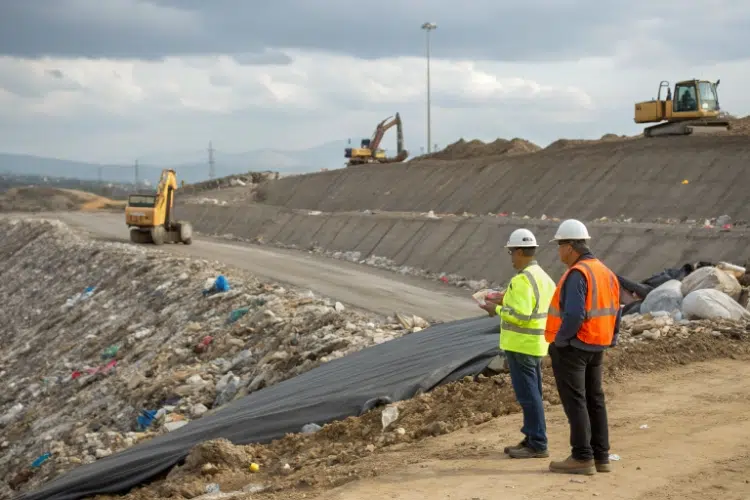
بطانة مكب النفايات عبارة عن نظام حاجز متعدد الطبقات تم تصميمه في أسفل وجوانب مكب النفايات. وتتمثل مهمتها الأساسية في احتواء النفايات الصلبة ومنع السائل الملوث، المعروف باسم المادة المرتشحة، من التسرب إلى التربة والمياه الجوفية. ويتم وضع نظام مماثل، وهو الغطاء النهائي، فوق المكب بعد امتلائه.
المكونات المشتركة لبطانة مدافن النفايات
نظام الخطوط الملاحية المنتظمة الحديث عبارة عن هيكل مركب، يتضمن عادةً ما يلي:
- غشاء أرضي: لوح بلاستيكي غير منفذ (عادةً HDPE) يعمل كحاجز أساسي.
- بطانة الطين الجيولوجية (GCL) أو بطانة الطين المضغوطة (CCL): حاجز ثانوي يوفر التكرار.
- طبقة الصرف: طبقة مركبة من الجيوكومبوست أو الحصى لجمع وإزالة المادة المرتشحة.
- المنسوجات الأرضية الواقية: طبقات من القماش تحمي الغشاء الأرضي من الثقب.
تم تصميم هذا النظام ليكون حاجزًا سلبيًا. ولكن عندما يستقر مكب النفايات بشكل غير متساو بعدة أمتار، فإن المقاومة السلبية ليست كافية. هذا هو المكان الذي يصبح فيه التعزيز حاسما.
ما هي الشبكات الجغرافية وكيف تعمل؟
لفهم دورها، عليك أن تعرف ما هي الشبكات الجغرافية بشكل أساسي.
تعريف ووظيفة Geogrids
الشبكة الجغرافية هي أ المواد الاصطناعية الجيولوجية تم تشكيلها في تكوين مفتوح يشبه الشبكة. وظيفتها الأساسية هي تعزيز. عند وضعها في التربة أو الركام، يتم قفل الجزيئات في فتحات الشبكة (الفتحات). عندما يتم تطبيق الحمل، فإن قوة الشد العالية للشبكة الجغرافية تقاوم قوى السحب، مما يحافظ على كتلة التربة معًا ويوزع الحمل على مساحة أوسع.
أنواع الشبكات الجغرافية المستخدمة في الهندسة الجيوتقنية
هناك عدة أنواع، ولكن الأكثر شيوعا في الهندسة المدنية هي:
- شبكات جغرافية أحادية المحور: قوة عالية في اتجاه واحد، مثالية للتطبيقات ذات اتجاه الضغط الأساسي، مثل الجدران الاستنادية والمنحدرات الشديدة.
- شبكات جغرافية ذات محورين: تكون القوة موحدة في اتجاهين متعامدين، وهي مثالية لتطبيقات مثل قواعد الطرق وتعزيز الأساسات حيث تكون الضغوط متعددة الاتجاهات.
- شبكات جغرافية ثلاثية المحاور: يتم توزيع القوة بشكل متساوٍ في اتجاهات متعددة، مما يوفر أداءً محسنًا لتحقيق الاستقرار الأساسي.
تختلف الشبكات الجغرافية عن غيرها من المواد الاصطناعية الجيولوجية مثل المنسوجات الأرضية، والتي تعمل في المقام الأول كفواصل أو مرشحات أو مصارف بدلاً من عناصر التعزيز الأولية.
هل تحتاج بطانات مدافن النفايات حقًا إلى شبكات جغرافية؟
هذا هو السؤال الأساسي. الجواب ليس دائمًا نعم، ولكن بالنسبة لمعظم مدافن النفايات الحديثة والواسعة النطاق، فهو كذلك بأغلبية ساحقة نعم. ويعتمد القرار على المخاطر والجيولوجيا والتصميم.
الحالات التي لا تكون فيها الشبكات الجغرافية مطلوبة
قد تتمكن من تجنب استخدام الشبكات الجغرافية إذا الجميع من الشروط التالية:
- مؤسسة: تم بناء المكب على قاعدة صلبة غير قابلة للتسوية.
- مقاس & عمر: إنها منشأة صغيرة جدًا ومؤقتة ذات ارتفاع منخفض للنفايات.
- المنحدرات: يشتمل التصميم على منحدرات لطيفة جدًا (على سبيل المثال، أكثر تسطحًا بنسبة 3:1).
- المخاطر الزلزالية: الموقع في منطقة غير نشطة زلزاليا.
ومن خلال خبرتي، فإن المشاريع التي تلبي جميع هذه المعايير تمثل أقل من 5% من إجمالي إنشاءات مدافن النفايات الحديثة. بالنسبة للـ 95% الأخرى، الشبكات الجغرافية ليست مجرد وظيفة إضافية؛ فهي عنصر أساسي في إدارة المخاطر.
عندما تصبح الشبكات الجغرافية ضرورية في بطانات مدافن النفايات
تتحول الشبكات الجغرافية من كونها اختيارية إلى أساسية في ظل هذه الظروف المشتركة:
- أسس ناعمة أو قابلة للضغط: Most landfills are built on soil, not solid rock. This soil compresses under the immense weight of the waste, leading to uneven or "differential" مستعمرة.
- مكدسات النفايات العالية: ويمكن لمكب النفايات الذي يبلغ ارتفاعه 50 مترًا أن يستقر بعدة أمتار، مع استقرار المركز أكثر بكثير من الحواف. هذه التسوية التفاضلية تضع نظام الخطوط الملاحية المنتظمة تحت ضغط هائل.
- المنحدرات الجانبية شديدة الانحدار: لتعظيم المجال الجوي القيم، تم تصميم مدافن النفايات الحديثة بمنحدرات شديدة (على سبيل المثال، 2:1 أو 1.5:1). الشبكات الجغرافية مطلوبة لضمان استقرار هذه المنحدرات، ومنع فشل القشرة الكارثي.
- المتطلبات التنظيمية: تتطلب العديد من اللوائح البيئية عامل أمان عاليًا (على سبيل المثال، FS > 1.5) ضد فشل المنحدر، والذي غالبًا ما يكون غير قابل للتحقيق على المنحدرات الشديدة دون تعزيز.
مخاطر الفشل الشائعة دون تعزيز الشبكة الجغرافية
Without geogrids, differential settlement can stretch the liner system past its breaking point. A compacted clay liner can crack when its tensile strain exceeds just 0.5%. These cracks create direct pathways for leachate to escape. The geogrid functions like a "tension membrane" within the soil, absorbing these tensile forces and allowing the liner system to accommodate much larger strains without rupturing. It acts as an insurance policy against cracks and leaks.
Typical Applications of Geogrids in Landfill Liner Systems
Geogrids are used in several key areas within a landfill to provide structural integrity.
Side Slope Reinforcement
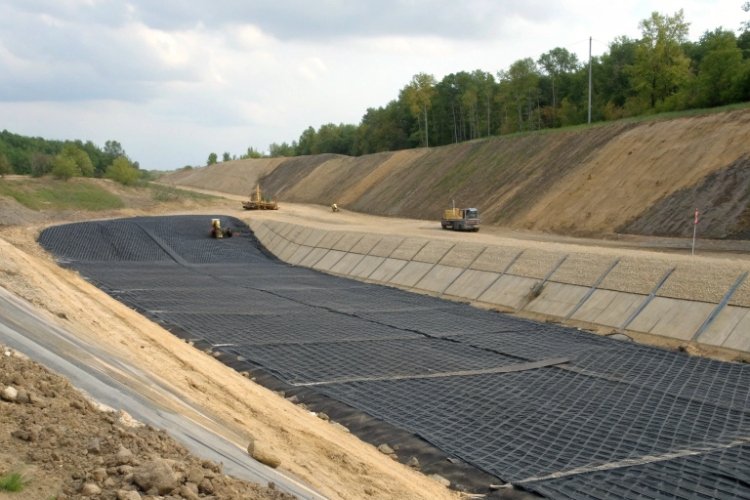
هذا هو التطبيق الأكثر شيوعا وحاسمة. ومن خلال وضع شبكات جغرافية أفقيًا داخل غطاء تربة المنحدر، يستطيع المهندسون تصميم منحدرات أكثر انحدارًا بكثير مما يمكن تحقيقه في حالة التربة غير المدعمة. ويترجم هذا بشكل مباشر إلى زيادة سعة النفايات والإيرادات لمشغل مكب النفايات.
تحسين استقرار بطانة القاعدة
When a landfill is built on a soft foundation, biaxial geogrids are placed within the base liner's soil layers. They create a stiff platform that "bridges" على المناطق الأضعف، ومنع المنخفضات الموضعية وتقليل إجهاد الشد على الغشاء الأرضي وGCL الناجم عن التسوية التفاضلية.
تعزيز أنظمة الغطاء
After a landfill is closed, the final cover system is also subject to settlement as the waste below decomposes. Geogrids are used in the cover system for the same reasons as the base liner: to maintain integrity and prevent cracks from forming as the ground shifts.
Interface Shear Strength Enhancement
On steep slopes, there is a risk of the topsoil "veneer" sliding off the smooth surface of the geomembrane. High-strength geogrids placed above the geomembrane provide a textured surface with tensile capacity, interlocking with the soil and dramatically increasing the friction and stability at this critical interface.
Key Specifications to Consider When Choosing Geogrids
Selecting the right geogrid is not about picking the "strongest" one; it's about matching the specifications to the specific engineering need.
Tensile Strength and Load Direction
This is the primary specification, measured in kN/m. It defines how much pulling force the geogrid can withstand before breaking. It's crucial to match the geogrid type (uniaxial, biaxial) to the primary direction of stress in your application.
Junction Strength and Aperture Size
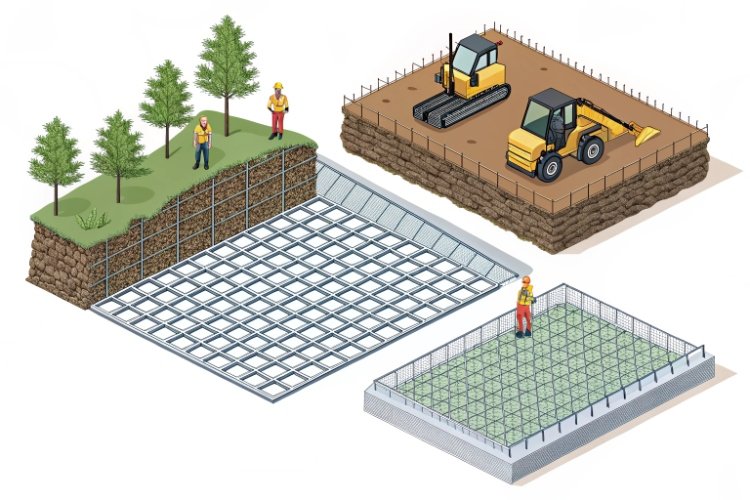
The points where the grid's ribs are connected are called junctions. High junction strength is vital to ensure the grid acts as a cohesive unit. The aperture size (the opening in the grid) must be optimized for the infill material. An opening between 25-50mm typically provides the best interlock with common soil and aggregate fills.
Creep Resistance and Long-Term Performance
Creep is the tendency of a material to slowly deform over time under a constant load. For a landfill designed to last 100+ years, resistance to creep is non-negotiable. High-quality geogrids made from polymers like polyester (PET) or polyvinyl alcohol (PVA) are tested for long-term creep to ensure they maintain their strength for the entire design life of the facility.
المقاومة الكيميائية والبيولوجية
The landfill environment is chemically aggressive and biologically active. The geogrid polymer must be inert and resistant to degradation from leachate, soil chemicals, and microorganisms. Standard PET is stable in most conditions, but in high-temperature or high-pH environments, a more robust polymer like PVA may be required. If the geogrid is part of an exposed slope, UV resistance is also essential.
How to Select the Right Type of Geogrid for Your Project
Here is a simplified framework for making the right selection:
Uniaxial vs. Biaxial Geogrids for Landfills
- يستخدم Uniaxial Geogrids: For reinforcing steep side slopes and retaining walls where the primary stress is horizontal, pulling away from the slope face.
- Use Biaxial (or Triaxial) Geogrids: For reinforcing the landfill base, haul roads, and cover systems where settlement and loads create multi-directional stresses.
Matching Geogrid Type to Slope Angle and Load
The design is always project-specific, but as a general rule:
- Gentle Slopes (e.g., 3:1) & Moderate Settlement: A medium-strength biaxial geogrid (e.g., 50-80 kN/m) may be sufficient.
- Steep Slopes (e.g., 1.8:1) & مكدسات النفايات العالية: High-strength uniaxial geogrids (e.g., 300-700 kN/m) layered within the slope are necessary.
- Extremely Steep Slopes (e.g., 1.5:1) or Very High Loads: May require very high-strength geogrids (>900 kN/m) and specialized design.
Design Considerations Based on Regulations and Standards
The final design must be completed by a qualified geotechnical engineer. They will perform calculations to ensure the reinforced system meets or exceeds the required factors of safety for static, seismic, and long-term conditions as mandated by local environmental regulations.
Design and Installation Considerations
A high-quality geogrid is only effective if it's installed correctly.
Placement Location Within the Liner System
Geogrids are not placed in direct contact with geomembranes. They are embedded within compacted soil layers. A typical reinforced base might have 3-4 layers of geogrid interspersed within a 1-meter-thick clay liner. Research shows that for optimal performance, the first geogrid layer should be placed at a specific depth below the surface to effectively mobilize the soil, with subsequent layers spaced to create a true composite material.
Common Installation Mistakes to Avoid
- Poor Subgrade Preparation: The ground beneath the geogrid must be smooth and compacted.
- Inadequate Overlap/Connection: Adjacent geogrid panels must be overlapped and securely fastened according to manufacturer specifications.
- Damage During Installation: Driving heavy equipment directly on an exposed geogrid can damage it. Infill should be placed carefully.
- Insufficient Tensioning: The geogrid must be laid flat and taut to engage properly under load.
Cost vs. Performance: Is Using Geogrids Worth It?
This is a question I get from almost every client. Financially, the decision is surprisingly clear.

Initial Cost vs. Long-Term Risk Reduction
Adding geogrid reinforcement might increase the cost of the geosynthetic system by 10-30%. This may seem significant upfront. However, consider the cost of failure. The a single leak in a liner system can cost millions in remediation—excavating waste, repairing the liner, and paying regulatory fines. The potential liability for groundwater contamination is effectively unlimited.
Compared to these catastrophic risks, the initial investment in geogrids is a very low-cost insurance policy. The financial ROI is realized the moment a failure is prevented.
Impact on Landfill Safety and Service Life
By ensuring stability, geogrids directly contribute to the safety and longevity of the entire facility. Furthermore, by allowing for steeper slopes, they maximize the landfill's capacity, increasing its revenue-generating potential and extending its operational life.
Common Questions About Geogrids in Landfill Liners (FAQ)
Can geogrids replace thicker soil layers?
No, they don't replace soil; they reinforce it. By reinforcing the soil, they allow engineers to achieve the required stability with thinner layers than would be possible with unreinforced soil, saving on material and construction costs.
Do geogrids damage geomembranes?
When installed correctly, no. A protective layer of soil or a nonwoven geotextile is always placed between the geogrid and the geomembrane to prevent any risk of friction or puncture. Damage only occurs as a result of poor design or improper installation.
How long do geogrids last in landfill environments?
High-quality geogrids are designed and manufactured for a service life of over 100 years. This longevity is achieved by selecting the right polymer (e.g., PET, PVA) that can resist chemical degradation and long-term creep for the specific conditions inside the landfill.
Conclusion: Making the Right Decision for Landfill Liner Reinforcement
For the vast majority of modern landfills, the question is not لو you need geogrids, but which geogrids you need and where you need them. They are a fundamental engineering tool for managing the immense and long-lasting stresses caused by waste settlement and steep slope designs.
The decision to incorporate geogrids into a landfill liner system is a proactive investment in safety, environmental security, and long-term structural performance. By working with a qualified engineer and choosing the right materials for your specific site conditions, you are not adding a cost—you are building a safer, more resilient, and more profitable facility.