

Your heap leach pad represents a massive investment. You followed the book, but now you're seeing premature cracks in the liner, risking leaks and catastrophic failure. The cost of failure is astronomical.
Geomembranes in mining crack primarily due to Environmental Stress Cracking (ESCR). This is a brittle failure caused by the combined action of high mechanical stress from the ore heap, subtle chemical agents in the process solution, and a polymer's inherent molecular structure.
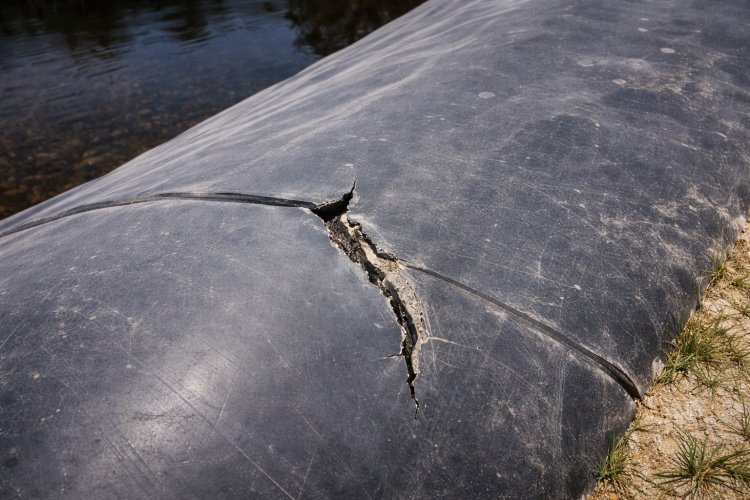
From my work supplying liners for major mining operations, I can tell you that ESCR is the silent killer of heap leach pads. It's not a simple chemical rot or a brute-force tear. It's a complex, microscopic chain reaction that leads to catastrophic macroscopic failure. Understanding this mechanism is the only way to prevent it, and it starts by looking at the polymer itself.
What material and manufacturing issues lead to geomembrane cracking?
You specified a high-density liner, thinking "denser is stronger." Yet, it failed far sooner than a competitor's liner with a lower density. The spec sheet told you one story, but the material's hidden molecular structure told another.
Cracking originates in the liner's molecular structure. Resins with a high density combined with a narrow Molecular Weight Distribution (MWD) create highly-stressed "interphase" zones between the polymer crystals. These zones are the Achilles' heel, making the material highly susceptible to ESCR.
Think of the polymer as having three regions: ordered crystals, disordered amorphous zones, and the "interphase" that connects them. The interphase molecules are under constant tension. This built-in stress makes them incredibly vulnerable. The choice of polymer resin is therefore the single most important factor in preventing cracks.
| Polymer Property | High ESCR Risk (Prone to Cracking) | Low ESCR Risk (Resistant to Cracking) |
|---|---|---|
| Density | ≥0.940 g/cm³ | 0.932 - 0.936 g/cm³ |
| Molecular Weight Distribution (MWD) | Narrow (Mw/Mn < 4) | Wide (Mw/Mn > 10) |
| Melt Flow Index (MFI) | عالي (>1.0 g/10min) | قليل (<0.5 g/10min) |
| خاتمة | High Density + Narrow MWD = DISASTER | Lower Density + Wide MWD = OPTIMAL |
As you can see, the relationship is counter-intuitive. A liner with a slightly lower density but a wide MWD can outperform a higher-density liner by over 60 times in ESCR tests. The wide distribution means more long polymer chains ("tie molecules") that anchor the structure together, resisting the molecular slippage that defines ESCR.
How do temperature extremes and thermal cycling cause cracks?
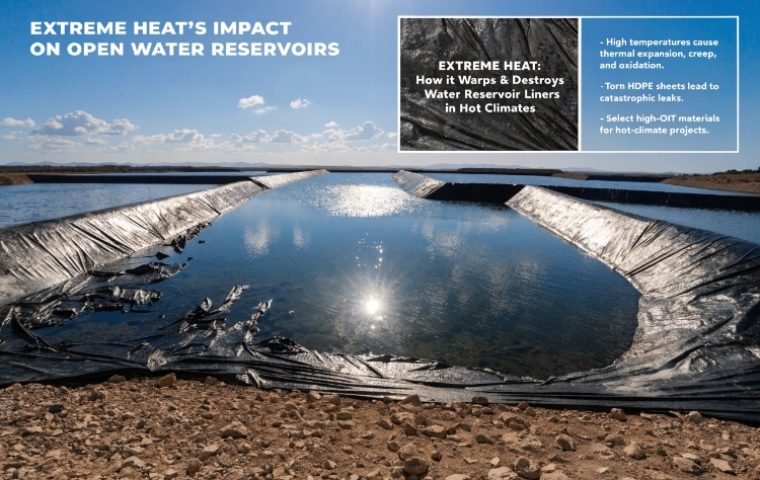
The liner was installed in cool weather and looked perfect. But as the heap began its exothermic reaction and the sun beat down, the material became brittle and small cracks appeared. What role did heat play?
Temperature is a powerful accelerator for ESCR. It doesn't cause the crack alone, but it drastically speeds up the molecular processes. For every 10°C increase, the rate of ESCR can increase by 3 to 4 times, dramatically shortening the liner's service life.
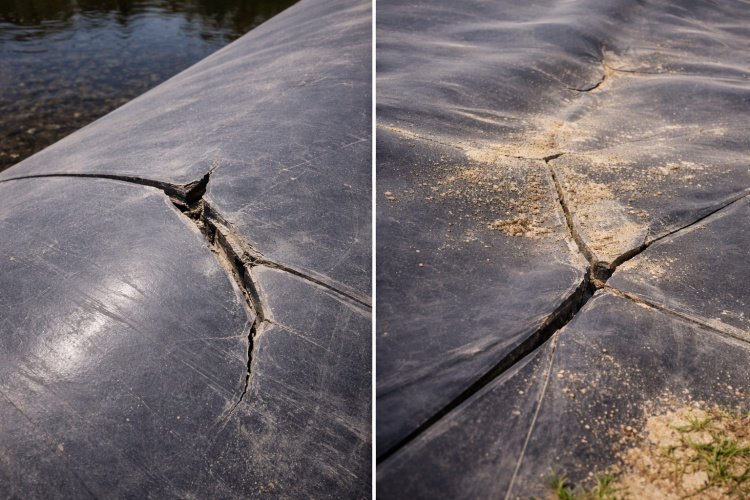
Heat attacks the liner in two ways. First, high, sustained temperatures inside the heap (often well above 50°C) give the polymer molecules more energy. This makes it easier for chemical agents to penetrate the liner and for the polymer chains to slip apart under stress. Second, daily thermal cycling—the expansion and contraction from hot days to cool nights—creates a low-level fatigue stress. On exposed slopes, this is combined with UV radiation, a deadly trio that can destroy a liner's ductility in a matter of weeks. The heat doesn't cause the failure, but it puts its foot on the gas pedal.
How do settlement, stress, and subgrade conditions contribute to cracking?
You see cracks forming around sumps, pipe boots, and along the crest of slopes. The subgrade was compacted perfectly, but the liner is failing in these high-stress zones.
Mining applications create extreme, sustained mechanical stress—the "S" in ESCR. The immense weight of the ore heap, shear forces on slopes, and massive stress concentrations at folds and corners create the primary driver for crack initiation and propagation.
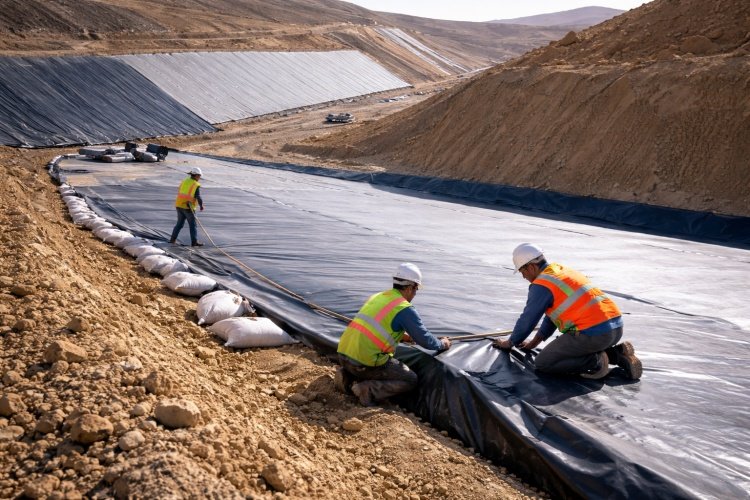
The stresses on a heap leach liner are far beyond what is seen in any other application. Once the stress exceeds about 30% of the material's yield strength, ESCR starts to accelerate dramatically. The liners in these facilities live permanently in the danger zone.
| Stress Source in a Heap Leach Pad | Typical Magnitude (kPa) | Impact on Liner |
|---|---|---|
| Vertical Ore Load | 1,100 - 3,300 kPa | Puts the entire liner under extreme, constant compressive and tensile stress. |
| Slope Shear Stress | 300 - 600 kPa | Tries to pull the liner down the slope, stressing anchor trenches and welds. |
| Stress Concentrations | Up to 50x the average | At wrinkles, folds, and corners, stress is magnified to a point where cracks can easily start. |
| Thermal & Weld Stress | 50 - 300 kPa | Constant background stress from temperature changes and welding residuals. |
What design or operational factors increase cracking risk in mining liners?
Your material choice was solid, and the installation looked clean. Yet, failure is occurring. The problem may lie in the chemistry of your process and the design of your facility.
The final triggers for cracking are often operational: "mild" chemical agents in the leachate that act as ESCR accelerants, prolonged UV exposure on unprotected slopes, and poor design details that create stress points and allow these factors to converge.
The biggest chemical threat isn't necessarily a strong acid. The most effective ESCR agents are "mild" chemicals with intermediate hydrogen bonding, like surfactants, esters, and some oils. These are common in flotation reagents and other additives used in mineral processing. They are just potent enough to disrupt the weak forces holding polymer chains together, allowing them to slip apart under stress. When you combine these chemicals with the high stresses and temperatures of a heap, and add UV exposure on any unburied liner sections, you have created the perfect storm for liner failure. Prevention requires a multi-layered defense: choose the right polymer, design to minimize stress, and cover the liner as quickly as possible.
خاتمة
Geomembrane cracking in mining is a system failure—a deadly trio of material susceptibility, extreme stress, and chemical exposure. Prevention through smart material selection and stress-reducing design is the only viable long-term solution.