Jy ontwerp 'n pad of platform op sagte grond, voor 'n kritieke keuse tussen geonetwerke en geoselle. As u verkeerd kies, kan dit lei tot vinnige mislukking, duur herstelwerk en projekvertragings.
Geoselle presteer beslis beter as geonetwerke onder swaar vragte vanweë hul driedimensionele struktuur. Hierdie 3D-heuningkoekstelsel beperk grond heeltemal en skep 'n semi-rigiede matras wat gewig oor 'n massiewe area versprei. Geogrids, synde 2D, bied slegs versterking in 'n plat vlak, wat baie minder effektief is.

Uit my ervaring met die uitvoer van beide produkte, het ek gesien hoe kontrakteurs duur foute maak deur hulle as uitruilbaar te hanteer. Hulle is fundamenteel verskillende instrumente. Terwyl 'n geonetwerk krag kan byvoeg, verander 'n geosel swak grond in 'n hoëprestasie saamgestelde materiaal. Om hierdie sleutelverskil te verstaan, sal jou help om die regte produk te spesifiseer en te verseker dat jou projek van die grond af slaag.
Watter sleutel strukturele kenmerke onderskei geoselle van geonetwerke?
Jy sien albei produkte op datablaaie, en hulle kan soos soortgelyke plastiekroosters lyk. Hierdie misverstand kan jou daartoe lei om 'n produk te spesifiseer wat eenvoudig nie vir die werk gebou is nie.
Die bepalende verskil is dimensionaliteit. 'n Geosel is 'n driedimensionele (3D) heuningkoekstruktuur met vertikale hoogte. 'n Geogrid is 'n tweedimensionele (2D) plat maas. Hierdie enkele kenmerk verander alles oor hoe hulle met grond omgaan en vragte hanteer.
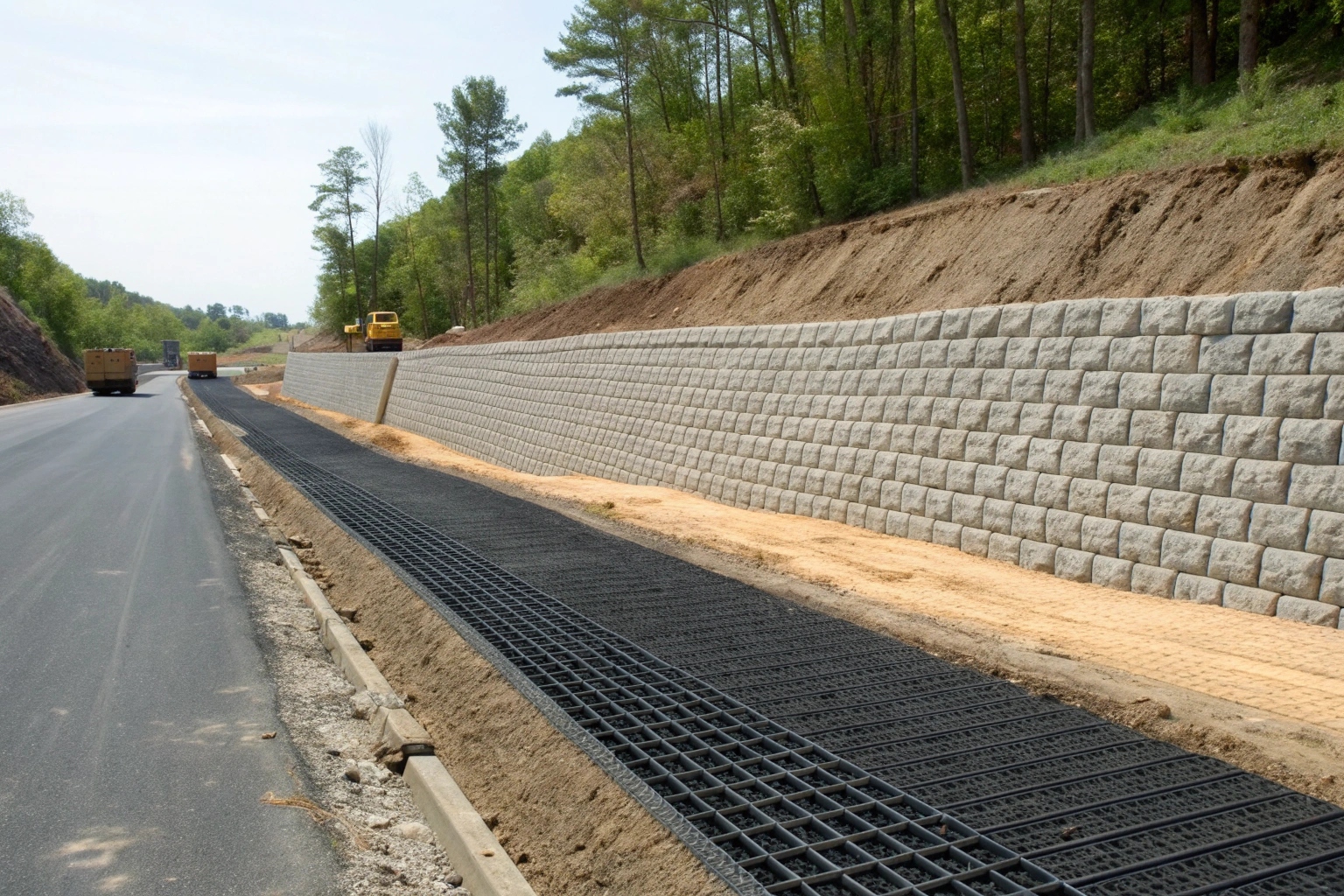
Dink so daaraan: 'n geosel, wanneer dit uitgebrei word, vorm 'n reeks onderling gekoppelde bokse. Elke boks het mure met 'n spesifieke hoogte (van 50 mm tot 250 mm). Wanneer jy hierdie bokse met grond of aggregaat vul, omring die selwande die materiaal heeltemal. Die grond word vertikaal en horisontaal op sy plek gesluit. Dit skep 'n ware 3D-beperkingstelsel.
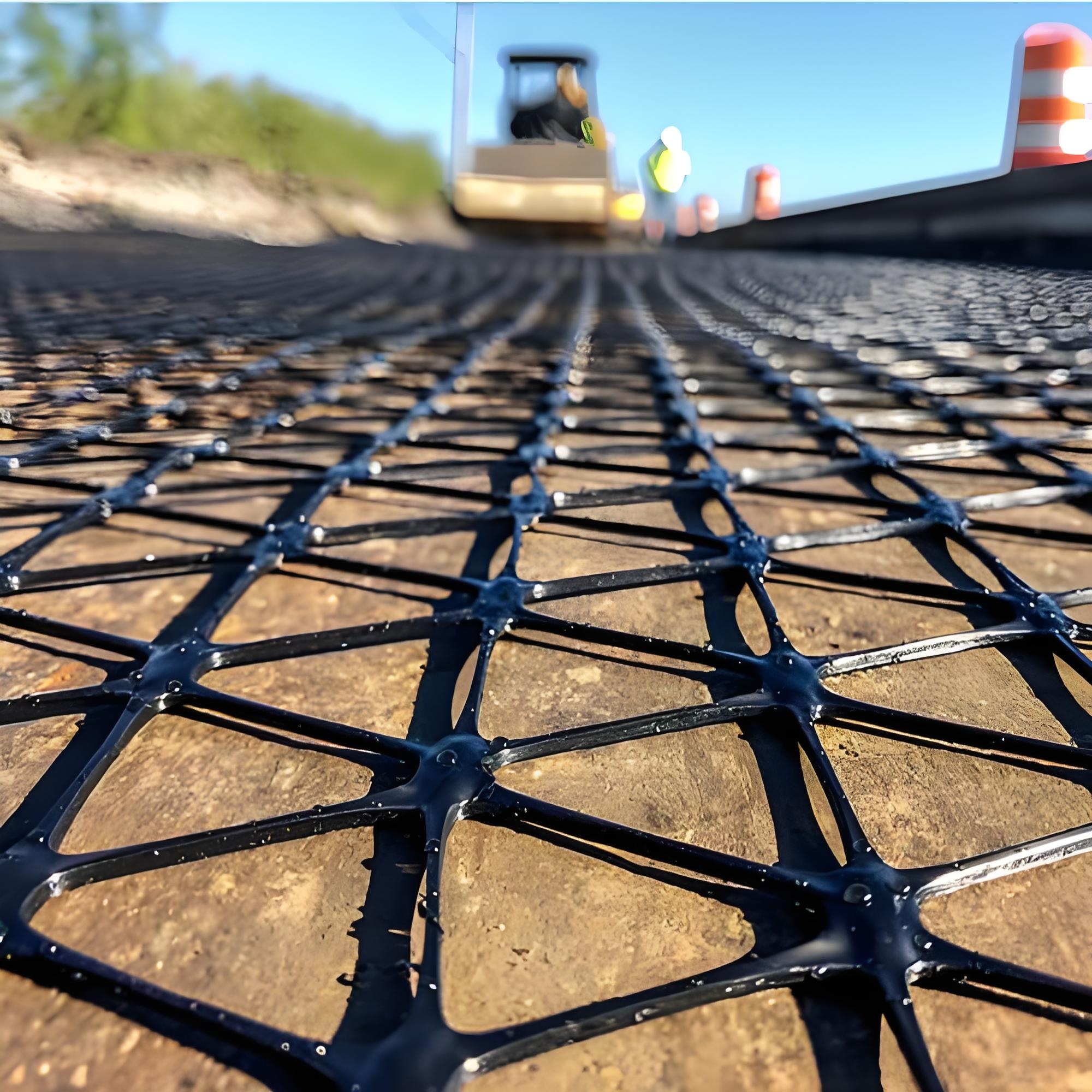
'n Geogrid, aan die ander kant, is soos 'n sterk net wat plat op die grond gelê is. Dit verskaf versterking slegs in sy vlak deur ineen te sluit met aggregaat. Daar is geen vertikale mure nie. Dit kan keer dat grond sywaarts gly, maar dit kan nie keer dat dit uitbult of vertikaal vervorm nie. Hierdie 2D-struktuur is die primêre beperking, veral wanneer swaar vragte van bo af toegepas word.
| Kenmerk | Geocell | Geogrid |
|---|---|---|
| Struktuur | Drie-dimensionele (3D) heuningkoek | Tweedimensionele (2D) plat rooster |
| Beperking | Vertikaal en Horisontaal | Slegs horisontaal |
| Sleutelkomponent | Selmure met Hoogte | Openings in 'n plat vlak |
| Interaksie | Omsluit en bevat die invulling | Vergrendel met aggregaat aan die oppervlak |
Hoe verbeter geosel-beperking lasverspreiding in vergelyking met geonetwerke?
Jy moet 'n swaar, gekonsentreerde vrag van 'n vragmotorband oor swak ondergrondse grond versprei. As die spanning nie behoorlik versprei word nie, sal die grond deurslaan, wat onmiddellike mislukking veroorsaak.
A geocell system creates a "semi-rigid beam" or mattress effect. Its 3D structure distributes loads over a very wide area, significantly reducing pressure on the soil below. Geogrids rely on a weaker "tension membrane" effek, wat eers aktiveer nadat die grond reeds begin vervorm het.
Wanneer 'n vrag 'n geosel-gevulde laag, die hele stelsel tree op soos 'n dik, stywe plaat. Die vertikale selwande weerstaan buiging en dra die spanning nie net af nie, maar ook uit na aangrensende selle. Hierdie groter verspreiding beteken die druk op die sagte grond daaronder kan met meer as 50% verminder word. Dit is 'n onmiddellike, rigiede reaksie.
'n Geogrid werk anders. Vir dit om 'n las te versprei, moet dit in 'n geboë vorm sak of vervorm. Dit skep spanning in die rooster, soos 'n trampolien. Die probleem is, vir die geonetwerk om te vervorm, moet die grond daaronder reeds gevestig het. Hierdie meganisme is minder doeltreffend en bied baie swakker ladingverspreiding, wat dikwels net druk met 15-25% verminder. By baie projekte waarvoor ek geraadpleeg het, is hierdie verskil die deurslaggewende faktor tussen 'n stabiele oppervlak en een wat vinnig spoortjies ontwikkel.
Waar lewer geoselle beter werkverrigting as geonetwerke onder swaar vragte?
Jou projek behels uiterste toestande: massiewe vragte, konstante verkeer en baie sagte grond. Standaard versterkingsmetodes kan dalk net 'n paar maande duur voordat groot herstelwerk nodig is, wat jou tyd en geld kos.
Geocells is die voortreflike keuse vir die mees veeleisende toepassings, soos hawehouerwerwe, mynboupaaie, lughawesypaadjies en militêre vervoerroetes. Hul vermoë om 'n stabiele platform te vorm op uiters swak gronde (soos dié met 'n CBR onder 3%) is ongeëwenaard deur geonetwerke.
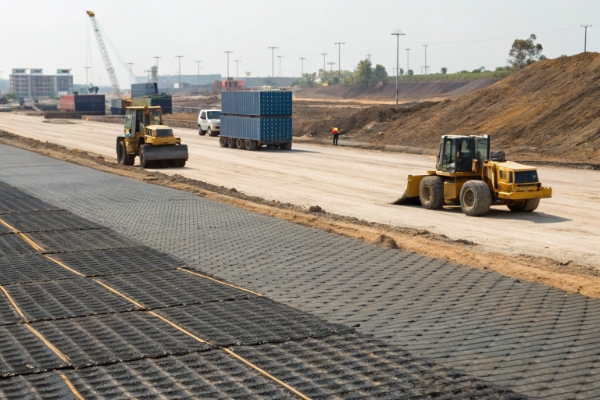
Ek het aan 'n haweprojek gewerk waar die grond uiters sagte klei was. Die kontrakteur moes 200 ton hyskrane ondersteun. ’n Tradisionele geonetwerkontwerp het vereis om die swak grond uit te grawe en ’n 1,3 meter dik versterkte basis met veelvuldige lae geonetwerke en materiaal te bou.
In plaas daarvan het ons 'n geosel-oplossing voorgestel. Deur 'n dubbellaag hoësterkte geoselle te gebruik, kon ons 'n stabiele platform direk op die sagte klei bou met 'n totale dikte van net 750 mm. Die projek het nie net meer as 20% in koste bespaar nie, maar het ook konstruksietyd met 40% verminder. Die geosel se 3D-struktuur kon onmiddellik die konstruksievoertuie ondersteun, wat in 'n geogrid-versterkte laag sou gesink het. Onder herhaalde swaar verkeer presteer geoselle ook aansienlik beter as georoosters om spore te voorkom. Toetsdata toon dat ná 20 000 voertuie verby is, kan 'n geosel-versterkte basis 2,5 keer minder vestiging hê as 'n geonetwerkbasis.
Hoe kan projektoestande die keuse tussen geoselle en geonetwerke rig?
Jy wil die slimste keuse vir jou projek maak, deur prestasie met jou begroting te balanseer. Om bloot die duurste opsie te kies, is nie altyd die regte antwoord nie, maar om hoeke te sny kan tot rampspoed lei.
Die keuse hang van drie dinge af: die onderlaagsterkte, die tipe vrag en die vereiste vulmateriaal. Geocells is die beter belegging vir swak gronde en swaar, dinamiese vragte, want dit laat jou ook toe om goedkoper, plaaslik beskikbare vul te gebruik, wat geogriets nie kan nie.
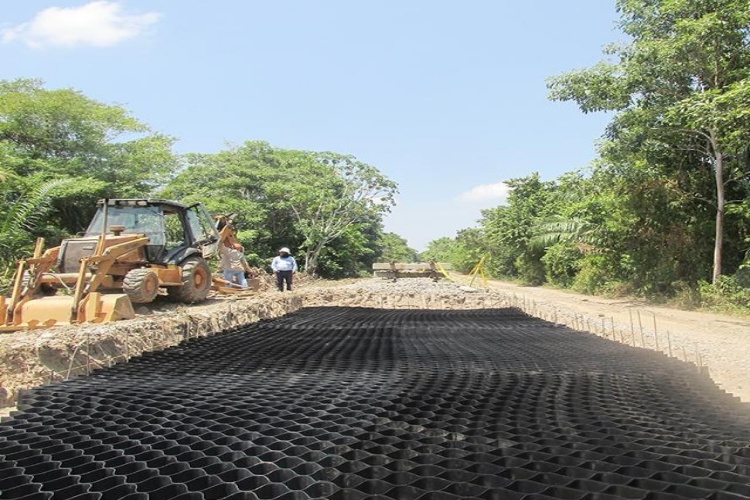
Een van die grootste verborge voordele van geoselle wat ek altyd aan kliënte uitwys, is vulbuigsaamheid. Omdat die 3D-selle sulke kragtige inperking bied, kan jy hulle met amper enigiets vul: sand, gruis, herwonne beton, of selfs grond van lae gehalte wat op die terrein uitgegrawe word. Dit kan 'n projek enorme bedrae geld bespaar op materiaal en vervoerkoste.
Geogrids is egter afhanklik van 'n sterk meganiese grendel om te werk. Dit beteken hulle benodig skoon, fyngemaakte, goed gegradeerde aggregaat van 'n spesifieke grootte. Die gebruik van fyn sand of vulsel van swak gehalte met 'n georooster sal die doeltreffendheid daarvan drasties verminder. So, wanneer jy jou opsies evalueer, moenie net die prys per vierkante meter van die geosintetiese vergelyk nie. Oorweeg die totale konstruksiekoste. Geoselle laat jou dikwels toe om 'n dunner basis te bou deur goedkoper vul te gebruik, wat hulle die meer ekonomiese oplossing maak vir veeleisende werke.
Hier is 'n opsomming wat ek gebruik om kliënte te help besluit:
| Faktor | Kies Geocell wanneer... | Kies geonetwerk wanneer... |
|---|---|---|
| Subgraad | Baie sag tot sag (bv. CBR < 3%) | Ferm tot styf (bv. CBR > 3%) |
| Tipe laai | Swaar, dinamies, gekonsentreerd (vragmotors, hyskrane) | Ligter, statiese of eenvormige vragte (parkeerterreine, walle) |
| Vul materiaal | Jy wil laekoste plaaslike vul of herwonne materiaal gebruik | Jy het toegang tot skoon, spesifieke grootte aggregaat |
| Prestasiedoelwit | Minimaliseer ALLE nedersetting en skep 'n semi-rigiede platform | Verbeter dravermoë en beheer laterale verspreiding |
Gevolgtrekking
Vir swaarvragprojekte op swak grond bied die 3D-beperking van geoselle voortreflike werkverrigting en langtermynwaarde bo 2D-geonetwerke, wat dikwels algehele projekkoste en konstruksietyd verminder.