

One of the most dangerous assumptions in mining engineering is treating a heap leach pad as a static, ambient-temperature civil structure. While a tailings dam might sit relatively passively at environmental temperatures, a heap leach pad is a chemically active bioreactor. I have seen projects where the engineering team designed the liner system based on the average air temperature of the site (e.g., 25°C), only to find that the liner at the bottom of the stack was cooking at 60°C or even 80°C due to exothermic reactions within the ore.
This discrepancy is a primary driver of premature liner failure.
This guide explores the thermodynamics of heap leach pads, how elevated temperatures fundamentally alter the physical and chemical properties of HDPE geomembranes, and how to select materials that will survive the thermal reality of modern mining.
1. Introduction: Why Temperature Is a Critical Design Parameter
In standard civil applications—like water reservoirs or canals—the geomembrane temperature rarely exceeds the ambient air or water temperature. In these scenarios, the "service life" of High-Density Polyethylene (HDPE) is calculated based on standard Arrhenius modeling at 20°C or 25°C, yielding theoretical lifespans of hundreds of years.
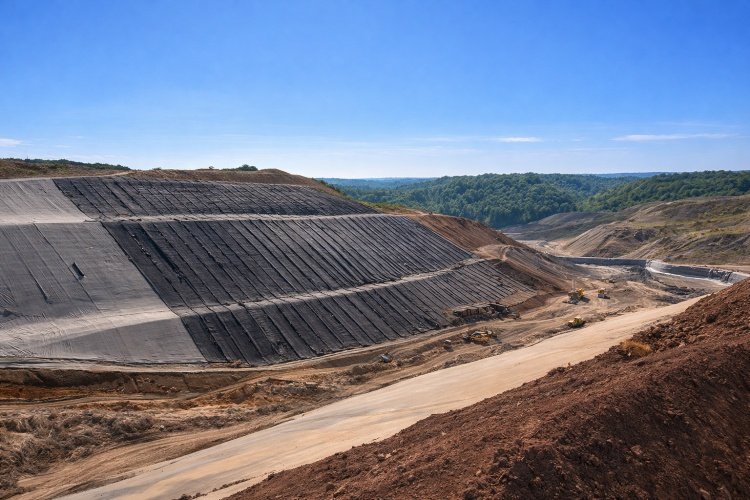
However, heap leach mining is different. The heap leach process is designed to dissolve metals, and the chemical reactions used to achieve this—specifically sulfide oxidation—release significant energy. When you stack ore 50 to 100 meters high, the rock acts as a massive thermal insulator. The heat generated deep inside the pile cannot escape to the atmosphere; instead, it migrates downward, creating a thermal load directly on the liner system.
Understanding this thermal reality is not just academic; it dictates the procurement budget. A standard-grade geomembrane that performs perfectly in a water pond may degrade, brittle, and crack in less than 5 years under a hot leach pile. For procurement officers and engineers, recognizing the thermal classification of your heap is the first step in risk management.
2. Sources of Temperature in Heap Leach Pads
To select the right liner, we must first understand where the heat comes from. It is rarely the sun that causes the long-term damage; it is the chemistry.
2.1 Internally Generated Heat
The primary heat source in copper, gold, and uranium leaching is the exothermic oxidation of sulfide minerals.
- Sulfide Oxidation: When pyrite ($FeS_2$) or other sulfide minerals oxidize, they release heat. In many modern copper projects, this is intentional. Operators use bio-leaching (using bacteria) to accelerate this breakdown. Optimization of these bacterial colonies often requires maintaining heap temperatures between 40°C and 70°C.
- Heat Accumulation: Rock has high thermal mass. As the reaction proceeds, the heat is trapped. In deep valley-fill heaps, the ore depth can exceed 150 meters. The pressure and the insulating effect mean that the liner at the bottom interface is insulated from the cooling air. It effectively becomes the floor of a slow-burning oven.
- The Accumulator Effect: Even if the lixiviant (leach solution) is applied at ambient temperature, it heats up as it percolates through the hot rock. By the time the pregnant leach solution (PLS) hits the primary liner, it has absorbed the heat of the reaction.
2.2 External Environmental Temperature
While internal heat governs the long-term service life, external temperature dictates the installation risk.
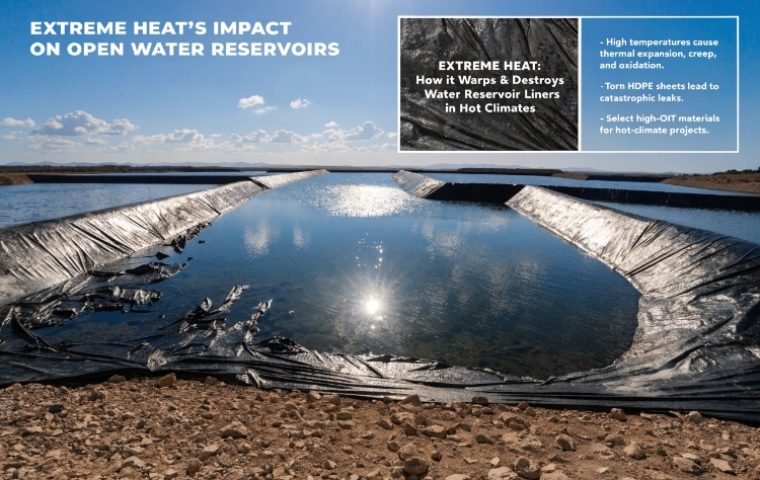
- Solar Radiation: Black HDPE absorbs UV and heat. In high-altitude mining sites (like the Andes), a black liner can reach surface temperatures of 70°C–80°C during installation, even if the air is only 20°C. This causes massive thermal expansion (waves/wrinkles).
- Diurnal Cycling: The rapid swing from hot days to freezing nights puts the liner under cyclic stress before it is even covered.
Key Takeaway: While solar heating is a challenge during installation, the internal exothermic heat is the challenge for the service life.
3. Operating Temperature of Geomembranes in Heap Leach Pads
It is crucial to define "Operating Temperature." In a specification sheet, this does not refer to the weather report. It refers to the temperature at the interface between the geomembrane and the overliner (drainage layer).
In a typical bio-leach copper operation, temperature gradients are distinct:
- Surface: Subject to ambient fluctuation.
- Core of Heap: The hottest zone, largely adiabatic (no heat loss). Temperatures can reach 80°C+.
- Liner Interface: While the ground beneath the liner (subgrade) provides some cooling (heat sink effect), the liner typically operates closer to the core temperature than the ground temperature.
Short-term vs. Long-term:
A geomembrane can easily withstand a spike to 90°C for a few hours. However, in a heap leach pad, the materials are subjected to elevated temperatures (e.g., 60°C) continuously for 10 to 20 years. This continuous thermal soaking is what depletes the chemical stabilizers in the plastic.
4. Effects of Temperature on Geomembrane Material Properties
When HDPE is heated, its molecular behavior changes. Designing for room temperature properties when the facility runs at 60°C is a calculation for failure.
4.1 Mechanical Properties
HDPE is a thermoplastic. As temperature rises, it becomes softer.
- Resistência à tracção & Yield: At 60°C, the yield strength of HDPE is significantly lower than at 23°C (standard testing temp). The material becomes more ductile but less able to bridging voids.
- Creep and Puncture: This is the most critical mechanical risk. Under the immense weight of a 100-meter heap, the gravel in the drainage layer presses into the liner. At higher temperatures, the polymer "creeps" (moves slowly under load) more easily. Stones that would not puncture the liner at 20°C might slowly deform and penetrate the liner at 60°C over several years.
- Friction Angles: Thermal softening can alter the interface friction between the liner and the soil, potentially impacting slope stability calculations.
4.2 Stress Crack Resistance and Thermal Stress
Environmental Stress Crack Resistance (ESCR) is the measure of a plastic's ability to resist cracking under physical stress and chemical attack.
- Temperature Penalty: Higher temperatures reduce the time to failure for stress cracking. A localized stress point (like a wrinkle or a stone poke) that would be stable at ambient temperature can become a crack initiation site at elevated temperatures.
- Wrinkling: If the liner is installed hot and covered while expanded, wrinkles are locked in. As the heap load is applied, these wrinkles are crushed. The combination of high folding stress + high chemical concentration + high temperature is the "perfect storm" for stress cracking.
4.3 Oxidative and Thermal Aging
This is the chemical lifespan clock. HDPE degrades primarily through oxidation. To prevent this, we add antioxidants/stabilizers during manufacturing.
- Standard Depletion: Stabilizers are sacrificial. They consume themselves to protect the polymer chain.
- The Arrhenius Effect: Chemical reaction rates increase exponentially with temperature. A general rule of thumb in polymer science is that the rate of antioxidant depletion doubles for every 10°C increase in temperature.
- A consequência: A standard liner designed to last 100 years at 20°C might only last 15 years at 50°C, and perhaps only 5 years at 70°C. Once the antioxidants are gone, the physical polymer begins to break down, becoming brittle like glass.
5. Common Temperature-Related Failure Modes in Heap Leach Pads
We rarely see the liner melt. Failure is more subtle and insidious.
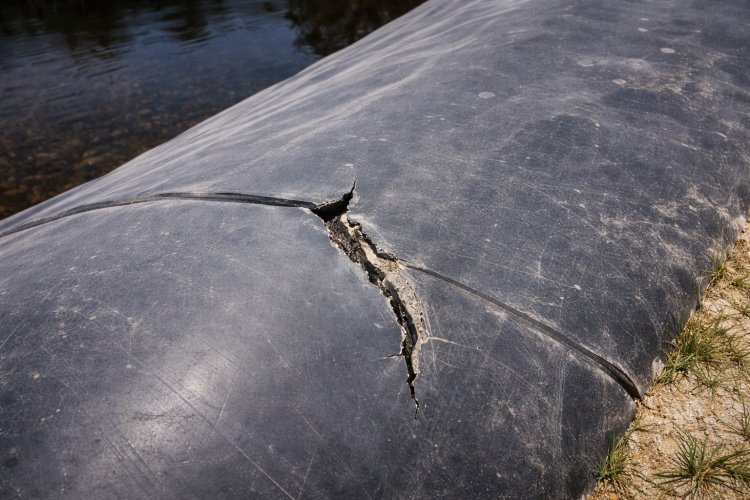
- Embrittlement: The liner loses its flexibility. When the heap settles (which it always does), the brittle liner cannot stretch; it cracks.
- Seam Failure: The welded seam is often the point of highest stress. At elevated temperatures, the "peel strength" of the weld is reduced. If the seam is under tension (due to thermal contraction or slope drag), the seam can slowly peel apart (creep rupture).
- Down-Slope Creep: On steep valley walls, the liner carries the weight of the cover soil. Thermal softening reduces the tensile modulus, causing the liner to stretch down the slope, leading to tears at the anchor trench (top of the slope).
- Accelerated Chemical Attack: High temperature makes the polymer more permeable. This allows the acid (lixiviant) to penetrate deeper into the molecular structure, speeding up the extraction of stabilizers.
6. Performance of Different Geomembrane Materials Under Elevated Temperatures
Not all "Black Plastic" is created equal. The market offers different grades of HDPE, and distinguishing between them is vital for hot leaching.
Standard HDPE Geomembranes
Standard commercial-grade HDPE (often compliant with GRI-GM13) is designed for general applications like landfills and water ponds.
- Temperature Limit: Generally rated for up to 60°C for short durations, or prolonged use at <40°C.
- Risk: In a hot heap (50°C+), the standard antioxidant package (Standard OIT) will deplete relatively quickly.
High-Temperature (HT) HDPE Geomembranes
These are specialized formulations engineered for the mining sector.
- Enhanced Resin: They often use specific resin architectures (like bimodal resins) that offer higher Stress Crack Resistance (ESCR > 5000 hours).
- Advanced Stabilizers: They utilize a high-performance antioxidant package designed to resist "pooking" or leaching out at high temperatures. They focus on maintaining High Pressure OIT (HP-OIT).
- Performance: Can often withstand continuous operating temperatures of 60°C–80°C with a service life exceeding the 20-year mine lifespan.
The Role of Thickness
While resin chemistry is key, simple physics also plays a role.
- Thickness as a Reservoir: A 2.5mm liner contains 25% more antioxidants than a 2.0mm liner simply because there is more mass. It acts as a larger "battery" of protection.
- Insulation: The added thickness provides a marginal increase in puncture protection against the thermally softened subgrade.
7. Design and Material Selection Considerations
If you are an engineer or buyer for a project where heap temperatures might exceed 40°C, you must move beyond standard datasheets.
7.1 Material Selection Criteria
- OIT (Oxidative Induction Time):
- Standard OIT (ASTM D3895): Measures antioxidizing at 200°C. Good for manufacturing quality control but correlates poorly with long-term field performance in leach pads.
- High Pressure OIT (ASTM D5885): Measures at 150°C under high pressure. This is the critical metric for mining liners. It better predicts resistance to the leaching of stabilizers by the acidic solution. Demand high HP-OIT values.
- ESCR: Do not accept the standard 300 or 500 hours. For high-temp heaps, specify >3000 hours or even >5000 hours.
7.2 Design and Installation Considerations
- Color: Consider a white-surfaced geomembrane (co-extruded). This reflects solar radiation during installation, reducing the liner temperature by 20°C–30°C. This significantly reduces wrinkles (waves), which reduces the "locked-in" stresses that lead to cracking later.
- Grossura: For thermal heaps, upgrade from the standard 1.5mm to 2.0mm or 2.5mm. The cost increase is minimal compared to the risk reduction.
- Welding Window: Welding hot plastic in the desert sun requires adjusted parameters. The "Operating Window" of the welding machine must be validated on-site with destruct tests performed at different times of the day.
8. Practical Recommendations for Heap Leach Projects
Based on our involvement in supplying global mining projects, here are three practical steps to protect your asset:
- Model the Heat: Before buying a liner, ask the process engineers: "What is the expected core temperature of the heap in Year 5?" Don't guess. If the answer is "We intend to bio-leach," assume high temperatures.
- Test for Compatibility: Don't just rely on the datasheet. Perform an EPA 9090 compatibility test using the specific lixiviant and the proposed liner at the maximum expected temperature. If you expect 60°C, test at 60°C (or 70°C for safety).
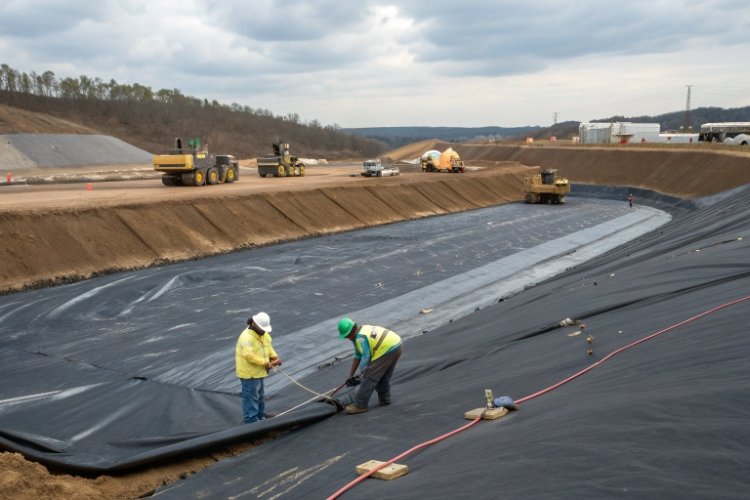
- Manage the Wrinkles: Enforce strict installation times (welding at night or early morning) to minimize thermal expansion waves. Wrinkles in a hot leach pad are fatal flaws.
Conclusão
Temperature is the invisible accelerator of failure in heap leach pads. For modern mining operations, particularly those utilizing bio-oxidation or processing sulfide ores, the operational reality is a high-temperature, chemically aggressive environment that far exceeds the design parameters of standard civil geomembranes.
The "Internally Generated Heat" from the ore body turns the liner system into a component that must resist thermal softening, creep, and accelerated oxidative aging for decades.
Key Takeaways:
- Don't design for ambient air temperature; design for the heap core temperature.
- Standard HDPE is often insufficient for temperatures >40°C–50°C.
- Specification is key: Require High-Pressure OIT (HP-OIT), high ESCR resins, and consider increased thickness (2.0mm+) as a logical insurance policy.
A liner failure at the bottom of a 100-meter heap is effectively unrepairable. The only way to ensure the security of the project is to select the material based on the thermal reality of the mine, not the standard practice of a water reservoir.
About the Geomembrane Solution Provider
No Especialista em Impermeabilidade, we understand that mining is not a "one-size-fits-all" industry. We have supplied containment solutions to projects where temperatures fluctuate from -20°C to +70°C.
We provide more than just rolls of plastic. We offer:
- Resin Selection: Custom sourcing of high-performance resins optimized for thermal stability.
- Laboratory Support: In-house testing for OIT, HP-OIT, and ESCR to verify batch consistency.
- Technical Guidance: Helping you match the right thickness and texturing to your slope stability and thermal requirements.
If you are evaluating the risks for your next heap leach pad or tailings facility, connect with our technical team. Let’s discuss how to engineer a liner system that withstands the heat.