

In the mining industry, we often see procurement decisions driven by a simple metric: price per square meter. When you are buying hundreds of thousands of square meters for a new heap leach pad, a small reduction in the unit price looks like a significant win on the balance sheet.
This is a dangerous illusion.
As a supplier who has worked with mining projects from South America to Central Asia, I have seen the aftermath of "economy" liners. A liner failure under a 60-meter pile of acid-leached ore is not a maintenance issue; it is a financial catastrophe that stops cash flow cold.
This article breaks down the true, hidden costs of geomembrane failure—from excavation and downtime to environmental fines—to help project owners and procurement teams understand why the liner is the single most critical risk management component in a heap leach system.
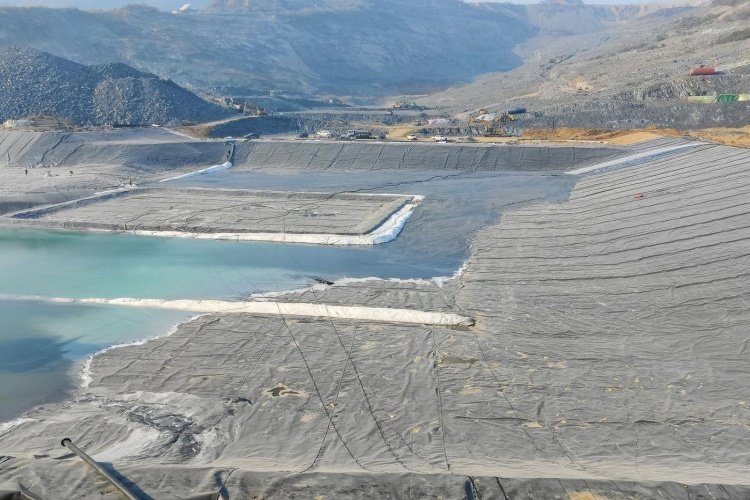
It is easy to buy a cheaper roll of plastic. It is much harder to explain to investors why production has halted for months because that plastic failed under load.
Failure Is Not a Repair Cost — It’s a Financial Disaster
A heap leach pad is not a water reservoir. It is a massive bio-chemical reactor operating under extreme conditions. The liner at the bottom is subjected to immense hydraulic pressure, chemical aggression (sulfuric acid or cyanide), and the crushing weight of millions of tons of ore.
When a liner fails, the pregnant leach solution (PLS)—which contains your gold, copper, or uranium—leaks into the ground.
The immediate reaction is often, "We will just patch it."
But here is the reality: You cannot simple patch a hole buried under 50 meters of ore. To access a tear in the primary liner, you must stop leaching, disturb the heap stability, and physically excavate massive volumes of material.
In mining, liner performance is not a material expense — it is a risk management decision.
The True Cost Breakdown of Liner Failure
If we move beyond the invoice price of the HDPE, the actual cost of a failure event cascades through the entire operation. Let’s look at the financial impact of a significant breach relative to the initial material cost.
1. Direct Repair Costs (The Multiplier Effect)
The cost of the replacement HDPE patch itself is negligible. However, the cost to install that patch is astronomical.
- Escavação: Heavy equipment must move tons of saturated ore to expose the liner.
- Labor: Specialized crews must work in hazardous, chemically active environments.
- Re-stacking: Once fixed, the pad must be engineered and rebuilt.
- Total Impact: The operational cost to repair a single breach often exceeds the total value of the original liner supply contract.
2. Production Downtime (The Cash Flow Killer)
This is where the real damage occurs.
If a regulatory body detects groundwater contamination, they will typically issue a Stop Work Order.
- Lost Recovery: Every day the pad is dry, no metal is being recovered, but fixed costs remain.
- Idle Capital: Crushers, conveyors, and fleets stand still while overhead burns budget.
- Receita atrasada: In a volatile commodity market, missing a production window can severely impact quarterly earnings.
3. Environmental Remediation & Regulatory Fines
Mining licenses are revocable privileges. A leak that contaminates local aquifers triggers:
- Fines: Penalties from environmental agencies are severe and immediate.
- Cleanup: You may be required to install pump-back systems to treat groundwater for years—a massive, unplanned OPEX (Operational Expenditure).
- Permit Risk: Existing expansion permits may be frozen pending investigation, halting future growth.
4. Reputation & Investor Confidence
In today's ESG-focused market, news of an environmental breach spreads instantly.
- Stock Price: Publicly traded miners often see share valuation dips following environmental incidents.
- Financing: Banks and insurers view projects with a history of liner failure as "high risk," leading to higher insurance premiums and stricter loan conditions.
Why Heap Leach Liners Fail
If the stakes are so high, why do failures happen? In my experience exporting to these projects, failures are rarely due to "bad luck." They are typically due to preventable quality issues.
1. Substandard Raw Materials (The "recycled" trap)
To cut costs, some manufacturers blend recycled polyethylene (off-spec or post-consumer) into the geomembrane.
- The Flaw: Recycled material has unknown heat history. It degrades faster and has significantly lower Stress Crack Resistance (SCR).
- O resultado: The liner becomes brittle and cracks under the chemical and physical stress of the heap.
2. Insufficient Thickness
Using a 1.0mm liner where a 1.5mm or 2.0mm liner is required is a common engineering mistake driven by budget constraints.
- The Flaw: Thinner liners have proportionally lower puncture resistance and yield strength.
- O resultado: Sharp rocks in the drainage layer or subgrade puncture the liner as the heap load increases.
3. Inadequate Chemical Resistance
Not all HDPE is the same. The resin package (antioxidants and stabilizers) determines how long the plastic survives in acid or cyanide solutions.
- The Flaw: Using a standard "waterproofing" membrane instead of a "mining-grade" membrane.
- O resultado: The chemical solution leaches out the antioxidants, causing the polymer to oxidize and fail prematurely.
Why Lowest Price Procurement Increases Project Risk
This creates a paradox in mining procurement.
Procurement teams are incentivized to lower CAPEX (Capital Expenditure). They often send out a tender and select the lowest bidder to save a percentage on the material budget.
However, liner systems are not commodities like diesel or sand.
- Scenario A: A supplier offers a lower price by using blended resins with lower stress crack resistance.
- Scenario B: A supplier offers a market price using Virgin Resin and High-Grade Antioxidants (GRI-GM13 compliant).
The percentage saved on the initial invoice in Scenario A is minuscule compared to the potential liability.
If the liner in Scenario A fails in Year 2, the repair cost wipes out the initial savings instantly and introduces millions in liability.
The Logic: Is saving a small fraction of the CAPEX worth risking the entire OPEX?
The difference between industrial-grade and low-grade geomembrane is not visible on the invoice—but it becomes tragically visible once the pad is loaded.
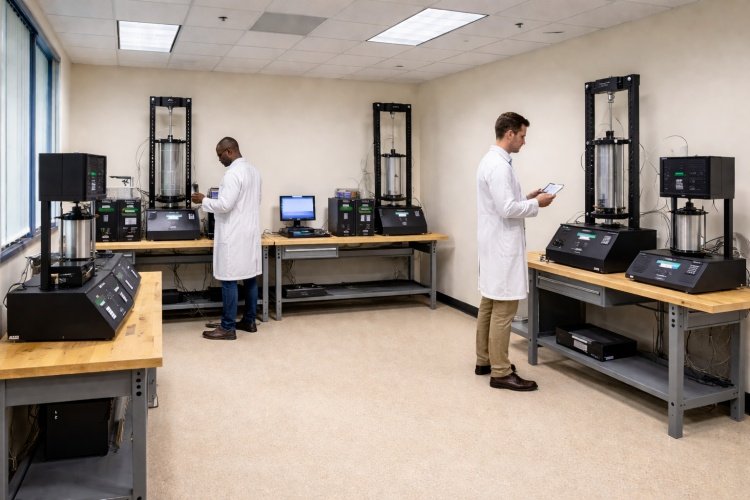
How to Reduce Liner Failure Risk in Mining Projects
Reducing risk doesn't mean simply buying the most expensive product; it means buying the correct product and validating it. Here is the checklist we recommend to our mining clients to ensure they aren't burying a liability.
1. Demand Virgin Resin (GRI-GM13)
Specify strictly that the geomembrane must be manufactured from prime virgin resin. Request the Certificate of Analysis (COA) for the specific resin batch used, not just a generic datasheet, to ensure no recycled fillers are present.
2. Verify Stress Crack Resistance (SP-NCTL)
The most important test for mining is ASTM D5397.
- Standard GRI-GM13 requirement: >500 hours.
- Our recommendation for deep heaps: Look for materials testing >2000 hours. This provides a critical safety factor against environmental stress cracking.
3. Implement Electric Leak Location Surveys
Do not rely only on visual inspection. Before placing the drainage stone (overliner), require a geo-electrical integrity survey (Arc Testing or Dipole). This detects pinholes caused by installation damage antes you cover the liner.
4. Optimize Thickness for the Load
Don't guess. For most permanent heap leach pads, 1.5mm is the minimum, and 2.0mm is the standard. The cost difference to upgrade thickness is minimal compared to the exponential increase in puncture protection.
5. Risk, Limitations, and When HDPE is NOT Enough
Even the best HDPE has limits.
- High Temperature Leaching: If your process involves bio-oxidation temperatures above 60°C, standard HDPE will degrade. You must switch to High-Temperature stabilized HDPE or specialized LLDPE.
- Rough Subgrade: If you cannot guarantee a smooth clay subgrade, you must install a heavy non-woven geotextile cushion below the liner. HDPE cannot bridge sharp rocks; it will puncture.
Conclusão
In the high-stakes world of mining, the liner system is often treated as a simple commodity purchase.
But that sheet is the only barrier protecting your recovery yield and the surrounding environment foundation. Treat the liner system not as a consumable, but as an insurance policy.
When evaluating suppliers, look beyond the unit price. Look at their resin pedigree, their stress-crack resistance data, and their track record in mining applications. A deliberate investment in quality materials today prevents a massive withdrawal from your profits tomorrow.
In heap leach applications, the liner is the foundation of specific environmental protection and operational continuity. Do not compromise the foundation.