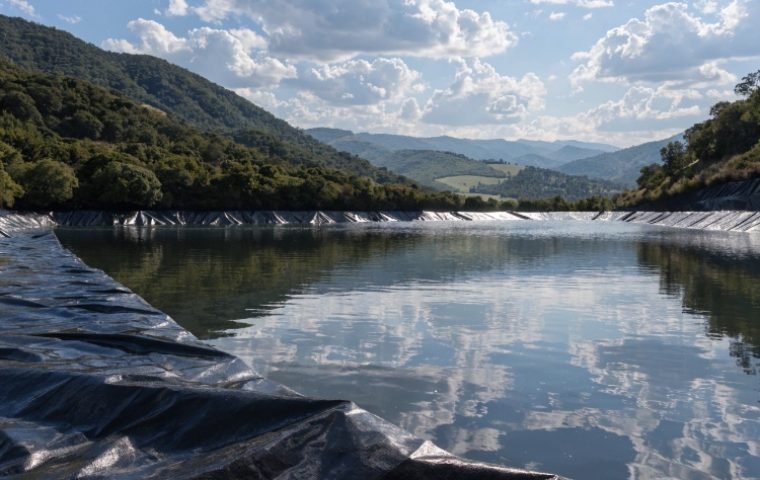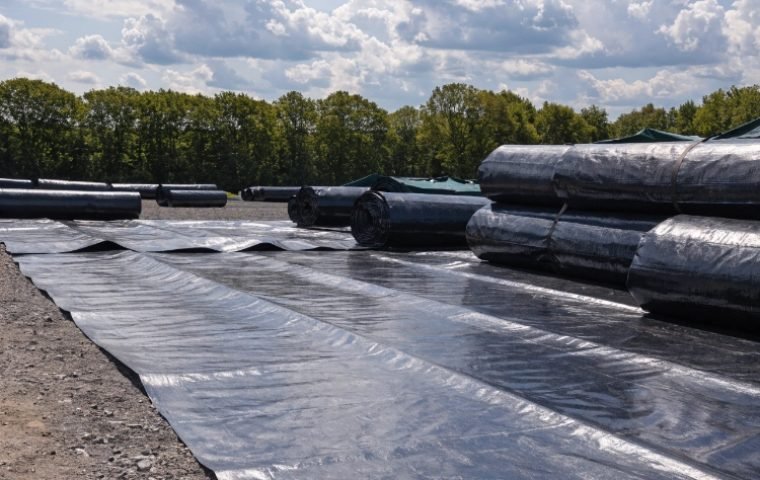


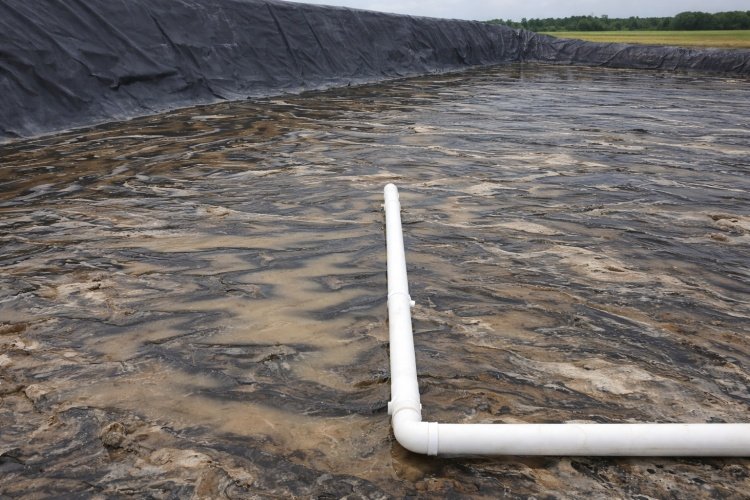
High-Density Polyethylene (HDPE) geomembrane is the most specified containment material on the planet. From gold mines in the Andes to municipal landfills in Southeast Asia, it is the industry standard for environmental protection.
But let’s be honest: HDPE is not a magic blanket. It is a highly technical engineering material with distinct behaviors, rigid constraints, and significant risks if mishandled. I have seen million-dollar projects fail not because the liner was bad, but because the engineering team treated it like a generic plastic sheet rather than a structural component.
This guide provides a professional evaluation of HDPE geomembrane, analyzing its chemical and mechanical advantages while bluntly addressing its limitations (such as stress cracking and thermal expansion) to help engineers and procurement officers mitigate risk in large-scale containment projects.
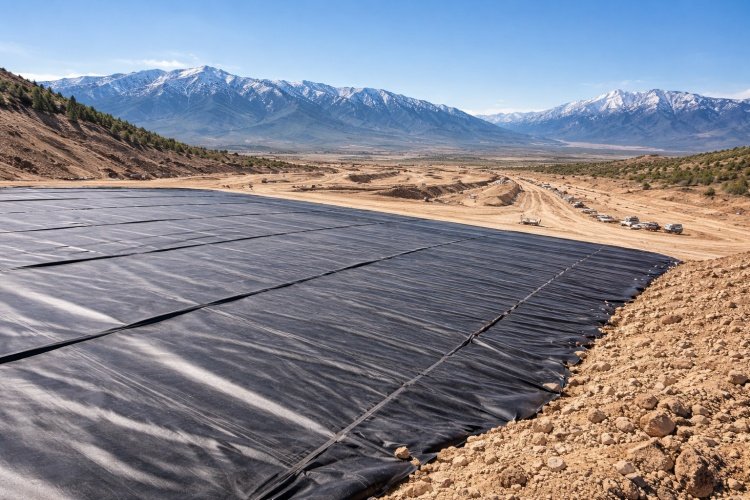
For a containment system to succeed, you must understand both what the material can do and what it cannot do.
Why HDPE Geomembrane Is the Global Standard
Before we dissect the risks, we must understand why HDPE dominates the market. It isn’t just about price; it’s about the unique molecular architecture that allows it to isolate toxic waste from the biosphere for centuries.
In my experience supplying containment solutions, 90% of the project inquiries we receive—whether for Municipal Landfill Systems, Mining Heap Leach Pads, Industrial Wastewater Ponds, ou Oil & Gas Secondary Containment—specify HDPE.
The reason is "Critical Containment Performance." When you are holding back cyanide solution or leachate that could poison a reliable aquifer, you need a material with a proven track record of near-zero permeability.
Key Advantages of HDPE Geomembrane Liner
When I speak with engineers about material selection, there are five technical pillars that make HDPE the default choice over PVC, EPDM, or compacted clay.
1. Outstanding Chemical Resistance for Aggressive Environments
This is the primary selling point. HDPE is chemically inert.
It resists a vast spectrum of aggressive chemicals, including strong acids, alkalis, heavy metal salts, and organic solvents (hydrocarbons).
- Engineering Context: In a copper mine, the pregnant leach solution is highly acidic. In a landfill, the leachate is a complex, evolving cocktail of chemicals. HDPE is one of the few materials that does not swell, soften, or degrade when exposed to these fluids over decades.
2. High Tensile Strength for Large-Scale Applications
HDPE is a stiff, semi-crystalline polymer. This gives it high tensile strength and tear resistance.
- Por que isso é importante: In large reservoirs or deep landfills, the liner is subjected to immense down-drag forces and shear stress from the waste mass. A weaker liner (like PVC) might deform excessively. HDPE maintains its structural integrity under high loads, providing a high yield point before plastic deformation occurs.
3. Excellent UV Stability for Exposed Installations
Many of our clients in the Middle East and Africa build evaporation ponds that are exposed to scorching sun 365 days a year.
- The Mechanism: High-quality HDPE contains 2.0% to 3.0% carbon black. This creates a barrier that absorbs UV radiation, preventing photo-oxidation of the polymer chain. Without this, plastic becomes brittle and cracks within months. With it, exposed HDPE can perform for 20+ years in desert conditions.
4. Cost Efficiency for Large Area Coverage
When covering 50 hectares, cost is a decisive factor.
HDPE has a lower material cost per square meter compared to flexible materials like EPDM. Furthermore, because it is available in wide rolls (up to 8 meters), it reduces the number of field seams required. Fewer seams mean lower installation costs and fewer potential leak points.
5. Proven Long-Term Performance
This is the "sleep at night" factor. We have empirical data and exhumed samples from landfills in Germany and the USA showing that properly installed HDPE liners have retained their physical properties for over 30 years. Accelerated aging tests (Arrhenius modeling) suggest lifespans exceeding 100 years for buried applications.
Practical Limitations of HDPE Geomembrane
Here is where the marketing brochure usually stops, and where the engineering reality begins. HDPE has limitations. If your design does not account for these, your project is at risk.
1. Limited Flexibility (Stiffness)
HDPE is rigid. It has high crystallinity.
- The Constraint: It does not conform well to irregular shapes. It is notoriously difficult to install around intricate pipe penetrations, sumps, or sharp corners.
- A correção: For complex details, we often recommend switching to LLDPE (Linear Low-Density Polyethylene), which is more flexible, or using specialized prefabricated polyethylene boots. Never force HDPE into a tight corner; it will bridge and eventually crack.
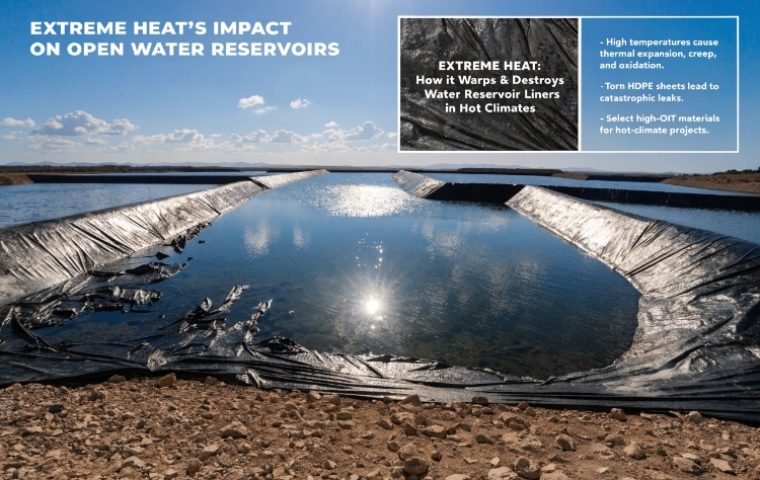
2. High Thermal Expansion and Contraction
HDPE has a very high coefficient of thermal expansion.
- The Scene: On a hot day, a flat sheet of HDPE will expand and create massive "waves" or wrinkles (often 30cm high). At night, it contracts and becomes tight like a drumskin.
- The Risk: If you weld the liner flat during the heat of the day, it will shrink at night and tear the welds apart or pull out of the anchor trench.
- The Control: Experienced installers only weld during specific temperature windows and use "compensation wrinkles" to allow for movement.
3. Susceptibility to Stress Cracking (ESCR)
This is the silent killer of HDPE. Environmental Stress Cracking (ESC) is a brittle failure that occurs at stresses much lower than the material's yield strength, usually accelerated by chemical contact.
- The Cause: It is often caused by using low-quality resin or recycled regrind material.
- The Solution: You must specify High-Pressure OIT (Oxidative Induction Time) testing and ensure the NCTL (Notched Constant Tensile Load) stress crack resistance exceeds 500 hours (per GRI-GM13).
4. Sensitive to Subgrade Preparation
Because HDPE is stiff, it does not "mold" around a sharp rock; it sits on top of it.
- A consequência: Once the weight of the water or waste is applied, that rock acts like a spear, creating a stress point that will eventually puncture the liner.
- The Requirement: A protection geotextile (cushion layer) is not optional—it is mandatory for 99% of projects.
Common Causes of HDPE Geomembrane Failures
In my years of analyzing failed projects, I have found that the material itself is rarely the culprit. The failure is almost always in the execution.
1. Welding Defects
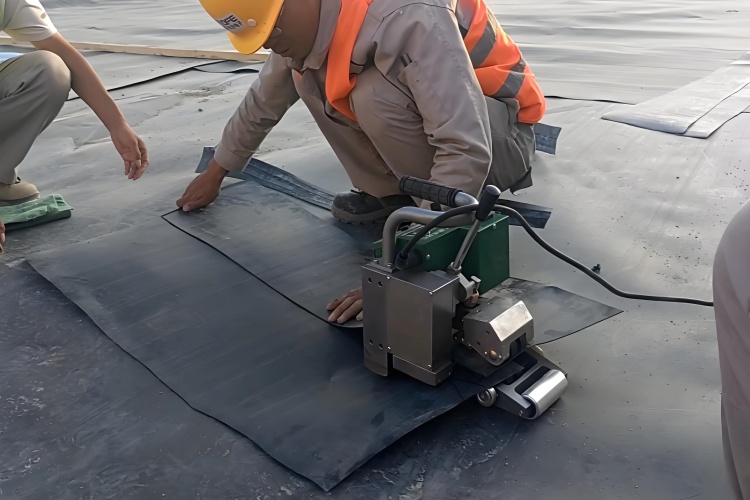
The seam is the weakest link. Poor welding parameters (speed, temperature, pressure) result in "cold welds" that look bonded but peel apart under stress. Moisture or dust in the seam area during welding is the number one enemy of a secure bond.
2. Puncture from Poor Subgrade
I have visited sites where the contractor skipped the subgrade cleaning to save two days. Six months later, the leak detection system went off. We drained the pond and found multiple punctures caused by stones that were "good enough" during inspection but fatal under load.
3. Inferior Recycled Raw Materials
This is a massive issue in the import/export market. Some manufacturers mix Recycled Polyethylene (Recycled PE) into their "virgin" liners to cut costs.
Recycled material has unpredictable melt flow indices and contains contaminants that drastically reduce Stress Crack Resistance. A liner made with recycled content might look fine on day one but can crack within two years.
4. Lack of On-Site Quality Testing
Trusting the factory certificate is not enough. Failures occur when site engineers do not perform trial welds at the start of every shift or neglect the destructive shear/peel tests.
In most cases, HDPE failures are related to installation quality and material control rather than the inherent properties of the polyethylene.
Risk Control Measures for HDPE Geomembrane Projects
How do we mitigate these risks? As a supplier and solution provider, we advise a strict protocol for Risk Control.
1. Subgrade Preparation Standards
The ground must be compacted to 95% Proctor and free of all sharp objects. If the native soil is stony, a sand bedding layer (150mm) or a heavy nonwoven geotextile (>400gsm) must be installed.
2. Use of Textured Surface for Slopes
Smooth HDPE is slippery (low friction angle). If you place soil on a smooth HDPE slope, it will slide off when it rains (veneer failure).
Solução: Usar Textured HDPE Geomembrane. The rough surface locks into the geotextile and soil, increasing the interface friction angle and ensuring slope stability.
3. Rigorous Non-Destructive Testing (NDT)
Every meter of seam must be tested.
- Air Pressure Test: For double-track fusion welds. You pump air into the channel between welds; if the pressure drops, there is a leak.
- Vacuum Box Test: For extrusion welds (patches and details). Bubbles indicate a leak.
- Spark Testing: For conductive-backed geomembranes (high-tech leak detection).
4. Destructive Testing Validation
Do not skip this. Cut samples from the installed liner and pull them to failure in a tensiometer (shear and peel mode). The weld must be stronger than the sheet itself (Film Tear Bond).
How to Ensure You Select a Reliable HDPE Geomembrane Supplier
The market is flooded with "cheap" HDPE. In engineering, cheap is expensive. Here is how to filter your suppliers.
1. Check GRI-GM13 Compliance
O Geosynthetic Institute (GSI) sets the global benchmark (GRI-GM13) for HDPE geomembranes. If a supplier cannot guarantee their product meets every single parameter of this standard (especially OIT and Stress Crack Resistance), walk away.
2. Verify Raw Material Source
Ask the supplier: "What brand of resin do you use?" Reliable manufacturers use tier-one petrochemical resins (like Sinopec, ExxonMobil, Sabic) specifically designed for geomembranes.
3. Evaluate Production Thickness Tolerance
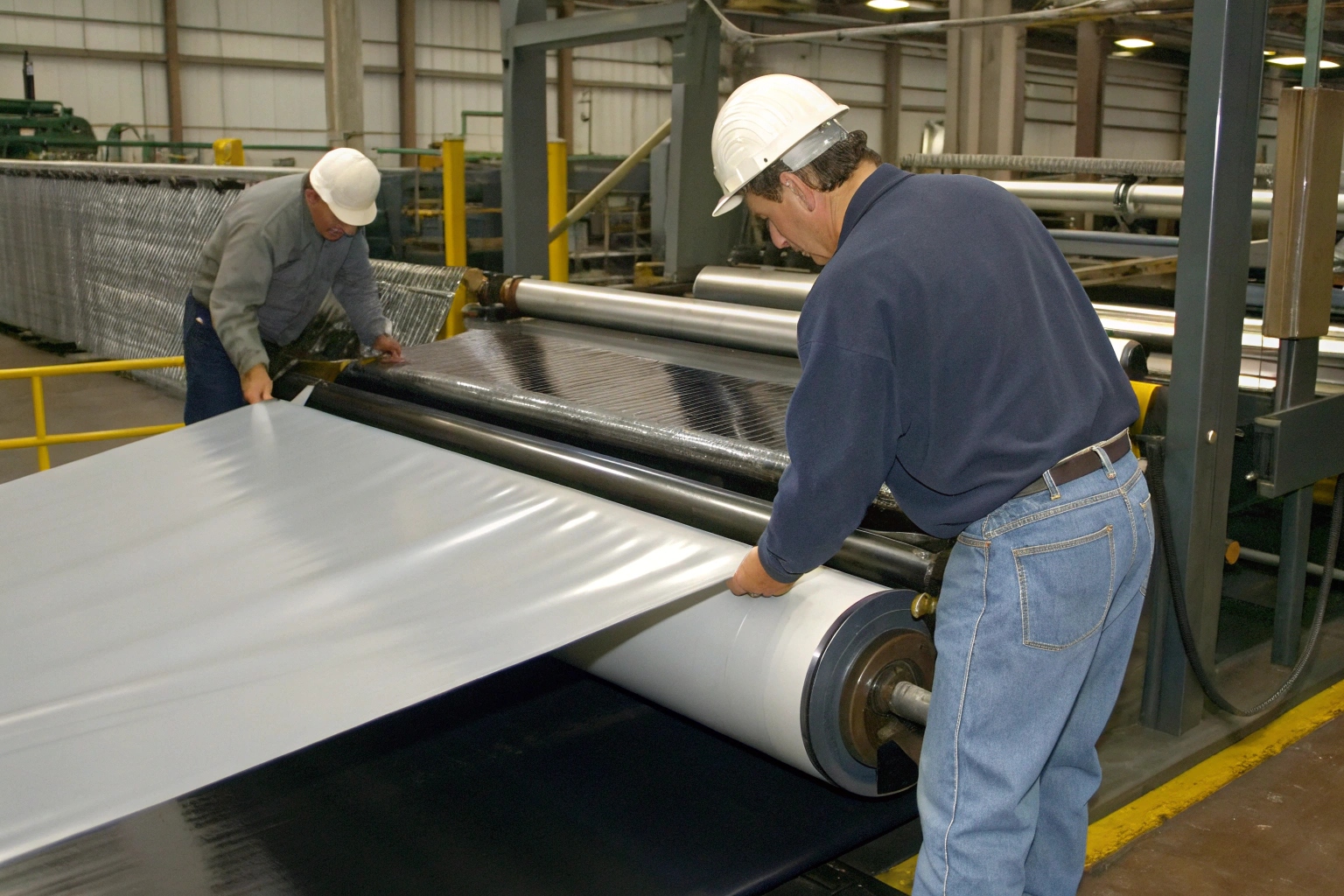
Cheap production lines produce uneven thickness. A 1.5mm liner might be 1.2mm in spots. A quality manufacturer uses automatic gravimetric feeding systems to ensure the thickness is consistent ±5%.
4. Request Third-Party Test Reports
Do not just accept the "factory stamp." Ask for reports from independent labs like TRI or GAI-LAP accredited institutions.
Frequently Asked Questions (FAQ)
How long does an HDPE geomembrane last?
In exposed applications (like water reservoirs), high-quality HDPE lasts 20–25 years. In buried applications (like landfills) where UV is not a factor, the service life can exceed 100 years.
Can HDPE liner crack?
Yes. Environmental Stress Cracking (ESC) is a risk if the material is low quality or subjected to extreme point loads and chemicals simultaneously. This is why using Virgin Resin with proper stabilizers is non-negotiable.
Is HDPE suitable for all exposed applications?
For the most part, yes, due to Carbon Black stabilization. However, for applications requiring very high flexibility or aesthetic colors (non-black), other materials might be considered, as HDPE must be black to resist UV effectively.
What causes HDPE liner leakage?
Statistics show that 80% of leaks are caused by mechanical damage (punctures) during the covering process, and 20% are caused by poor welding. Material failure itself is rare if purchased from a reputable source.
Is HDPE geomembrane recyclable?
Yes, HDPE is a thermoplastic and is fully recyclable at the end of its life. However, recycled HDPE generally cannot be used to make new high-spec pressure pipes or liners; it is usually down-cycled into lower-grade products.
Final Thoughts: Balancing Performance and Risk
HDPE geomembrane remains the most reliable containment solution worldwide when properly designed and installed. Its chemical resistance and cost-effectiveness are unmatched by any other polymer.
However, success lies in the details. It requires:
- Virgin Resin materials (GRI-GM13).
- Robust Protection layers (Geotextiles).
- Strict CQA (Construction Quality Assurance) during installation.
If you respect the material's limitations and control the installation risks, HDPE will provide a secure barrier for generations.
Does your project require technical data sheets, chemical resistance charts, or a second opinion on liner thickness? Contact our engineering team today for a free project consultation and rigorous third-party test reports.