

In the world of anaerobic digestion, the term "gas-tight" is everywhere. It’s a standard line item in project specifications and a key feature on material data sheets. But this seemingly simple term is one of the most misunderstood concepts in the industry, leading to costly design misalignments, operational inefficiencies, and safety risks.
So, what does a "gas-tight geomembrane" truly mean? This guide demystifies the term from an engineering and operational perspective. We will explain what it does and does not mean, where it actually matters in your AD system, and why achieving a truly gas-tight result is about designing a high-performance system, not just specifying a single material.

From our experience on global projects, the disconnect in understanding this term often begins with the different priorities of the teams involved.
Why “Gas-Tight” Is Often Misunderstood in Biogas Projects
The core of the misunderstanding lies in the fact that different project stakeholders interpret "gas-tight" through the lens of their own responsibilities. This creates a gap between the requirement on paper and the reality of long-term performance.
Different Meanings for Engineers, EPCs, and Procurement Teams
- For a Procurement Manager: "Gas-tight" is often a label on a technical data sheet. Their goal is to source a material that meets the specified permeability rating at the most competitive price. The focus is on the material's certified properties in a lab setting, not necessarily its performance once installed.
- For an EPC Contractor: "Gas-tight" relates to the installation deliverable. Their focus is on executing the design, ensuring that all seams are properly welded and pass quality assurance tests (like air pressure or vacuum box tests) at the time of handover. Their responsibility is to build a system that is verifiably sealed upon completion.
- For a Plant Operator or Design Engineer: "Gas-tight" is a long-term performance metric. It means the system must prevent the economically significant loss of methane and the environmentally hazardous release of H₂S and other odors over a 20+ year lifespan. For them, it is a dynamic operational state, not a static material property.
How the Term “Gas-Tight” Became a Catch-All Requirement
Because of these different perspectives, "gas-tight" has become a convenient but vague catch-all phrase. It's easier to write "gas-tight cover" in a specification than to define a performance target like, "The complete cover system shall limit total methane fugitive emissions to less than 1% of total gas production under all anticipated operational pressures and environmental conditions." Without this specific performance definition, teams are left to their own interpretations, which often leads to misaligned expectations.
Does “Gas-Tight” Mean 100% Gas-Proof? (Short Answer: No)
This is the most important technical clarification. From a physics standpoint, no flexible polymer membrane is 100% impermeable to gas.
All Polymer Membranes Allow Some Degree of Gas Diffusion
Every polymer, including high-performance HDPE and LLDPE, has a molecular structure that allows for an extremely small amount of gas to pass through it over time. This process is called diffusion. Think of a helium balloon: it feels perfectly sealed, but over a few days, it slowly deflates because the tiny helium atoms diffuse through the molecular structure of the latex.
The same principle applies to geomembranes. The rate of diffusion depends on the gas type (smaller molecules like hydrogen diffuse faster than larger ones like methane), the polymer type, the material thickness, the temperature, and the pressure difference across the membrane.
Engineering Definition of “Gas-Tight” in AD Applications
So, if nothing is 100% proof, what do engineers mean by "gas-tight"?
In the context of biogas projects, "gas-tight" refers to a system where the rate of gas loss through diffusion and minor imperfections is so low that it is considered negligible for the project's economic and safety objectives.
A high-quality HDPE or LLDPE geomembrane has an exceptionally low methane transmission rate. When properly specified and installed, the amount of gas lost through diffusion is a tiny fraction of a percentage point of the total gas production. The system is therefore "functionally" or "operationally" gas-tight, even if it is not "absolutely" gas-proof in a purely scientific sense.
Where Gas-Tight Performance Actually Matters in an AD System
Another
common point of confusion is applying the "gas-tight" requirement uniformly to all parts of the system. The liner's function—and therefore its critical performance requirement—differs significantly between the bottom of the digester and the cover.
Bottom and Side Liners: Liquid Containment Comes First
For the geomembrane liner at the bottom and on the sides of an anaerobic digester or storage pond, the primary function is liquid containment. Its job is to prevent the highly polluting digestate from leaking into the soil and groundwater. While it also prevents biogas from escaping into the subgrade, this is a secondary benefit. The most critical performance metric for this component is its long-term chemical resistance and impermeability to liquids. A robust HDPE liner is the standard choice precisely for this reason.
Covers and Gas Zones: Where Gas-Tightness Becomes Critical
For the floating cover or gas dome, the performance priorities are reversed. The primary function is gas containment. Its job is to capture every valuable cubic meter of biogas produced, directing it toward the energy recovery system. Any loss of gas through the cover—whether from diffusion, poor seams, or damaged penetrations—is a direct loss of revenue and a potential safety hazard. This is where true gas-tight performance is the most critical design driver, which is why flexible LLDPE is often selected for its ability to handle the dynamic stresses of this application.
Why Do Many Geomembrane Covers Balloon or Puff Up During Operation?
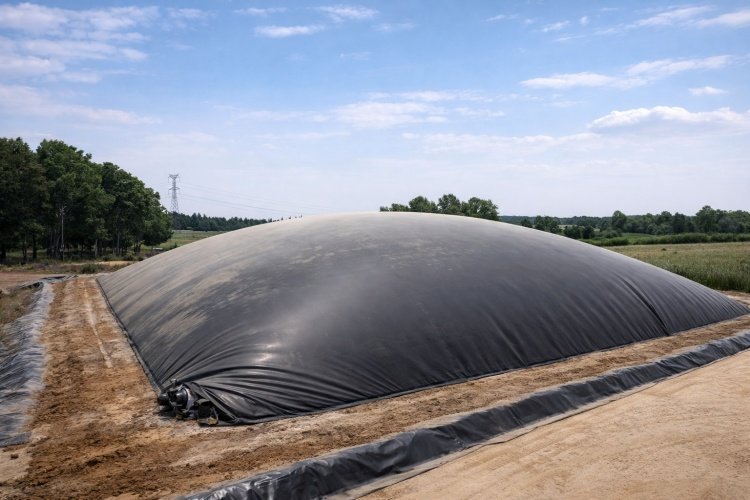
Anyone who has visited an anaerobic lagoon has likely seen the floating cover gently inflated like a large, black pillow. This "ballooning" is a normal and expected phenomenon, but it is often misinterpreted.
Biogas Generation and Natural Gas Accumulation
The process is simple:
- Microorganisms in the digester break down organic waste, producing biogas (primarily methane and CO₂).
- This gas is lighter than the liquid digestate and rises to the surface.
- It accumulates underneath the floating cover, which is sealed around its perimeter.
- As more gas is produced, the pressure underneath the cover increases, causing it to lift and inflate.
This accumulation is precisely what the cover is designed to do—it acts as a flexible, low-pressure gas holder.
Passive Covers Without Active Gas Management
In many systems, this captured gas builds up until it is drawn off by a compressor or blower for use in a generator or flare. The ballooning effect is simply a visual indicator of the volume of gas currently stored under the cover. The degree of inflation will rise and fall throughout the day depending on the rate of gas production and the rate of gas withdrawal.
Ballooning Does Not Equal a Gas-Tight Design
This is the key takeaway. While a ballooning cover looks impressive, it is not, by itself, proof of a high-performance, gas-tight system.
What Ballooning Actually Tells You About the Installation
An inflated cover provides some useful but limited information:
- It confirms that the rate of gas production is greater than the rate of leakage through major flaws at that specific moment.
- It indicates that the welded seams and the material itself are strong enough to withstand the current low-level gas pressure without rupturing.
- It shows that the anchoring system is holding the cover in place against the uplift force.
Essentially, it demonstrates that the system is not failing catastrophically.
What Ballooning Does Not Tell You About Long-Term Gas Control
An inflated cover tells you nothing about the more subtle, but equally important, aspects of true gas-tight performance:
- Rate of Diffusion: It doesn't tell you the actual rate of gas loss diffusing through the entire surface area of the membrane. An inferior material could be losing significant amounts of methane this way even while visibly inflated.
- Integrity of Seams and Penetrations: It does not guarantee that all seams are perfect or that the seals around pipes, hatches, and mixers are 100% effective. Small, "weeping" leaks can add up to significant gas loss over time.
- Long-Term Performance: It is a snapshot in time. It doesn't provide any information about the material's ability to retain its gas-tight properties after 5, 10, or 20 years of exposure to UV radiation, temperature cycles, and chemical attack.
Why Material Properties Alone Cannot Define a Gas-Tight System
This brings us back to the central theme: a "gas-tight" label on a roll of geomembrane is only the starting point. Achieving a truly gas-tight system depends on the design and execution of all its components.
The Role of Seams, Penetrations, and Anchoring Details
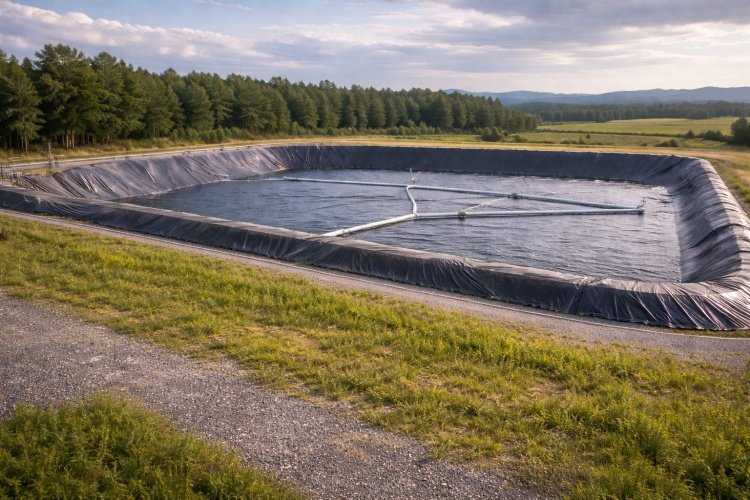
The vast majority of leaks in a geomembrane cover system do not occur through the body of the material itself. They occur at the weak points:
- Seams: A single poorly executed weld can compromise the integrity of the entire cover. This is why rigorous, 100% testing of all field seams is non-negotiable.
- Penetrations: Every pipe, mixer shaft, or sensor that passes through the cover creates a potential leak path. These areas require specialized, custom-fabricated boots and collars that must be expertly welded to both the liner and the pipe.
- Ancoragem: An improperly designed anchor trench can allow gas to escape from under the perimeter of the liner.
A system is only as gas-tight as its weakest seam or seal.
Pressure Control, Safety Systems, and Operational Conditions
A complete gas-tight system also includes active components. Pressure relief valves are critical safety devices that prevent the cover from over-inflating and rupturing if gas production exceeds the offtake rate. The system must be designed to operate within a specific pressure range, and exceeding that range can stress the material and seams, creating future leak paths. Condensate traps, gas collection piping, and monitoring sensors are all part of a comprehensive gas management system.
When Does an AD Project Truly Require a Gas-Tight System?
Given this complexity, is a truly high-performance gas-tight system always necessary? For any serious, commercial-scale AD facility, the answer is unequivocally yes.
Long-Term Operation and Energy Recovery Requirements
The business model of most AD plants is based on selling electricity or renewable natural gas. Every molecule of methane lost is lost revenue. Over a 25-year project lifespan, even a small percentage of fugitive emissions adds up to a significant financial loss. Investing in a properly designed and installed gas-tight system provides a clear and rapid return on investment through maximized energy yield.
Safety, Environmental, and Regulatory Drivers
- Safety: Methane is flammable, and hydrogen sulfide is highly toxic. Uncontrolled gas leaks create a direct safety hazard for plant personnel and the surrounding community.
- Environment: Methane is a potent greenhouse gas. Releasing it to the atmosphere undermines the environmental benefit of the project.
- Regulation: Environmental agencies are imposing increasingly strict limits on odor (H₂S) and fugitive emissions from biogas facilities. A robust gas-tight system is essential for maintaining regulatory compliance and the social license to operate.
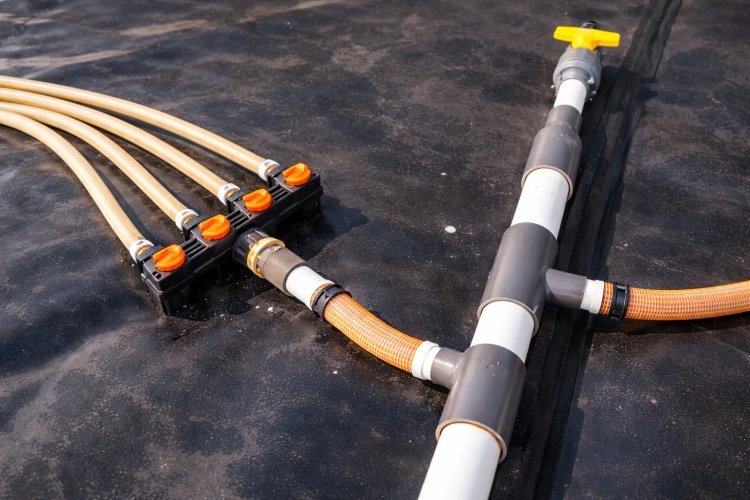
Gas-Tight Is a System Performance Goal — Not a Material Label
If there is one thing to take away from this guide, it is this: you cannot buy a gas-tight system off the shelf. You must design and build one.
Why Defining the Requirement Comes Before Selecting Materials
The most successful projects we've worked on start by defining the performance goal first. Instead of simply stating "gas-tight cover," the project specification should define the acceptable level of gas loss. This clear, measurable target then drives all subsequent design decisions, from material selection and thickness to the QA/QC protocol for every weld and penetration. This approach aligns the procurement, engineering, and installation teams around a common, unambiguous objective.
How This Understanding Prevents Costly Design Misalignment
By shifting the focus from a material label to a system performance goal, you avoid the common pitfalls of vague specifications. You ensure that the budget accounts for high-quality installation, detailed sealing work, and rigorous testing. This prevents the costly scenario where a contractor installs a "gas-tight" material that meets the basic spec, only for the plant operator to discover significant revenue loss and odor problems years later, requiring expensive retrofits.
If you are evaluating liner materials for your project, the next step is understanding how different geomembranes perform within this system-level framework.
Conclusão
In anaerobic digestion, "gas-tight" is not a property of a material, but the result of an engineered system. It is achieved through the careful integration of a high-quality geomembrane, meticulous installation by certified technicians, and a design that considers all potential leak paths. Shifting your mindset from buying a product to engineering a solution ensures your project maximizes its energy revenue, maintains regulatory compliance, and operates safely for its entire lifespan.