

Choosing the wrong geomembrane thickness can doom your project. A liner that is too thin will puncture and leak, while one that's too thick is a waste of money.
Match the thickness to your project’s scale, risk, and lifespan. Use 0.5-1.0mm for small, simple projects like garden ponds, 1.0-1.5mm for medium projects like irrigation canals, and 1.5-3.0mm for large, high-risk applications like landfills and mining.

As a supplier, the most common question I get is, "What thickness do I need?" My answer is always, "It depends." I've seen clients waste a fortune on overly thick liners for simple jobs and others face catastrophic failures because they tried to save a few dollars on a critical project. The thickness isn't just a number; it's the most important factor determining your project's security and longevity. Let's break down how to make the right choice every time.
How does project type and scale affect geomembrane thickness selection?
Using a landfill-grade liner for a small fish pond is overkill. But using a thin pond liner for a landfill is a recipe for an environmental disaster and huge liabilities.
Small, low-risk projects can use thinner liners (0.5-1.0mm). Large, high-risk projects like landfills or large reservoirs demand thick, robust liners (1.5-3.0mm) to handle the pressure and long-term stress.

Matching Thickness to the Job
The first step is to categorize your project by its scale and importance. The bigger the project and the more serious the consequences of a leak, the thicker the liner needs to be. I generally group projects into three main categories for my clients.
-
Small-Scale Projects
This includes applications like small fish ponds (under 500 m²), decorative water features, and rooftop gardens. Here, the physical stress is low, and the primary job is simply to hold water. A thickness of 0.5mm to 1.0mm is usually perfect. It provides reliable waterproofing at a good price. -
Medium-Scale Projects
Think of agricultural irrigation ponds, medium-sized landscape lakes, and standard industrial wastewater ponds. These projects involve more water volume, potential contact with light machinery, and a bigger financial investment. I recommend 1.0mm to 1.5mm here. This thickness offers much better resistance to tearing and punctures. -
Large-Scale and High-Risk Projects
This category includes municipal landfills, mining tailing dams, large reservoirs, and chemical containment ponds. The stakes are extremely high. These liners must withstand immense pressure, vehicle traffic, and potentially corrosive substances for decades. A thickness of 1.5mm to 3.0mm is required. For example, a landfill liner is often 2.0mm or more.
How should I adjust thickness based on stress level and damage risk?
Your project site is not a perfectly smooth and controlled environment. Sharp rocks, tree roots, or construction vehicles can easily destroy an underspecified geomembrane liner.
Assess your site's risk level. For smooth, protected sites, 1.0mm may be enough. For sites with sharp rocks, roots, or heavy vehicle traffic, you must use a thicker liner of 1.5mm or more.

Evaluating Your Site Conditions
After considering the project scale, you need to look at the ground itself and the activity that will happen on top of the liner. A perfectly prepared subgrade is much kinder to a liner than a rocky, uneven one.
-
Low-Risk Environments
A low-risk site has a smooth, compacted subgrade free of sharp objects and will not have any vehicle traffic. An artificial lake with only water pressure on the liner is a good example. In these ideal conditions, you can often use a liner of 1.0mm or slightly less. -
Medium-Risk Environments
Most sites fall into this category. The subgrade might have some small stones, or there might be occasional light machinery used for cleaning. A medium-depth fish pond is a good example. For these situations, a 1.0mm to 1.5mm liner provides a necessary buffer against moderate puncture risks. -
High-Risk Environments
A high-risk site has a complex subgrade with rocks and roots, will experience heavy vehicle traffic (like in a landfill), or involves high water pressure. Containment for chemical or saline solutions also falls into this category. Here, you cannot take any chances. You must select a robust liner of 1.5mm, 2.0mm, or even 3.0mm to guarantee integrity.
How does expected service life influence the required geomembrane thickness?
A liner for a temporary construction pond doesn't need to last 50 years. But a liner for a permanent city reservoir absolutely has to stand the test of time.
For short-term projects (5-10 years), a 0.5-1.0mm liner is economical. For long-term infrastructure (15+ years), you must invest in a thicker liner (1.5mm or more) for superior anti-aging and fatigue resistance.

Investing in Durability
A thicker geomembrane is essentially an investment in time. The extra material provides more resistance to the slow, steady attacks from UV radiation, oxidation, and chemical exposure that degrade the liner over the years.
-
Short-Term Use (5-10 Years)
Projects like temporary water storage during construction or seasonal irrigation ponds don't need to last forever. For these applications, choosing a thinner liner between 0.5mm and 1.0mm is a smart, cost-effective decision. It meets the immediate need without overspending on a product that will be removed in a few years. -
Long-Term Use (15+ Years)
For permanent infrastructure like municipal water reservoirs, wastewater treatment plants, and dams, longevity is critical. A thicker liner of 1.5mm or more is essential. The extra thickness acts as a sacrificial layer against environmental degradation. It slows down the aging process, resists material fatigue from pressure cycles, and ensures the liner performs reliably for decades. For these projects, the higher upfront cost of a thicker liner is easily justified by its extended service life and the avoidance of future replacement costs.
How can special conditions like cold climates or UV exposure affect thickness choice?
Your standard liner might fail in a desert or a frozen landscape. Extreme temperatures and intense sunlight can accelerate aging and cause material failure if you don't plan for them.
Increase thickness for harsh environments. Add 0.2-0.5mm in very cold regions to prevent cracking. In areas with intense, direct UV exposure, use a liner that is 1.5mm or thicker to resist degradation.
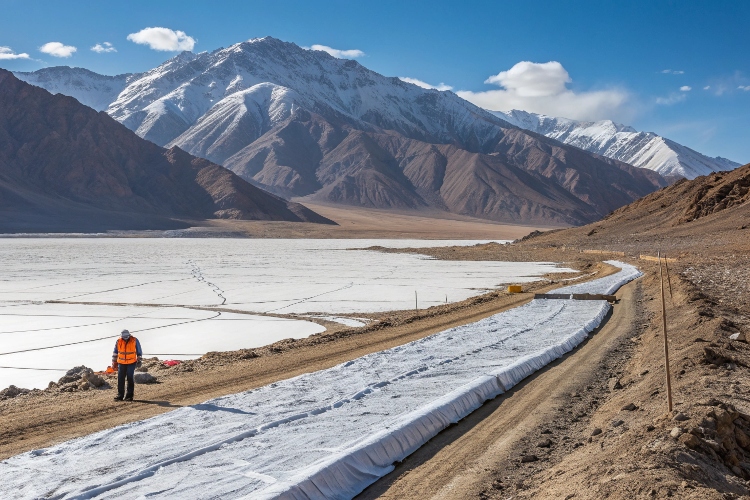
Adapting to the Environment
The final piece of the puzzle is your project's specific climate and setting. Environmental factors can place unique stresses on a geomembrana, and you need to adjust your thickness selection accordingly.
-
Cold Climates
In regions with harsh winters, geomembranes face the risk of becoming brittle at low temperatures. Freeze-thaw cycles can cause stress and lead to cracking. To combat this, I always advise clients in cold climates to increase their planned thickness by 0.2mm to 0.5mm. This extra material improves the liner's resilience to cold-weather brittleness. -
High UV Exposure
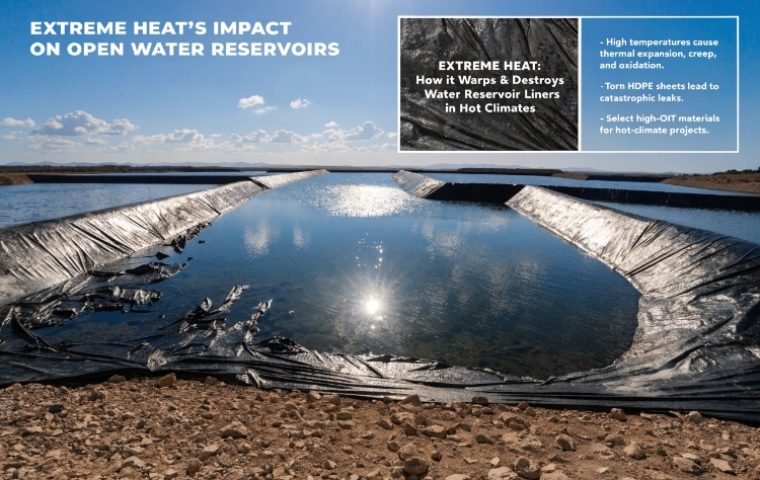
If your liner will be left exposed to direct, intense sunlight, like in a desert reservoir, UV degradation is your biggest enemy. Carbon black in the liner provides excellent UV protection, but a thicker material provides more of it. For exposed applications, choosing a liner of 1.5mm or more is critical to slowing down UV aging and extending its service life. -
Using Protective Layers
If you plan to cover the geomembrane with a protective layer of soil or sand (at least 5cm thick), you can sometimes use a slightly thinner liner. For example, a project that might require 1.5mm in an exposed setting could potentially use 1.2mm if properly covered. This protective layer shields the liner from UV rays and physical damage, taking some of the burden off the material itself.
Conclusão
Choosing the right thickness is a balancing act. The higher the risk, scale, and required lifespan of your project, the thicker your geomembrane must be. Analyze your project needs carefully.