

Un vertedero moderno es mucho más que un simple agujero en el suelo. Es una instalación de contención diseñada para proteger nuestro medio ambiente de los desechos. El subproducto más tóxico, el lixiviado, puede contaminar el suelo y las aguas subterráneas durante décadas si se escapa. Es por eso que el sistema de revestimiento del vertedero es el componente más crítico, ya que actúa como un escudo multicapa.
Esta guía lo guiará a través de los materiales naturales y geosintéticos avanzados que forman un revestimiento de vertedero moderno. Exploraremos el papel que desempeña cada componente, desde la barrera impermeable primaria hasta las capas de drenaje y protección, creando un sistema integrado diseñado para un rendimiento a largo plazo y seguridad ambiental.

Piense en esto no como una barrera única, sino como un sistema sofisticado y redundante donde cada material apoya a los demás. Analicemos los componentes desde adentro hacia afuera.
Geomembrana de HDPE: la barrera principal
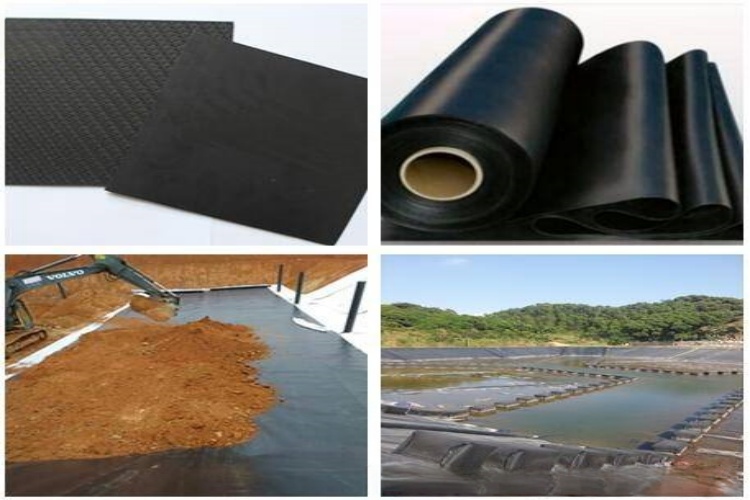
El caballo de batalla y barrera principal en casi todos los vertederos modernos es el Geomembrana de polietileno de alta densidad (HDPE). Este robusto revestimiento de plástico se elige por su excepcional durabilidad y resistencia química. Está diseñado para resistir el fuerte cóctel químico que se encuentra en los lixiviados y funciona de manera confiable en un amplio rango de pH (generalmente 1 a 14).
Para aplicaciones de vertederos, los revestimientos de HDPE generalmente se especifican con espesores entre 1,5 mm (60 mil) y 3,0 mm (120 mil). Este espesor proporciona una excelente impermeabilidad (con una conductividad hidráulica tan baja como 10⁻¹³ m/s) y la resistencia física para resistir el estrés de la instalación. Con una estabilización UV adecuada, el HDPE tiene una vida útil de más de 50 años. Los paneles se unen permanentemente en el sitio mediante técnicas de soldadura por fusión térmica, como soldadura por cuña caliente, para crear una barrera continua y segura.
Geomembrana LLDPE: una alternativa flexible
Si bien el HDPE es el estándar, Geomembranas de polietileno lineal de baja densidad (LLDPE) También tienen un lugar en el diseño de vertederos. La ventaja clave del LLDPE es su flexibilidad y alargamiento superiores. Esto lo convierte en una opción ideal para áreas específicas dentro de un sistema de vertedero.
Normalmente recomendamos LLDPE para:
- Zonas con potencial de asentamiento diferencial: Su capacidad para estirarse y adaptarse sin fallar es crucial cuando la subrasante puede ser desigual o asentarse con el tiempo.
- Pendientes más pronunciadas: El LLDPE texturizado proporciona una mayor fricción en la interfaz, lo cual es esencial para la estabilidad al revestir los lados de una celda de vertedero.
- Tapas y cierres de vertederos: Su flexibilidad facilita su instalación sobre los contornos finales de la masa residual.
La elección entre HDPE y LLDPE implica una compensación. Si bien el LLDPE ofrece flexibilidad, el HDPE generalmente tiene un historial más largo de resistencia química a largo plazo en las aplicaciones de desechos peligrosos más exigentes. El ingeniero del proyecto especificará el material correcto según las condiciones específicas del sitio.
Revestimiento de arcilla geosintética (GCL): la barrera secundaria autorreparable
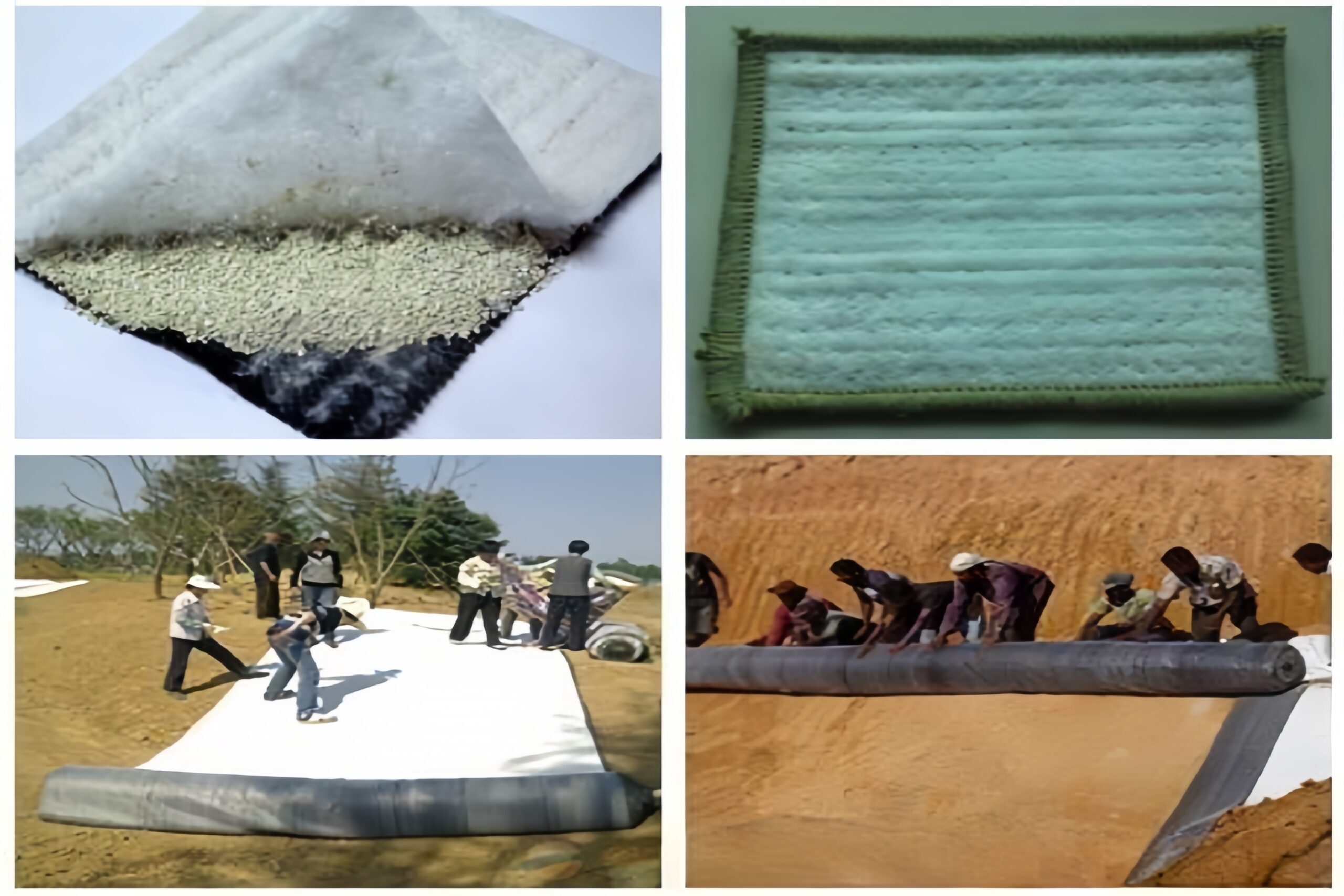
Debajo de la geomembrana primaria, a menudo encontrará una Revestimiento de arcilla geosintética (GCL). Este notable material actúa como una poderosa barrera secundaria. Un GCL es un compuesto hecho de una fina capa de arcilla de bentonita de sodio intercalada entre dos geotextiles.
Cuando la arcilla bentonita se moja, se hincha hasta muchas veces su volumen original, formando un sello de permeabilidad ultrabaja. La ventaja clave de un GCL es su capacidad para autocurarse. Si se produce un pequeño pinchazo, la bentonita hidratada circundante se expande hacia el vacío, sellando la fuga. Esto la convierte en una excelente barrera complementaria a la geomembrana de HDPE, creando un sistema redundante que a menudo exigen regulaciones como el Subtítulo D de la RCRA de la EPA.
Revestimiento de arcilla compactada (CCL): la base natural tradicional
Antes de la llegada de los GCL, la barrera secundaria tradicional era una Revestimiento de arcilla compactada (CCL). Un CCL es una capa gruesa diseñada de arcilla natural (generalmente de 24 a 60 pulgadas de espesor) que se compacta a una densidad específica (95%+ Proctor) y contenido de humedad. Cuando se construye adecuadamente, un CCL logra una baja conductividad hidráulica (máximo de 10⁻⁷ cm/s).
Si bien es efectivo, construir un CCL es un proceso lento y laborioso que depende en gran medida de las condiciones climáticas y el control de calidad. Hoy en día, un GCL a menudo puede reemplazar a un CCL mucho más grueso, ofreciendo una instalación más rápida y un rendimiento más consistente. Sin embargo, en muchos diseños, todavía se utiliza un CCL como capa de barrera fundamental, con un GCL o geomembrana colocado directamente encima para crear un sistema de revestimiento compuesto robusto.
Geotextiles: para protección, amortiguación y filtración
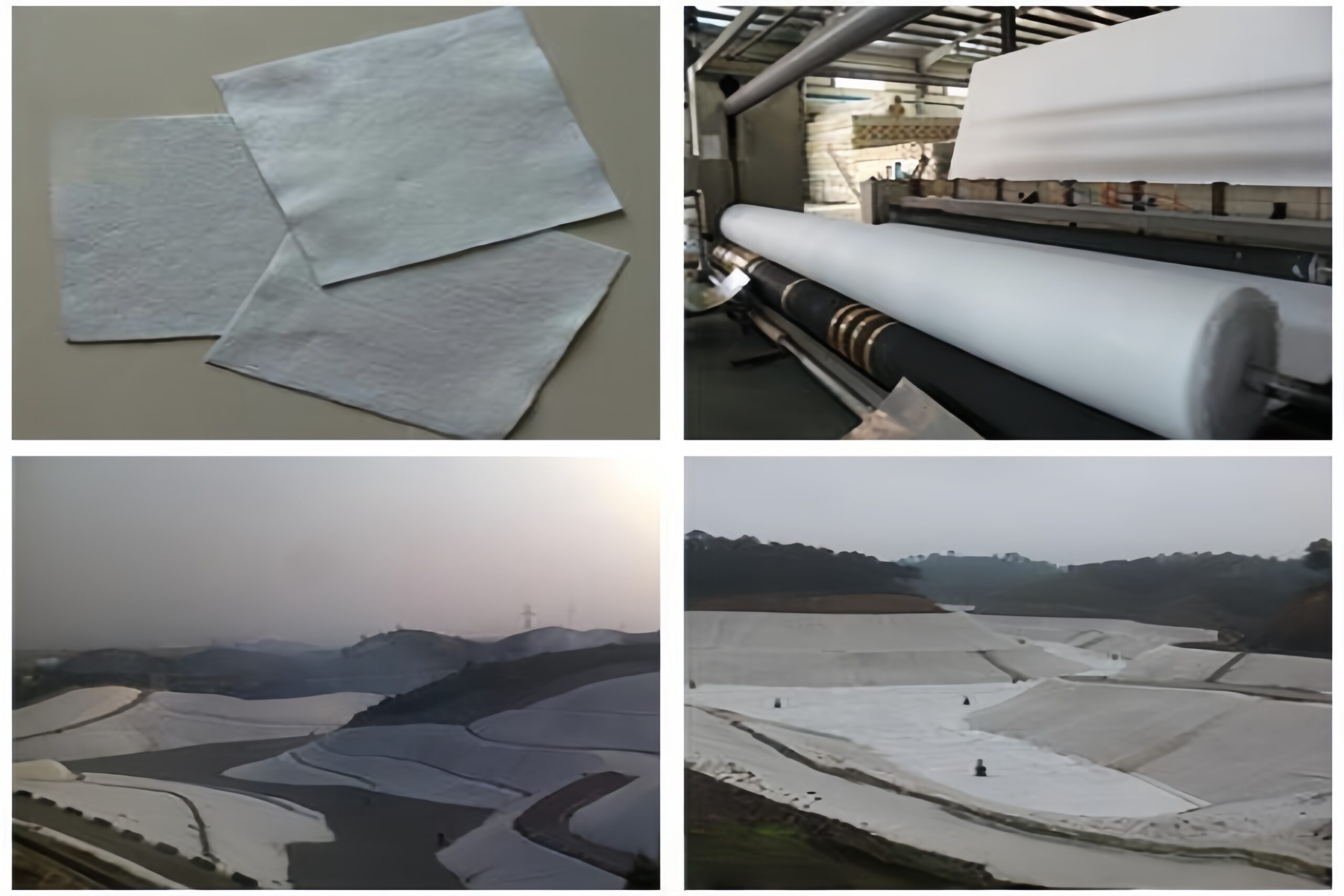
Los geotextiles son los héroes anónimos del sistema de revestimiento de vertederos. Estos materiales similares a telas realizan varias funciones críticas que garantizan la integridad a largo plazo de las capas de barrera.
- Protección y Amortiguación: Un grueso, punzonado geotextil no tejido (normalmente entre 300 y 500 g/m²) se coloca directamente contra una geomembrana. Actúa como un cojín, protegiendo el revestimiento de ser perforado por objetos punzantes en el suelo subyacente o en los desechos suprayacentes.
- Filtración y Separación: Los geotextiles son permeables, lo que permite el paso del agua mientras retienen la tierra o las partículas de desechos. Esto evita que las capas de drenaje se obstruyan y mantiene las diferentes capas del suelo separadas y estables.
Sin esta capa protectora, la geomembrana primaria sería muy vulnerable a sufrir daños durante la construcción y operación.
Georedes y geocompuestos: la capa de recolección de lixiviados
It's not enough to simply contain leachate; you must also collect and remove it. If liquid builds up on top of the liner, the resulting hydrostatic pressure (or "head") can force leachate through any tiny imperfection. This is the job of the drainage layer, which is typically made from geonets or geocompuestos.
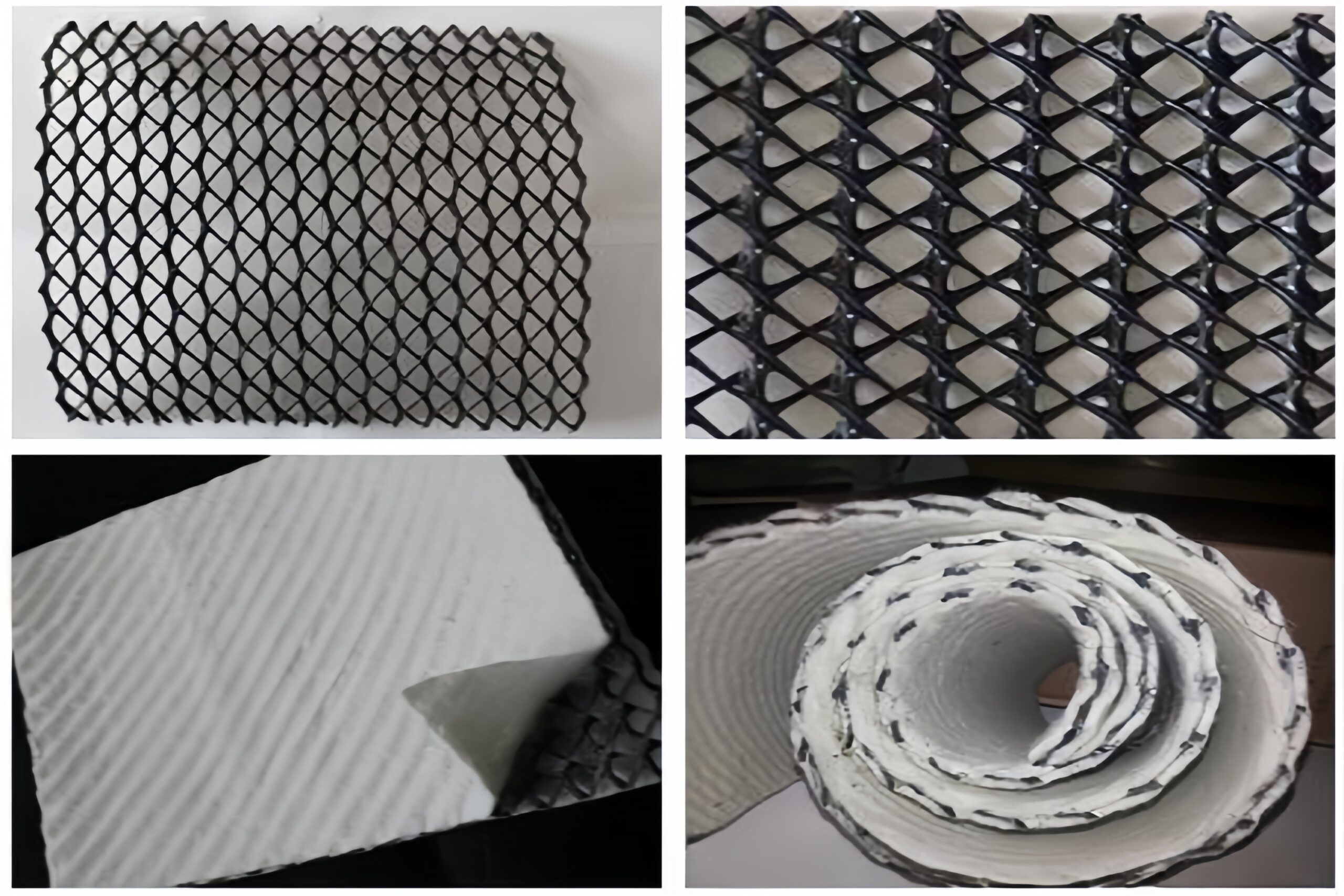
- Georedes: Se trata de rejillas de polímero con una estructura en forma de diamante que crea una alta capacidad de flujo en el plano para líquidos y gases.
- Geocompuestos: Un geocompuesto combina una geored con una o dos capas de geotextil termolaminado. El geotextil actúa como filtro, evitando que partículas obstruyan el núcleo de drenaje de la geored.
Esta capa de drenaje, oficialmente conocida como Sistema de recolección y eliminación de lixiviados (LCRS), se coloca directamente encima de la geomembrana primaria. Recoge el lixiviado y lo dirige a una serie de tuberías perforadas y sumideros, desde donde se puede bombear para su tratamiento.
Combinación de materiales con tipos de residuos
La configuración específica de un sistema de revestimiento depende en gran medida del tipo de residuo que contiene. Las regulaciones son, con razón, más estrictas para los materiales más peligrosos.
Una pauta general:
- Residuos Sólidos Municipales (RSU): Las regulaciones generalmente requieren un sistema de revestimiento compuesto, como una geomembrana de HDPE sobre un GCL o un revestimiento de arcilla compactada.
- Desechos peligrosos: Los estándares son aún más altos y exigen un sistema de doble línea. Por lo general, consta de una geomembrana primaria, una capa de detección de fugas (geored) y un revestimiento compuesto secundario (otra geomembrana sobre un GCL/CCL).
- Residuos Radiactivos o Altamente Industriales: Estas aplicaciones de nicho pueden requerir materiales especializados con un rendimiento documentado a muy largo plazo.
Cuadro resumen de componentes y costos de vertederos
Esta tabla resume los materiales primarios, sus funciones y los costos típicos de los materiales. Tenga en cuenta que estos son sólo costos de materiales; Los costos totales de instalación son significativamente más altos.
| Componente | Función primaria | Costo típico del material (USD/m²) |
|---|---|---|
| Geomembrana HDPE/LLDPE | Barrera impermeable primaria para la contención de lixiviados | $2.00 – $5.00 |
| Revestimiento de arcilla geosintética (GCL) | Barrera hidráulica secundaria autorreparable | $3.00 – $6.00 |
| Revestimiento de arcilla compactada (CCL) | Capa de base tradicional de baja permeabilidad | $8.00 – $15.00 |
| Geotextil no tejido | Protección, amortiguación y filtración. | $1.00 – $4.00 |
| Geored/Geocompuesto | Recolección de lixiviados, drenaje y venteo de gases. | $2.00 – $6.00 |
Conclusión
Un sistema moderno de revestimiento de vertederos es un testimonio de la ingeniería geosintética. No es un solo producto, sino un sistema integrado de múltiples componentes diseñado para brindar redundancia y seguridad a largo plazo. Desde la geomembrana impermeable de HDPE hasta el GCL autorreparable y los geocompuestos de drenaje críticos, cada material juega un papel vital. Comprender cómo funcionan juntos estos componentes es el primer paso para garantizar una instalación de contención segura y ambientalmente responsable.