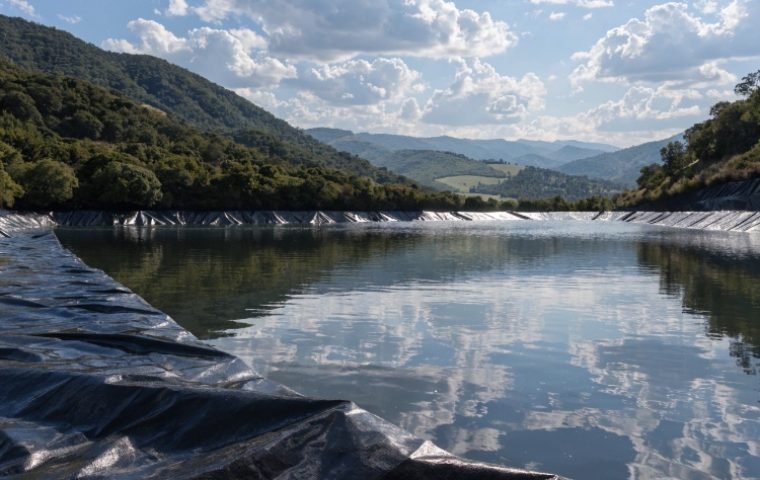


Copper mine owners and EPC engineers often treat liner design as a simple procurement checkbox, focusing only on price per square meter. This is a critical error, as the unique combination of extreme heap heights, aggressive sulfuric acid, and decades-long operating cycles makes copper heap leaching one of the most demanding applications for geosynthetics.
To ensure success, copper heap leach pad liner design must prioritize long-term structural stability and chemical durability, moving beyond basic hydraulic containment to consider the mechanical interaction between the liner, the drainage layer, and the massive static load of the ore pile. Design decisions made today basically dictate the mine's profit safety margin for the next 20 to 30 years.
When I consult with mining clients in Chile, Peru, or the Congo, the conversation shifts quickly from "how much?" to "how long will it last?" A liner failure under a 150-meter heap of copper ore is not a maintenance issue; it is a permanent loss of revenue and a potential environmental catastrophe.
What unique challenges exist in copper heap leach pad design?
Design engineers often underestimate how drastically copper heap leaching differs from other metalliferous mining operations like gold. We aren't talking about a temporary five-year pad; we are talking about a permanent geological structure that involves aggressive chemistry and immense physical scale.
The primary challenges are the destructive synergy of concentrated sulfuric acid, internal heat generation from bio-leaching, and the crushing weight of low-grade ore stacked over multiple decades.
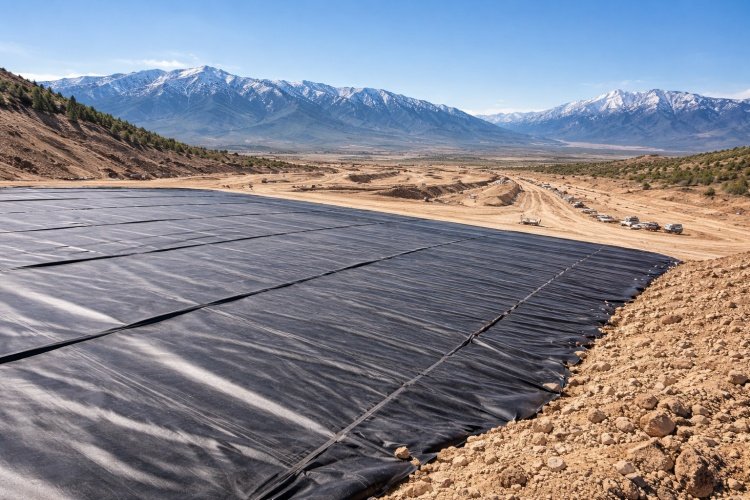
The "Time + Acid + Load" Equation
In my years of exporting geomembranes, I have seen specs that work for water reservoirs copy-pasted into copper mine tenders. This is dangerous.
- Duration: Copper mines often operate for 15 to 30 years. The liner you install in Phase 1 is still the primary containment barrier in Year 20.
- Scale: Unlike gold heaps which often stay under 60-80 meters, copper heaps frequently exceed 100 meters, sometimes reaching 150 meters or more. The static load at the bottom liners is tremendous.
- Chemistry: The PLS (Pregnant Leach Solution) is acidic (dilute H2SO4). While HDPE is naturally acid-resistant, the combination of acid + stress + temperature accelerates aging mechanisms that laboratory tests often miss.
The Thermal Factor (Bio-Leaching)
A unique aspect of modern copper leaching is the use of bacteria (bio-leaching) to oxidize sulfide minerals. This process is exothermic. The internal temperature of a copper heap can rise significantly, sometimes reaching 30°C to 60°C inside the pile.
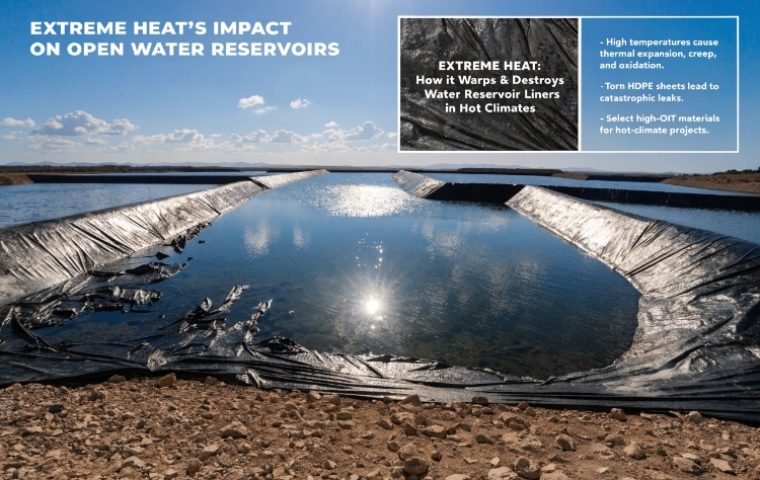
Heat is the enemy of plastic. It accelerates the depletion of antioxidants (OIT). A design that ignores the internal temperature of the heap will underestimate the degradation rate of the liner.
What are the key design drivers for copper heap leach liners?
A liner system must be designed as a structural component, not just a waterproof barrier. If the design focuses only on "stopping liquid," it will likely fail due to geotechnical instability or drainage collapse.
The key drivers are the hydro-mechanical behavior of the liner interface and the drainage efficiency required to prevent pore pressure buildup, which is the leading cause of slope failures in large heaps.
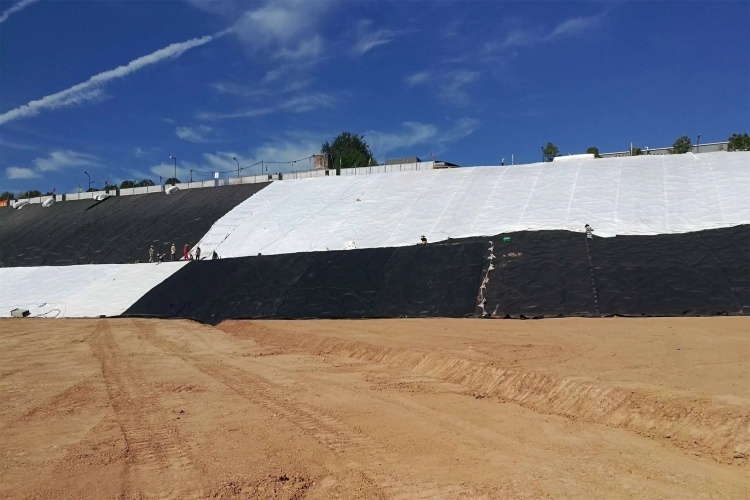
Heap Height and Loading Pressure
As a supplier, I always ask: "What is your final design height?"
- At 100+ meters, the compressive stress on the liner system can exceed 2 MPa.
- Under this pressure, the liner is susceptible to creep (slow deformation) and puncture from the subgrade or the drainage gravel.
- Design implication: The subgrade must be perfectly compacted, and the protective geotextile or cushion layer must be engineered based on puncture calculations, not just a generic "500gsm" rule.
Interface Shear Strength and Slope Stability
The most critical structural risk is the interface between the geomembrane and the soil (below) or the drainage layer (above).
- The friction problem: HDPE is smooth. Smooth surfaces slip. If the friction angle between the liner and the clay subgrade is lower than the slope of the pad (usually 2-5% for the base, 2.5:1 or 3:1 for external slopes), the entire heap can become unstable.
- Design implication: Engineers must specify Textured HDPE for slopes to increase the friction coefficient. We often supply single-sided textured liners (textured side down) for base areas to grip the soil while keeping the top smooth for better drainage flow.
Drainage Efficiency
In copper leaching, flow is money. The liner must facilitate the rapid flow of PLS to the collection ponds.
- If the liner system impedes flow, the "phreatic surface" (water level) inside the heap rises.
- A high phreatic surface reduces the shear strength of the ore pile, leading to catastrophic slope failures (landslides).
- Design implication: The slope of the liner and the layout of the collection pipes are paramount. The liner is the "slip plane," so keeping the head on the liner low is a critical safety factor.
What liner system configurations work for copper heap leach pads?
There is no single "correct" design, but there is a clear distinction between "economy" designs and "high-security" designs. The configuration depends heavily on local regulations, the sensitivity of the environment, and the corporate risk appetite of the mining company.
We typically see three main configurations in the projects we supply: Single Composite, Double Liner, and Valley Fill designs.
Single Composite Liner (The Standard / Economy)
In many remote copper projects, especially in arid regions with deep groundwater tables (like the Atacama Desert), a single composite liner is common.
- Configuration: Prepared low-permeability soil (clay) + 1.5mm or 2.0mm HDPE Geomembrane.
- Mi percepción: While cost-effective, this relies heavily on the quality of the installation. A small hole equals a leak. To mitigate this risk, many mines are adding a GCL (Revestimiento de arcilla geosintética) under the HDPE to create an intimate contact barrier that self-seals minor punctures.
Double Liner System (The High-Security Option)
For projects funded by international banks (IFC/World Bank standards) or located near communities/water sources, a double liner is mandatory.
- Configuration:
- Primary Liner (Top): 2.0mm HDPE.
- Leak Detection Layer (Middle): Geonet or Geocomposite drainage layer.
- Secondary Liner (Bottom): 1.5mm HDPE or GCL.
- Why choose this: It allows you to monitor leakage. If the primary liner leaks, the PLS is captured by the secondary liner and directed to a monitoring sump. You don't lose the chemical, and you don't contaminate the ground. It turns a "spill" into a "managed process."
Valley Fill Considerations
Many copper mines are in mountainous regions where the heap fills a valley.
- The Challenge: The "inter-lift" liners. As the heap grows, new liners are often placed on top of old ore levels (on-off pads or expansion).
- Design Note: The differential settlement in valley fills is extreme. The liner must have high elongation properties (multi-axial) to stretch without tearing as the massive ore body settles into the valley floor.
What material performance requirements are critical under copper heap leach conditions?
It is easy to focus on short-term specs like "Tensile Strength," but in copper mining, durability is defined by resistance to degradation over time.
The liner must survive a chemical-thermal-mechanical assault for 20+ years. As a professional in this field, I urge buyers to look at the long-term properties in the Technical Data Sheet (TDS), specifically Stress Crack Resistance (SCR) and OIT retention.
Acid Resistance and Oxidative Aging
Copper leaching uses sulfuric acid. While HDPE is chemically resistant to H2SO4 degradation mechanism is oxidation.
- The acid environment, combined with UV (during installation) and heat (during operation), attacks the antioxidants in the resin.
- The Indicator: We look at High-Pressure OIT (HPOIT). Standard OIT measures volatile antioxidants (processing stabilizers), but HPOIT measures the hindered amine light stabilizers (HALS) that provide long-term protection.
- Requirement: For copper pads, specific HPOIT retention values after oven aging are a non-negotiable part of the spec.
Resistencia al agrietamiento por tensión (SCR)
This is the single most important parameter for longevity under load.
- The Scenario: Imagine a wrinkled liner under 100 meters of rock. The fold is under immense "stress." Simultaneously, the chemical "environment" (acid/surfactant) attacks that stress point. This is Environmental Stress Cracking (ESC).
- The risk: If the resin is weak, the liner calls create brittle cracks at the folds, even without a direct puncture.
- My Recommendation: Standard GRI-GM13 requires 500 hours of SCR (NCTL test). For copper heap leach pads, especially valley fills or dynamic loads, we recommend specifying resins that achieve >1500 hours or even 3000 hours. Using "pipe-grade" or high-performance resins is a small cost premium for a massive increase in safety.
Creep Behavior
Creep is the tendency of a solid material to move slowly or deform permanently under the influence of persistent mechanical stresses.
- At the bottom of a 150m heap, the liner is under constant compression and tension (cushioning effect).
- Good design limits the strain on the liner.
- Quality Check: Ensuring the HDPE density is strictly controlled (>0.940 g/cm³) ensures stiffness and resistance to creep deformation over decades.
What liner thickness and material selection considerations apply?
"How thick should my liner be?" is the most common question I get. In copper mining, using thin liners is logically flawed because the savings are minuscule compared to the risk.
We must balance the need for physical robustness (thickness) with the need for flexibility and weldability.
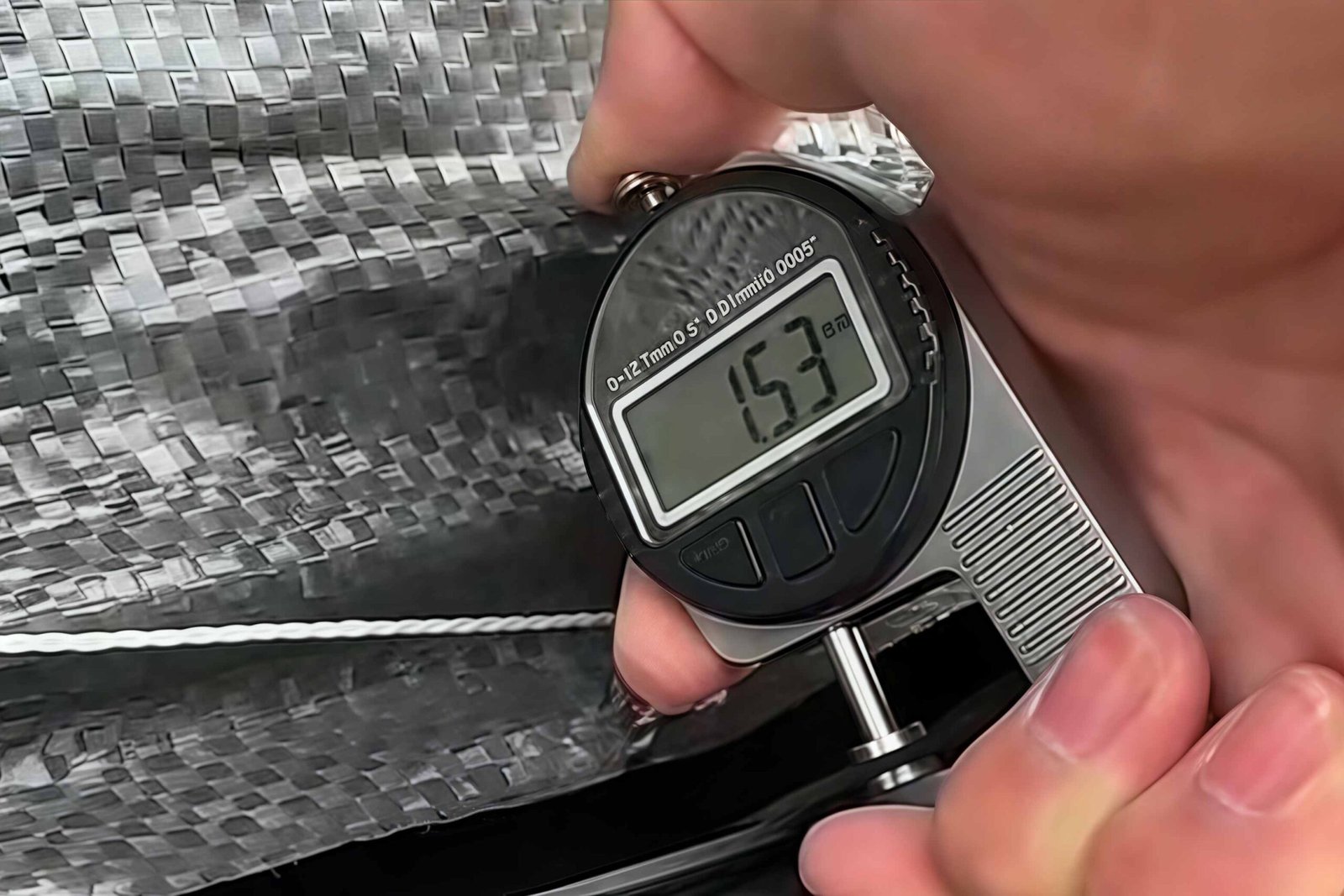
Thickness: The 2.0mm Standard
For standard copper heap leach pads, 2.0mm (80 mil) HDPE is the industry standard for the primary liner.
- Why not 1.5mm? While 1.5mm might theoretically hold the liquid, 2.0mm provides:
- Sacrificial Thickness: Surface oxidation and scratches will remove microns of material over 20 years. 2.0mm gives you a buffer.
- Increased SCR: Generally, thicker sheets made from the same resin have better absolute resistance to environmentally induced cracking.
- Construction Robustness: A 2.0mm sheet is harder to accidentally puncture with a boot or a dropped tool during installation.
HDPE vs LLDPE
- HDPE (Polietileno de Alta Densidad): The default choice for the base liner. It has the highest chemical resistance and highest physical strength.
- LLDPE (Polietileno lineal de baja densidad): Sometimes considered for closure caps or top-deck liners where differential settlement is expected. LLDPE is more flexible (can stretch more before breaking) but has lower chemical resistance and lower tensile strength.
- My Verdict: For the leaching pad base (where the acid is), stick to HDPE. The structural integrity is paramount. If settlement is a major concern, use a higher-grade HDPE with improved multiaxial elongation properties, rather than switching to LLDPE which might degrade faster in acid.
Resin Consistency and Carbon Black
In copper projects, the exposed liner on the side slopes might sit in the sun for 5-10 years before the heap expands to cover it.
- Carbon Black: Must be 2.0-3.0% and well-dispersed. This is the only thing protecting the polymer from UV radiation.
- Resin: Only use Virgin Prime resin. Recycled materials have unpredictable "melt flow" which creates weak welds, and they often contain contaminants that act as initiation sites for stress cracking.
What installation and construction considerations exist?
Even the perfect design fails if the installation is flawed. Copper mines are typically located in geologically difficult areas—high Andes (4000m+ altitude), Arizona deserts, or African copper belts. These environments are hostile to geosynthetic installation.
Construction Quality Assurance (CQA) is vital.
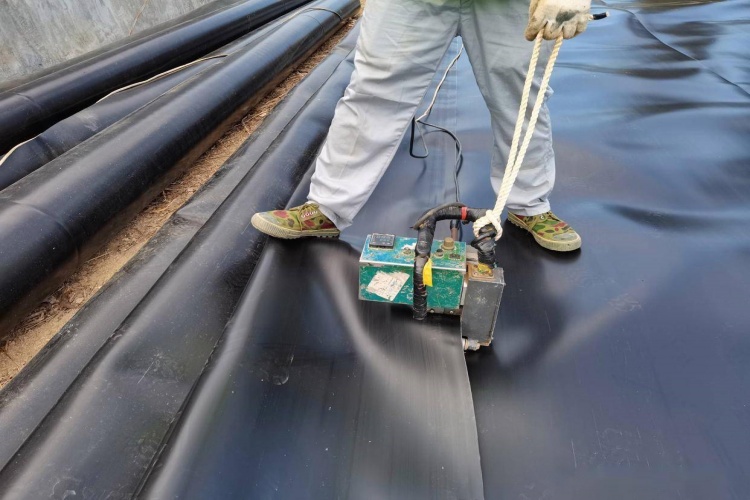
Managing Thermal Expansion (Wrinkles)
HDPE has a high coefficient of thermal expansion. In the high desert, temperatures swing from 0°C at night to 40°C in the day.
- El riesgo: Laying liner in the heat of the day creates massive wrinkles. If you cover these wrinkles with gravel, they fold over. Under 100m of ore, these folded wrinkles Crack (see SCR above).
- La solución: Installation must be timed. Welding often happens at night or early morning to ensure the sheet is flat ("in intimate contact" with the subgrade).
Welding Quality Control
Given the critical nature of the leachate, we advocate for stricter testing frequencies than the standard GM19.
- Trial Welds: Must be done at the specific start time of work to calibrate for that day’s ambient temperature and machine speed.
- Destructive Testing: In copper projects, we often see requirements for destructive shear/peel tests every 120m-150m of seam, rather than the standard 150m-200m.
Logistics and Roll Sizes
For massive projects (e.g., 500,000 m² phases), logistics impacts design.
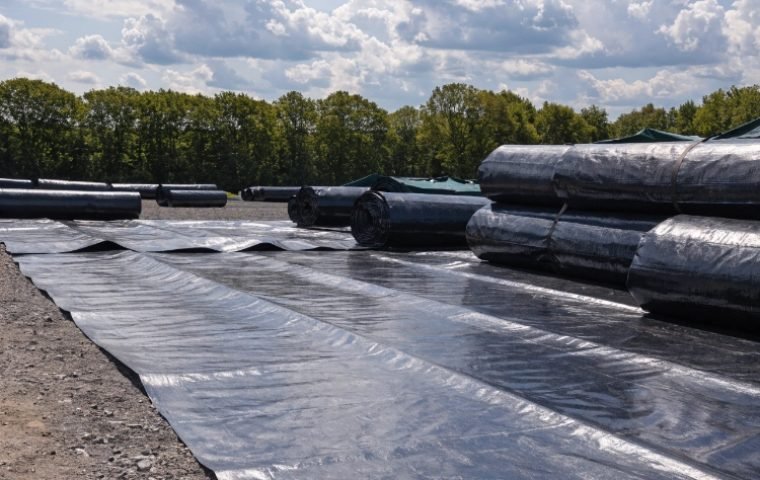
- Roll Optimization: We supply broad-width rolls (7m or 8m) to reduce the number of field seams. Fewer seams = fewer failure points + faster installation.
- Container loading: For remote sites like the Congo, efficient packing reduces freight costs, which can be substantial for thousands of rolls.
How do cost vs. lifecycle performance stack up?
In B2B discussions, I often have to walk procurement teams back from the ledge of buying the cheapest option. In copper heap leaching, the "Lifecycle Cost" is the only metric that matters.
The Economics of "Unrepairable Assets"
A heap leach liner is an unrepairable asset. Once the ore is stacked, you cannot go back and patch a hole at the bottom.
- Scenario: You save $50,000 by using a 1.5mm generic liner instead of a 2.0mm premium liner.
- Resultado: In Year 5, a stress crack develops due to poor resin. PLS leaks into the ground.
- Cost: You lose recoverable copper. You have to drill interception wells (millions of dollars). You face fines. You might have to stop stacking on that sector (loss of production).
- Conclusion: The initial cost of the liner is often less than 2-3% of the total pad construction cost, yet it holds 100% of the environmental risk. Upgrading the liner spec is the cheapest insurance policy a mine can buy.
What is the role of liner suppliers in long-term projects?
Copper mines expand in phases. Phase 1 might be in 2024, Phase 2 in 2026, and Phase 3 in 2030.
Consistency is Key
You need a supplier who can provide the exact same resin formulation five years from now.
- Welding Compatibility: If Phase 1 used a specific resin/MFI (Melt Flow Index) and Phase 2 uses a different one, welding the new liner to the old tie-in trench can be problematic.
- Data Support: As a supplier, we keep retention samples and rigorous quality data. When the mine expands, we provide the technical bridge to ensure the new system integrates perfectly with the old one.
- Capacity: Large copper phases can require 500 containers of material in a 3-month window. Small suppliers cannot handle this surge without compromising quality. You need a partner with the manufacturing capacity to deliver huge volumes quickly to meet the dry-season installation window.
Conclusión
Designing a copper heap leach pad liner is an exercise in long-term structural engineering. You are building a foundation that must support millions of tons of acidic rock for decades.
The unique challenges of heap height, acid concentration, and thermal buildup demand a liner specification that goes beyond basic standards.
- Espesor: 2.0mm HDPE is the safe baseline.
- Resin: High SCR (>1500 hrs) and high-pressure OIT are critical for longevity.
- Structure: Textured surfaces for slope stability and robust drainage designs are mandatory.
As an experienced exporter and solution provider, my advice to mine owners is simple: Do not value-engineer the liner into a point of weakness. Invest in high-performance materials and rigorous installation quality. In the lifespan of a copper mine, the liner is the one component that must never fail.