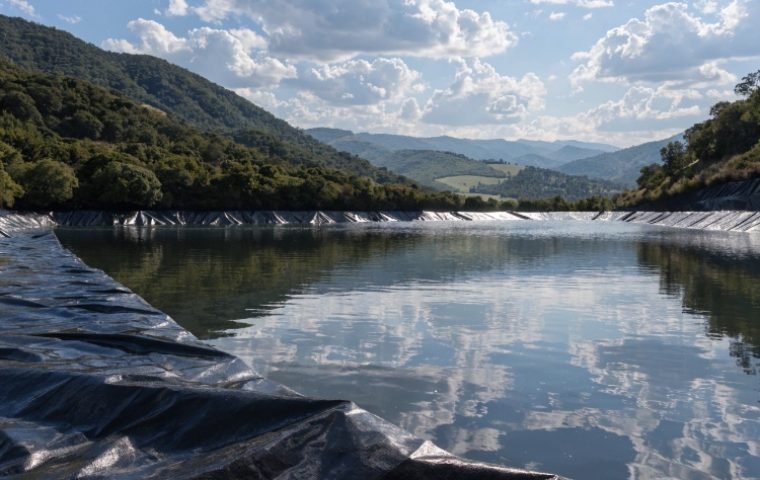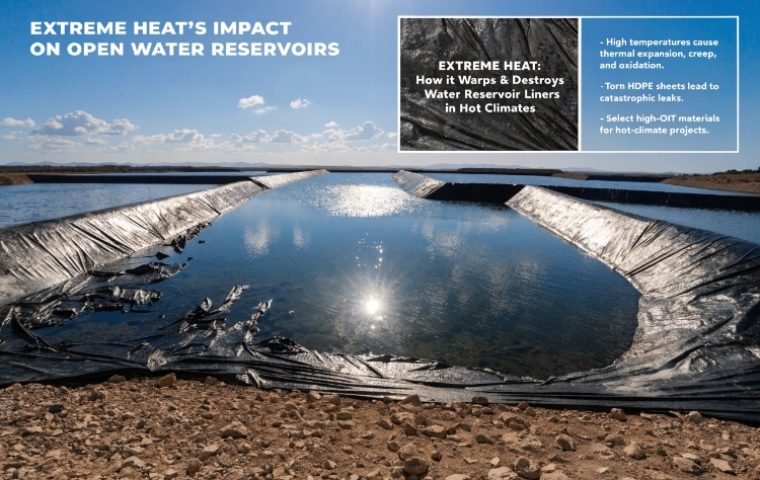


Tailings ponds are some of the largest engineered structures on Earth, yet their purpose and construction remain a mystery to many outside the mining industry. These are not simple ponds; they are complex containment facilities essential for modern mining operations.
This guide provides a comprehensive overview of how tailings ponds are constructed, from initial site selection to long-term closure. We'll explore the critical engineering steps, construction methods, and the materials used—especially geosynthetics—to build a facility that is both operationally efficient and environmentally secure.
What a Tailings Pond Is and Its Purpose
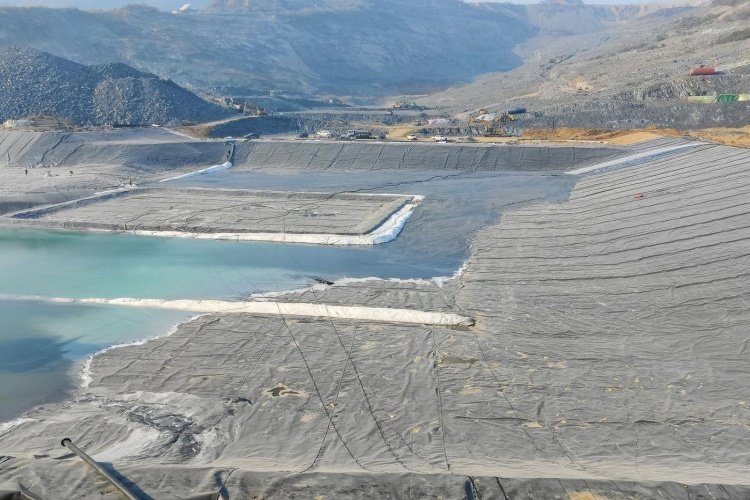
First, let's clarify what we're building. A tailings pond, or tailings storage facility (TSF), is a large engineered dam and containment structure used to store the waste byproducts of mining operations. "Tailings" are the finely ground rock and process water left over after the valuable minerals have been extracted. This slurry, a mix of water and fine particles, is pumped to the TSF for permanent storage.
The primary purpose of a tailings pond is twofold:
- Containment: To safely store massive volumes of solid waste material for perpetuity.
- Water Management: To allow the fine solid particles to settle out, so the process water can be clarified and recycled back into the mining operation, minimizing the need for fresh water.
Because tailings can contain residual chemicals and metals, preventing any seepage into the surrounding environment is a top engineering and environmental priority.
Site Selection and Preliminary Engineering Design
The success and safety of a tailings pond begin long before any dirt is moved. The selection of a suitable site is a critical first step, involving a multi-disciplinary assessment. Engineers evaluate:
- Geological and Geotechnical Conditions: The stability of the underlying soil and rock is paramount. Sites with weak foundations or a high risk of landslides are avoided.
- Topography: Natural valleys or basins are often preferred as they can reduce the amount of dam construction needed.
- Seismic Considerations: In earthquake-prone regions, the site and dam design must be able to withstand significant ground shaking. This factor heavily influences the type of dam that can be built.
- Hydrology: Understanding surface and groundwater flow is crucial to prevent the facility from being overwhelmed by rainfall and to protect local water resources.
- Proximity to Mining Operations: The site must be close enough to the mine to make pumping the tailings slurry economically feasible.
Once a site is chosen, a detailed engineering design is developed, outlining the facility's ultimate size, the type of dam to be constructed, and the liner and drainage systems required.
Subgrade Preparation and Foundation Treatment
With the design in place, site preparation begins. This is similar to preparing the foundation for any major civil structure. The process involves:
- Clearing and Grubbing: The entire footprint of the facility is cleared of all vegetation, topsoil, and large rocks.
- Excavation and Leveling: The ground is excavated and graded to the design contours.
- الضغط: The subgrade soil is compacted to a specified density to create a strong, stable, and uniform foundation for the liner system and dam.
- Weak Soil Treatment: If any pockets of weak soil are discovered, they are removed and replaced with engineered fill.
This step is critical because any future settlement of the foundation could put stress on the liner system and compromise its integrity.
Construction of Embankments and Containment Dams
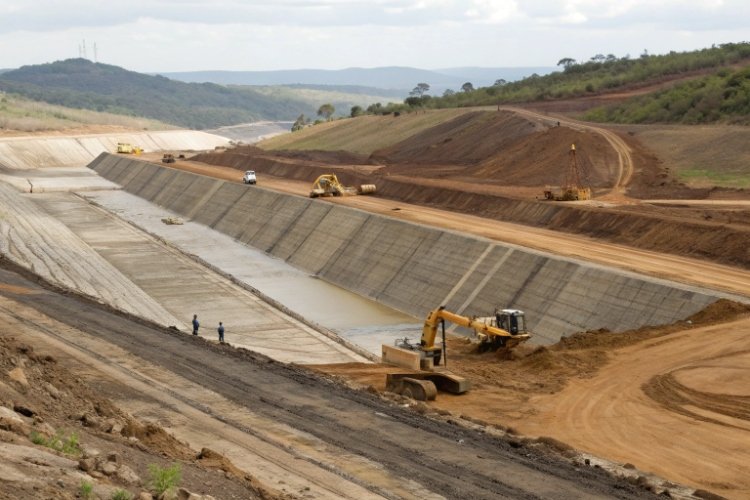
The containment dam is the most prominent feature of a tailings pond. The construction method chosen depends heavily on seismic risk, tailings characteristics, and budget. There are three primary methods for raising the dam over its operational life:
Upstream Method
This is the oldest and least expensive method. After a small "starter dam" is built, the tailings slurry is discharged from the crest. The coarser particles settle near the dam, forming a beach, which becomes the foundation for the next stage of the dam raise. The crest of the dam moves progressively upstream, over the settled tailings. While cost-effective, this method is highly susceptible to failure from seismic liquefaction and is now banned or heavily restricted in many countries.
Downstream Method
This is the safest but most expensive method. The dam is built and raised by placing new material on the downstream side, so the structure is not founded on the tailings themselves. The dam is typically built with a well-engineered, impermeable core, filters, and drainage zones, much like a conventional water-retention dam. This method requires a large volume of construction material and a significant downstream footprint.
Centerline Method
This method is a hybrid of the upstream and downstream approaches. The dam crest is raised vertically, with the centerline remaining in the same position. It often uses cyclones to separate the tailings into coarse sand for dam construction and fine particles that are deposited in the pond. It offers better stability than the upstream method at a lower cost than the downstream method.
Liner System Design for Tailings Ponds
To prevent contaminated water from seeping into the ground, modern tailings ponds are built with robust, multi-layered liner systems. The goal is to create a composite barrier with extremely low permeability.
A typical liner system, from the bottom up, may include:
- بطانة الطين المضغوط (CCL): A thick layer of low-permeability clay is placed on the prepared subgrade and compacted to achieve a hydraulic barrier.
- بطانة الطين الاصطناعية (GCL): In many modern designs, a GCL is used in place of or in addition to a CCL. A GCL is a factory-made product consisting of a thin layer of bentonite clay sandwiched between two geotextiles. It is easier to install and provides more consistent performance than a thick CCL.
- Geomembrane: This is the primary barrier. A thick (typically 1.5 mm to 2.5 mm) High-Density Polyethylene (HDPE) geomembrane is installed over the clay liner. HDPE is chosen for its excellent chemical resistance, durability, and extremely low permeability.
This combination of a geomembrane and a GCL/CCL creates a "composite liner" that is far more effective at preventing leaks than either component used alone.
Installation of Drainage and Leak Collection Systems
Above the primary liner, a drainage and leak collection system is installed. Its purpose is to collect any leachate that permeates the tailings and to quickly detect and capture any potential leaks from the primary liner.
This system typically consists of:
- A Drainage Layer: A layer of clean sand or gravel, or more commonly, a drainage geocomposite. A geocomposite combines a high-flow plastic drainage core (a geonet) with a geotextile filter bonded to it. Geocomposites are often preferred because they are lighter, more cost-effective to install, and provide engineered, predictable drainage performance.
- Perforated Collection Pipes: A network of perforated pipes is installed within the drainage layer to collect the water and direct it to a sump, from where it can be pumped out.
This entire system sits between the liner and the tailings, forming a Leakage Collection and Recovery System (LCRS).
Tailings Deposition and Water Management Systems
Once the containment structure is built, the operational phase begins.
- Tailings Deposition: The tailings slurry is pumped from the processing plant and discharged into the pond, usually from spigots placed along the dam's perimeter. The goal is to deposit the coarse particles along the dam to form a stable "beach" while the finer particles settle in the central pond.
- Water Management: As the solids settle, clear water forms on the surface of the pond. This water is collected through a decant system—often a floating pump barge or a vertical concrete tower—and pumped back to the processing plant for reuse. Emergency spillways are also constructed to safely release excess water during extreme storm events.
Slope Protection and Erosion Control Measures
The exterior slopes of the containment dams must be protected from erosion caused by wind and rain. This is crucial for maintaining the dam's long-term structural integrity.
Various geosynthetic materials are used for this purpose:
- Geotextiles: A layer of nonwoven or woven geotextile can be placed on the slope surface to prevent soil loss before vegetation is established.
- Geocells: A three-dimensional geocell system can be installed on the slope, filled with topsoil, and vegetated. The geocell's honeycomb structure confines the soil, preventing it from washing away even on steep slopes.
- Erosion Control Blankets: Biodegradable or permanent blankets made of natural fibers or synthetic materials are used to stabilize the surface and promote vegetation growth.
- Riprap: In areas of concentrated water flow, large, angular rocks (riprap) are placed over a geotextile to armor the slope against scouring.
Monitoring, Instrumentation, and Safety Controls
A tailings pond is not a "build and forget" structure. It is a dynamic facility that requires continuous monitoring throughout its life. A network of instruments is installed to track its performance and provide early warning of any potential problems:
- Piezometers: These instruments are installed within the dam to measure water pressure (pore pressure), which is a key indicator of stability.
- Inclinometers and Survey Monuments: These are used to detect and measure any horizontal or vertical movement of the dam.
- Seepage Collection Monitoring: The volume of water collected from the underdrain system is carefully measured to detect any increase that might signal a leak.
Regular visual inspections are also a critical part of the safety protocol.
Closure, Rehabilitation, and Long-Term Management
When the mine ceases operations, the tailings pond must be permanently and safely closed. The goal of closure is to create a chemically and physically stable landform that requires minimal long-term maintenance.
The closure process typically involves:
- Dewatering: Removing as much water as possible from the facility.
- Consolidation: Allowing the tailings to settle and consolidate.
- Final Cover System: Capping the entire facility with a multi-layered cover system, similar to the base liner. This cover is designed to prevent rainwater from infiltrating the tailings and to support sustainable vegetation.
- Surface Water Management: Constructing permanent channels and spillways to safely route rainwater off and around the facility.
- Revegetation: Establishing a self-sustaining cover of native vegetation to control erosion and restore the site's ecological function.
Post-closure monitoring of the dam's stability and water quality continues for many decades.
Summary
Building a tailings pond is a monumental engineering task that integrates geology, hydrology, and civil and geotechnical engineering. The process follows a logical sequence: careful site selection, robust dam design and construction, the installation of a high-performance composite liner and drainage system, and a commitment to rigorous operational monitoring and sustainable final closure. Through the systematic application of sound engineering principles and the use of advanced materials like geomembranes, GCLs, and geocells, the mining industry can construct facilities that meet the dual demands of operational necessity and long-term environmental protection.