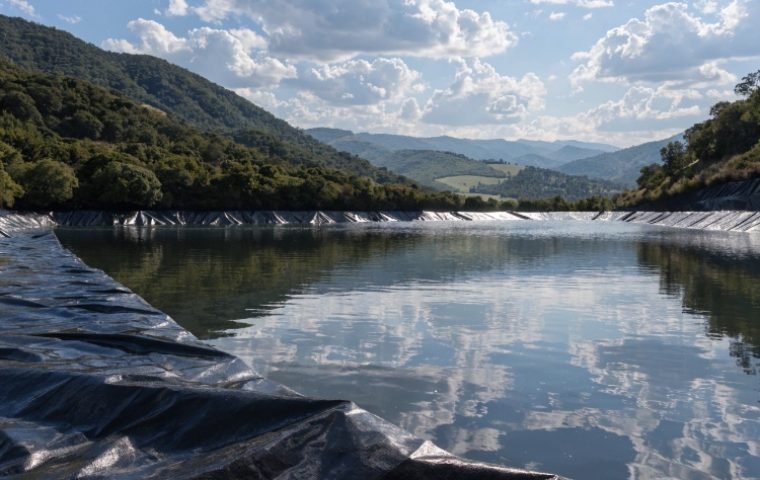
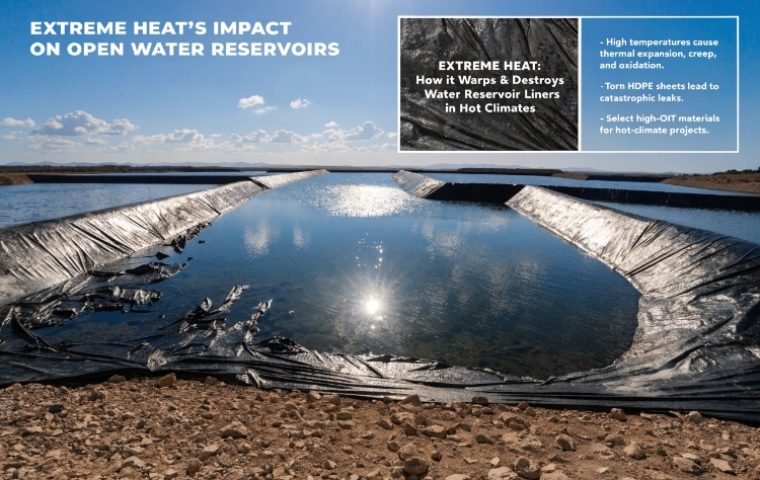
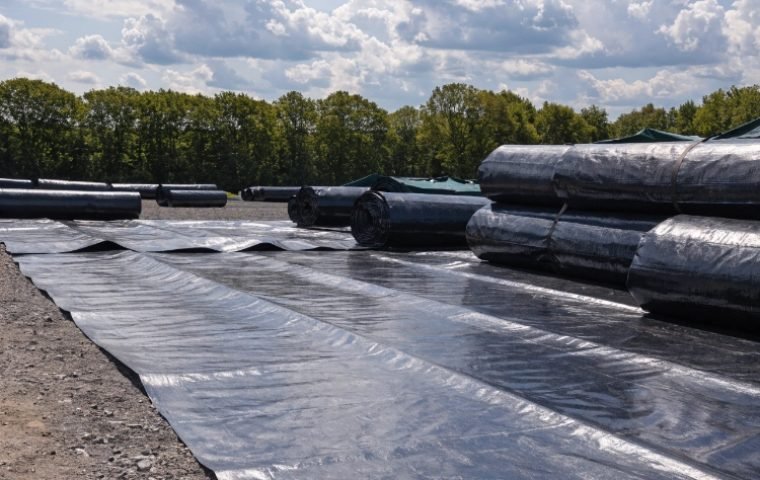
You are lining a new reservoir and face a critical choice: a standard HDPE geomembrane or a composite geomembrane with a geotextile attached. Picking the wrong one could mean costly installation headaches, a shorter lifespan, or even a catastrophic liner failure.
Choose HDPE geomembrane for well-prepared, large-scale reservoirs where durability and cost-effectiveness are key. Opt for a composite geomembrane when the ground is rough, puncture risk is high, or you need to simplify the installation process by having protection built-in.
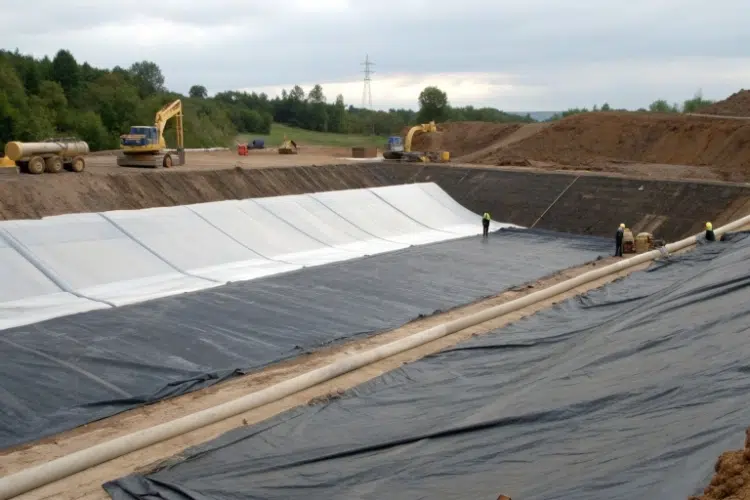
As a geosynthetics supplier, this is one of the most common technical questions I get from clients building reservoirs, ponds, or canals. It’s a decision that balances upfront cost against long-term performance and site-specific risks. A simple HDPE liner is often the workhorse, but a composite liner can be a problem-solver in challenging conditions. Let’s compare them head-to-head on structure, performance, cost, and lifespan to help you make the right call for your project.
What are the main structural and performance differences between HDPE and composite geomembranes?
You see a sheet of plastic versus a sheet with fabric on it. It’s easy to think the only difference is a bit of cushioning, but their entire performance profile—from puncture resistance to installation method—is fundamentally different.
An HDPE geomembrane is a single, dense sheet of high-density polyethylene that serves as a standalone waterproof barrier. A composite geomembrane is a manufactured product that permanently bonds a geotextile layer to an HDPE core, creating a multi-functional liner with built-in protection.
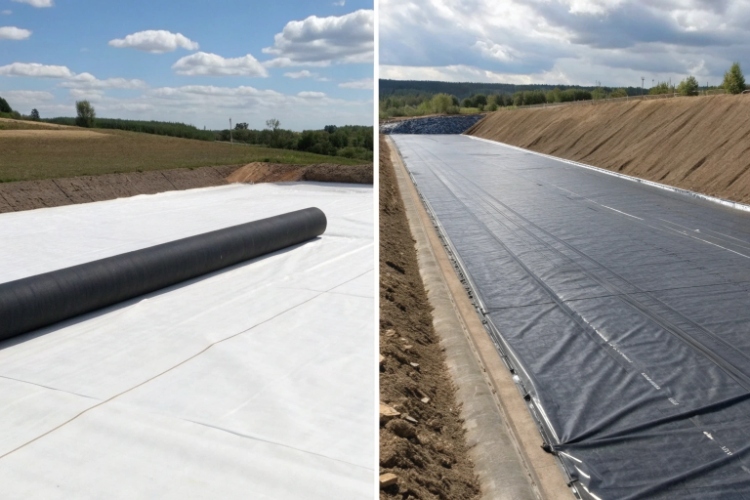
One Layer vs. Two-in-One
Understanding this structural difference is key to knowing which one suits your project. As someone who works with manufacturers, I know they are engineered for very different scenarios.
-
غشاء أرضي HDPE: The Pure Barrier
A standard HDPE geomembrane is all about one thing: impermeability. It's a tough, chemically resistant, and highly durable plastic sheet. Think of it as the core waterproof shield. Because it's a single material, its properties are very consistent. However, it has little inherent protection against punctures from sharp rocks or rough ground. It almost always requires a separate nonwoven geotextile to be installed underneath it as a protective cushion. -
Composite Geomembrane: The All-in-One Solution
A composite geomembrane takes that HDPE core and bonds a layer of nonwoven geotextile directly to one or both sides in the factory. The geotextile layer provides built-in puncture resistance, drains away small amounts of water, and adds friction. This makes it a more robust, multi-functional product right off the roll. The trade-off is that you are locked into the specific geotextile the manufacturer has chosen to bond to the liner.
How do project conditions—like soil type, slope, and water pressure—affect the liner choice?
Your reservoir site has a mix of flat bottoms and steep, rocky side slopes. Using a single liner type for the entire project might seem efficient, but different site conditions demand different solutions.
For large, flat reservoirs with well-prepared, smooth ground, a standard HDPE geomembrane is ideal. For sites with rough, uneven subgrade, sharp rocks, or steep slopes requiring extra friction and puncture protection, a composite geomembrane is the safer choice.
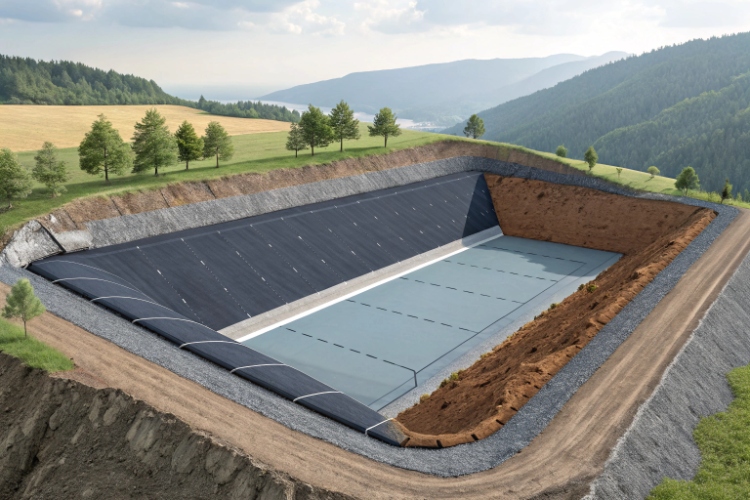
Matching the Liner to the Land
The ground itself will tell you which liner to use. The more challenging the site conditions, the more a composite liner's built-in protection becomes valuable.
Here’s a simple guide based on common reservoir conditions:
| Project Condition | Best Choice: HDPE Geomembrane | Best Choice: Composite Geomembrane |
|---|---|---|
| Subgrade (Ground Surface) | Smooth, well-compacted soil, free of rocks and sharp objects. | Uneven ground, rocky soil, or subgrade with tree roots and debris that are hard to remove. |
| Puncture Risk | Low risk. The area is clean and machinery will not drive directly on the liner. | High risk. Risk of damage from rocks, equipment, or maintenance activities. |
| Slopes | Gentle slopes (< 3:1). A textured HDPE liner may be needed for friction on slopes. | Steep slopes (> 3:1) where the geotextile layer's added friction and stability are beneficial. |
| Water Depth & Pressure | Suitable for all depths, but typically used in reservoirs less than 10 ft (3m) deep for cost-effectiveness. | Better for deep reservoirs (> 10 ft) where the geotextile helps dissipate stress and resist deformation. |
For large projects with mixed conditions, it’s common to use a standard HDPE liner for the smooth, flat bottom and a more robust composite or textured HDPE liner for the challenging side slopes.
What are the cost, installation, and lifespan considerations for each geomembrane type?
You’re looking at quotes, and the composite geomembrane is 30-40% more expensive per square meter. It’s tempting to choose the cheaper HDPE option, but the material cost is only one part of the total project cost.
HDPE geomembrane has a lower upfront material cost. However, a composite geomembrane can save on labor and a separate geotextile purchase, potentially making its total installed cost competitive, especially for complex sites.

The Full Financial Picture
As a supplier, I always advise clients to look at the total "in-the-ground" cost, not just the price per roll. Let's break it down using a 10,000 sq. ft. reservoir as an example.
-
Upfront Cost
- HDPE Geomembrane (1.0mm): The material costs around $0.17 - $0.21 per square foot. Installation adds $0.07 - $0.11 per square foot. But you also need a separate protective geotextile, adding another $0.05 - $0.08 per sq. ft. The total initial investment is roughly $0.29 - $0.40 per square foot.
- Composite Geomembrane (0.8mm liner + 300g geotextile): The material costs around $0.25 - $0.31 per square foot. Installation is slightly higher at $0.08 - $0.12 per square foot due to careful handling. The total initial investment is roughly $0.33 - $0.43 per square foot.
-
Lifespan and Maintenance
- HDPE Lifespan: With a proper geotextile cushion and a soil cover, an HDPE liner can last 15-20 years. However, it is more susceptible to accidental damage during cleaning or maintenance, leading to higher repair costs over its life.
- Composite Lifespan: The integrated geotextile provides constant protection, reducing the risk of damage. This often extends its reliable service life to 18-25 years with fewer repairs. For long-term projects, the lower maintenance needs can make the composite option more economical over the full life cycle.
Which geomembrane is more suitable for long-term reservoir waterproofing and maintenance?
You need a liner that will perform reliably for decades. Your decision isn't just about surviving installation; it's about enduring years of sun, water pressure, and maintenance activities. Which one is the most durable choice?
For maximum long-term durability and the lowest lifetime cost in a well-designed system, a properly installed HDPE geomembrane with a separate, high-quality geotextile cushion is often the preferred choice for large, critical reservoirs.
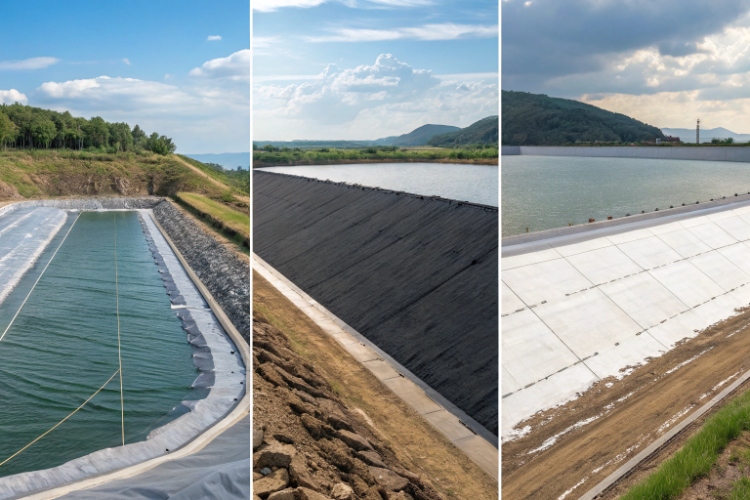
Durability is More Than Puncture Resistance
While a composite liner wins on built-in toughness, long-term durability is about the entire system. Here’s how they compare over the decades.
-
HDPE: The Proven Standard
HDPE resin is incredibly stable and resistant to chemicals and UV degradation (when properly formulated). The standards for manufacturing and welding HDPE (like GRI-GM13) are mature and globally accepted. When you install a 1.5mm or 2.0mm HDPE liner on top of a correctly specified nonwoven geotextile and cover it with soil, you create a system that is trusted for the most critical applications, including potable water and 50+ year design life projects. You have complete control over specifying the ideal liner thickness and the ideal geotextile weight separately. -
Composite: Convenience with a Caveat
A composite liner's main durability advantage is resisting damage during construction. However, its long-term performance hinges on the quality of the bond between the geotextile and the plastic core. In lower-quality products, this bond can delaminate after years of being submerged, compromising the liner. While convenient, you are also stuck with the manufacturer's choice of geotextile. For critical, long-life projects, many engineers prefer the control and proven track record of designing a two-part HDPE and geotextile system themselves.
خاتمة
For small ponds on good ground with a tight budget, an HDPE geomembrane is a smart choice. For large, deep reservoirs or sites with challenging soil, a composite geomembrane provides valuable, built-in protection and can simplify installation.