

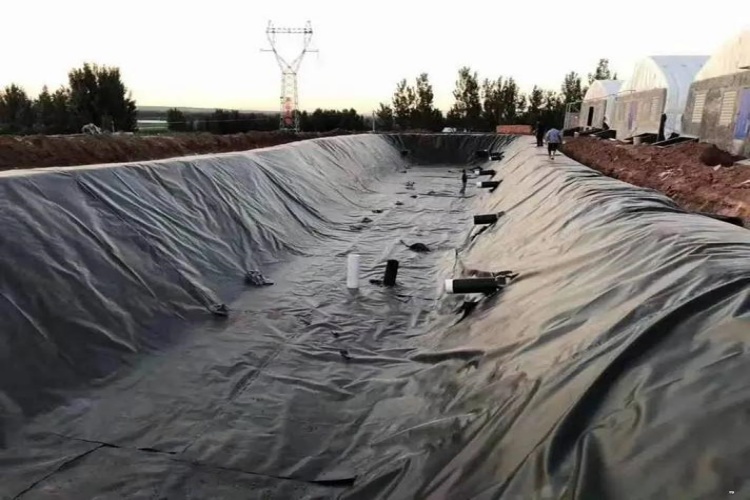
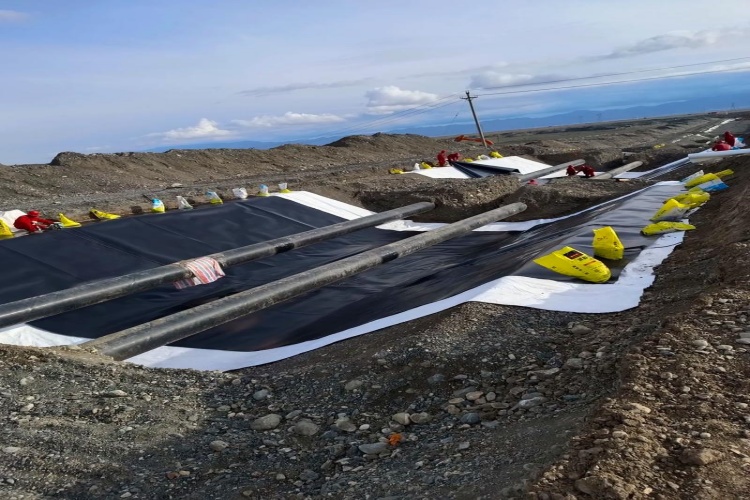
A geomembrane liner is only as effective as its seals, and penetrations are the most critical sealing points. In nearly every containment project—from landfills to reservoirs—pipes must pass through the liner to manage leachate, water, or gas. The connection between the flexible geomembrane and the rigid pipe is a point of high mechanical stress and immense leak risk.
This guide provides a complete overview of industry-approved methods for connecting geomembranes to different pipe materials, including PE/HDPE, PVC, steel, and concrete. We will explore the right technique for each material, compare the reliability and cost of each method, and provide practical engineering recommendations to ensure a permanent, leak-proof seal.
The choice of connection method is not universal; it is dictated entirely by the pipe's material properties.
Why Different Pipes Require Different Connection Methods
The core challenge is material compatibility. A geomembrane (typically البولي ايثيلين عالي الكثافة, or HDPE) can only be thermally fusion-welded to a material with the same chemical makeup. When connecting to a dissimilar material like PVC, steel, or concrete, welding is impossible. In these cases, we must rely on mechanical connections that use compression, gaskets, and sealants to create a barrier. Let's break down the best method for each pipe type.
Connecting Geomembranes to PE/HDPE Pipes
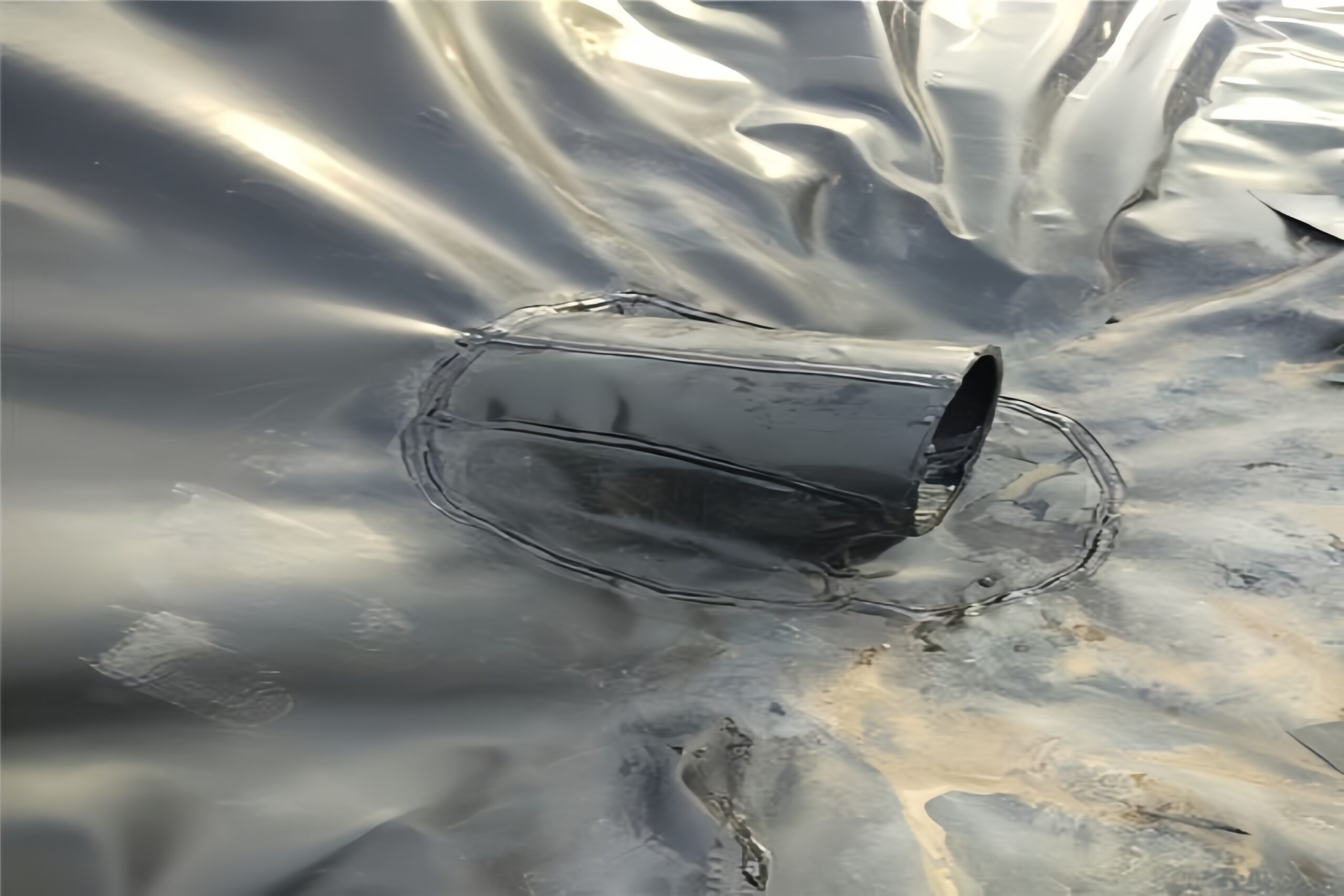
This is the ideal and most reliable scenario. Because PE/HDPE pipes are made of the same base material as most geomembranes, we can create a direct, monolithic connection through thermal fusion.
- Primary Method: Hot-Melt Welding with a Pipe Boot. This is the gold standard. A prefabricated HDPE "pipe boot" (a sleeve with a wide flange) is slipped over the pipe. The flange of the boot is then fusion-welded to the main geomembrane liner using a hot-wedge welder. The sleeve of the boot is then welded directly to the pipe wall using a handheld extrusion welder.
- نتيجة: A continuous, seamless, and permanent molecular bond that is often stronger than the parent material itself. This method is required for high-risk applications like landfill primary containment.
Connecting Geomembranes to PVC Pipes
PVC cannot be fusion-welded to an HDPE geomembrane. The connection must therefore be mechanical.
- Primary Method: Mechanical Clamping. This involves using a clamping system, often with a specialized transition fitting. One common method is to use a stainless-steel band clamp tightened over the geomembrane, which is wrapped around the PVC pipe. A layer of neoprene rubber gasket and/or butyl sealant is placed between the geomembrane and the pipe to create the seal.
- Alternative: Transition Fittings. Specialized fittings are available that have one end designed to connect to a PVC pipe (e.g., a solvent weld socket) and the other end designed to connect to an HDPE geomembrane (e.g., a spigot end ready for electrofusion).
Connecting Geomembranes to Steel or Stainless-Steel Pipes
Connecting to a rigid, high-strength material like steel requires a robust mechanical seal that can accommodate thermal expansion and prevent the sharp edges of the steel from damaging the geomembrane.
- Primary Method: Bolted Flange Connection. A common and effective method is to weld a steel flange onto the pipe. The geomembrane is then sandwiched between this flange and a second "companion" flange using a high-quality elastomeric gasket (like EPDM or neoprene). A series of bolts are tightened to a specified torque to create compressive force, sealing the gasket against the geomembrane and the steel. All sharp edges must be ground smooth, and a protective geotextile underlay is recommended.
Connecting Geomembranes to Concrete Pipes
Concrete connections are common for large outfalls, culverts, and penetrations through structural walls. The goal is to create a seal against a hard, porous, and often uneven surface.
- Primary Method: Batten Strip and Sealant. The geomembrane is laid against the concrete surface. A continuous bead of aggressive butyl sealant is applied. A rigid "batten strip" (typically a flat bar of stainless steel or aluminum) is then placed over the geomembrane and mechanically fastened into the concrete using expansion anchors or stainless steel bolts at regular intervals (e.g., 20 cm on center). Tightening the bolts compresses the geomembrane and sealant into the concrete, creating a durable seal.
- Alternative: Concrete Embedment. For new construction, a plastic or metal "embedment strip" can be cast directly into the concrete wall or structure. The geomembrane is later welded or clamped directly to this integrated strip, forming a continuous and extremely reliable connection.
Reliability and Cost Comparison of Various Connection Methods
| Connection Method | Applicable Pipes | Seal Reliability | Cost | Key Feature |
|---|---|---|---|---|
| Hot-Melt Welding | PE, HDPE | ★★★★★ (Excellent) | Medium | Monolithic, permanent fusion weld. No long-term maintenance. |
| Electrofusion Welding | PE, HDPE | ★★★★★ (Excellent) | Med-High | Highly controlled, automated fusion weld. Excellent for precision. |
| Mechanical Clamping | PVC, PE, HDPE | ★★★☆☆ (Good) | قليل | Simple and fast, but relies on gasket compression. |
| Bolted Flange | Steel, Concrete | ★★★★☆ (Very Good) | عالي | Very robust mechanical seal. Can be disassembled for maintenance. |
| Batten Strip | Concrete, Steel | ★★★★☆ (Very Good) | Medium | Standard for terminating liners against rigid structures. |
Practical Engineering Recommendations
- Prioritize Material Compatibility: Whenever possible, design your system to use HDPE pipes where they penetrate an HDPE geomembrane. This allows for the most reliable connection (welding) and eliminates long-term maintenance concerns associated with mechanical seals.
- Use Prefabricated Boots: For PE/HDPE connections, always opt for factory-prefabricated pipe boots over field-fabricated ones. They are made in a controlled environment from thicker material, ensuring higher quality and more consistent performance.
- Protect the Geomembrane: When connecting to concrete or steel, always add a layer of nonwoven geotextile cushion between the geomembrane and the rigid surface to protect against puncture and abrasion.
- Control the Details: For mechanical connections, success is in the details. Use high-quality stainless-steel hardware, ensure gaskets are chemically compatible with the contained liquid, and tighten bolts in a star pattern to the correct torque specification.
- Perform 100% Quality Control: All fusion welds must be tested (e.g., with air pressure or vacuum box testing). All mechanical connections should be visually inspected to ensure uniform compression and proper sealant application. Never backfill a penetration until it has been fully inspected and approved.
By understanding the fundamental differences between materials and applying the correct connection technique, you can ensure that every pipe penetration is a point of strength, not a point of failure.