

Choosing the wrong geogrid can compromise an entire landfill, leading to costly instability. Many products look similar on a spec sheet, but in the field, application-specific performance is what truly matters. How do you ensure you have the right one?
This guide explains how to select the right geogrid for different types of landfills, from small local sites to massive municipal solid waste (MSW) facilities. I'll show you how to match geogrid properties like tensile strength, creep resistance, and interface friction to specific project conditions to guarantee long-term stability and safety.
ك مورد المواد الاصطناعية الجيولوجية, I've seen firsthand how crucial this decision is. A successful project starts with understanding the unique demands of your site. Let's begin by breaking down why an application-first approach is the only reliable way to select geogrids.
1. Introduction to Application-Based Selection
Choosing a geogrid is about more than just meeting a minimum tensile strength value on a technical data sheet. It is about ensuring the material performs its specific function—reinforcement, stabilization, or separation—under real-world conditions for decades.
Why Application-Based Selection Matters
Every landfill is different. A low-height landfill in an arid climate has vastly different engineering needs than a towering, 50-meter-high MSW landfill in a seismically active, high-rainfall area. An application-based approach forces you to ask the right questions: What problem am I trying to solve? Is it slope stability? Is it bearing capacity on a soft foundation? Is it preventing the cover soil from sliding off a geomembrane? The answer dictates which geogrid property is most critical. For example, in a steep slope design, interface friction with the geomembrane might be more important than ultimate tensile strength. In a high-fill scenario, long-term creep resistance is the non-negotiable parameter.
Limitations of Specification-Only Selection
A common mistake I see is buyers procuring geogrids based on a single parameter, usually ultimate tensile strength (T_ult). This value is measured in a quick laboratory test and represents the point where the material breaks. However, in landfill engineering, we design for serviceability, meaning we need the structure to remain stable with minimal deformation. The geogrid will never—and should never—reach its ultimate strength. Selecting a product based only on T_ult ignores more critical factors like strength at low strain (stiffness), junction strength, long-term creep deformation, and installation damage resistance. It's like buying a car based only on its top speed without considering fuel efficiency, safety, or reliability.
Relationship to Specification-Based Design
This approach doesn't replace formal, specification-based design; it complements it. An engineer will calculate the required forces and produce a design specification (e.g., "required long-term design strength = X kN/m"). Your job as a procurer or contractor is to find a product that not only meets this number but also possesses the other essential characteristics demanded by the application. This guide helps you bridge that gap, ensuring the geogrid you choose is truly fit for purpose, delivering performance and safety for the entire design life of the landfill.
2. Classification of Landfill Types and Conditions
To select the right geogrid, we first need to understand the environment it will be placed in. We classify landfills based on several key characteristics that directly influence reinforcement requirements. These factors work together to create a unique engineering challenge for each site.
Landfill Height and Waste Load Characteristics
The height of the waste column is a primary driver of stress. A low-height landfill (e.g., under 15 meters) exerts relatively low, predictable loads. In contrast, a large municipal solid waste (MSW) landfill can reach heights of 50 meters or more. This creates immense vertical and horizontal pressures on the liner system and foundation. Furthermore, the waste itself will decompose and settle over many years, creating long-term, sustained loads that challenge the geogrid's ability to resist creep.
Slope Geometry and Stability Conditions
Landfill slopes, both internal and external, are critical to stability. Gentle slopes (e.g., 4H:1V) are inherently more stable than steep slopes (e.g., 2.5H:1V). Steep slopes are often necessary to maximize airspace and land use efficiency, but they significantly increase the risk of translational or rotational failures. The main role of the geogrid in these scenarios is to provide tensile resistance to counteract the driving forces pulling the waste mass and liner system downslope.
Foundation Soil Conditions
The ground beneath the landfill is just as important as the structure itself. A landfill built on strong, competent bedrock or dense gravel has a solid base. However, many sites are located on less-than-ideal ground, such as soft clays or loose sands. These soft foundations have low bearing capacity and are prone to excessive and uneven settlement. Without proper reinforcement, the weight of the landfill can cause a catastrophic foundation failure. Here, the geogrid functions to distribute the load over a wider area and prevent localized shear failure.
Operational vs Final Closure Stages
A landfill's reinforcement needs change over its life. During the operational phase, geogrids are used in the base liner system and potentially in internal berms to reinforce the growing waste mass. The loads are high and long-term. In the final closure stage, the focus shifts to the cover system. The geogrid's role here is to ensure "veneer stability"—preventing the topsoil, drainage layer, and geomembrane cap from sliding off the final slopes. The loads are much lower, but interface friction and flexibility become the most important properties.
3. Geogrid Selection for Low-Height or Small Landfills
For smaller or low-height landfills, which we typically define as having a final waste height under 15–20 meters, the engineering challenges are less severe than in large MSW facilities. The primary goal is general stability and ensuring a robust foundation, making the geogrid selection process more straightforward.
Engineering Characteristics and Risks
In these landfills, the overall loads are lower, and long-term creep is less of a controlling factor. The primary risks are related to basal stability, especially if the foundation soils are moderately weak, and maintaining the integrity of shallower slopes. The stresses are often distributed in more than one direction due to the lower height and wider footprint. Therefore, the reinforcement does not need to be concentrated in a single, principal direction. Failures, if they occur, are more likely to be shallow and rotational.
Recommended Geogrid Types
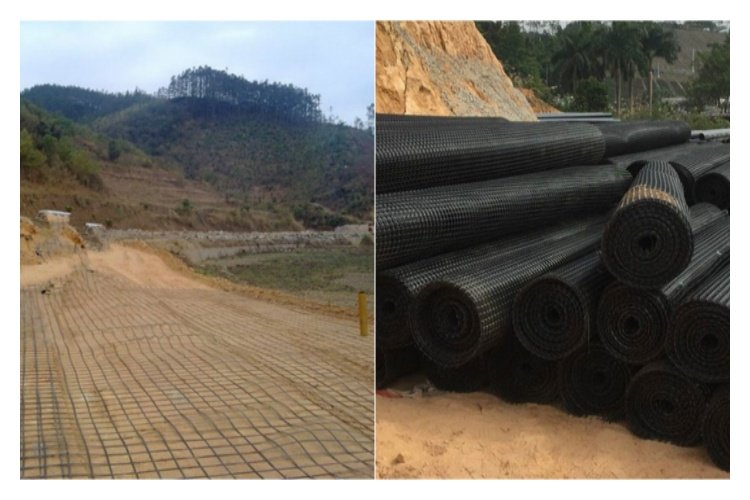
For these conditions, biaxial plastic geogrids (typically made from polypropylene, PP) are the most common and cost-effective choice. A biaxial geogrid has a square or rectangular aperture and provides tensile strength in both the longitudinal (machine) and transverse directions. This two-way reinforcement is ideal for spreading loads and providing general confinement to the base aggregate layer and lower soil slopes. They work by interlocking with the aggregate, creating a mechanically stabilized layer that is stiffer and stronger than the unreinforced soil.
Governing Performance Criteria
When selecting a biaxial geogrid for a small landfill, the key performance criteria are:
- Moderate Tensile Strength: High-performance grids are often overkill. A standard biaxial geogrid with ultimate tensile strengths in the range of 20 to 40 kN/m is usually sufficient for base reinforcement and gentle slope stability.
- Interface Friction and Interlock: The most important function is how well the grid "locks up" with the soil or aggregate placed on it. A well-defined rib structure and aperture size that matches the aggregate size will maximize this interlock, preventing sliding and improving load distribution.
- Durability and Installation Damage Resistance: The geogrid must be robust enough to withstand the stresses of installation, including construction traffic and aggregate placement, without being damaged.
In most cases, these landfills still require geogrid reinforcement, especially to satisfy regulatory requirements and provide a factor of safety against unforeseen soil variability. The use of a biaxial grid is a prudent and economical way to enhance overall system stability.
4. Geogrid Selection for Large MSW Landfills
Large Municipal Solid Waste (MSW) landfills represent one of the most demanding applications for geosynthetics. With fill heights often exceeding 50 meters and design lives of 30 years or more, the selection of geogrid reinforcement is absolutely critical to long-term performance and safety.
High Fill Height and Long-Term Settlement
The immense weight of the waste creates very high, sustained tensile forces within the reinforcement layers. More importantly, waste decomposes and compacts over time, leading to significant long-term settlement. This process places the geogrid under a constant state of tension for its entire design life. If the geogrid elongates or "creeps" excessively under this sustained load, the reinforcement function is lost, and the stability of the entire structure can be compromised. Therefore, long-term creep performance, not short-term ultimate strength, is the most important design consideration.
Load Transfer and Reinforcement Mechanisms
In a high landfill, the geogrid primarily functions to provide tensile reinforcement to resist lateral earth pressures and maintain slope stability. The stresses are highly concentrated in the principal direction, typically parallel to the slope. The geogrid acts like a structural element, transferring tensile loads from the potentially unstable soil and waste mass to zones of anchorage. To be effective, the geogrid must be very stiff—that is, it must be able to handle high loads at very low levels of strain (elongation). Excessive stretching would allow the soil mass to deform, defeating the purpose of reinforcement.
Recommended High-Performance Geogrids
For these demanding conditions, you must use high-performance geogrids specifically engineered for long-term, high-load applications.
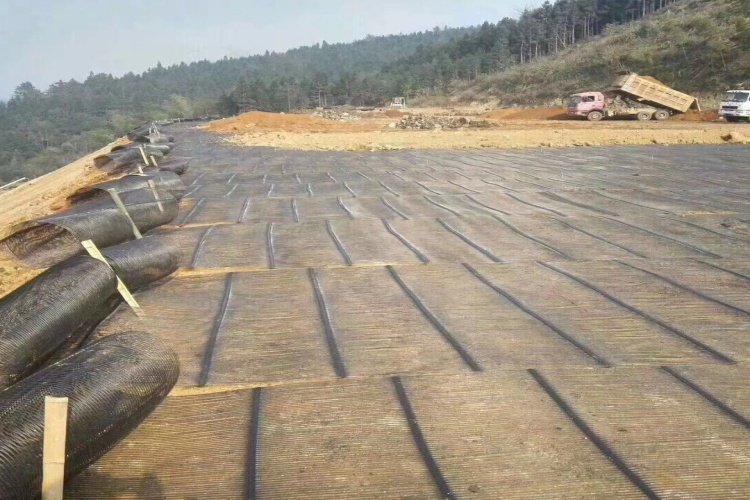
- High-Strength Uniaxial Geogrids (PET/HDPE): These grids are designed to provide very high tensile strength in a single direction. Polyester (PET) geogrids are the most common choice due to their excellent low-creep characteristics. High-density polyethylene (HDPE) uniaxial grids are also used, prized for their superior chemical resistance.
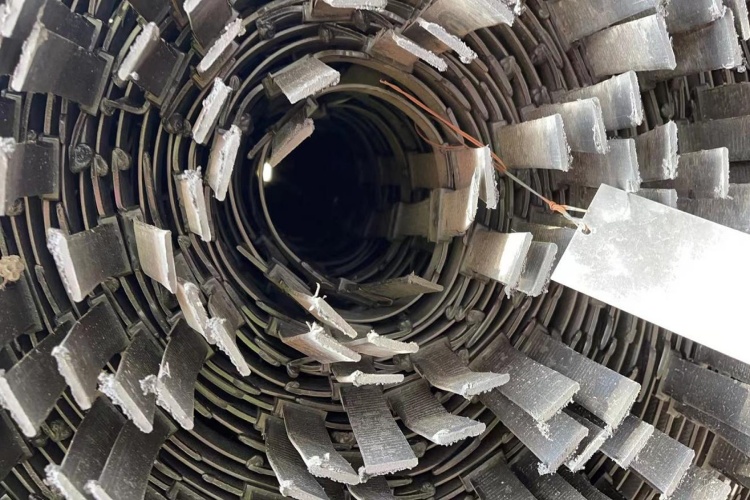
- Steel-Plastic Composite Geogrids: For the most critical applications with extreme heights and loads, steel-plastic geogrids are an excellent solution. They consist of high-strength steel wires encased in a protective polyethylene sheath. This composite structure leverages the exceptionally high tensile modulus and negligible creep of steel, providing the most robust reinforcement available.
When procuring these materials, you must request and review data on long-term creep-limited strength و tensile strength at 2% or 5% strain, as these are the values engineers use for design.
5. Geogrid Selection for Steep Slope Landfills
As landfills compete for space, designs are pushed to include steeper slopes to maximize capacity. Slopes of 3H:1V or even 2.5H:1V are now common. While efficient, this geometry dramatically increases the gravitational driving forces that promote sliding failures, making geogrid reinforcement an absolute necessity.
Interface Sliding Failure Mechanisms
On steep slopes lined with a composite system (e.g., geomembrane, GCL, geotextile), the most critical failure mode is often interface sliding. This is where one geosynthetic layer slides against another, or the entire geosynthetic package slides against the underlying soil. The geogrid's job is to provide tensile resistance to hold the entire system in place. However, its own interaction with the layers above and below it is just as important. If the geogrid has poor frictional characteristics with the adjacent HDPE geomembrane, it can become a plane of weakness itself.
Importance of Modulus and Junction Strength
To prevent slope deformation, the geogrid must be stiff (have a high tensile modulus). This means it develops high resisting forces at very small movements or strains. A geogrid that has to stretch significantly before providing resistance is not suitable for steep slope applications, as this elongation would allow the slope to deform unacceptably.
Furthermore, junction strength is a crucial parameter often overlooked. The junctions are where the longitudinal and transverse ribs of the geogrid are connected. In a slope application, the soil and waste exert shear forces on the transverse ribs, which then transfer that load to the main, high-strength longitudinal ribs via the junctions. If the junctions are weak, they can fail before the main ribs are mobilized, rendering the grid ineffective.
Recommended Uniaxial Geogrid Solutions
For steep slope reinforcement, high-modulus uniaxial geogrids are the standard choice. As the primary stress is one-directional (down the slope), concentrating the tensile capacity in that direction is most efficient.
- Polyester (PET) Uniaxial Geogrids: These are widely used due to their excellent high-modulus properties and proven low-creep performance, making them ideal for long-term stability.
- HDPE Uniaxial Geogrids: These are also a strong option, particularly valued for their chemical inertness and high interface friction angles against other textured geosynthetics and soils.
When selecting a product, it is essential to consider not just the geogrid's datasheet but also project-specific interface shear testing results. This testing, done in a laboratory, directly measures the frictional performance between your chosen geogrid, geomembrane, and other layers, providing the data needed to confirm system stability.
6. Geogrid Selection for Landfills on Soft Foundations
Building a massive, heavy structure like a landfill on soft, compressible soil is a major engineering challenge. Soft foundations, such as those with weak clays, silts, or organic soils, have low bearing capacity and are susceptible to large, non-uniform settlements. Without proper ground improvement, the landfill's weight could cause a catastrophic failure of the foundation soil.
Bearing Capacity and Deformation Control
The primary function of a geogrid in this scenario is basal reinforcement. It is placed at the base of the landfill, directly on the prepared subgrade. Its role is twofold:
- Increase Bearing Capacity: The geogrid acts as a tensioned membrane, distributing the concentrated loads from the waste over a much wider area of the foundation. This "snowshoe effect" reduces the stress on the weak soil, preventing it from failing in shear.
- Control Differential Settlement: Soft soils rarely settle uniformly. A geogrid reinforcement layer helps to bridge over weaker zones and average out these differences, reducing the damaging effects of uneven settlement on the critical liner system above.
Stress Distribution and Load Spreading
When a load is applied to a geogrid-reinforced base, the aggregate or fill material interlocks with the grid's apertures. As the soil tries to spread laterally under the load, it is restrained by the geogrid's tensile strength. This confinement creates a composite, mechanically stabilized layer that is significantly stiffer and stronger than the soil alone. This allows the system to support much higher loads and effectively spreads the stresses at a wider angle, protecting the underlying soft foundation.
Recommended Biaxial or Composite Geogrids
For foundation stabilization, reinforcement is needed in multiple directions to handle the complex stress patterns.
- Biaxial Geogrids: High-strength polypropylene (PP) or polyester (PET) biaxial geogrids are the most common solution. They provide tensile reinforcement in both the longitudinal and transverse directions, which is perfect for spreading loads and controlling deformations across a wide area.
- Geogrid-Geotextile Composites: In some cases, a composite product that combines a geogrid with a nonwoven geotextile can be beneficial. The geogrid provides the reinforcement, while the geotextile provides separation and filtration, preventing fine particles from the soft subgrade from contaminating the structural fill layer.
The key selection criteria are the tensile strength at a low strain (typically 2% or 5%) to ensure stiffness, and high resistance to installation damage, as placing aggregate fill on a soft subgrade can be a harsh process.
7. Geogrid Selection for Final Cover and Closure Systems
When a landfill reaches its final capacity, it must be closed with a multi-layered cover system. This system is designed to minimize water infiltration, control gas emissions, and provide a stable surface for revegetation. The geogrid plays a crucial but different role here compared to its function in the main waste body.
Stability of Cover Soils on Slopes
The final cover typically includes a low-permeability layer (like a geomembrane or GCL), a drainage layer, and a topsoil or vegetative layer. This entire package is placed on the final, settled slopes of the waste mass, which can still be quite steep. The primary challenge is veneer stability—preventing the cover soils and drainage materials from sliding down the smooth surface of the underlying geomembrane. The gravitational forces acting on the cover soils must be resisted to ensure long-term integrity.
Protection of Geomembranes and Barrier Layers
The geogrid provides the tensile force necessary to hold the cover soils in place. It is anchored at the crest of the slope and unrolled downslope. The soil is then placed on top of it. The friction and interlock between the soil and the geogrid create a stabilized soil veneer that can be placed on much steeper slopes than would be possible otherwise. This reinforcement also helps protect the underlying geomembrane from an overburden of soil weight that could cause it to deform or slide, potentially compromising the entire cap.
Lightweight and Flexible Geogrid Options
The loads involved in a cover system are significantly lower than those within the landfill base. Therefore, high-strength, high-modulus geogrids are not necessary and would not be cost-effective.
- Lightweight Biaxial Geogrids: These are often the ideal choice. They provide sufficient tensile capacity in both directions to handle veneer stability and are flexible enough to conform well to the differential settlement contours of the final landfill surface. Polypropylene (PP) or polyethylene (HDPE) are common polymer choices.
- التركيبات الجغرافية: Products that combine a lightweight geogrid with a nonwoven geotextile are also very effective. The geogrid provides the reinforcement, while the geotextile provides added friction and separation.
The critical performance criteria for cover system geogrids are interface friction (how well it grips the geomembrane below and soil above), flexibility, and adequate مقاومة للأشعة فوق البنفسجية to withstand sun exposure during the installation period.
8. Integrated Selection in Composite Liner Systems
A modern landfill liner is not a single layer but a complex, engineered system composed of multiple geosynthetic materials working together. A geogrid is just one component. Its performance is directly tied to how well it interacts with the other layers, such as geomembranes, geosynthetic clay liners (GCLs), and geotextiles. Selecting the right geogrid requires a holistic, system-wide view.
Compatibility with Geomembranes and GCLs
The most common liner components are HDPE geomembranes (for impermeability) and GCLs (as a secondary hydraulic barrier). A geogrid placed in contact with these materials must be chemically and physically compatible. For example, the sharp edges of a poorly manufactured geogrid could potentially damage a geomembrane during installation or under long-term pressure. More importantly, the surface texture of the geogrid and the geomembrane determines the frictional performance between them. Using a textured geomembrane with a well-structured geogrid can significantly increase interface shear strength compared to using two smooth surfaces.
Interface Shear and System Stability
As mentioned before, قوة القص في الواجهة is arguably the most critical parameter for lined slopes. It represents the friction or bond between adjacent layers in the geosynthetic system. A low interface shear strength creates a potential slip plane that could lead to catastrophic failure, regardless of how strong the geogrid itself is. Engineers must analyze the stability of every single interface:
- Soil vs. Geotextile
- Geotextile vs. Geogrid
- Geogrid vs. Geomembrane
- Geomembrane vs. GCL
- GCL vs. Subgrade Soil
This analysis must be done using project-specific materials and site conditions, typically through large-scale direct shear testing in a qualified laboratory. As a supplier, we always recommend that our clients perform this testing to validate their design and material choices.
Multi-Layer Design Considerations
In very high or complex landfills, it's not uncommon to use multiple layers of geogrid reinforcement at different elevations within the waste mass. For instance, a high-strength biaxial grid might be used at the base for foundation stability, while several layers of high-strength uniaxial grid are placed every 5-10 meters vertically to reinforce the main waste body. In these designs, proper anchorage and connection between layers are critical. The selection of each geogrid layer must be tailored to the specific stresses and functions at that elevation.
9. Common Selection Mistakes and Design Pitfalls
Over the years, I've seen some common and costly mistakes in geogrid selection for landfills. Avoiding these pitfalls is key to ensuring a safe, reliable, and economical design. Being aware of them can help you ask the right questions of your engineer and supplier.
Over-Reliance on Ultimate Tensile Strength
This is the most frequent mistake. A buyer receives a specification calling for a geogrid with a certain "tensile strength" and procures a product based solely on its ultimate tensile strength (T_ult) from the data sheet. T_ult is measured in a rapid test and represents the breaking point, a condition that should never be approached in a real-world structure. For landfill design, engineers rely on long-term allowable design strength, which accounts for reductions due to creep, installation damage, and chemical degradation. This value can be less than half of the ultimate strength. Always ask for the long-term design strength and the data that supports it.
Ignoring Long-Term and Interface Performance
A close second is neglecting the two most critical performance indicators for landfill reinforcement:
- Creep: If the geogrid stretches over time under the constant load of the waste, it stops providing reinforcement. For high fills, you must select a geogrid with proven low-creep characteristics, like polyester (PET) or steel composites. Requesting 10,000-hour creep data is standard practice for critical applications.
- Interface Friction: The strongest geogrid in the world is useless if it simply slides against the adjacent geomembrane. The stability of the entire system depends on the frictional performance between each layer. Insisting on project-specific interface shear testing is not optional; it's essential due diligence.
Mismatch between Geogrid and Site Conditions
The third common pitfall is a fundamental mismatch between the product and the problem. For example:
- Using a biaxial geogrid (strength in two directions) for a high, steep slope where a uniaxial geogrid (strength concentrated in one direction) is needed.
- Using a low-strength geogrid intended for a final cover system in a high-stress basal reinforcement application.
- Selecting a geogrid with the right strength but the wrong aperture size for the specified backfill, leading to poor interlock and reduced performance.
These errors often stem from a procurement process that is detached from the engineering design intent. To avoid this, ensure there is clear communication between the design engineer, the contractor, and the material supplier.
Summary Table
To help you quickly reference the right geogrid type for your project, here is a summary table that connects landfill conditions to recommended geogrids and their most important performance requirements.
| Landfill Condition | Recommended Geogrid Type | Key Performance Requirements |
|---|---|---|
| Low-Height / Small Landfill | Biaxial Plastic Geogrid | Moderate tensile strength, interface friction, interlock |
| Large MSW Landfill | High-Strength Uniaxial or Steel-Plastic Geogrid | High tensile strength at low strain, low creep, chemical resistance |
| Steep Slope Landfill | High-Modulus Uniaxial Geogrid | High modulus, strong interface shear with geomembrane, junction strength |
| Landfill on Soft Foundation | Biaxial Geogrid or Geocomposite | Bearing capacity improvement, deformation control, installation damage resistance |
| Final Cover System | Lightweight Biaxial Geogrid or Geocomposite | Veneer stability, interface friction, flexibility |
خاتمة
Effective landfill design depends on selecting the right geogrid for the specific application. By moving beyond simple spec sheets and focusing on the actual engineering challenges—be it fill height, slope angle, or foundation stability—you ensure a safe and durable structure. Always match the geogrid's key properties to the site's unique conditions for reliable, long-term performance.