

Building a retaining wall on poor ground is a huge risk. A massive concrete wall is expensive and can crack with the slightest ground settlement, leading to catastrophic failure.
Geocells create a flexible, composite structure by confining soil, which adapts to ground movement. Traditional walls are rigid structures that resist pressure through their sheer mass and strength. Geocells are better for soft soils, are often cheaper, and can be vegetated for a green finish.
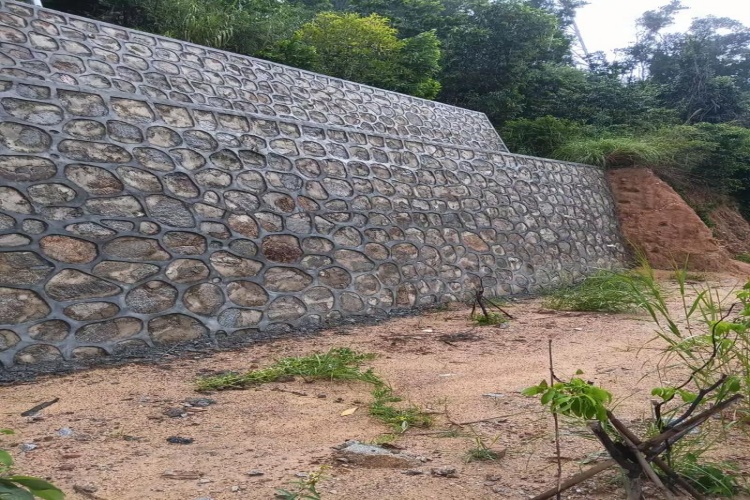
From my experience exporting geosynthetics, I see clients moving away from old methods for many applications. The choice between a geocell system and a traditional concrete or block wall isn't just about the material; it represents two completely different engineering philosophies. One works with the earth, and the other tries to fight it. Understanding this core difference is key to building a safer, more cost-effective, and longer-lasting structure.
How do geocells and traditional retaining walls differ in structural behavior and load transfer?
A rigid concrete wall concentrates immense stress on its foundation. If the ground settles even slightly, the wall can crack and fail without warning, a terrifying prospect.
A geocell wall forms a flexible, monolithic mass that distributes loads broadly across the subgrade. A traditional rigid wall, like a gravity wall, concentrates its entire weight onto a narrow footing, relying on its own mass to resist failure.
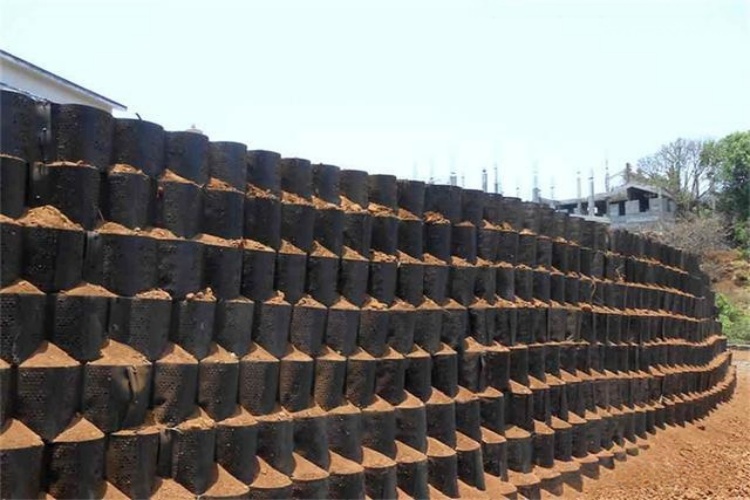
This difference in behavior is the most important distinction between the two systems.
Geocells: The Flexible Composite System
أ geocell wall is not just the plastic cell structure; it's a composite system. The three-dimensional honeycomb cells are filled with soil, sand, or gravel. The cell walls confine this infill material, creating immense friction between the infill and the cell wall. This turns thousands of individual particles into a single, flexible, but coherent block of material. This block acts as a whole, spreading structural loads over a very wide area.
Traditional Walls: The Rigid Barrier System
Traditional retaining walls—like gravity, cantilever, or block walls—are rigid elements. A gravity wall uses its own immense weight to hold back the soil. A cantilever wall uses a large footing to act as a lever. In all cases, these are hard structures that concentrate huge forces at their base. They are designed to not bend or deform.
This leads to a critical difference in safety. A geocell wall has a ductile failure mode; if it is overloaded, it will deform slowly and visibly, giving you clear warning signs. A rigid wall has a brittle failure mode; it can fail suddenly and catastrophically with little to no warning.
What material and construction differences affect cost, flexibility, and installation complexity?
Your project requires a high retaining wall, but the cost of concrete, steel, and heavy machinery is soaring. You are stuck between a budget blowout and a scaled-back design.
Geocells are lightweight, transported in a collapsed form, and can often use local, on-site soil for infill. This cuts material and transport costs. Traditional walls require heavy, manufactured materials like concrete or blocks, extensive foundation work, and are much slower to build.

The on-site construction process is where the practical advantages of geocells become very clear. I regularly see clients save significant amounts on their project budgets by switching from traditional designs. Here is a direct comparison of the key performance and construction factors:
| مقياس الأداء | Geocell Retaining Wall | Traditional Retaining Wall |
|---|---|---|
| Structural Nature | Flexible | Rigid |
| Foundation Needs | Adapts to poor/uneven ground | Requires strong, stable ground |
| Seismic Performance | Excellent, absorbs energy | Poor, prone to cracking |
| Construction Speed | Fast | Slow |
| Material Weight | Lightweight | Heavy |
| Cost-Effectiveness | High (less material, local fill) | Low (heavy materials, deep foundation) |
The ability to use on-site granular soil as infill is a game-changer for many projects. Instead of paying to haul away excavated material و paying to truck in expensive aggregates or concrete, you can often use what you already have. This reduces costs, project timelines, and environmental impact.
In which site conditions do geocells perform better than rigid retaining wall systems?
You're facing a site with soft, unstable soil. You know a traditional retaining wall would require massive, expensive ground improvement just to stand up, making the project financially unfeasible.
Geocells excel on soft, compressible, or non-uniform ground where traditional walls would fail or require costly foundations. Their flexibility allows them to accommodate settlement. They are also superior for steep slopes, areas with seismic activity, and sites where a vegetated, green finish is required.

This is where geocells truly outshine traditional methods. They are problem-solvers for difficult sites.
Poor Foundation Soils
This is the number one reason clients choose geocells. A rigid wall on soft clay or silt will settle unevenly and crack. A geocell wall spreads the load out like a snowshoe, reducing the pressure on the weak soil. It can handle differential settlement without losing its structural integrity.
Seismic and High-Vibration Areas
During an earthquake, a rigid concrete wall will crack and shatter. A flexible geocell structure can absorb and dissipate the seismic energy, deforming slightly and then returning to its shape, making it a much safer option in seismically active regions.
Ecological and Aesthetic Requirements
Traditional walls are often just gray, functional structures. Geocell walls offer a unique environmental benefit. The outer-facing cells can be filled with topsoil and planted with local vegetation. This turns a structural wall into a living, green slope that blends into the natural environment, provides ecological habitat, and is more aesthetically pleasing.
How can I decide between geocells and traditional retaining wall materials for my project needs?
Choosing the wrong retaining wall system is an expensive, long-term mistake. You're weighing upfront costs against long-term performance and aren't sure which factors matter most for your project.
Choose geocells for projects with poor foundations, steep slope requirements (>45°), or environmental goals. Choose traditional walls only when you have excellent ground conditions and need an absolutely rigid structure, such as a bridge abutment or a building's basement wall.

Making the right choice comes down to asking a few simple questions about your project's specific conditions and goals. For most common retaining wall applications in road, rail, and land development, the advantages of geocells are clear.
Here's a quick checklist to guide your decision:
- What is my ground condition? If the soil is soft, compressible, or prone to settling, a geocell wall is the safer, more reliable choice.
- What is my budget? If you need to minimize material, transport, and labor costs, geocells almost always have a significant cost advantage.
- How important is construction speed? Geocell systems can be installed much faster than traditional walls, which can be critical for meeting tight project deadlines.
- Do I want a "green" wall? If a vegetated, natural-looking finish is a project requirement, geocells are the only practical option.
- Do I need absolute, unyielding rigidity? For certain specialized structures where zero deformation is allowed, a heavily engineered rigid wall on a solid rock foundation may be required.
خاتمة
Geocells offer a flexible, cost-effective, and environmentally friendly solution for most retaining wall needs. By evaluating your site conditions and project goals, you can build a more resilient and sustainable structure.