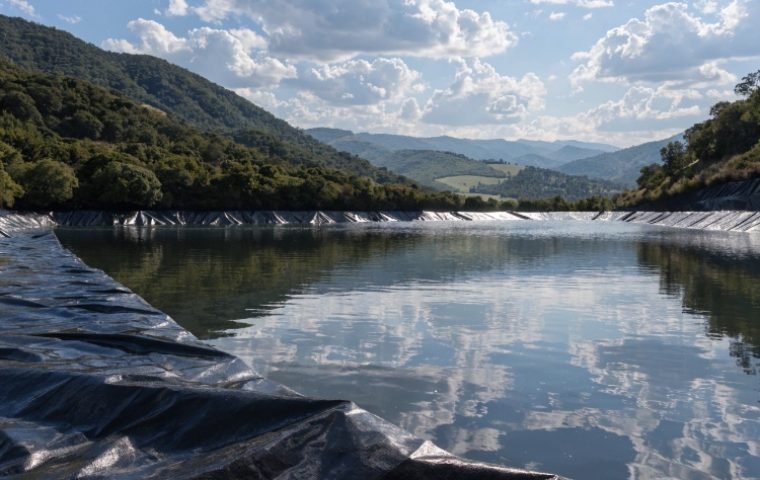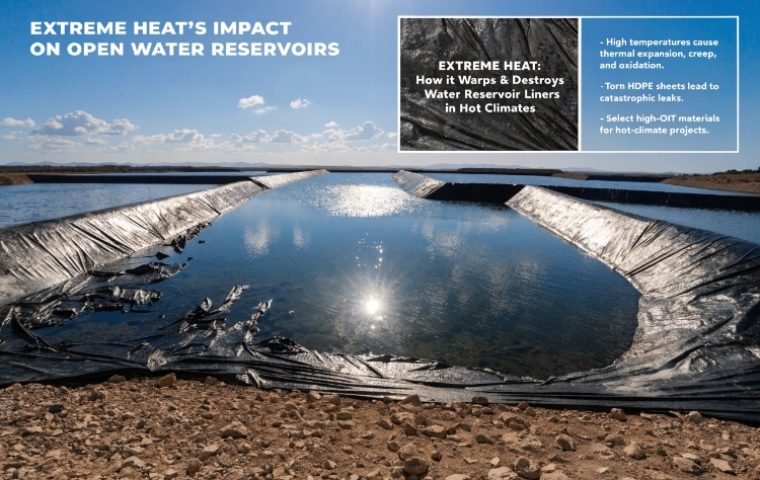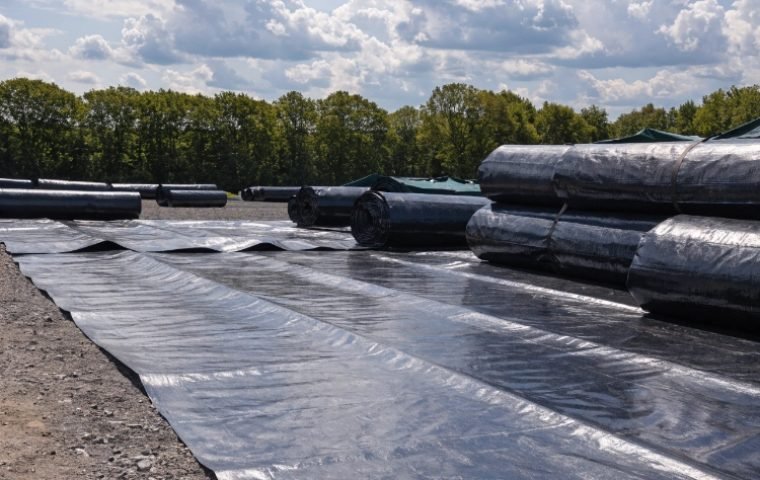


When installing a geomembrane liner, it's tempting to think of panel layout as a simple puzzle: how to cover an area with the fewest pieces. This approach is dangerously wrong. The direction of your seams is not an installation shortcut; it's a critical engineering decision that directly impacts stress distribution, leak resistance, and the long-term survival of the entire containment system.
For any large-scale geosynthetic application, from a simple pond to a complex tailings dam, seam orientation must be treated as a core design parameter. This guide explains why, using the high-stakes environment of a landfill to illustrate the forces at play and outline the best practices that ensure a durable, secure liner system.
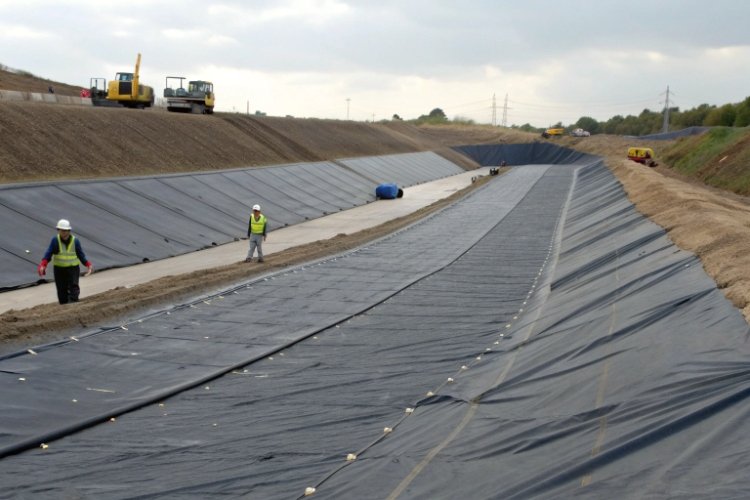
Let's begin by defining the two primary options for seam orientation.
What Is Panel Seaming Direction?
A geomembrane system is constructed from large factory-produced rolls, or "panels," which are joined on-site with thermal welds to create a continuous, impermeable "seam." The orientation of these seams relative to the site's topography, particularly its slopes, is the seaming direction.
There are two fundamental orientations:
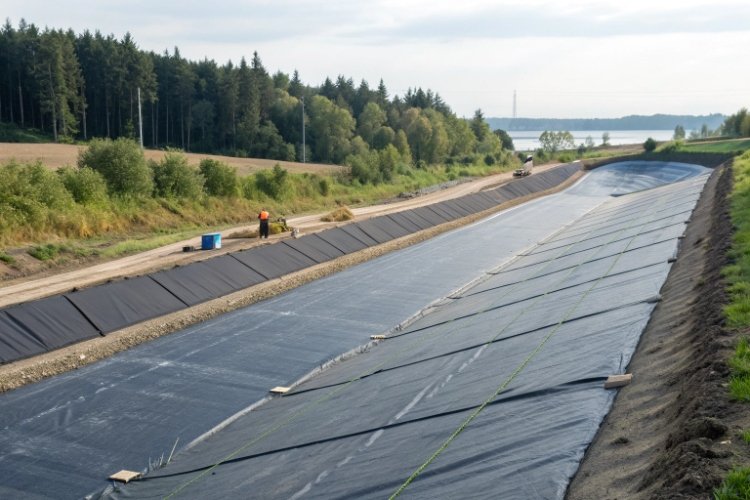
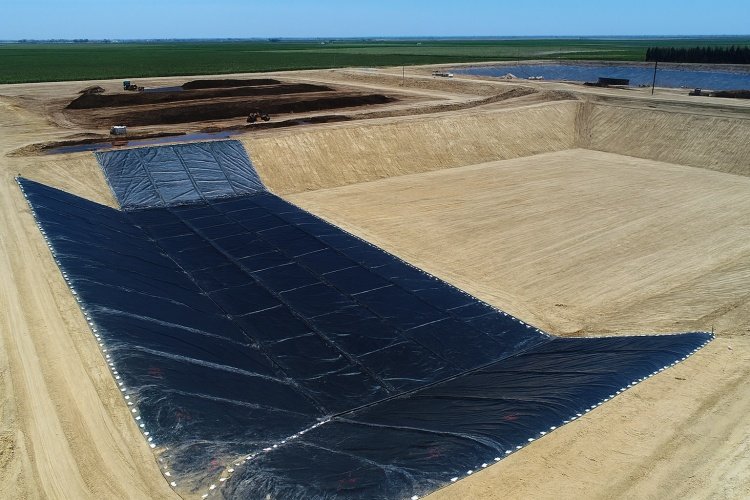
- Parallel to the Slope (Longitudinal): Seams run vertically, from the top of the slope (crest) to the bottom (toe). They follow the direction of gravity and the "line of maximum slope."
- Perpendicular to the Slope (Transverse): Seams run horizontally across the slope face, perpendicular to the direction of gravity.
Industry standards and engineering best practices overwhelmingly recommend one a single approach: seams must be oriented parallel to the slope.
Why Seaming Direction Is a Critical Design Consideration
Choosing to orient seams parallel to the slope is not an arbitrary rule; it is based on fundamental physics and material science that govern how the liner behaves under stress.
Stress Distribution and Load Transfer
An HDPE geomembrane expands and contracts significantly with temperature changes. On a slope, this movement primarily occurs along the longest dimension—from top to bottom.
- Parallel Seams: When seams are parallel to the slope, this thermal expansion and contraction happens along the body of the panel. The seam itself, which runs in the same direction, is not subjected to direct tensile stress from this movement.
- Transverse Seams: If seams run horizontally, the liner’s vertical expansion and contraction will pull directly on the seams, creating significant tensile stress. This constant stress dramatically increases the risk of long-term seam failure.
Seam Integrity and Wrinkle Management
Wrinkles form in geomembranes due to thermal expansion or subgrade settlement.
- Parallel Seams: These seams align with the natural direction of settlement and wrinkle formation on a slope. The liner can adjust and form waves more naturally without putting localized stress on the seams.
- Transverse Seams: Wrinkles that form across a horizontal seam create sharp points of stress concentration, which can lead to fatigue and cracking over time.
Application-Specific Impacts of Seaming Direction
While the principle is universal, its importance is magnified in high-risk applications.
Vullisterreine
This is the most demanding scenario due to a combination of factors: steep slopes, immense long-term loads from waste, corrosive leachate, and a required service life of 30-50 years or more. A seam failure here can lead to irreversible groundwater contamination. Therefore, seams on landfill slopes must be oriented parallel to the slope. On the landfill floor (base), which has a slight grade, seams are often oriented perpendicular to the leachate collection pipes to avoid having the pipes cross welds.
Tailings Storage Facilities
These sites involve high hydraulic pressure, dynamic loads, and significant seismic risk. Seam orientation is critical for slope stability and preventing seam shear failure during settlement or seismic events.
Wastewater and Industrial Ponds
In these applications, liners are exposed to chemicals and frequent thermal cycling. Proper seam orientation prevents stress concentration at the welds, which are often the first points to degrade under chemical attack and fatigue.
Reservoirs and Canals
For canals, seams must run parallel to the direction of water flow to prevent creating hydraulic drag or points of scour that could lift or damage the liner. In reservoirs, seams on slopes must follow the line of maximum slope down to the floor.
Common Panel Seaming Direction Mistakes
Mistakes in seam layout are costly and often impossible to correct after installation.
- Ignoring Slope-Induced Stresses: The most common error is laying panels horizontally across a slope simply because it seems easier or matches the roll width. This fundamentally ignores the primary stress direction and sentences the seams to a life under constant tension.
- Using Cross-Shaped Seams: A "cross" seam, where four panels meet at a single point, is strictly prohibited in professional installations. This geometry creates an extreme point of stress concentration that is nearly impossible to weld perfectly and is highly prone to failure. The correct method is to use offset "T-shaped" seams.
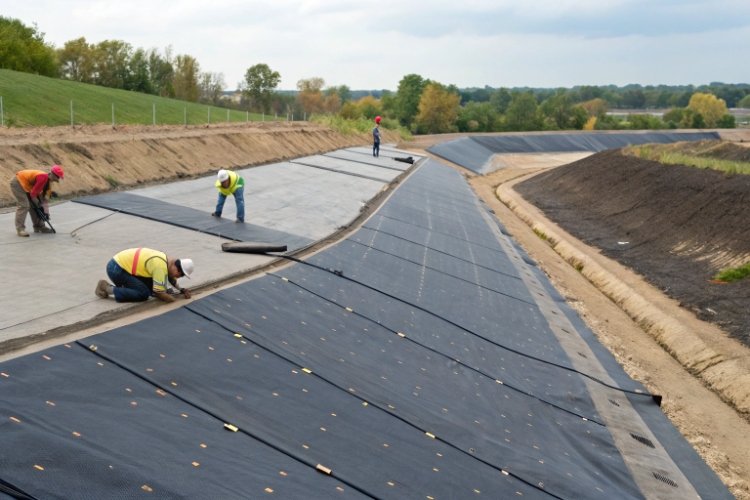
- Placing Seams in High-Stress Zones: Seams should never be located in areas of known stress concentration. A key rule is to avoid placing any seams within 1.5 meters of the slope crest or toe, where the liner transitions from flat to sloped.
Best Practices for Panel Layout and Seam Orientation
A robust seam layout plan is developed during the design phase, not improvised on-site.
- Follow Industry Standards: The International Association of Geosynthetic Installers (IAGI) and other regulatory bodies are clear: “In general, seams shall be oriented parallel to the line of the maximum slope.”
- Prioritize a Slope-Parallel Layout: On any slope steeper than 1:6 (16.7%), a parallel orientation is mandatory.
- Minimize Total Seam Length: Design the panel layout to minimize the total linear meters of seams. This reduces the time and cost of welding and quality assurance testing, and lowers the overall number of potential failure points. This can often be achieved by using wider geomembrane rolls.
- Plan Transitions Carefully: At the transition from the floor to the slope, the seam orientation will change. This area requires careful planning to ensure the seams from the two directions are properly overlapped and welded, often with reinforcement from an extrusion weld.
Gevolgtrekking
The orientation of geomembrane seams is a foundational element of containment system design, not an incidental construction detail. By aligning seams parallel to the principal direction of stress on slopes, we accommodate thermal forces, manage settlement, and avoid concentrating damaging loads on the welds. This simple but critical principle is the key to ensuring the long-term integrity, durability, and safety of the entire liner system.