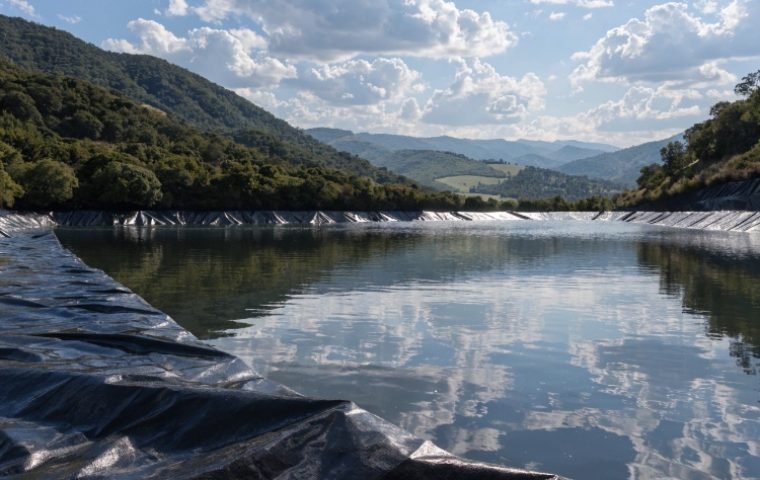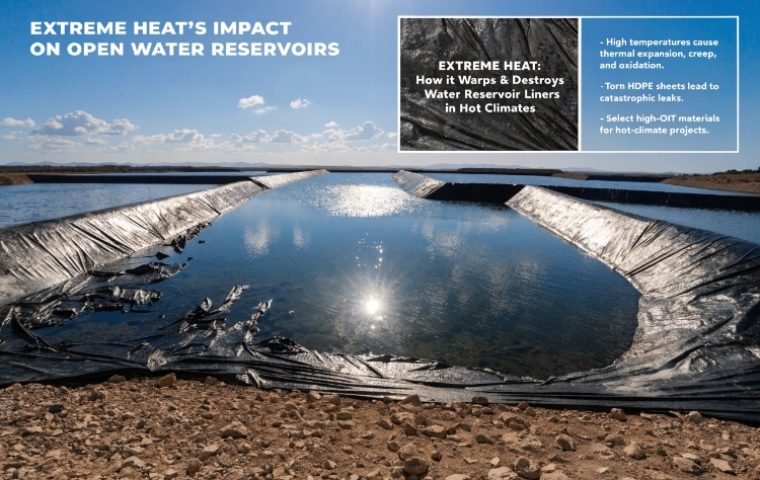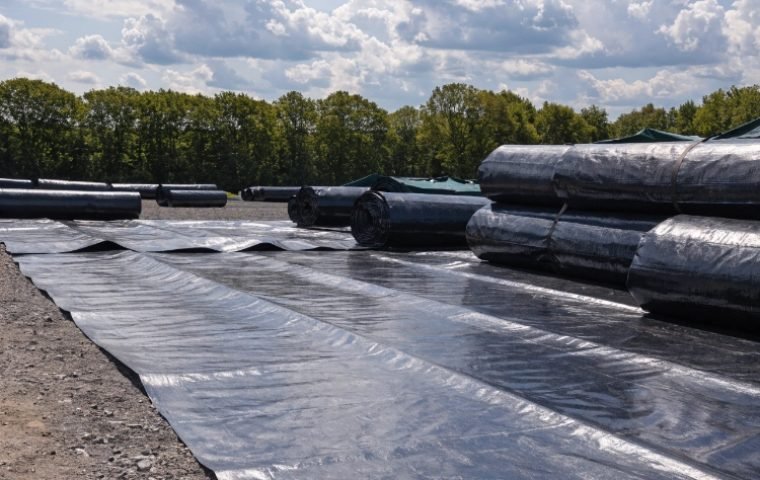


In mining engineering practice, tailings ponds and heap leach pads are distinct operational systems. However, during the early design phases, specification drafting, or procurement, the "liner system" is often dangerously over-simplified.
We frequently see tenders that treat the geomembrane as a generic commodity, assuming that a specification suitable for a tailings dam will automatically work for a leach pad, provided the thickness is the same. This is a fundamental error.
While both systems often use High-Density Polyethylene (HDPE), the engineering logic driving their selection is fundamentally different. One focuses on long-term containment of static waste, while the other focuses on the dynamic recovery of valuable fluid under high mechanical load.
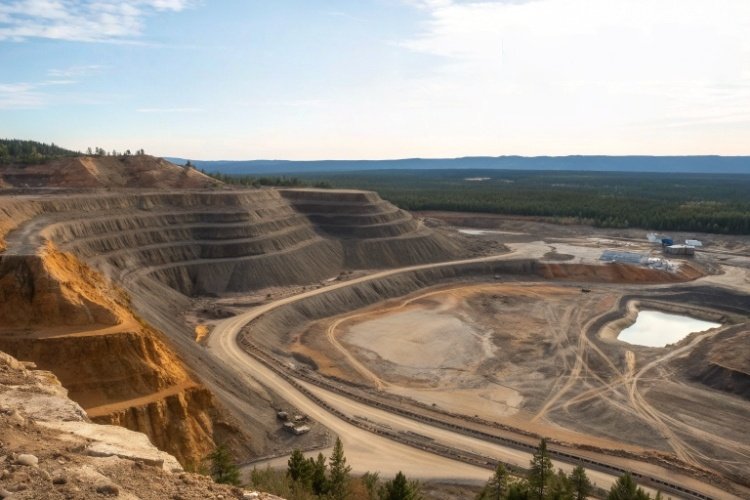
The purpose of this article is not to define these systems—you already know what they are. Instead, we clarify why their liner design logic cannot be swapped, based on the specific stress profiles and risks we encounter in global mining supply B2B projects.
2. Are Operating Conditions the Same?
The starting point for any material selection is the operational environment. While both applications involve containment, the physical and chemical conditions acting on the liner are polar opposites.
2.1 Tailings Ponds: Static Load and Slow Accumulation
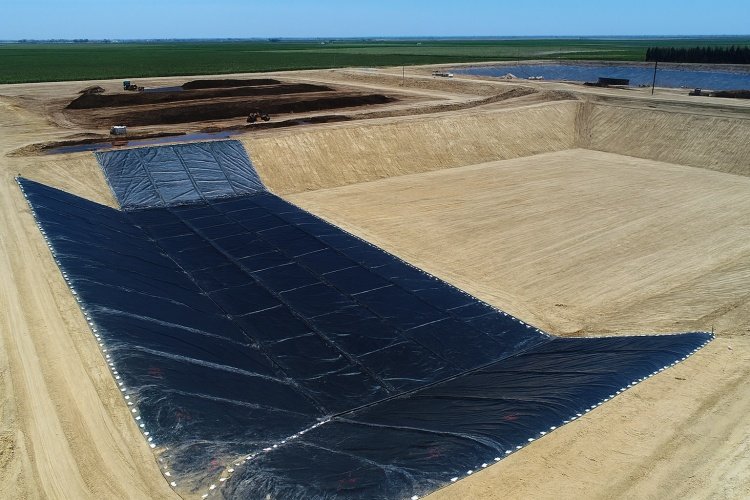
A tailings storage facility (TSF) functions essentially as a permanent bathtub.
- Loading: The loading is gradual. Tailings slurry is deposited in layers, slowly building up hydrostatic pressure over decades. Once deposited, the material is generally static.
- State: The environment is characterized by fine particles (slimes/sands) and a high percentage of liquid. The liner is subjected to continuous hydrostatic pressure from the supernatant pond.
- Chemistry: The liquid is waste. While it may contain heavy metals or process chemicals, the goal is indefinite sequestration. The chemical attack is constant but relatively stagnant.
2.2 Heap Leach Pads: Dynamic Flow and Mechanical Aggression
A heap leach pad is a chemical reactor.
- Loading: The loading is aggressive and staged. Crushed ore (often sharp and coarse) is stacked in lifts, sometimes reaching heights of 50 to 100 meters. Heavy equipment (conveyors, stackers, dozers) operates directly above the liner system during construction.
- State: The specific goal is flow. We are intentionally irrigating the pile. The liner must handle the hydraulic head of the pregnant leach solution (PLS) flowing toward collection channels.
- Chemistry: The solution is the "money." It creates a chemically aggressive, dynamic environment (often high pH cyanide for gold, or low pH sulfuric acid for copper) that is constantly replenished and moving across the liner surface.
The takeaway: Tailings liners face a static endurance test; heap leach liners face a dynamic mechanical and hydraulic test.
3. How Do Liner System Design Priorities Differ?
Because the operating conditions differ, the engineering priorities—and therefore the specifications we recommend to buyers—must shift.
3.1 Tailings Pond Priorities: Time and Stability
In a tailings project, the liner is the final barrier between toxic waste and the groundwater. The design philosophy is conservatism.
- Устойчивость к растрескиванию под напряжением (ESCR): This is the MVP (Most Valuable Parameter) for tailings. Under the immense weight of the tailings, the liner often experiences multi-axial stress, especially if there is differential settlement in the subgrade. If the material has low ESCR, it will brittle-crack over time. We prioritize resins with high ESCR values (exceeding standard GRI-GM13 requirements) for deep TSFs.
- Settlement Tolerance: Tailings dams often settle. The liner must have the elongation properties to deform without rupturing.
- Long-Term Chemical Resistance: Since the liquid stays there forever, any slow chemical degradation will eventually compromise the facility decades after closure.
3.2 Heap Leach Pad Priorities: Friction and Recovery
In a heap leach project, the liner is part of the production line. If it fails, you lose production.
- Puncture Resistance: This is the primary concern. Since crushed ore is placed on top (often with only a thin protective overliner layer), the geomembrane must resist puncture from sharp rocks. We often recommend textured surfaces not just for friction, but because the texturing process can influence the sheet’s interface behavior with the protective soil.
- Interface Shear Strength: Heap leach pads are often built on slopes to facilitate drainage. The friction angle between the Geomembrane and the Soil (or GCL) is critical. If this friction is too low, the entire heap can slide—a catastrophic geotechnical failure. Textured geomembranes are almost mandatory here.
- Hydraulic Performance: The liner must facilitate the flow of PLS to the collection pipes. Wrinkles or poor installation can create "dead spots" where dissolved metal gets trapped and is never recovered.
4. Is Geomembrane Thickness Selection Driven by the Same Logic?
A common misconception in procurement is that thickness is purely a function of budget. "If we have money, we buy 2.0mm; if not, 1.5mm." This is dangerous logic. Thickness selection is an engineering response to specific stresses.
4.1 Thickness in Tailings Ponds
In tailings applications, thickness provides diffusion resistance и stress buffering.
- Thicker sheets (1.5mm or 2.0mm) have lower permeability rates for chemical diffusion over spans of 50 or 100 years.
- Thickness also provides a margin of safety against stress cracking (SCR) induced by subgrade imperfections or stone protrusions that were missed during subgrade preparation.
- However, making it thicker usually reduces flexibility, which might be counter-productive if the subgrade is expected to settle significantly.
4.2 Thickness in Heap Leach Pads
In heap leach pads, thickness is primarily armor.
- The overwhelming risk is construction damage and ore loading. When a dozer pushes the first lift of ore over the liner, the risk of puncture is highest.
- A 2.0mm liner provides significantly more puncture resistance than a 1.5mm liner.
- Furthermore, under high compressive loads (e.g., a 100m high copper leach pad), the thickness prevents the liner from thinning out excessively due to localized strain from adjacent rocks.
Our Insight: We often see Heap Leach projects specify 2.0mm LLDPE or HDPE specifically for the mechanical toughness during the stacking phase, whereas Tailings projects might stick to 1.5mm HDPE but with stricter resin requirements for chemical longevity.
5. What Failure Mechanisms Are Unique to Each System?
To understand why we select different materials, we must understand what "failure" looks like in the real world. Failure is not just a hole in the plastic; it is the consequence of that hole.
5.1 Tailings Failure: Environmental and Legal Crisis
If a tailings liner fails, the containment is breached.
- Consequence: Pollutants seep into the aquifer. This triggers regulatory shutdowns, massive fines, and remediation costs that can bankrupt a project.
- Detection: It is notoriously difficult to detect a leak under 30 meters of saturated sludge.
- Repair: Impossible. You cannot drain a tailings pond to patch a hole. The liner system must be perfect from Day 1 because it is inaccessible forever.
5.2 Heap Leach Failure: Economic Bleed (OPEX)
If a heap leach liner fails, the consequence is immediate financial loss.
- Consequence: You are leaking "Pregnant Solution" (gold or copper) into the ground. Your recovery rates drop. You are essentially mining for free.
- Detection: Monitoring wells will show spikes in metal content, or the flow rates at the recovery pond will drop unexplainably.
- Repair: Also nearly impossible under the heap. However, the failure here is measured in Lost Revenue. We have seen mines operate with known leaks simply because unstacking the heap costs more than the lost gold—but this is a terrible operational position to be in.
6. Risk, Limitations, and When Standard HDPE Is Not Enough
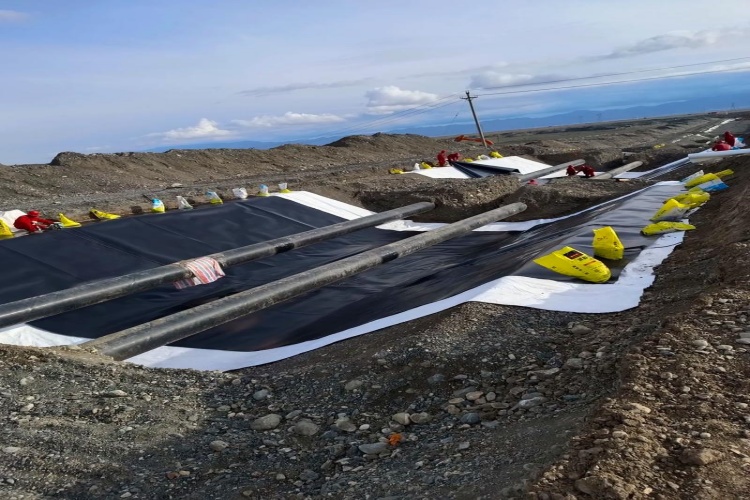
In B2B purchasing, there is a tendency to default to "Standard HDPE GRI-GM13." While this standard is excellent, it is a baseline, not a ceiling.
When does standard HDPE fail in these applications?
- High Temperature Leach Pads: Some bio-leaching processes (especially copper) generate significant heat (exothermic reactions), raising internal pile temperatures to 60°C or higher. Standard HDPE has a shorter lifespan at high temperatures due to antioxidant depletion. In these cases, we must supply High-Temperature Resistant geomembranes with specialized antioxidant packages.
- Bituminous Geomembranes (BGM): In extremely cold climates or where subgrades are very rough, standard HDPE might have too much thermal contraction or susceptibility to puncture. In some tailings applications, BGM is used instead of HDPE due to its superior toughness and lower thermal expansion coefficient, despite the higher cost.
- LLDPE Usage: For heap leach pad covers or areas requiring high flexibility, HDPE might be too stiff. Linear Low-Density Polyethylene (LLDPE) is often swapped in for its multiaxial strain performance, even though its chemical resistance is slightly lower.
Заключение
Tailings pond liners and heap leach pad liners are not interchangeable mining solutions. They are specialized components of two very different industrial machines.
- Tailings Pond: A long-term storage vault.
- Focus: Chemical stability, ESCR, settlement tolerance.
- Risk: Environmental disaster.
- Heap Leach Pad: A large-scale chemical processor.
- Focus: Interface friction, high-load puncture resistance, hydraulic flow.
- Risk: Economic loss (lost product).
When sourcing materials for these projects, do not rely on a single data sheet to cover both applications. The "best" liner is not the one with the highest general specs, but the one engineered to survive the specific failure modes of your mine’s operation.
В Специалист по водонепроницаемости, we review the project parameters—pond depth, ore height, subgrade type, and chemical makeup—before recommending a roll of plastic. Ensuring the right fit for the application is the only way to secure the long-term viability of the mine.