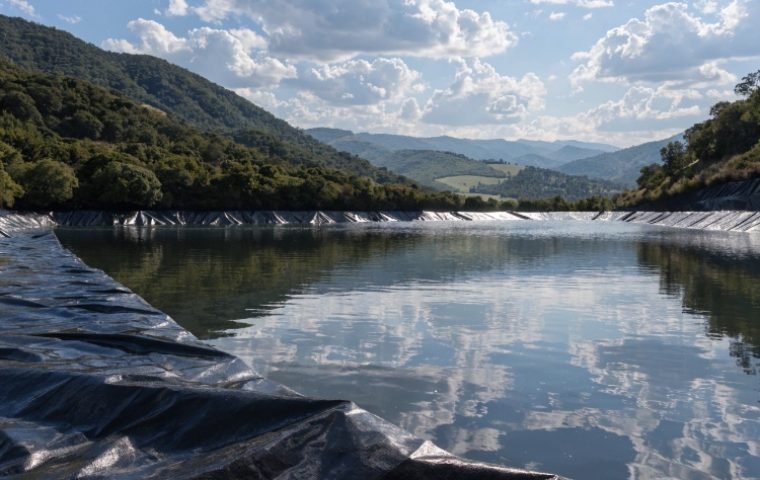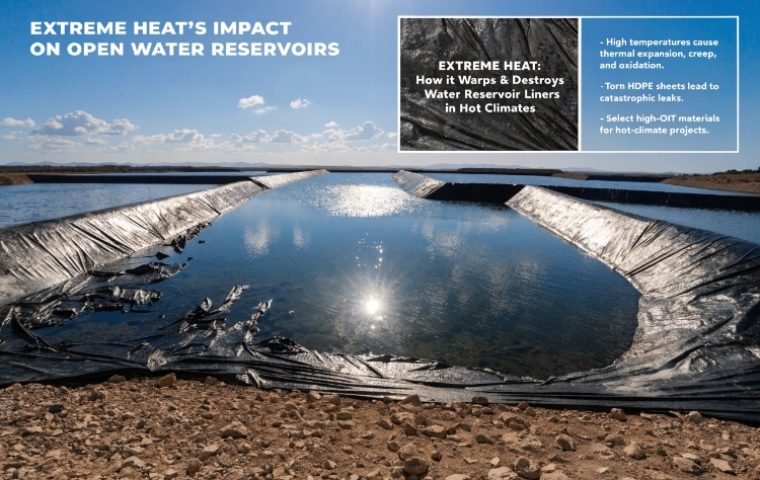


Landfills are not static structures; they are massive, active geotechnical systems that settle and shift for decades. This movement places enormous stress on the liner system, the critical barrier protecting our environment. So, how do we ensure this barrier remains intact? This often leads to a key question from engineers and project owners: do landfill liners really need geogrids?
In this guide, I'll provide a direct answer based on years of supplying materials for these critical projects. We will cover when geogrids are an absolute necessity, when they might be optional, and how to choose the right type to ensure the long-term safety, stability, and profitability of your landfill.
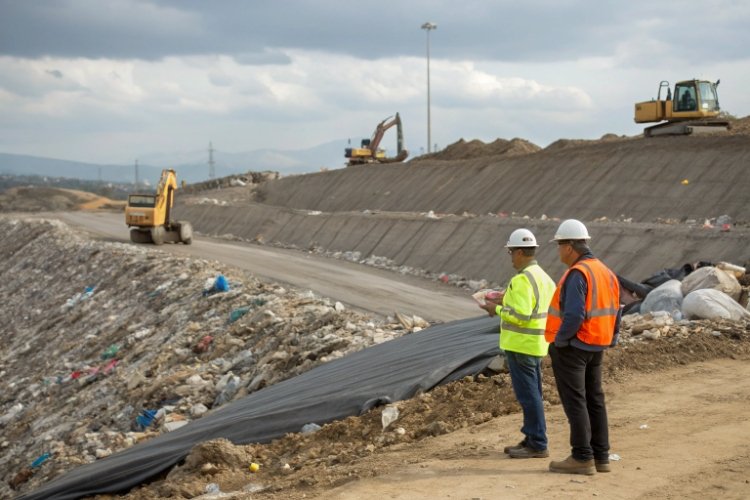
Introduction to Landfill Liner Systems
Before we talk about reinforcement, let's briefly review the system we are trying to protect.
What Is a Landfill Liner System?
A landfill liner is a multi-layered barrier system engineered at the bottom and sides of a landfill. Its primary job is to contain solid waste and prevent contaminated liquid, known as leachate, from escaping into the soil and groundwater. A similar system, the final cover, is placed on top of the landfill after it is full.
Common Components of a Landfill Liner
A modern liner system is a composite structure, typically including:
- A Geomembrane: An impermeable plastic sheet (usually HDPE) that acts as the primary barrier.
- A Geosynthetic Clay Liner (GCL) or Compacted Clay Liner (CCL): A secondary barrier providing redundancy.
- A Drainage Layer: A geocomposite or gravel layer to collect and remove leachate.
- Protective Geotextiles: Fabric layers that protect the geomembrane from puncture.
This system is designed to be a passive barrier. But when a landfill settles unevenly by several meters, passive resistance is not enough. This is where reinforcement becomes critical.
What Are Geogrids and How Do They Work?
To understand their role, you need to know what geogrids fundamentally are.
Definition and Function of Geogrids
A geogrid is a geosynthetic material formed into an open, grid-like configuration. Its primary function is reinforcement. When placed in soil or aggregate, the particles lock into the grid's apertures (openings). When a load is applied, the geogrid's high tensile strength resists the pulling forces, holding the soil mass together and distributing the load over a wider area.
Types of Geogrids Used in Geotechnical Engineering
There are several types, but the most common in civil engineering are:
- Uniaxial Geogrids: High strength in one direction, ideal for applications with a primary stress direction, like retaining walls and steep slopes.
- Biaxial Geogrids: Strength is uniform in two perpendicular directions, ideal for applications like road bases and foundation reinforcement where stresses are multi-directional.
- Трехосные георешетки: Сила более равномерно распределяется в нескольких направлениях, обеспечивая повышенную эффективность стабилизации основания.
Георешетки отличаются от других геосинтетических материалов, таких как геотекстиль, которые в первую очередь функционируют как сепараторы, фильтры или дренажи, а не как основные армирующие элементы.
Действительно ли нужны георешетки для облицовки свалок?
Это основной вопрос. Ответ не всегда положительный, но для большинства современных крупных свалок это так. в подавляющем большинстве да. Решение зависит от риска, геологии и дизайна.
Ситуации, когда георешетки не требуются
Возможно, вам удастся избежать использования геосеток, если все выполняются следующие условия:
- Фундамент: Полигон построен на твердом, не оседающем основании.
- Размер & Продолжительность жизни: Это очень маленькое временное сооружение с небольшой высотой отходов.
- Склоны: В конструкции предусмотрены очень пологие уклоны (например, более пологие, чем 3:1).
- Сейсмический риск: Объект находится в сейсмически активной зоне.
По моему опыту, проекты, отвечающие всем этим критериям, составляют менее 5% всех современных свалок. Для остальных 95% георешетки — это не просто дополнение; они являются важным компонентом управления рисками.
Когда георешетки становятся необходимыми на полигонах мусора
Георешетки из необязательных становятся необходимыми при следующих общих условиях:
- Мягкие или сжимаемые основы: Most landfills are built on soil, not solid rock. This soil compresses under the immense weight of the waste, leading to uneven or "differential" урегулирование.
- Высокие штабели отходов: Свалка высотой 50 метров может оседать на несколько метров, причем центр оседает гораздо больше, чем края. Эта неравномерная осадка подвергает систему вкладышей огромному напряжению.
- Крутые боковые склоны: Чтобы максимизировать ценное воздушное пространство, современные свалки проектируются с крутыми уклонами (например, 2:1 или 1,5:1). Георешетки необходимы для обеспечения устойчивости этих склонов и предотвращения катастрофического разрушения облицовки.
- Нормативные требования: Многие экологические нормы требуют высокого коэффициента безопасности (например, FS > 1.5) против провала склона, что на крутых склонах без армирования зачастую недостижимо.
Распространенные риски отказа без армирования георешеткой
Without geogrids, differential settlement can stretch the liner system past its breaking point. A compacted clay liner can crack when its tensile strain exceeds just 0.5%. These cracks create direct pathways for leachate to escape. The geogrid functions like a "tension membrane" within the soil, absorbing these tensile forces and allowing the liner system to accommodate much larger strains without rupturing. It acts as an insurance policy against cracks and leaks.
Typical Applications of Geogrids in Landfill Liner Systems
Geogrids are used in several key areas within a landfill to provide structural integrity.
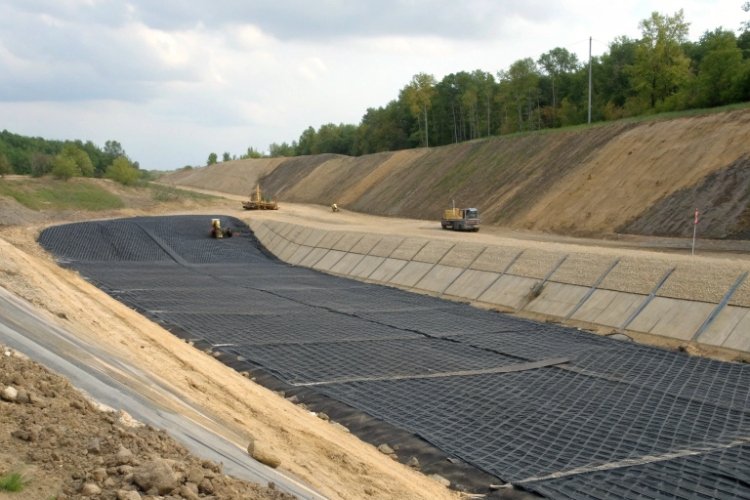
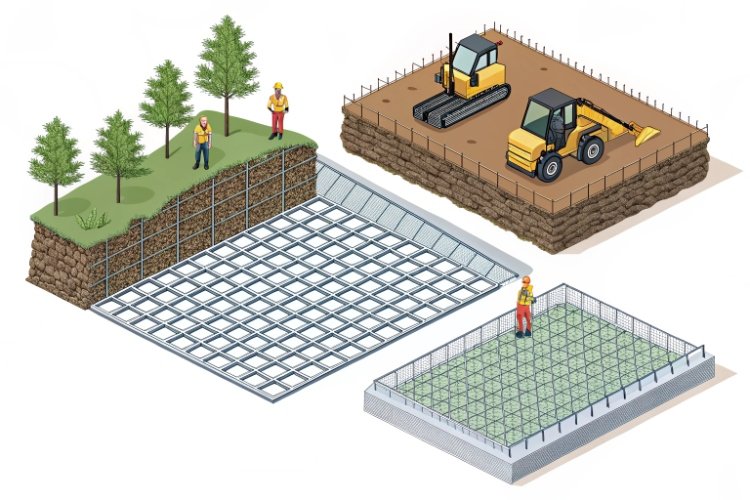
Side Slope Reinforcement
Это наиболее распространенное и критическое приложение. Размещая георешетки горизонтально внутри почвенного покрова склона, инженеры могут проектировать гораздо более крутые склоны, чем это было бы возможно с неармированным грунтом. Это напрямую приводит к увеличению емкости отходов и доходов оператора полигона.
Улучшение стабильности базового вкладыша
When a landfill is built on a soft foundation, biaxial geogrids are placed within the base liner's soil layers. They create a stiff platform that "bridges" над более слабыми зонами, предотвращая локализованные депрессии и уменьшая растягивающее напряжение на геомембрану и GCL, вызванное дифференциальной осадкой.
Усиление систем укрытий
After a landfill is closed, the final cover system is also subject to settlement as the waste below decomposes. Geogrids are used in the cover system for the same reasons as the base liner: to maintain integrity and prevent cracks from forming as the ground shifts.
Interface Shear Strength Enhancement
On steep slopes, there is a risk of the topsoil "veneer" sliding off the smooth surface of the geomembrane. High-strength geogrids placed above the geomembrane provide a textured surface with tensile capacity, interlocking with the soil and dramatically increasing the friction and stability at this critical interface.
Key Specifications to Consider When Choosing Geogrids
Selecting the right geogrid is not about picking the "strongest" one; it's about matching the specifications to the specific engineering need.
Tensile Strength and Load Direction
This is the primary specification, measured in kN/m. It defines how much pulling force the geogrid can withstand before breaking. It's crucial to match the geogrid type (uniaxial, biaxial) to the primary direction of stress in your application.
Junction Strength and Aperture Size
The points where the grid's ribs are connected are called junctions. High junction strength is vital to ensure the grid acts as a cohesive unit. The aperture size (the opening in the grid) must be optimized for the infill material. An opening between 25-50mm typically provides the best interlock with common soil and aggregate fills.
Creep Resistance and Long-Term Performance
Creep is the tendency of a material to slowly deform over time under a constant load. For a landfill designed to last 100+ years, resistance to creep is non-negotiable. High-quality geogrids made from polymers like polyester (PET) or polyvinyl alcohol (PVA) are tested for long-term creep to ensure they maintain their strength for the entire design life of the facility.
Химическая и биологическая стойкость
The landfill environment is chemically aggressive and biologically active. The geogrid polymer must be inert and resistant to degradation from leachate, soil chemicals, and microorganisms. Standard PET is stable in most conditions, but in high-temperature or high-pH environments, a more robust polymer like PVA may be required. If the geogrid is part of an exposed slope, UV resistance is also essential.
How to Select the Right Type of Geogrid for Your Project
Here is a simplified framework for making the right selection:
Uniaxial vs. Biaxial Geogrids for Landfills
- Использовать Uniaxial Geogrids: For reinforcing steep side slopes and retaining walls where the primary stress is horizontal, pulling away from the slope face.
- Use Biaxial (or Triaxial) Geogrids: For reinforcing the landfill base, haul roads, and cover systems where settlement and loads create multi-directional stresses.
Matching Geogrid Type to Slope Angle and Load
The design is always project-specific, but as a general rule:
- Gentle Slopes (e.g., 3:1) & Moderate Settlement: A medium-strength biaxial geogrid (e.g., 50-80 kN/m) may be sufficient.
- Steep Slopes (e.g., 1.8:1) & Высокие штабели отходов: High-strength uniaxial geogrids (e.g., 300-700 kN/m) layered within the slope are necessary.
- Extremely Steep Slopes (e.g., 1.5:1) or Very High Loads: May require very high-strength geogrids (>900 kN/m) and specialized design.
Design Considerations Based on Regulations and Standards
The final design must be completed by a qualified geotechnical engineer. They will perform calculations to ensure the reinforced system meets or exceeds the required factors of safety for static, seismic, and long-term conditions as mandated by local environmental regulations.
Design and Installation Considerations
A high-quality geogrid is only effective if it's installed correctly.
Placement Location Within the Liner System
Geogrids are not placed in direct contact with geomembranes. They are embedded within compacted soil layers. A typical reinforced base might have 3-4 layers of geogrid interspersed within a 1-meter-thick clay liner. Research shows that for optimal performance, the first geogrid layer should be placed at a specific depth below the surface to effectively mobilize the soil, with subsequent layers spaced to create a true composite material.
Common Installation Mistakes to Avoid
- Poor Subgrade Preparation: The ground beneath the geogrid must be smooth and compacted.
- Inadequate Overlap/Connection: Adjacent geogrid panels must be overlapped and securely fastened according to manufacturer specifications.
- Damage During Installation: Движение тяжелого оборудования непосредственно по открытой георешетке может привести к ее повреждению. Заполнение следует размещать аккуратно.
- Недостаточное натяжение: Георешетка должна лежать ровно и натянуто, чтобы правильно зафиксироваться под нагрузкой.
Стоимость и производительность: стоит ли использовать георешетки?
Этот вопрос я получаю почти от каждого клиента. В финансовом отношении решение на удивление очевидно.

Первоначальная стоимость и долгосрочное снижение риска
Adding geogrid reinforcement might increase the cost of the geosynthetic system by 10-30%. This may seem significant upfront. However, consider the cost of failure. The a single leak in a liner system can cost millions in remediation—excavating waste, repairing the liner, and paying regulatory fines. The potential liability for groundwater contamination is effectively unlimited.
Compared to these catastrophic risks, the initial investment in geogrids is a very low-cost insurance policy. The financial ROI is realized the moment a failure is prevented.
Impact on Landfill Safety and Service Life
By ensuring stability, geogrids directly contribute to the safety and longevity of the entire facility. Furthermore, by allowing for steeper slopes, they maximize the landfill's capacity, increasing its revenue-generating potential and extending its operational life.
Common Questions About Geogrids in Landfill Liners (FAQ)
Can geogrids replace thicker soil layers?
No, they don't replace soil; they reinforce it. By reinforcing the soil, they allow engineers to achieve the required stability with thinner layers than would be possible with unreinforced soil, saving on material and construction costs.
Do geogrids damage geomembranes?
При правильной установке нет. Между георешеткой и геомембраной всегда помещается защитный слой почвы или нетканого геотекстиля, чтобы предотвратить риск трения или прокола. Повреждения возникают только в результате плохой конструкции или неправильной установки.
Как долго георешетки служат на свалках?
Высококачественные георешетки проектируются и производятся со сроком службы более 100 лет. Такая долговечность достигается за счет выбора правильного полимера (например, ПЭТ, ПВС), который может противостоять химическому разложению и длительной ползучести в конкретных условиях внутри свалки.
Вывод: принятие правильного решения по армированию облицовки свалки
Для подавляющего большинства современных свалок вопрос не в том. если вам нужны георешетки, но который нужные вам георешетки и где они вам нужны. Они являются фундаментальным инженерным инструментом для управления огромными и длительными нагрузками, вызванными осадкой мусора и проектированием крутых склонов.
Решение включить георешетки в систему покрытия свалки является активным вложением в безопасность, экологическую безопасность и долгосрочные характеристики конструкции. Работая с квалифицированным инженером и выбирая материалы, подходящие для конкретных условий вашего объекта, вы не увеличиваете затраты — вы строите более безопасный, устойчивый и прибыльный объект.