

Looking at a geocell spec sheet can be overwhelming. It's just a list of numbers—thickness, height, spacing. Choosing the wrong combination feels like a huge risk, potentially leading to project failure and wasted money.
Geocell dimensions are not arbitrary; they are the blueprint for its performance. The cell height dictates load distribution, welding distance controls confinement, sheet thickness determines durability, and the expanded panel size affects installation efficiency. Each dimension has a specific job.
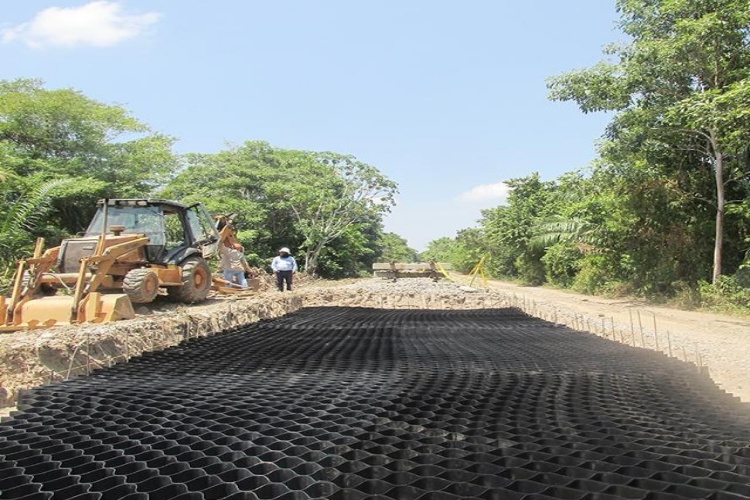
Как поставщик геосинтетики, I often tell my clients that a technical data sheet is a recipe. If you understand what each ingredient does, you can choose the perfect recipe for your project's needs. Getting these four key dimensions right is the difference between a system that lasts for 50 years and one that fails in five. Let's break down exactly what each of these numbers means for your road, slope, or retaining wall.
How does welding distance influence the structural strength and confinement capability of a geocell?
The distance between the welds on a geocell seems like a minor manufacturing detail. This leads many to overlook it, not realizing that this single dimension determines how well the whole system works.
The welding distance determines the size of the expanded cell aperture. A shorter distance creates smaller, tighter cells, providing much stronger confinement for the infill material. This is critical for supporting heavy, concentrated loads.
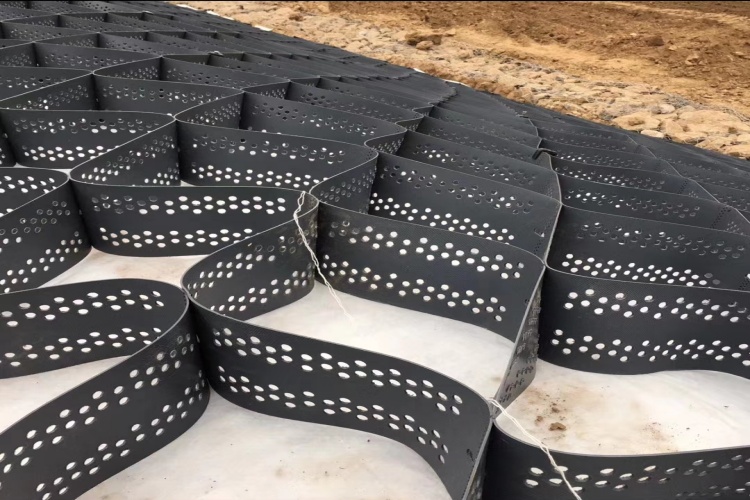
Think of the geocell's job as gripping the aggregate to keep it from moving. A smaller cell is like making a tighter fist—the grip is much stronger. This "confinement" is the primary mechanism that gives a geocell its strength. For a project with heavy truck traffic, for example, choosing a smaller cell size is non-negotiable.
| Welding Distance | Expanded Cell Size (Width x Length) | Typical Use Case |
|---|---|---|
| 330 mm | approx. 250 x 210 mm | High Confinement: Best for supporting very heavy, channelized loads like truck wheels on an unpaved road. Provides maximum stiffness. |
| 445 mm | approx. 320 x 288 mm | General Purpose: The most common specification. Offers an excellent balance of confinement and cost-effectiveness for most road base and slope applications. |
| 660 mm | approx. 470 x 450 mm | Low Confinement: Suitable for applications where the main goal is erosion control with light loads, such as vegetated slopes. Not recommended for heavy-duty reinforcement. |
What impact does cell height have on load distribution and subgrade reinforcement performance?
When trying to save money, it’s tempting to choose a shorter geocell. But this is a critical mistake, as the height is directly responsible for the system's ability to support weight over weak ground.
Cell height is the single most important dimension for load distribution. A taller cell creates a thicker and stiffer semi-rigid slab. This "beam effect" spreads concentrated loads over a much wider area of the weak subgrade below, preventing settlement and failure.
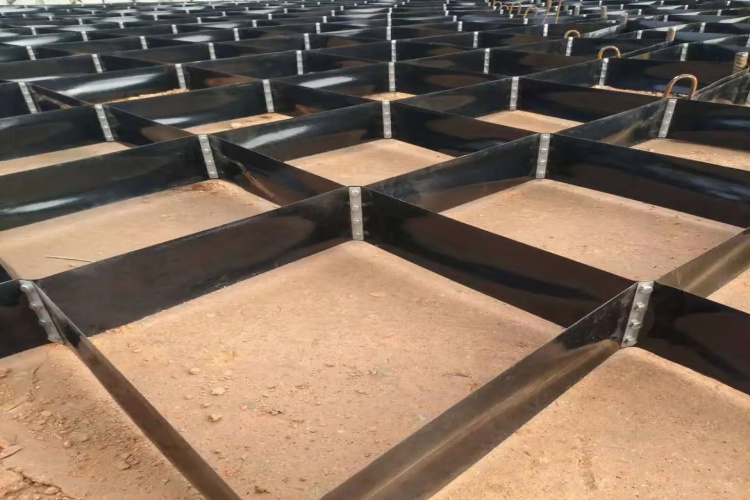
Imagine trying to walk on snow. If you wear regular shoes (a short "height"), you sink. If you wear snowshoes (a large "height"), you float on top. A taller geocell works in exactly the same way for a truck tire on soft soil. Doubling the cell height does not just double the strength; it increases the system's stiffness exponentially. This is the most powerful tool you have for reinforcing weak ground.
| Cell Height (Depth) | Typical Application | Performance Impact |
|---|---|---|
| 50 mm (2 in) | Light Duty: Topsoil protection for vegetated slopes, pedestrian paths. | Provides basic erosion control and root reinforcement, but minimal load support. |
| 75 mm (3 in) | Light to Medium Duty: Driveways, parking lots with light vehicle traffic. | A common choice for stabilizing the base layer on moderately firm ground. |
| 100 mm (4 in) | General Purpose: The most widely used height. Excellent for unpaved roads, base reinforcement, and general slope stabilization. | Offers a robust balance of performance, cost, and reduced infill requirements. |
| 150 mm (6 in) | Medium to Heavy Duty: Reinforcing soft subgrades, retaining walls, haul roads. | Creates a very stiff slab, significantly improving load-bearing capacity on weak soils. |
| 200 mm (8 in) | Heavy Duty: Mine roads, port container yards, and areas with very soft ground and extreme loads. | Provides maximum reinforcement and load distribution for the most challenging conditions. |
How does sheet thickness determine the durability and deformation resistance of geocells?
You might assume that a thicker plastic sheet is always better. While thickness is important for durability, it's not the only factor, and knowing the industry standards helps you avoid low-quality products.
Sheet thickness directly impacts a geocell's long-term durability, puncture resistance, and the strength of the cell walls and seams. A standard, high-quality sheet thickness is a minimum average of 1.25 mm, with 1.5 mm being common for heavy-duty applications.

The thickness of the individual plastic strips determines the overall toughness of the system. A thicker sheet is more resistant to damage during installation from sharp rocks and can withstand more environmental stress over its lifetime. However, it's important to look at certified specifications. The Geosynthetic Research Institute (GRI-GS14) sets a minimum average thickness of 1.25 mm for quality control. Be cautious of any product that falls below this standard.
| Толщина листа | Standard | Key Performance Attribute |
|---|---|---|
| 1.13 mm (min.) | GRI-GS14 | Minimum Single Value: No single point on the sheet should be thinner than this to ensure structural integrity. |
| 1.25 mm (avg.) | GRI-GS14 | Minimum Average Value: This is the benchmark for a standard, reliable geocell product. It ensures consistent quality. |
| 1.5 mm - 2.0 mm | Common Specification | High Durability: Specified for applications with abrasive infill (like sharp, angular rock), high stresses, or where a very long design life is required. |
It's also important to note that for textured geocells, a simple caliper measurement can be inaccurate. The industry standard is to verify thickness by calculating it from the material's mass per unit area and density.
How can I evaluate expanded size to ensure proper coverage and installation efficiency?
The final dimension on the spec sheet is the panel size. This number seems simple, but it has a huge impact on your project's logistics, labor costs, and overall installation speed.
The expanded panel size is a practical dimension that dictates the area one geocell section will cover. Choosing the right panel size for your site minimizes material waste, reduces the number of connections between sections, and significantly speeds up installation.

Think of a geocell panel as a single "tile" you are laying down. If your room is large and open, you want the biggest tiles possible to cover it quickly. If the room is small and has awkward corners, smaller tiles might be easier to work with. Standard panels are typically around 2.5 meters wide and 6 to 8 meters long. These are designed to be a good balance—large enough to cover ground quickly, but still manageable for a small crew to handle and position without heavy equipment.
| Common Panel Width | Common Panel Length | Total Coverage Area | Best For |
|---|---|---|---|
| 2.5 m | 6.0 m | 15 m² | General Purpose: The most common size. Easy for 2-3 workers to handle. Efficient for roads, slopes, and foundations. |
| 2.5 m | 8.0 m | 20 m² | Large Open Areas: Ideal for large-scale projects like base reinforcement for parking lots or airfields where you can cover ground very quickly. |
| 5.0 m | 7.0 m | 35 m² | Large-Scale Earthworks: Requires more labor or machinery to position but offers the highest installation efficiency for massive, unobstructed sites. |
Choosing the right panel size is a simple way to optimize your project's schedule and budget. For most applications, the standard 2.5m width provides the best combination of coverage and handling ease.
Заключение
Understanding geocell dimensions transforms a confusing spec sheet into a powerful tool. By matching the height, welding distance, thickness, and panel size to your project's specific needs, you ensure long-term performance and a successful outcome.