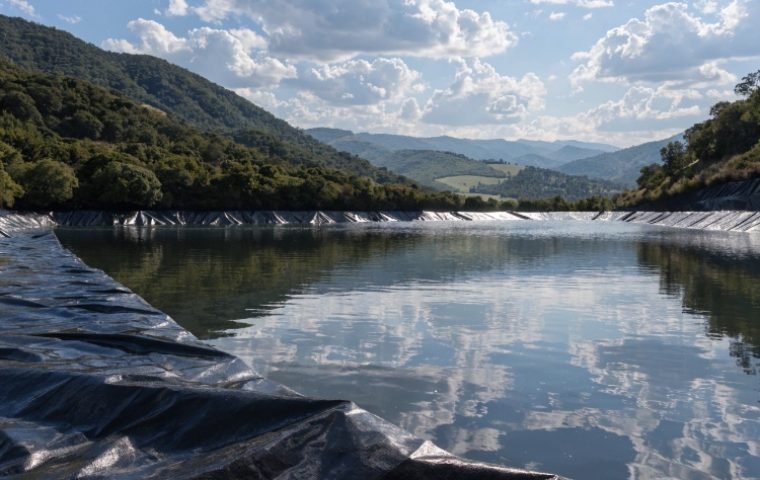
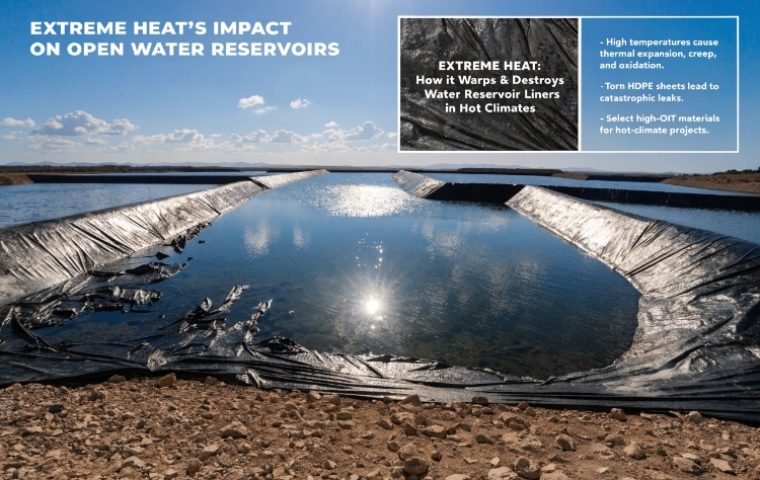
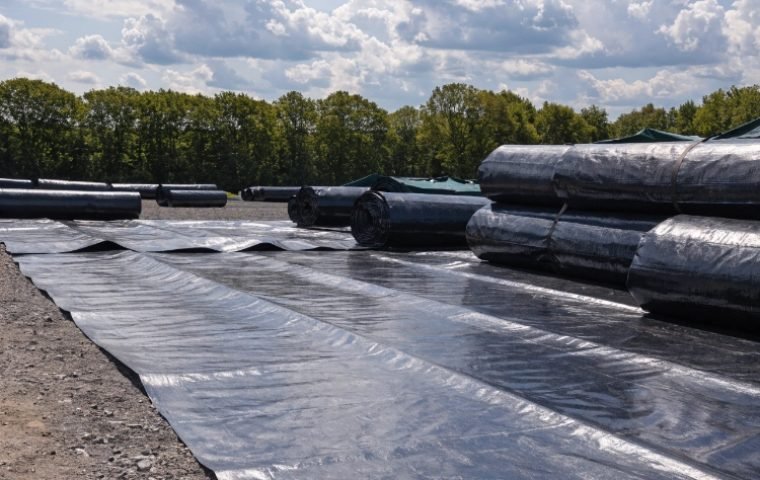
You're looking at a set of blueprints and see "geotextile fabric" specified for a road, a drain, and a retaining wall. How can one material be used for so many different jobs? Using the wrong type could lead to project failure.
Geotextile fabric is a foundational material in modern construction, most commonly used for road building, drainage systems, erosion control, and environmental containment projects. Its versatility comes from its ability to perform several key functions, including separation, filtration, and reinforcement.

Kao a dobavljač geosintetike, I've shipped geotextiles to every type of project imaginable. While the list of applications is long, they all rely on a handful of core engineering principles. Understanding these principles is the key to seeing why this simple-looking fabric is one of the most versatile and valuable materials in civil engineering today. Let's explore where and why it's used.
In what types of civil and environmental projects is geotextile fabric commonly used?
It can be overwhelming to see geotextiles listed for everything from landfills to highways. How can you make sense of this endless list and know where it fits into your own projects?
Geotextile applications can be grouped into four main categories: transportation infrastructure (roads, railways), geotechnical engineering (walls, slopes), environmental protection (landfills, ponds), and water management (canals, drains). Each category relies on the fabric's core functions in a different way.
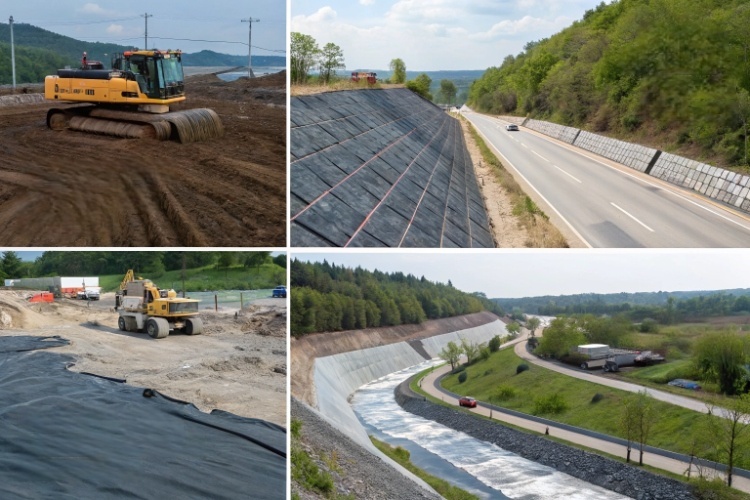
From my experience exporting these materials, nearly every project falls into one of these buckets. Understanding them makes it easy to see the big picture. Here’s a breakdown of some of the most common projects I supply materials for:
| Project Category | Specific Application Examples | Primary Geotextile Function(s) |
|---|---|---|
| Transportation | Roads (paved & unpaved), Railways, Airports | Separation, Reinforcement, Filtration |
| Geotechnical | Retaining Walls, Embankments, Slope Stabilization | Reinforcement, Drainage, Filtration |
| Ekološki | Landfills, Ponds (fish, golf), Wastewater Lagoons | Protection (Cushioning), Filtration, Separation |
| Hydraulic | Canals, Riverbanks, Subsurface Drains, Dams | Drainage, Filtration, Erosion Control |
This shows how a single product line can serve a huge range of industries. Whether a contractor is building a temporary haul road or a government is constructing a 50-year landfill, this engineered fabric plays a critical role in the project's success.
How does geotextile function differently in separation, filtration, and drainage applications?
You've heard the terms separation, filtration, and drainage used to describe what geotextiles do. But they are not the same thing, and confusing them can lead to specifying a fabric that fails to solve the actual problem on your site.
Separation prevents two different materials from mixing. Filtration lets water pass through while blocking soil particles. Drainage is the active movement of water through or along the fabric to a discharge point. Each function requires a different property of the geotextile.
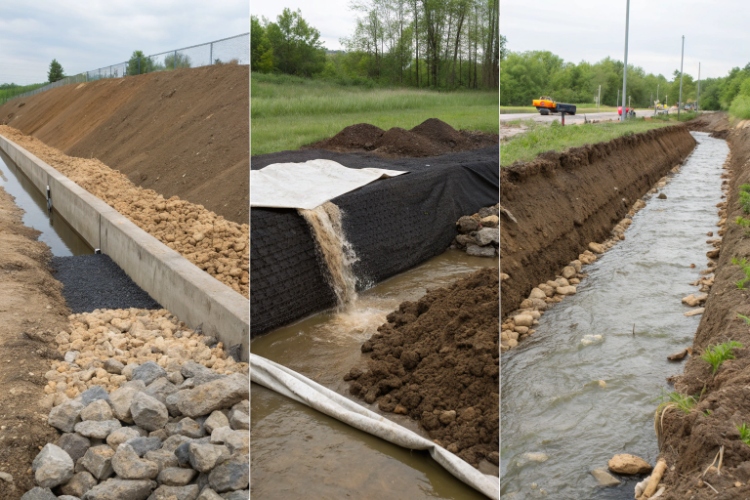
I spend a lot of time clarifying these functions for my clients. Getting this right is the foundation of a good design.
-
Razdvajanje
Think of building a gravel road over soft mud. Without a separator, the heavy vehicle traffic will push the gravel down into the mud, and the mud will pump up into the gravel. The road base loses its strength and fails. A separation geotextile, often a strong woven fabric, acts as a physical barrier between the two layers, maintaining the integrity and strength of the road structure. -
Filtriranje
This is like a coffee filter for soil. The geotextile is placed in a position where water needs to pass through, but soil must be held back. A classic example is wrapping a perforated drain pipe. The fabric's pores are small enough to block silt and sand from clogging the pipe but large enough to let water enter freely. This is crucial for any drainage system to work long-term. -
Drenaža
Drainage is about providing a path for water to escape. Thick, nonwoven geotextiles can move water within their own structure. When placed vertically against a basement or retaining wall, the fabric collects water over its entire surface and channels it downwards to a collection pipe. This relieves hydrostatic pressure, which is a leading cause of wall failure.
Why is geotextile important in road construction, embankments, and slope protection projects?
Building on soft ground or on a steep slope is a major engineering challenge. Without reinforcement, roads rut and sink, and slopes can slide. These failures are not only costly to repair but also incredibly dangerous.
Geotextile is important because it provides the reinforcement and stability that weak soil lacks. It adds tensile strength, separates soil layers, and manages water, creating a durable and safe structure at a fraction of the cost of traditional methods.
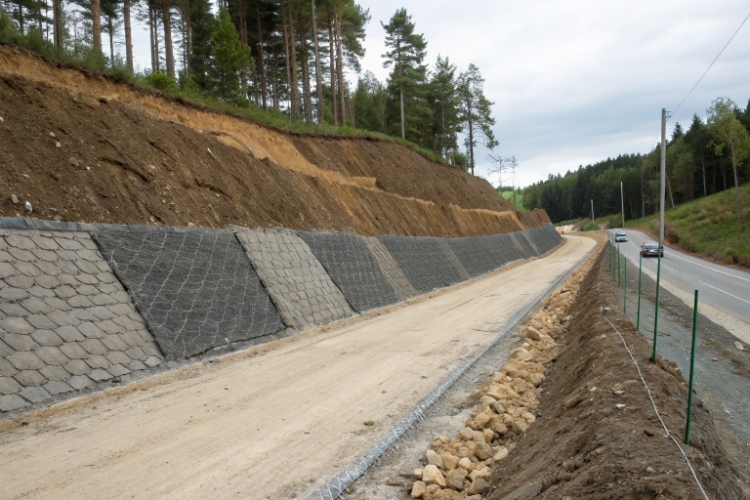
I've seen firsthand how geotextiles turn impossible projects into successful ones. In these heavy civil applications, the fabric does three jobs at once.
-
In Road Construction
When placed over a weak subgrade, a geotextile acts as a separator and a reinforcer. It stops the expensive aggregate base from being lost into the mud below. More importantly, the fabric's tensile strength spreads the load from tires over a wider area, just like snowshoes help you walk on snow. This prevents rutting and often allows engineers to design the road with less aggregate, saving significant material and trucking costs. -
In Embankments
Soil is strong under compression but has almost no tensile strength (it's easy to pull apart). By placing layers of high-strength geotextile within a soil embankment as it's being built, you add that missing tensile strength. This allows engineers to build taller, steeper slopes that are internally stable and safe from collapse. -
In Slope Protection
When using large rocks (riprap) to protect a slope or shoreline from erosion, there's a risk of the soil washing out from between the rocks. A geotextile is placed under the riprap to act as a robust filter. It holds the soil in place permanently while allowing water to pass through freely, preventing erosion and undermining of the structure.
How can I choose the right geotextile type for specific applications like ponds, landfills, or retaining walls?
You know you need a geotextile for your project, but your supplier offers woven vs. nonwoven, in weights from 4 oz to 16 oz. Choosing the wrong one can lead to a liner getting punctured or a drain getting clogged.
The right geotextile is determined by the primary function it must perform. For protection, use a heavy nonwoven. For reinforcement, use a high-strength woven. For drainage and filtration, use a mid-weight nonwoven with the correct pore size.

When a client asks me what to order, I always start with the application. The job dictates the tool.
| Primjena | Primary Function Needed | Recommended Geotextile Type | Why It's the Right Choice |
|---|---|---|---|
| Pond / Landfill Liner | Protection (Cushioning) | Heavy-weight Nonwoven | Its thick, felt-like body protects the waterproof geomembrane from being punctured by sharp rocks or debris in the subgrade. |
| Retaining Wall Backing | Drenaža & Filtriranje | Mid-weight Nonwoven | Lets water escape from the soil to relieve pressure but stops soil fines from clogging the drainage aggregate behind the wall. |
| Gravel Road on Soft Soil | Razdvajanje & Pojačanje | High-strength Woven | Its high tensile strength and low stretch prevent the gravel from mixing with mud and spreads the vehicle load to stop rutting. |
| Francuski omotač za odvod | Filtriranje | Light- to Mid-weight Nonwoven | The pore structure is engineered to let water in while keeping out the specific soil particles on site, preventing the drain from clogging. |
Zaključak
Geotextile fabric is a versatile problem-solver used in countless construction projects. By performing key functions like separation, filtration, drainage, and reinforcement, it makes infrastructure safer, more durable, and more cost-effective.