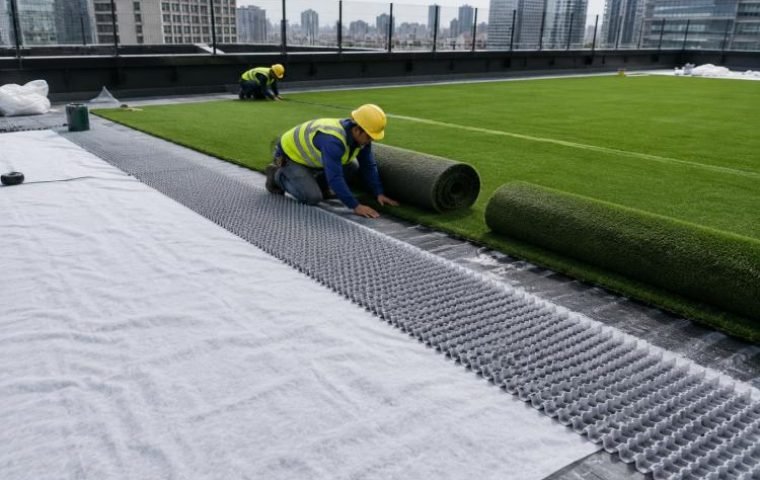
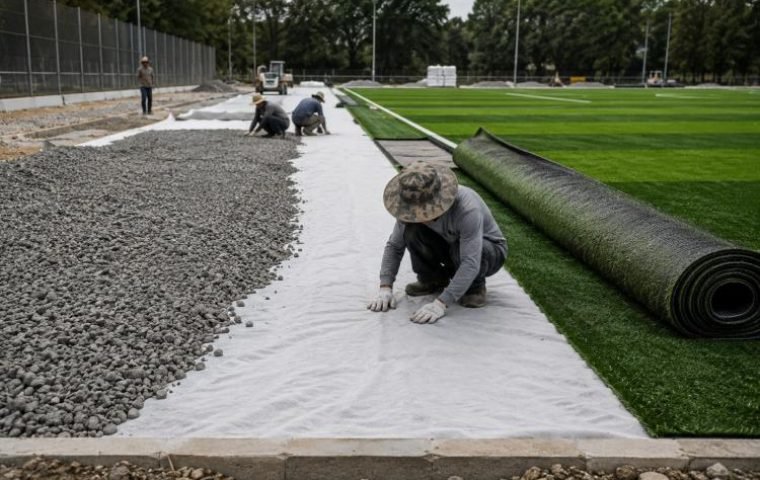
You're looking at a set of blueprints and see "geotextile fabric" gespesifiseer vir 'n pad, 'n drein en 'n keermuur. Hoe kan een materiaal vir soveel verskillende werke gebruik word? Die gebruik van die verkeerde tipe kan lei tot projekmislukking.
Geotekstielstof is 'n grondliggende materiaal in moderne konstruksie, wat die meeste gebruik word vir padbou, dreineringstelsels, erosiebeheer en omgewingsbeperkingsprojekte. Die veelsydigheid daarvan kom van sy vermoë om verskeie sleutelfunksies uit te voer, insluitend skeiding, filtrasie en versterking.

As 'n geosintetiese verskaffer, Ek het geotekstiele na elke denkbare soort projek gestuur. Alhoewel die lys van toepassings lank is, maak hulle almal staat op 'n handvol kern-ingenieursbeginsels. Om hierdie beginsels te verstaan, is die sleutel om te sien waarom hierdie eenvoudige stof een van die veelsydigste en waardevolste materiale in siviele ingenieurswese vandag is. Kom ons ondersoek waar en hoekom dit gebruik word.
In watter tipe siviele en omgewingsprojekte word geotekstielstof algemeen gebruik?
Dit kan oorweldigend wees om geotekstiele te sien gelys vir alles van stortingsterreine tot snelweë. Hoe kan jy sin maak uit hierdie eindelose lys en weet waar dit by jou eie projekte inpas?
Geotekstieltoepassings kan in vier hoofkategorieë gegroepeer word: vervoerinfrastruktuur (paaie, spoorweë), geotegniese ingenieurswese (mure, hellings), omgewingsbeskerming (stortingsterreine, damme) en waterbestuur (kanale, dreine). Elke kategorie maak op 'n ander manier staat op die stof se kernfunksies.
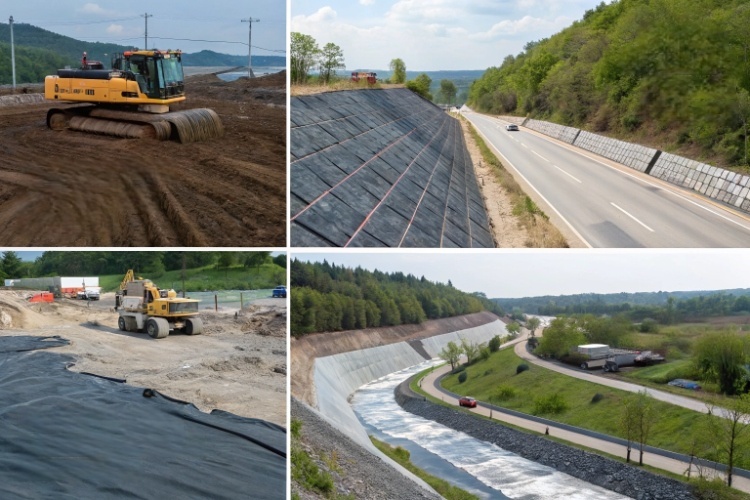
Uit my ervaring met die uitvoer van hierdie materiale val byna elke projek in een van hierdie emmers. Om hulle te verstaan, maak dit maklik om die groot prentjie te sien. Hier is 'n uiteensetting van sommige van die mees algemene projekte waarvoor ek materiaal verskaf:
| Projek Kategorie | Spesifieke toepassingsvoorbeelde | Primêre geotekstielfunksie(s) |
|---|---|---|
| Vervoer | Paaie (geplaveide & ongeplaveide), Spoorweë, Lughawens | Skeiding, versterking, filtrasie |
| Geotegnies | Keermure, walle, hellingsstabilisasie | Versterking, dreinering, filtrasie |
| Omgewing | Vullisterreine, Damme (vis, gholf), Afvalwaterstrandmere | Beskerming (kussing), filtrasie, skeiding |
| Hidroulies | Kanale, rivieroewers, ondergrondse dreine, damme | Dreinering, filtrasie, erosiebeheer |
Dit wys hoe 'n enkele produklyn 'n groot verskeidenheid nywerhede kan bedien. Of 'n kontrakteur nou 'n tydelike vervoerpad bou of 'n regering 'n 50-jaar stortingsterrein bou, hierdie vervaardigde materiaal speel 'n kritieke rol in die projek se sukses.
Hoe funksioneer geotekstiel anders in skeidings-, filtrasie- en dreineringstoepassings?
Jy het gehoor hoe die terme skeiding, filtrasie en dreinering gebruik word om te beskryf wat geotekstiele doen. Maar dit is nie dieselfde ding nie, en verwarring kan daartoe lei dat 'n stof gespesifiseer word wat nie die werklike probleem op u webwerf oplos nie.
Skeiding verhoed dat twee verskillende materiale meng. Filtrering laat water deurgaan terwyl gronddeeltjies geblokkeer word. Dreinering is die aktiewe beweging van water deur of langs die stof na 'n afvoerpunt. Elke funksie vereis 'n ander eienskap van die geotekstiel.
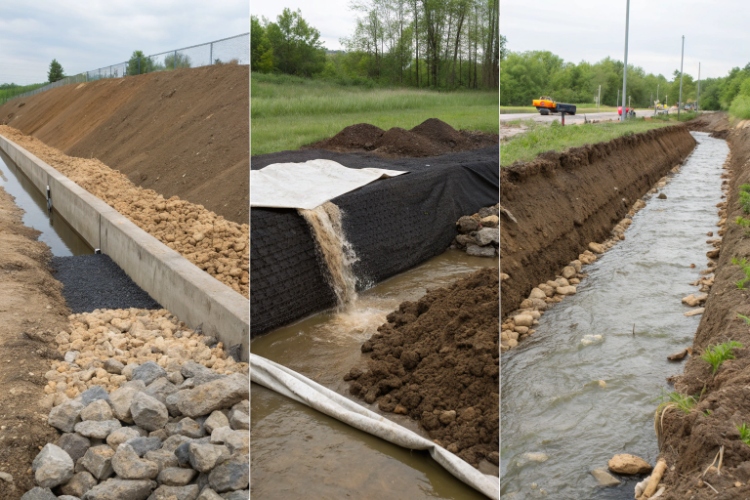
Ek spandeer baie tyd om hierdie funksies vir my kliënte uit te klaar. Om dit reg te kry, is die grondslag van 'n goeie ontwerp.
-
Skeiding
Dink daaraan om 'n grondpad oor sagte modder te bou. Sonder 'n skeier sal die swaarvoertuigverkeer die gruis in die modder afdruk, en die modder sal in die gruis oppomp. Die padbasis verloor sy krag en misluk. 'n Skeidingsgeotekstiel, dikwels 'n sterk geweefde stof, dien as 'n fisiese versperring tussen die twee lae, wat die integriteit en sterkte van die padstruktuur behou. -
Filtrering
Dit is soos 'n koffiefilter vir grond. Die geotekstiel word in 'n posisie geplaas waar water moet deurgaan, maar grond moet teruggehou word. 'n Klassieke voorbeeld is om 'n geperforeerde afvoerpyp toe te draai. Die stof se porieë is klein genoeg om slik en sand te keer om die pyp te verstop, maar groot genoeg om water vrylik in te laat. Dit is van kardinale belang vir enige dreineringstelsel om langtermyn te werk. -
Dreinering
Dreinering gaan oor die verskaffing van 'n pad vir water om te ontsnap. Dik, nie-geweefde geotekstiele kan water beweeg binne hul eie struktuur. Wanneer dit vertikaal teen 'n kelder of keermuur geplaas word, versamel die stof water oor sy hele oppervlak en kanaliseer dit afwaarts na 'n opvangpyp. Dit verlig hidrostatiese druk, wat 'n hoofoorsaak van muurversaking is.
Why is geotextile important in road construction, embankments, and slope protection projects?
Building on soft ground or on a steep slope is a major engineering challenge. Without reinforcement, roads rut and sink, and slopes can slide. These failures are not only costly to repair but also incredibly dangerous.
Geotextile is important because it provides the reinforcement and stability that weak soil lacks. It adds tensile strength, separates soil layers, and manages water, creating a durable and safe structure at a fraction of the cost of traditional methods.
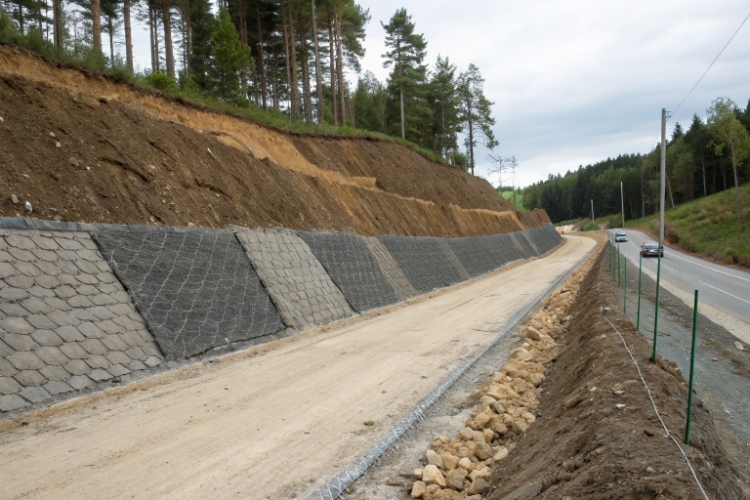
I've seen firsthand how geotextiles turn impossible projects into successful ones. In these heavy civil applications, the fabric does three jobs at once.
-
In Road Construction
When placed over a weak subgrade, a geotextile acts as a separator and a reinforcer. It stops the expensive aggregate base from being lost into the mud below. More importantly, the fabric's tensile strength spreads the load from tires over a wider area, just like snowshoes help you walk on snow. This prevents rutting and often allows engineers to design the road with less aggregate, saving significant material and trucking costs. -
In Embankments
Soil is strong under compression but has almost no tensile strength (it's easy to pull apart). By placing layers of high-strength geotextile within a soil embankment as it's being built, you add that missing tensile strength. This allows engineers to build taller, steeper slopes that are internally stable and safe from collapse. -
In Slope Protection
When using large rocks (riprap) to protect a slope or shoreline from erosion, there's a risk of the soil washing out from between the rocks. A geotextile is placed under the riprap to act as a robust filter. It holds the soil in place permanently while allowing water to pass through freely, preventing erosion and undermining of the structure.
How can I choose the right geotextile type for specific applications like ponds, landfills, or retaining walls?
You know you need a geotextile for your project, but your supplier offers woven vs. nonwoven, in weights from 4 oz to 16 oz. Choosing the wrong one can lead to a liner getting punctured or a drain getting clogged.
The right geotextile is determined by the primary function it must perform. For protection, use a heavy nonwoven. For reinforcement, use a high-strength woven. For drainage and filtration, use a mid-weight nonwoven with the correct pore size.

When a client asks me what to order, I always start with the application. The job dictates the tool.
| Toepassing | Primary Function Needed | Recommended Geotextile Type | Why It's the Right Choice |
|---|---|---|---|
| Pond / Landfill Liner | Protection (Cushioning) | Heavy-weight Nonwoven | Its thick, felt-like body protects the waterproof geomembrane from being punctured by sharp rocks or debris in the subgrade. |
| Retaining Wall Backing | Dreinering & Filtrering | Mid-weight Nonwoven | Lets water escape from the soil to relieve pressure but stops soil fines from clogging the drainage aggregate behind the wall. |
| Gravel Road on Soft Soil | Skeiding & Versterking | High-strength Woven | Its high tensile strength and low stretch prevent the gravel from mixing with mud and spreads the vehicle load to stop rutting. |
| French Drein Wrap | Filtrering | Light- to Mid-weight Nonwoven | The pore structure is engineered to let water in while keeping out the specific soil particles on site, preventing the drain from clogging. |
Gevolgtrekking
Geotextile fabric is a versatile problem-solver used in countless construction projects. By performing key functions like separation, filtration, drainage, and reinforcement, it makes infrastructure safer, more durable, and more cost-effective.