Geosynthetic Clay Liners (GCLs) have become a cornerstone of modern landfill barrier systems, offering a low-permeability solution in a compact, easy-to-install roll. However, a GCL is not a one-size-fits-all product. Its long-term performance is deeply intertwined with the site's specific geology and, most critically, the behavior of groundwater. Ignoring these factors can lead to a compromised barrier and potential environmental failure.
This comprehensive guide explains how to assess the suitability of GCLs under various geological conditions and a fluctuating water table. We’ll delve into the risks associated with different soil types, the mechanisms by which groundwater impacts bentonite, and provide a clear decision framework—with real-world case examples—to help you design a robust and reliable containment system.

To make informed decisions, we must first understand how a GCL works and what makes it vulnerable.
Fundamentals of GCLs and Their Hydraulic Barrier Mechanism
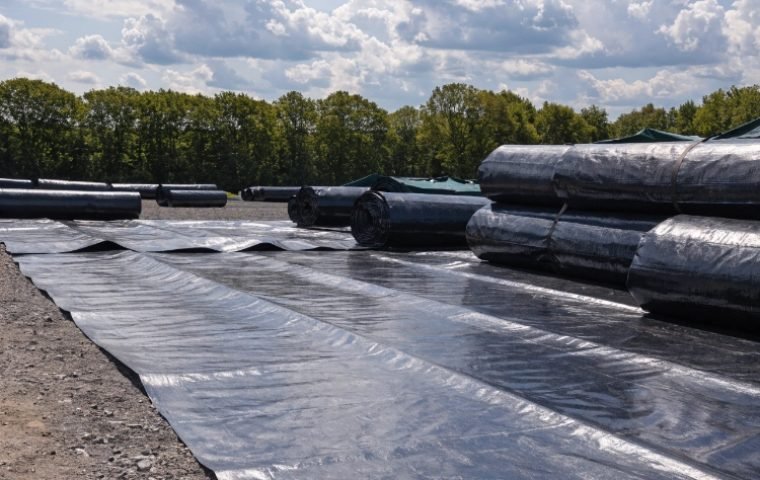
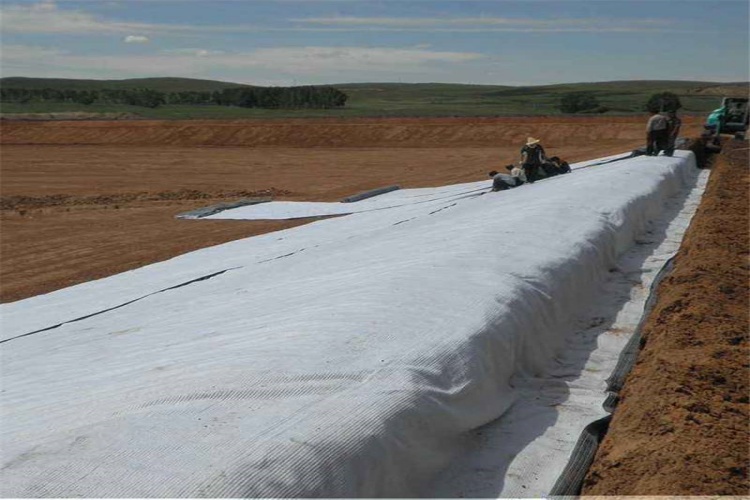
A GCL is a factory-manufactured composite material. Its structure is simple but effective: a thin layer of sodium bentonite clay is sandwiched between two geotextiles, which are needle-punched or stitched together to secure the bentonite.
The magic happens when the bentonite is hydrated. It swells to form a dense, monolithic gel with an extremely low permeability, often less than 5 × 10⁻⁹ cm/s. This swelling action is what creates the hydraulic barrier. Key performance metrics we look at include:
- Propusnost: The primary measure of its ability to block liquid flow.
- Swell Index: A measure of the bentonite's potential to swell upon hydration.
- Tensile Strength: The liner's ability to resist pulling forces, especially important for slope applications.
In landfills, GCLs are used for basal liners (at the bottom), on slopes, and as part of the final closure cap system.
GCL Suitability Under Different Geological Conditions
The soil or "subgrade" a GCL is placed on has a profound impact on its performance.
GCL Performance on Clayey Subgrades
A well-compacted clay subgrade, with its own low permeability (e.g., < 1 × 10⁻⁶ cm/s), is the ideal foundation for a GCL. The clay base provides a stable platform, minimizes water loss from the GCL into the subgrade, and offers a secondary layer of containment. This is a low-risk scenario where a standard GCL often performs exceptionally well.
GCL Risks on Sandy or High-Permeability Soils
Placing a GCL directly on sand, gravel, or fractured rock is a high-risk approach. Seepage forces can cause bentonite erosion, where water flow physically washes the bentonite particles out of the geotextile sandwich. To mitigate this, a protective sand or geotextile cushion layer is often required beneath the GCL. In most cases, using a GCL as part of a composite system with an overlaying HDPE geomembrane is the only safe design.
GCL Challenges on Soft or Weak Subgrades
Subgrades with high organic content, like silt or peat, are poor foundations. They are difficult to compact and prone to diferencijalno poravnanje. This can create wrinkles, voids, or tension in the GCL, creating potential leak paths. Extensive subgrade treatment, such as removing the soft soil and replacing it with engineered fill, is necessary before a GCL can be considered.
GCL Application on Irregular or Fractured Terrain
GCLs offer a significant advantage over thick compacted clay liners (CCLs) on irregular terrain due to their flexibility. They can conform to uneven surfaces much more easily. For steep slopes or areas with potential for minor settlement, a reinforced GCL with higher internal shear strength is recommended to ensure stability.
Effects of Groundwater Fluctuation on GCL Performance
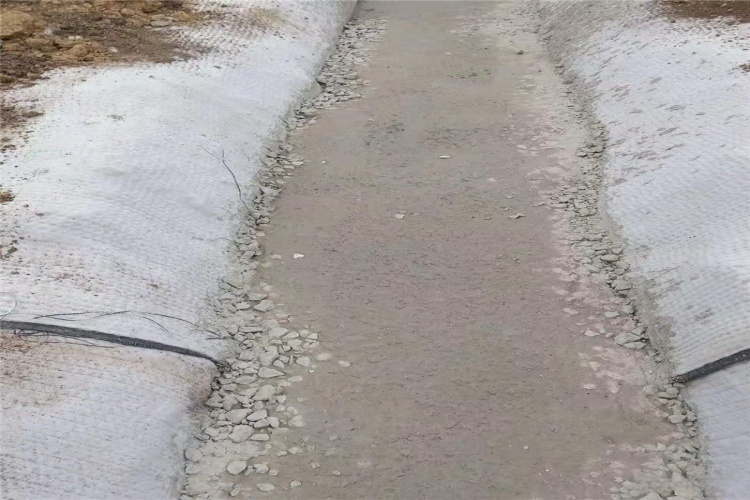
A fluctuating water table is one of the biggest threats to GCL stability. The mechanisms of failure are interconnected.
Dry–Wet Cycles
When the groundwater level drops, a hydrated GCL can dry out and shrink, potentially forming desiccation cracks. When the water table rises again, the GCL re-swells, but repeated cycles can lead to a 'saw-tooth' pattern of cracking and a measurable increase in permeability. Research has shown that these cycles are a primary cause of long-term performance degradation.
Bentonite Migration and Loss
High groundwater levels, especially an artesian condition where water flows upward, can physically push bentonite particles out of the liner. This risk is amplified in sandy soils. Furthermore, if the groundwater or leachate has a high salt concentration (i.e., high cation content), it can suppress the swelling capacity of the sodium bentonite through ion exchange, permanently reducing its effectiveness.
Hydrostatic Pressure and Structural Deformation
Upward pressure from a high water table can lift and create large wrinkles or "whales" in the liner, creating channels for rapid liquid flow. When saturated on slopes, the GCL's internal shear strength can decrease, potentially compromising slope stability.
Freeze–Thaw Cycles
In cold regions, the water within a hydrated GCL can freeze and expand, disrupting the clay structure. When combined with dry-wet cycles, this process accelerates the degradation of the liner’s hydraulic performance.

Integrated Evaluation Method and Decision Framework
To select the right design, we must systematically evaluate the geology and groundwater together. This decision matrix synthesizes the risks into actionable recommendations.
| Geologic Condition | Groundwater Fluctuation | GCL Suitability | Recommended Design Solution |
|---|---|---|---|
| Excellent Clay | Stable (<0.5m) | ✓✓✓ (Excellent) | Standard GCL is optimal, can be used alone or in a composite. |
| Excellent Clay | Moderate (0.5–1.5m) | ✓✓ (Good) | GCL + HDPE geomembrane composite. Add drainage layer. |
| Excellent Clay | High (>1.5m) or Frequent | ✓ (Fair) | GCL is secondary. Primary barrier must be HDPE geomembrane. |
| Sandy / High-Perm. | Stable (<0.5m) | ✓ (Fair) | GCL requires a sand cushion layer below. Composite w/ geomembrane recommended. |
| Sandy / High-Perm. | Moderate (0.5–1.5m) | △ (Risky) | Avoid standalone GCL. Must use a GCL + geomembrane composite with robust subgrade preparation & drainage. |
| Sandy / High-Perm. | High (>1.5m) or High Flow | ✗ (Not Recommended) | HDPE geomembrane is the primary choice. Use GCL only as a secondary layer on slopes, if at all. |
| Soft Subgrade | Any | △ (Risky) | Requires extensive ground improvement (e.g., ≥15cm sand cushion, geogrids). Always use in a composite system. |
| Irregular Terrain | Stable to Low | ✓✓ (Good) | Reinforced GCL is preferred for slopes. Excellent flexibility. |
Engineering Case Example: A Typical Landfill Design
Let's apply this framework to a hypothetical site.
-
Site Conditions: A mix of good clay at the base, an intermediate sand layer, and some upper soft soils. The groundwater table fluctuates seasonally by 1.0–2.0 meters. Leachate has a high salt content.
-
Design Solution:
- Bottom Liner System: Here, the fluctuation is moderate but the soil is good. We would excavate the soft soil, prepare a compacted clay base, and use a composite liner: Smooth 1.5mm HDPE Geomembrane (primary barrier) + 5kg/m² GCL (secondary barrier) + 15cm Sand Cushion Layer. The thicker GCL and geomembrane provide redundancy against the salt content and water fluctuations.
- Side Slope Liner System: Here, stability and resistance to wet-dry cycles are paramount. The choice is a Textured 1.5mm HDPE Geomembrane (for friction) + Reinforced GCL + Protective Nonwoven Geotextile. The reinforced GCL maintains its integrity during saturation cycles, and the textured membrane prevents sliding.
- Groundwater Control: A comprehensive leachate collection and sub-liner drainage system is installed to keep the water table from rising and exerting pressure on the liner system.
Construction and Monitoring Requirements
A great design can be ruined by poor execution.
- Construction Control: The subgrade must be smooth, firm, and dry. GCLs must be deployed with a minimum overlap (typically ≥20 cm, increased to 30 cm in high-risk areas) and kept dry until they are covered. If used in a composite system, all geomembrane welds must be 100% tested.
- Dugoročno praćenje: The design must include a network of monitoring wells to track groundwater levels and water quality quarterly. Leak detection systems placed between liner layers provide real-time alerts. A full geophysical assessment (e.g., electrical resistivity imaging) should be planned every 3–5 years to check the overall integrity of the barrier system.
Zaključak
A Geosynthetic Clay Liner is a powerful tool in environmental containment, but its effectiveness is not absolute. It is highly dependent on its surrounding environment. The best practice is always a "defense in depth" approach. By carefully assessing the geological conditions and groundwater dynamics, selecting the appropriate GCL type (or opting for a geomembrane when risks are high), and designing a multi-layered composite system with robust drainage and monitoring, we can build a barrier that is truly secure for the long term.