

Kada primamo upite od međunarodnih izvođača, distributera i timova za nabavu za projekte umjetne trave, jedno od najčešćih pitanja je iznenađujuće jednostavno:
"Do you have a 10 mm drainage mat?"
Debljina je svakako važna specifikacija, ali rijetko bi trebala biti polazna točka za odabir materijala za drenažu umjetne trave.
Dvije drenažne prostirke iste nominalne debljine mogu imati vrlo različite strukture jezgre, kapacitete protoka u ravnini, tlačno ponašanje, otpornost, slojeve za filtriranje i zahtjeve za ugradnju.
Drenažni proizvod prikladan za komercijalni krajolik možda nije pravi izbor za nogometno igralište. Isto tako, drenažni sloj dizajniran za sportsko igralište može funkcionirati vrlo drugačije od krute drenažne ploče koja se koristi na krovu ili betonskom podiju.
Ovisno o projektu, sloj ispod umjetne trave možda će trebati:
- Pustite da voda okomito iscuri u propusnu podlogu
- Vodite vodu bočno prema kolektorskim cijevima ili odvodima
- Održavajte kapacitet odvodnje pod radnim opterećenjem
- Omogućite odvajanje ili filtraciju
- Zaštitite vodonepropusni sustav
- Pružaju određenu otpornost ili amortizaciju u sportskim primjenama
Za B2B kupce to znači da odabir drenažne prostirke za umjetnu travu ne zahtijeva samo debljinu i osnovne dimenzije.
Ovaj vodič objašnjava glavne vrste rješenja za odvodnju umjetne trave, kako se vertikalna i bočna drenaža razlikuju, koje su strukture prikladne za različite primjene i koje tehničke specifikacije kupci trebaju usporediti prije nego što zatraže ponudu.

Što je drenažna prostirka za umjetnu travu?
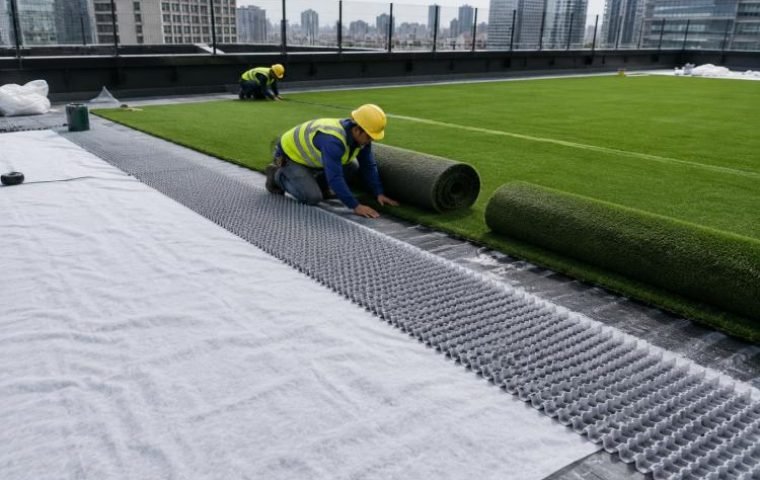
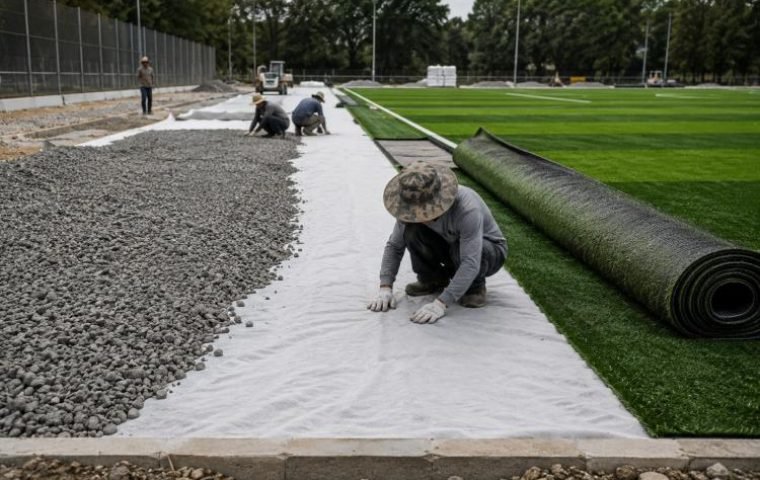
Drenažna prostirka umjetne trave je montažni sloj postavljen ispod sustava sintetičke trave za stvaranje i održavanje puteva za kretanje vode.
Ovisno o strukturi proizvoda i cjelokupnom dizajnu sustava travnjaka, može olakšati:
- Vertikalna drenaža u propusnu podlogu
- Bočna drenaža prema određenim sabirnim mjestima
- Ili kombinacija oba
Zbog toga se drenažna prostirka ne smije brkati sa standardnim geotekstilom.
Tipični netkani geotekstil prvenstveno osigurava filtracija, odvajanje i propusnost. Voda može proći kroz tkaninu, ali sam geotekstil obično ne stvara trodimenzionalnu prazninu za značajan prijenos vode u ravnini.
Za usporedbu, geokompozitni drenažni proizvod uključuje trodimenzionalnu polimernu jezgru koja stvara drenažne putove.
Ovisno o dizajnu, ova jezgra može biti izrađena od:
- 3D isprepleteni polimerni filamenti
- Polimerne strukture u obliku W ili M
- Kuspirane ili udubljene jezgre
- Bi-planarne ili tri-planarne geomreže
- Ostale oblikovane ili ekstrudirane drenažne strukture
Jezgra se zatim može kombinirati s jednim ili više slojeva geotekstila kako bi se osigurala filtracija, odvajanje ili zaštita gdje je to potrebno.
Pojednostavljeni sustav umjetne trave može izgledati ovako:
- Umjetna trava
- Ispuna, ako je primjenjivo
- Drenažna prostirka / drenažni sloj
- Baza od agregata, podloga, betonska ploča ili vodonepropusna konstrukcija
Točna konfiguracija ovisi o tome kako je projekt dizajniran za upravljanje vodom.

Koje se vrste drenažnih materijala koriste ispod umjetne trave?
Ne postoji niti jedan proizvod za drenažu koji je prikladan za svaku instalaciju umjetne trave.
Za komercijalne krajolike, sportske terene, krovove i druge projektirane travnate sustave, obično se razmatraju tri opće vrste rješenja za drenažu ispod travnjaka.
1. Geokompozitne drenažne prostirke
Geokompozitne drenažne prostirke naširoko se koriste tamo gdje je potreban namjenski drenažni sloj ispod umjetne trave.
Obično se isporučuju u fleksibilnim rolama i sastoje se od trodimenzionalne polimerne drenažne jezgre, sa ili bez jednog ili više slojeva geotekstila.
Tipična struktura
Geokompozitna drenažna prostirka može uključivati:
- Gornji geotekstil: Za filtraciju ili odvajanje gdje je potrebno
- Drenažna jezgra: Stvara prazan prostor i drenažne putove
- Izborni donji sloj: Za dodatno odvajanje, filtraciju ili zaštitu
Uobičajene jezgrene strukture odvodnje uključuju:
- 3D isprepletene filamentne jezgre
- Jezgre u obliku slova W ili M
- Kuspirane/udubljene jezgre
- Bi-planarne ili tri-planarne geomreže
Ovi su proizvodi osobito korisni kada se voda mora kretati bočno prema odvodima kolektora, perimetralnim sustavima odvodnje ili drugim određenim ispustima.
Budući da se isporučuju u rolama, također mogu biti praktični za velike instalacijske površine kao što su sportski tereni i komercijalni krajolici.
Međutim, dva proizvoda koja izgledaju slično mogu imati vrlo različite rezultate.
Geometrija jezgre, debljina, karakteristike polimera, primijenjeno opterećenje i hidraulički uvjeti utječu na stvarnu izvedbu drenaže.
Stoga ključno pitanje ne bi trebalo biti:
"How thick is the drainage mat?"
Bolje pitanje je:
"Can this drainage mat provide the required flow capacity under the expected project conditions?"

2. Elastične drenažne prostirke i drenažni udarni slojevi za sportske travnjake
Sportski tereni s umjetnom travom imaju različite zahtjeve u odnosu na mnoge krajobrazne ili civilne drenažne primjene.
Nogometno igralište, na primjer, obično ne doživljava ista kontinuirana teška tlačna opterećenja kao drenažni sustav potpornog zida, jako opterećeni podij ili druga strukturna drenažna primjena.
Umjesto toga, sustav ispod travnjaka možda će morati uravnotežiti nekoliko funkcija:
- Brza drenaža
- Stabilna podrška
- Zadržavanje debljine
- Elastičnost
- Amortizacija
- Sportska izvedba
Ovdje je posebno dizajnirano 3D elastične drenažne prostirke, drenažne podloge i drenažni udarni slojevi mogu postati relevantni.
Neki proizvodi koriste trodimenzionalne polimerne strukture kao što su:
- Jezgre u obliku slova W
- Jezgre u obliku slova M
- 3D isprepletene filamentne strukture
- Druge otporne geometrije otvorene jezgre
Ove strukture mogu stvoriti staze kontinuirane drenaže, a istovremeno osiguravaju određeni stupanj elastične reakcije pod dinamičkim opterećenjem.
Zašto je ovo korisno za sportski teren?
Za nogometno ili višesportsko igralište, cilj nije nužno odabrati drenažni materijal s najvećom mogućom tlačnom čvrstoćom.
Umjesto toga, materijal mora održavati dovoljno otvorenog prostora za drenažu dok ostaje kompatibilan sa potrebnim igračkim karakteristikama kompletnog sustava travnjaka.
Otporna 3D struktura stoga može pružiti dvije korisne funkcije:
Drenaža
Otvorena jezgra omogućuje da voda koja prolazi kroz umjetnu travu uđe u drenažni sloj i krene prema kolektorskim cijevima ili perimetralnim odvodima.
Otpornost i amortizacija
Trodimenzionalna polimerna struktura može se deformirati pod opterećenjem i oporaviti nakon što se opterećenje ukloni, pružajući dodatnu elastičnu potporu ispod sustava travnjaka.
To može biti korisno u sportskim primjenama gdje se očekuje da će podloga pridonijeti općem osjećaju i mehaničkoj reakciji površine.
Međutim, postoji važna razlika.
Elastična drenažna prostirka nije automatski certificirana podloga za udarce.
Ako nogometno igralište mora zadovoljiti zahtjeve izvedbe FIFA-e ili nekog drugog upravljačkog sportskog tijela, kompletan sustav umjetne trave mora se ocijeniti u skladu s primjenjivim zahtjevima za testiranje i certifikaciju.
Ovisno o projektu, relevantne karakteristike izvedbe mogu uključivati:
- Apsorpcija udara
- Vertikalna deformacija
- Restitucija energije
- Ponašanje lopte
- Površinska interakcija
- Izvedba travnjaka i ispune
- Izvedba podloge ili udarne podloge
- Izvedba odvodnje
3D drenažna prostirka može doprinijeti amortizaciji i otpornosti, ali to ne znači da svaka elastična drenažna prostirka može automatski zamijeniti testirani sportski amortizer.
Ispravan pristup je ocijeniti drenažni sloj kao dio cjelokupnog sustava umjetne trave.
3. Modularne drenažne ploče / drenažne ćelije
Modularne drenažne ploče, koje se često nazivaju drenažne ćelije, krute su ili polukrute plastične jedinice koje se spajaju kako bi stvorile strukturiranu drenažnu šupljinu.
Za razliku od fleksibilnih geokompozitnih rola, ovi se proizvodi sastavljaju ploču po ploču preko područja postavljanja.
Obično se smatraju za:
- Krovna umjetna trava
- Podijumski krajolici
- Terase
- Betonske ploče
- Druge tvrde ili vodootporne podloge
Ovi sustavi mogu osigurati definirane drenažne putove iznad vodonepropusne ili nepropusne strukture dok podržavaju slojeve postavljene iznad.
Njihova prikladnost ovisi o čimbenicima kao što su:
- Dostupna visina gradnje
- Projektirano opterećenje
- Potreban kapacitet odvodnje
- Nagib krova ili ploče
- Udaljenost do utičnica
- Zahtjevi zaštite od hidroizolacije
- Način ugradnje
- Trošak projekta
Za neke krovne projekte, modularna drenažna ćelija može osigurati potrebnu drenažnu šupljinu.
Za druge, tanja geokompozitna drenažna prostirka u obliku role može biti prikladnija.
Ispravno rješenje ovisi o kompletnom projektu krova i odvodnje.

Rješenja za odvodnju umjetne trave: brza usporedba
| Vrsta proizvoda | Glavna funkcija | Tipične primjene | Obrazac proizvoda |
|---|---|---|---|
| Geocomposite Drainage Mat | Lateral drainage and water conveyance | Sports fields, commercial landscapes, engineered turf systems | Flexible Roll |
| Resilient 3D Drainage Mat / Drainage Shock Layer | Drainage + resilient support / cushioning | Football fields, multi-sport fields | Roll / Panel |
| Modular Drainage Panel / Drainage Cell | Structured drainage void + load support | Rooftops, podiums, terraces, concrete slabs | Interlocking Panel |
These categories can overlap.
The correct product should therefore be selected according to the required function and tested performance rather than the product name alone.
Vertical Drainage vs. Lateral Drainage: What Does Your Project Need?
One of the most common mistakes in artificial turf drainage selection is confusing vertical permeability s lateral flow capacity.
Oni opisuju dva različita načina upravljanja vodom.
Vertikalna drenaža
Vertikalna drenaža znači da se voda prvenstveno kreće prema dolje kroz sustav umjetne trave.
Pojednostavljeni tok može izgledati ovako:
Padaline ↓ Umjetni travnjak ↓ Propusna baza agregata ↓ Podloga/sustav odvodnje
Na primjer, projekt vanjskog krajobraza može se izgraditi na pravilno sortiranoj, visoko propusnoj podlozi od agregata.
Ako temeljni sustav može učinkovito primiti i odvesti projektirane oborine, projekt se može prvenstveno oslanjati na vertikalnu odvodnju.
U ovoj situaciji namjenska bočna drenažna prostirka možda neće uvijek biti potrebna.
Bočna drenaža
Bočna drenaža postaje važna kada je infiltracija prema dolje ograničena ili kada dizajn drenaže zahtijeva vodoravno prikupljanje i transport vode.
Ovo se obično događa iznad:
- Niskopropusne podloge
- Zbijena glina
- Betonske ploče
- Hidroizolacijske membrane
- Krovne konstrukcije
- Ostale površine gdje je infiltracija prema dolje ograničena
Voda se tada mora kretati bočno prema:
- Cijevi kolektora
- Perimetralni odvodi
- Odvodni kanali
- Krovni odvodi
- Ostala određena prodajna mjesta
Za drenažne geokompozite važan pokazatelj učinkovitosti je kapacitet protoka u ravnini, koji se često procjenjuje testiranjem transmisivnosti.
Ključna ponuda za kupce
Visoka vertikalna propusnost ne znači automatski i visok bočni kapacitet odvodnje.
Materijal može dopustiti da voda prođe okomito kroz njegovu površinu vrlo brzo, ali još uvijek ima ograničen kapacitet za prijenos te vode nekoliko metara vodoravno pod opterećenjem.
For projects that depend on lateral drainage, buyers should therefore evaluate tested in-plane flow performance rather than judging drainage performance from permeability or thickness alone.

Which Drainage Material Is Suitable for Different Artificial Turf Applications?
A dedicated drainage mat is not mandatory for every artificial turf project.
The right solution depends on the application, base condition, drainage direction, required flow, loading conditions, and—in sports applications—the required mechanical response of the complete turf system.
Let's look at four typical scenarios.
Case 1 — Commercial Landscape on a Free-Draining Base
Project Conditions
- Propusna prirodna podloga
- Ispravno gradirana drenažna baza agregata
- Odgovarajuća površinska i podzemna drenaža
- Umjerena kiša
- Uglavnom pješački promet
Moguće rješenje
Namjenska drenažna prostirka možda neće biti potrebna.
Ako baza agregata već pruža dovoljan kapacitet odvodnje, dodavanje geokompozitnog drenažnog sloja može povećati troškove materijala i ugradnje bez značajne inženjerske prednosti.
Umjesto toga može biti potreban odgovarajući geotekstil između podloge i agregata kako bi se osiguralo odvajanje i filtracija.
Pitanje kupca
Prije kupnje drenažne prostirke pitajte:
Omogućuje li postojeća baza već funkciju odvodnje koju pokušavam dodati?
Slučaj 2 — Sportsko igralište preko podloge niske propusnosti
Project Conditions
- Veliki teren s umjetnom travom
- Niskopropusna ili zbijena podloga
- Visok intenzitet oborina
- Potreban brzi oporavak nakon oluja
- Voda mora učinkovito doći do odvoda kolektora
Moguće rješenje
Geokompozitni drenažni sloj visokog protoka može se smatrati dijelom projektiranog drenažnog sustava.
Tamo gdje dizajn zahtijeva brzi bočni prijenos iznad podloge niske propusnosti, drenažni geokompozit može pomoći u transportu vode prema kolektorskim cijevima ili perimetralnim odvodima.
Međutim, odabir proizvoda treba uskladiti s cjelokupnim projektom odvodnje.
Važni čimbenici uključuju:
- Osnovno ocjenjivanje
- Razmak odvoda
- Udaljenost odvodnje
- Hidraulički gradijent
- Slojevi agregata
- Dizajn padalina
- Očekivana servisna opterećenja
Konfiguraciju geotekstila također treba odabrati prema susjednim materijalima i potrebnoj funkciji filtriranja ili odvajanja.
Slučaj 3 — Nogometno igralište koje zahtijeva drenažu i elastičnu potporu
Project Conditions
- Football field or multi-sport artificial turf
- Rapid drainage required
- Dynamic athlete loading
- Limited heavy static loading
- Some resilience or cushioning desired beneath the turf
- Possible FIFA or other sports-performance requirements
Moguće rješenje
A resilient 3D drainage mat or specially designed drainage underlay may be considered.
For this type of application, products using W-shaped, M-shaped, 3D entangled, or other resilient open-core structures can be particularly interesting.
The objective is to maintain drainage pathways while also providing a degree of elastic response.
Unlike a rigid drainage panel designed primarily for high compressive resistance, a sports-oriented 3D drainage structure can be designed to deform under dynamic loading and recover afterward.
Ovo čini logiku odabira drugačijom od mnogih konvencionalnih primjena civilne odvodnje.
Za sportski teren, cilj može biti ravnoteža:
Kapacitet drenaže + otpornost + zadržavanje debljine + sportska izvedba
nego jednostavno maksimiziranje tlačne čvrstoće.
Što bi kupci trebali usporediti?
Za ovu vrstu drenažnog sloja kupci bi trebali pitati:
- Što je temeljna struktura?
- Koliki je ispitani kapacitet protoka u ravnini?
- Pod kojim opterećenjem je ispitana učinkovitost odvodnje?
- Koliko se proizvod sabija pod tipičnim radnim opterećenjima?
- Oporavlja li se struktura nakon opetovanog opterećenja?
- Jesu li dostupni podaci o apsorpciji udara?
- Jesu li dostupni podaci o okomitoj deformaciji?
- Je li proizvod korišten u sportskim sustavima s umjetnom travom?
- Može li se integrirati s navedenim sustavom travnjaka i ispune?
Što je s FIFA nogometnim igralištima?
Ako projekt mora zadovoljiti zahtjeve FIFA-e, cijeli sustav travnjaka treba ocijeniti prema primjenjivim FIFA-inim kriterijima testiranja i certificiranja.
A drainage mat that feels elastic or provides some cushioning should not automatically be described as a "FIFA shock pad."
Drenažna podloga može pridonijeti mehaničkom odgovoru površine, ali konačna izvedba ovisi o interakciji između:
Umjetna trava + ispuna + podloga / udarni sloj + drenažni sloj + baza
Stoga, za projekte profesionalnog nogometa, učinkovitost drenaže i sportsku izvedbu treba ocjenjivati zajedno.
Slučaj 4 — krovna umjetna trava
Project Conditions
- Strukturna betonska paluba
- Hidroizolacijska membrana
- Određeni krovni odvodi
- Ograničena visina konstrukcije
- Ograničenja težine
- Zahtjevi zaštite od hidroizolacije
Moguća rješenja
Modularne drenažne ploče ili odgovarajuća geokompozitna drenažna prostirka visokih performansi.
Na vodonepropusnom krovnom sklopu, vodu treba skupljati i usmjeravati prema određenim odvodnim otvorima bez ugrožavanja vodonepropusnog sustava.
Modularne drenažne ćelije mogu stvoriti relativno veliku i definiranu drenažnu šupljinu.
Odgovarajući geokompozitni drenažni valjak može pružiti tanju i fleksibilniju alternativu tamo gdje projekt ima ograničenu visinu nadogradnje.
Prilikom odabira treba uzeti u obzir:
- Potreban kapacitet odvodnje
- Nagib krova
- Udaljenost do odvodnih otvora
- Dostupna visina gradnje
- Projektna opterećenja
- Dugotrajna kompresija
- Hidroizolacijska zaštita
- Način ugradnje
- Kompatibilnost sustava
Za krovne primjene, proizvod za odvodnju uvijek treba procijeniti kao dio cjelokupnog dizajna krova i hidroizolacije.

Koje specifikacije trebate usporediti pri odabiru drenažne prostirke za umjetnu travu?
Za B2B nabavu, samo usporedba cijena, debljina i GSM rijetko je dovoljan.
Tehnički list treba pregledati u skladu sa stvarnom funkcijom koju projekt zahtijeva.
1. Kapacitet protoka u ravnini / transmisivnost
Za projekte koji ovise o bočnoj drenaži, ovo je jedna od najvažnijih specifikacija.
Kapacitet protoka u ravnini opisuje koliko vode drenažni materijal može prenijeti unutar svoje ravnine pod definiranim uvjetima ispitivanja.
Prilikom usporedbe proizvoda obratite pozornost na:
- Primijenjeno normalno opterećenje
- Hidraulički gradijent
- Rubni uvjeti
- Trajanje testa
- Metoda ispitivanja
Nemojte uspoređivati samo debljinu
Dobro dizajnirana drenažna jezgra od 8 mm može pružiti bolje performanse protoka u ravnini od nekih proizvoda od 10 mm ili 12 mm.
Zašto?
Budući da nazivna debljina ne govori koliko korisnog drenažnog prostora ostaje nakon utovara materijala.
Stoga:
Nazivna debljina ≠ Kapacitet drenaže
Usporedite testiranu hidrauličku izvedbu u relevantnim uvjetima.
2. Kompresija i zadržavanje debljine
Drenažna prostirka djeluje učinkovito samo dok je dovoljan broj odvodnih puteva otvoren.
Nakon ugradnje, materijal se može podvrgnuti:
- Težina umjetne trave
- Ispuna od pijeska ili gume
- Opterećenje sportaša
- Pješački promet
- Montažna oprema
- Strojevi za održavanje
Prekomjerna kompresija smanjuje dostupne kanale protoka i može značajno smanjiti kapacitet drenaže u ravnini.
Međutim, zahtijevano tlačno ponašanje ovisi o primjeni.
Krovni drenažni sloj koji podržava teža opterećenja može zahtijevati drugačije mehaničke karakteristike od elastične drenažne podloge koja se koristi ispod nogometnog igrališta.
Za sportske primjene, kupci bi također trebali razmotriti:
- Kompresija pod dinamičkim opterećenjima
- Oporavak debljine
- Elastičnost
- Dugotrajna deformacija
- Kompatibilnost sa zahtjevima sportskih performansi
Pitanje nije jednostavno:
"Which drainage mat has the highest compressive strength?"
Bolje pitanje je:
"Which mechanical behavior is appropriate for my application while still maintaining the required drainage performance?"
3. Osnovna struktura
Drenažna jezgra je ono što stvara otvoreni prostor kroz koji se voda može kretati.
Uobičajene strukture uključuju:
3D zapletena filamentna jezgra
Međusobno povezana polimerna filamentna struktura koja stvara trodimenzionalnu prazninu i može osigurati i drenažu i određeni stupanj elastičnosti, ovisno o svom dizajnu.
Jezgra u obliku slova W / M
Strukturirana polimerna jezgra s ponavljajućim kanalima ili profilima koji mogu stvoriti definirane odvodne putove.
Ovisno o geometriji i dizajnu polimera, ove strukture također mogu pružiti otporno ponašanje prikladno za određene primjene na sportskim travnjacima.
Kuspirana / udubljena jezgra
Oblikovana struktura koja koristi izbočine za održavanje drenažnog prostora. Može biti koristan tamo gdje je potrebna definirana drenažna šupljina i dimenzionalna stabilnost.
Geonet Core
Struktura polimerne rešetke, obično biplanarna ili triplanarna, dizajnirana za stvaranje učinkovitih odvodnih putova u ravnini.
No core structure is universally "the best."
Izvedba ovisi o:
- Geometrija jezgre
- Svojstva polimera
- Debljina proizvoda
- Primijenjeno opterećenje
- Hidraulički gradijent
- Udaljenost odvodnje
- Rubni uvjeti
- Zahtjevi za prijavu
Ispravnu usporedbu stoga treba temeljiti na ispitana izvedba pod relevantnim projektnim uvjetima, ne samo izgled.

4. Filter Svojstva geotekstila
Mnogi geokompoziti za drenažu sadrže jedan ili više slojeva geotekstila.
Ovisno o dizajnu sustava, geotekstil može pružiti:
- Filtriranje
- Razdvajanje
- Zaštita
Prilikom ocjenjivanja pričvršćene tkanine, kupci će možda morati pregledati:
- Vrsta polimera: PP ili PET
- Masa po jedinici površine (GSM)
- Prividna veličina otvora (AOS)
- Vodopropusnost / permitivnost
- Vlačna svojstva
- Otpornost na probijanje
- Jednostrana ili dvostrana laminacija
Ispravna konfiguracija ovisi o materijalima neposredno iznad i ispod drenažnog kompozita.
Teži geotekstil nije automatski bolji.
Filtration compatibility and mechanical requirements should determine the specification.
5. Thickness
Thickness still matters.
It can affect:
- Available drainage void
- Overall system build-up
- Door thresholds
- Connection details
- Sports surface response
- Installation requirements
However, thickness should always be evaluated together with hydraulic and mechanical performance.
For artificial turf drainage materials, a better purchasing principle is:
Performance First. Thickness Second.
6. Resilience and Sports Performance
For landscape drainage, this may not be an important selection criterion.
For sports turf, however, it can become highly relevant.
If a 3D drainage layer is expected to contribute to cushioning or the mechanical response of the artificial turf system, buyers should ask whether relevant test data are available.
Ovisno o specifikaciji projekta, to može uključivati:
- Apsorpcija udara
- Vertikalna deformacija
- Restitucija energije
- Ponašanje pri ponovljenom učitavanju
- Oporavak debljine
Opet, ove vrijednosti ne treba promatrati izolirano.
Za profesionalne sportske projekte cjelovita izvedba sustava travnjaka važnija je od pojedinačnog svojstva materijala.
Koje informacije trebate poslati kada tražite ponudu za podlogu za drenažu?
Koristan Zahtjev za ponudu trebao bi sadržavati više informacija od:
"Please quote your 10 mm drainage mat."
Pružanje osnovnih informacija o projektu omogućuje proizvođaču da utvrdi jesu li tražena debljina i struktura stvarno prikladni za primjenu.
Informacije o projektu
Navedite:
- Primjena umjetne trave
- Ukupna površina projekta (m²)
- Vrsta temelja ili podloge
- Unutarnja ili vanjska montaža
- Tipični presjek sustava, ako je dostupan
- Očekivani uvjeti opterećenja
- Lokacija projekta
Tipične primjene mogu uključivati:
- Nogometno igralište
- Višesportsko igralište
- Krovna terasa
- Pejzaž podija
- Komercijalni krajolik
- Igralište
Informacije o dizajnu odvodnje
Ako je dostupno, navedite:
- Projektirana količina oborina ili potrebna količina odvodnje
- Zahtjev za vertikalnu ili bočnu drenažu
- Udaljenost odvodnje
- Nagib površine / baze
- Razmak odvoda kolektora
- Mjesta prodajnih mjesta
- Potreban kapacitet protoka u ravnini
Čak i djelomične informacije mogu pomoći u određivanju je li potreban bočni drenažni sloj i koju razinu hidrauličke izvedbe treba uzeti u obzir.
Zahtjevi za sportsku izvedbu
Za nogometna igrališta i druge sportske primjene također navedite sve poznate zahtjeve za:
- Apsorpcija udara
- Vertikalna deformacija
- Restitucija energije
- Jastučić ili podloga za udarce
- FIFA ili drugi sportski standardi
- Specifikacija referentnog sustava
Ako ti parametri nisu dostupni, navedite specifikaciju travnjaka i projektne zahtjeve kako bi se drenažni sloj mogao ocijeniti unutar cijelog sustava.
Specifikacija proizvoda
Ako konzultant ili specifikacija projekta već definira potrebni materijal, navedite:
- Potrebna debljina
- Potrebna transmisivnost / kapacitet protoka u ravnini
- Uvjeti ispitivanja
- Potrebna kompresijska izvedba
- Geotekstil GSM
- Propusnost / permitivnost geotekstila
- ZA
- Zahtjevi za polimere
- Širina role
- Primjenjivi standardi ispitivanja
Ako je moguće, priložite:
- VRT
- Projektni crteži
- Crteži drenaže
- Tehničke specifikacije
- Referentni proizvod TDS
Ti su dokumenti mnogo korisniji od pružanja samo fotografije proizvoda ili nazivne debljine.
Komercijalne informacije
Za točnu ponudu također navedite:
- Ukupna potrebna količina
- Odredišna zemlja ili luka
- Potreban raspored dostave
- Preferirani trgovinski uvjeti, ako su poznati
Kontrolni popis za odabir drenažne podloge za umjetnu travu
Prije odabira drenažnog materijala prođite kroz sljedeći redoslijed:
1. Primjena
Koja je ovo vrsta projekta umjetne trave?
↓
2. Osnovni uvjet
Je li podloga propusna, slabo propusna, betonska ili vodonepropusna?
↓
3. Smjer odvodnje
Može li voda otjecati okomito ili mora putovati bočno prema izlazu?
↓
4. Hidraulički zahtjevi
Koliko vode je potrebno obraditi, preko koje udaljenosti odvodnje i nagiba?
↓
5. Stanje utovara
Kakva će opterećenja biti drenažni sloj tijekom ugradnje i servisiranja?
↓
6. Otpornost / sportska izvedba
Zahtijeva li projekt samo drenažu ili bi podloga također trebala pridonijeti amortizaciji i sportskim performansama?
↓
7. Struktura jezgre
Koja je struktura drenažne jezgre prikladna za zahtijevano hidrauličko i mehaničko ponašanje?
↓
8. Konfiguracija geotekstila
Je li potrebna filtracija, odvajanje ili zaštita s jedne ili s obje strane?
↓
9. Odabir proizvoda
Koji proizvod pruža tražene testirane performanse za kompletan sustav umjetne trave?
Ovaj postupak odabira puno je pouzdaniji od započinjanja s:
"I need a 10 mm drainage mat."
Zaključak: Kako odabrati pravi drenažni materijal za umjetnu travu?
Odabir odgovarajuće drenažne prostirke za umjetnu travu nije samo stvar pronalaženja najdebljeg proizvoda.
Različiti projekti zahtijevaju različite funkcije odvodnje.
Komercijalni krajolik izgrađen na visoko propusnoj podlozi od agregata možda uopće neće trebati poseban bočni drenažni sloj.
Sportsko igralište iznad podloge niske propusnosti može zahtijevati drenažni sustav od geokompozita visokog protoka za transport vode prema odvodima kolektora.
Nogometno igralište možda treba balansirati drenaža, otpornost, amortizacija i sportska izvedba, čineći elastičnu 3D drenažnu strukturu ili specijaliziranu sportsku podlogu prikladnijim rješenjem.
U međuvremenu, instalacija umjetne trave na krovu mora uskladiti drenažu s hidroizolacijom, strukturnim opterećenjima, dostupnom visinom nadogradnje i lokacijama ispusta.
Za B2B kupce, pouzdaniji proces odabira je:
Primjena → Osnovni uvjeti → Smjer drenaže → Hidraulički zahtjevi → Opterećenje → Otpornost / sportska izvedba → Osnovna struktura → Konfiguracija geotekstila → Odabir proizvoda
Najvažnije:
Nemojte pretpostavljati da dvije drenažne prostirke od 10 mm imaju istu učinkovitost.
Usporedite njihove osnovne strukture, ispitane hidrauličke performanse, mehaničko ponašanje i prikladnost za stvarni projekt.
Tražite rješenje za odvodnju umjetne trave?
Ako tražite materijale za drenažu za a nogometno igralište, sportski objekt, krovna umjetna trava, komercijalni krajolik, igralište ili drugi projekt sintetičke trave, kontaktirajte nas kako bismo razgovarali o vašoj prijavi.
Kao profesionalni proizvođač geosintetike u Kini, isporučujemo materijale za drenažu, filtraciju i odvajanje za međunarodne izvođače, distributere, tvrtke za krajobraz i kupce projekata.
Naš asortiman umjetne trave i geosintetike uključuje:
- 3D geokompozitne drenažne prostirke
- Elastične drenažne prostirke za sportske travnjake
- Geonet drenažni kompoziti
- Drenažne jezgre i drenažne ploče
- Netkani geotekstil
- Prilagođena geosintetička rješenja za potrebe projekta
Kako biste nam pomogli da preporučimo odgovarajući drenažni materijal, možete nam poslati:
Primjena + Osnovna struktura + Projektno područje + Potrebna debljina + Zahtjevi za odvodnju + Tehnički crteži ili referentni TDS
Ako još nemate potpunu tehničku specifikaciju, jednostavno nam recite o svojoj aplikaciji i osnovnim uvjetima.
Naš tim može pomoći u procjeni potrebnih smjer drenaže, performanse protoka, uvjeti opterećenja, zahtjevi za otpornost, struktura jezgre i konfiguracija geotekstila identificirati prikladno rješenje za vaš projekt.
Kontaktirajte nas za tehničke listove, uzorke proizvoda, preporuke za projekte i ponude.