

Operating a small-scale waste facility comes with a unique set of challenges. You face the same environmental responsibilities as a large municipal landfill but must meet them with a fraction of the budget and resources. Selecting the right liner system is often the biggest financial and regulatory hurdle. The good news is that "affordable" does not have to mean non-compliant or low-quality.
The key is to make an informed choice based on a smart balance of initial cost, long-term performance, and installation simplicity. This guide is designed to help you navigate the options. We will break down the most cost-effective liner materials, compare their total project costs, and provide a clear framework for selecting the best solution that protects both your budget and the environment.
What Is a Small-Scale Waste Faciility?
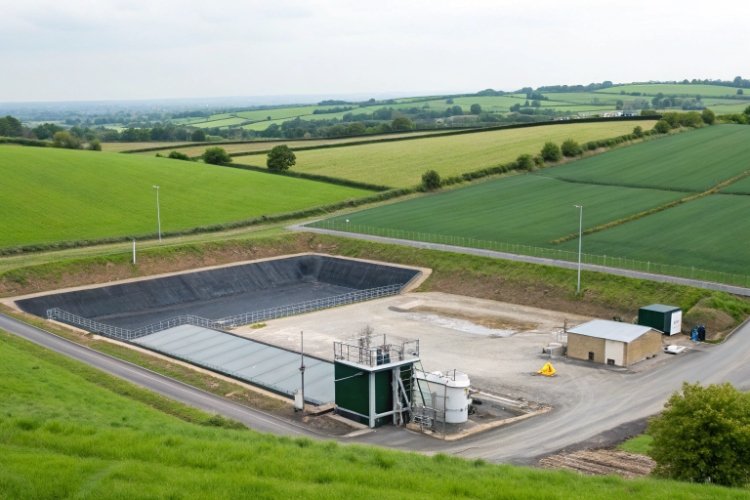
Before discussing landfill liner materials, it is important to clearly define what is meant by a small-scale waste facility. This term does not refer to large regional or metropolitan landfills, but rather to localized disposal sites with limited capacity, smaller service populations, and simplified engineering requirements, such as:
- Rural or township landfills: Serving smaller communities with lower volumes of municipal solid waste,with daily waste acceptance volumes generally below 50–100 tons per day.
- Industrial waste-specific sites: Disposal areas designed for non-hazardous industrial byproducts—such as ash, sludge, or manufacturing residues—often handling intermittent or low-volume waste streams rather than continuous municipal waste.
- Construction and demolition (C&D) debris sites: Temporary or permanent facilities managing construction waste, usually operating on project-based timelines with limited footprint and shorter design life.
In terms of physical scale, small-scale waste facilities typically occupy less than 5–10 hectares (12–25 acres) and are often developed in phases to reduce upfront capital investment.
Unlike large municipal landfills that may process hundreds or even thousands of tons of waste per day, these smaller facilities operate under tight budget constraints and lower overall environmental risk profiles. As a result, adopting complex, multi-million-dollar double composite liner systems commonly used in large landfills is often cost-prohibitive and technically unnecessary.
For small-scale waste facilities, the primary objective is to meet or exceed applicable regulatory requirements while implementing a landfill liner system that is cost-effective, practical to procure and install, and manageable to maintain over its service life.
Key Factors to Consider When Choosing Affordable Landfill Liners
Your decision should be based on a holistic assessment, not just the price per square meter of a material.
Budget Constraints and Lifecycle Cost
This is the most critical factor. However, it's crucial to look beyond the initial material price. The total installed cost includes material, shipping, earthwork, installation labor, equipment rental, and quality assurance testing. Furthermore, a cheaper material that requires more maintenance or fails prematurely will have a much higher lifecycle cost.
Regulatory and Environmental Requirements
Every jurisdiction has minimum standards. In the United States, the EPA's Subtitle D regulations are a common global benchmark. For non-hazardous waste, this typically requires a single composite liner system. This means an HDPE geomembrane placed over a low-permeability soil layer. Your chosen liner must meet these minimum permeability and thickness requirements.
Site Conditions
- Soil Type: Do you have access to high-quality, low-permeability clay on-site? If so, a compacted clay liner becomes a very low-cost material option. If not, importing clay can be prohibitively expensive.
- Groundwater Level: A high water table increases the environmental risk, potentially demanding a more robust liner system.
- Climate: A region with heavy rainfall requires excellent leachate collection. A location with extreme temperature swings puts more thermal stress on the geomembrane.
Installation and Maintenance Simplicity
Complex installation procedures require specialized technicians and equipment, driving up costs. A simpler system that can be installed by a local, well-trained crew is often more cost-effective.
Best Affordable Landfill Liner Options for Small-Scale Facilities
Here are the most viable options, ranked by their suitability for budget-conscious projects.
HDPE Geomembrane Liners
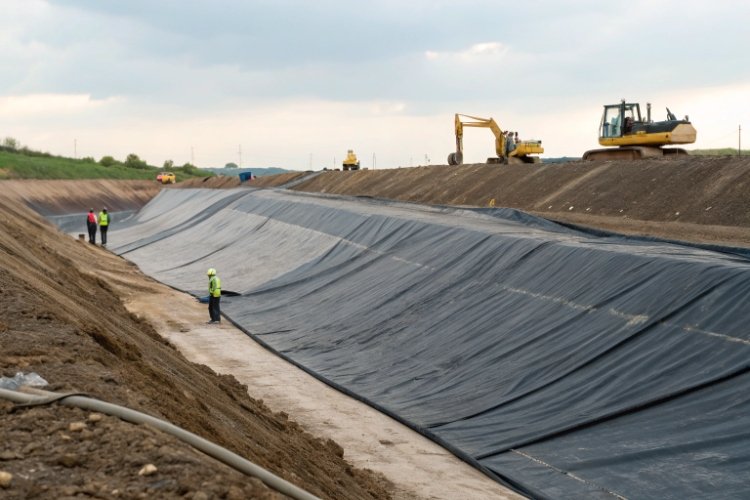
High-Density Polyethylene (HDPE) is the workhorse of the landfill industry for a reason. It offers an unbeatable combination of chemical resistance, UV stability, durability, and cost-effectiveness. For small facilities, 1.5 mm (60 mil) HDPE is typically the gold standard. It meets the minimum thickness specified by the EPA and has a proven track record of over 30 years in containment applications. While a 2.0 mm (80 mil) liner offers about 40% more puncture resistance, it costs 25-35% more and is often over-design for smaller sites unless subgrade conditions are particularly poor.
LLDPE Geomembrane Liners
Linear Low-Density Polyethylene (LLDPE) is a more flexible cousin of HDPE. Its primary advantage is its ability to conform to differential settlement and uneven subgrades without creating high-stress points. It is slightly more expensive than HDPE but can be a wise investment if your site has complex geometry or soil that is prone to settling.
Compacted Clay Liners (CCL)
A CCL is a layer of natural clay soil, typically 600 mm (2 feet) thick, that is compacted in multiple lifts to achieve a very low permeability (≤ 1 x 10⁻⁷ cm/s). If you have suitable clay available on-site, the material cost is virtually zero. However, this is a deceptive advantage. The installation is highly technical, labor-intensive, time-consuming, and extremely sensitive to weather conditions. Achieving the required compaction and permeability requires rigorous quality control, which can be costly.
Geosynthetic Clay Liners (GCLs)
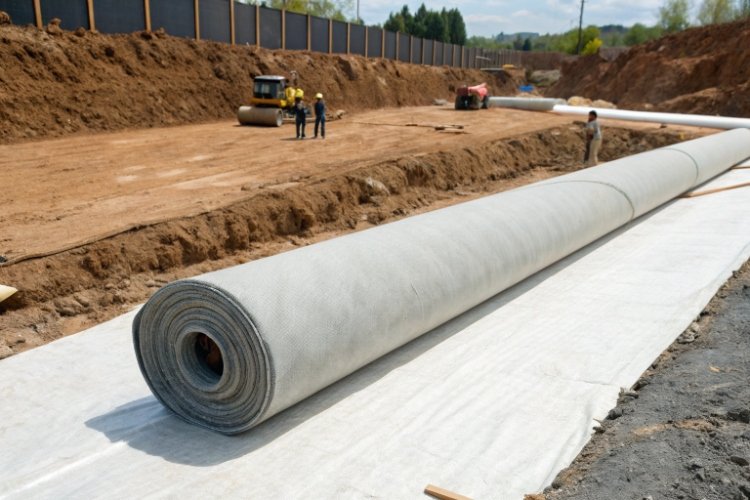
GCLs are a modern engineering marvel that provides the performance of a thick clay liner in a thin, easy-to-install roll. A GCL is a factory-manufactured composite of high-swelling sodium bentonite clay sandwiched between two geotextiles. When it gets wet, the clay hydrates and swells, creating an impermeable barrier that is often 100 to 1,000 times less permeable than a compacted clay liner. A key feature is its ability to "self-heal" minor punctures.
For small facilities, a GCL can be a game-changer. While the material cost per square meter is higher than clay, the total installed cost is often equal or even lower because it eliminates the need for extensive earthwork, compaction, and quality control.
Comparing Cost-Effective Landfill Liner Materials
This table provides a high-level comparison to help guide your decision. "Cost" ratings are based on the total installed cost for a small project, not just material price.
| Liner Option | Initial Cost | Performance | Lifespan (Years) | Installation Complexity | Best For |
|---|---|---|---|---|---|
| 1.5mm HDPE Geomembrane | Niska | Izvrsno | 30+ | Moderate (Requires Pro) | The default choice for the geomembrane component in most projects. |
| LLDPE geomembrana | Low-Moderate | Izvrsno | 30+ | Moderate (Requires Pro) | Sites with uneven settlement or complex shapes. |
| Zbijena glinena obloga (CCL) | Very Low-High | Dobro | 50+ | Vrlo visoko | Sites with abundant, high-quality on-site clay and a skilled workforce. |
| Obloga od geosintetske gline (GCL) | Umjereno | Superior | 50+ | Niska | Sites without cheap local clay; projects on a tight schedule. |
The Recommended Composite System: For most small-scale facilities, the most cost-effective, high-performance system is a 1.5 mm HDPE geomembrane installed over a GCL. This composite approach gives you a dual barrier: the impermeable geomembrane and the self-healing GCL. It is faster to install and provides a higher level of safety than the traditional HDPE-over-clay system, often for a similar total project cost.
How to Choose the Best Option for Your Small-Scale Project
Use this thought process to narrow down your choices:
- Assess Your Local Resources: Is there a local source of cheap, high-quality clay that meets permeability standards? If yes, a CCL is a strong contender for your barrier layer. If no, a GCL is almost certainly the more economical and reliable choice.
- Evaluate Your Budget Realistically: Get quotes for the total installed cost of both a CCL and a GCL system.
- Consider Your Risk Tolerance: The GCL + HDPE composite system offers significantly higher security due to the GCL's self-healing properties. For facilities near sensitive environmental areas (like wells or rivers), this added security is invaluable.
- Avoid Over-design: You likely do not need a double-liner system with two layers of geomembrane. A single composite liner (HDPE + GCL or HDPE + CCL) is the standard and is more than sufficient for most small, non-hazardous waste facilities.
Common Mistakes Small Facilities Make When Selecting Landfill Liners
- Focusing Only on Material Price: Ignoring the costs of transportation, earthwork, labor, equipment, and quality control leads to massive budget overruns. The cheapest material is rarely the cheapest project.
- Underestimating Installation Difficulty: Attempting to install a compacted clay liner without proper geotechnical supervision and testing will almost certainly result in a failed barrier. Similarly, welding HDPE requires certified technicians.
- Neglecting Prikupljanje procjednih voda: The liner is only one part of the system. You must also budget for a simple but effective leachate collection system, typically a 200-300mm layer of gravel over the liner with perforated collection pipes sloped at a minimum of 1%.
Tips for Reducing Landfill Liner Costs Without Compromising Safety
- Choose the Right Thickness: For the geomembrane, 1.5 mm (60 mil) HDPE is sufficient for most applications. Don't pay for 2.0 mm unless a geotechnical engineer specifies it for a valid reason.
- Simplify the System: A simple composite liner is robust and compliant. Avoid adding unnecessary layers that increase cost without providing a significant performance benefit for your specific site.
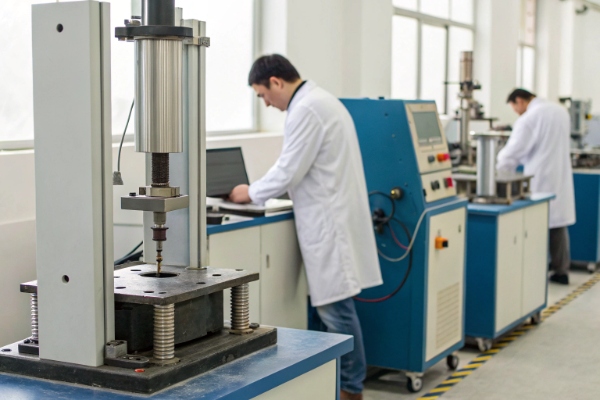
- Implement a Simplified CQA Plan: Full-scale Construction Quality Assurance (CQA) is expensive. For a small site, a risk-based CQA plan can be effective. This might involve testing 30-50% of the geomembrane welds with a vacuum box (instead of 100%) and performing a smaller number of destructive tests, while still visually inspecting all seams.
Conclusion: Affordable Does Not Mean Low Performance
Building a safe, compliant, and durable containment system for a small-scale waste facility is entirely achievable on a tight budget. The solution lies in smart engineering choices, not cutting corners. By looking at the total installed cost and focusing on proven, high-value materials like Geosynthetic Clay Liners (GCLs) and 1.5 mm HDPE geomembranes, you can build a system that meets regulatory standards, provides superior long-term protection, and is faster and more economical to install than traditional methods.
FAQ: Affordable Landfill Liners for Small-Scale Waste Facilities
What is the cheapest landfill liner material?
On a material-only basis, compacted clay from an on-site source is the cheapest. However, when you factor in the extensive labor, equipment, and quality control required for proper installation, a Geosynthetic Clay Liner (GCL) combined with an HDPE geomembrane is often the most affordable total project solution.
Does a small facility have to use HDPE?
While not always mandated by law, 1.5 mm HDPE is the universally accepted standard for landfill applications due to its superior chemical resistance and proven long-term performance. Using a less robust material like PVC is not recommended for long-term waste containment due to its lower durability and UV resistance.
How can I meet environmental requirements on a low budget?
The best strategy is to adopt the single composite liner model: a 1.5 mm HDPE geomembrane over a GCL or a properly installed compacted clay liner. This system is the global standard for safety and compliance. Combine this with a simple gravel leachate collection layer and a simplified CQA program to ensure a safe and cost-effective result.