Choosing the right geomembrane for a heap leach pad is one of the most critical decisions in a mining project. The liner is the primary barrier containing valuable process solutions and preventing environmental contamination. A failure isn't just a leak; it's a direct hit to your bottom line and a major environmental liability.
This guide provides a balanced, head-to-head comparison of the two leading geomaterials: High-Density Polyethylene (HDPE) and Linear Low-Density Polyethylene (LLDPE). I'll break down the advantages and limitations of each to help you select the right liner for the unique demands of your heap leach operation.

Introduction: Importance of Liner Selection in Heap Leach Mining
First, let's set the stage. Heap leaching is a process where a chemical solution, such as cyanide for gold or acid for copper, is irrigated over a large pile or "heap" of crushed ore. The solution dissolves the target metals as it percolates through the heap, is collected by a liner system at the base, and is then processed to extract the metal.
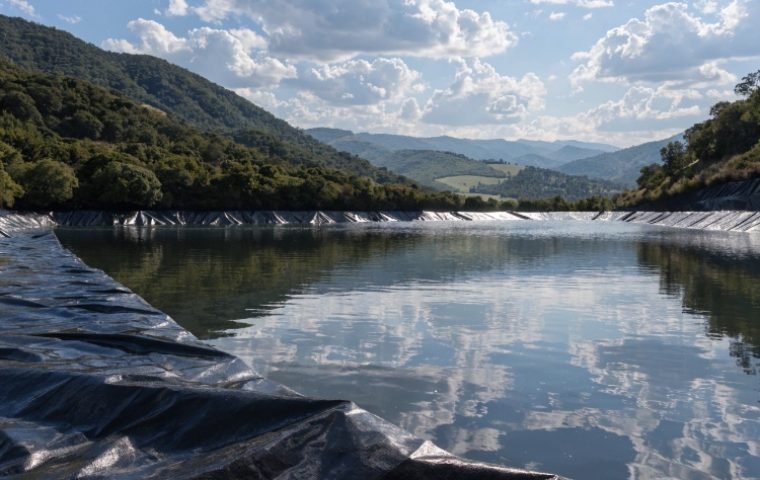
The geomembrane liner is the heart of this system. Its job is to be a perfectly sealed basin, ensuring every drop of a valuable, metal-rich solution is collected. The risks of a liner failure are immense, including lost revenue from solution leaks, costly repairs, project downtime, and severe environmental damage if contaminants reach the soil and groundwater.
Basic Material Overview: HDPE vs LLDPE
While both are polyethylene, HDPE and LLDPE have distinct molecular structures that give them very different physical properties.
- HDPE (High-Density Polyethylene): Made from a polymer with a more linear molecular structure, resulting in a higher density. This makes the material stiffer, stronger, and more resistant to chemicals. It is the traditional standard for containment applications.
- LLDPE (Linear Low-Density Polyethylene): Incorporates short-chain branches into its molecular structure, preventing the polymer chains from packing tightly. This results in a lower density, giving the material much greater flexibility and elongation (stretch).
This fundamental difference is the source of all their respective pros and cons.
| Property | HDPE | LLDPE |
|---|---|---|
| Density | Higher (e.g., ≥0.941 g/cm³) | Lower (e.g., 0.920–0.939 g/cm³) |
| Stiffness | High (rigid and strong) | Medium to Low (very flexible) |
| Flexibility | Moderate | High |
| Stress Crack Resistance (ESCR) | Good | Excellent |
| Typical Thickness in Mining | 1.5–2.5 mm (60–100 mil) | 1.0–2.0 mm (40–80 mil) |
Performance Requirements for Heap Leach Liners
Before comparing them, we must understand what we demand from a liner in this harsh environment.
- Chemical Resistance: It must withstand constant exposure to aggressive solutions like low-pH acid or high-pH cyanide for decades.
- Load-Bearing Capacity: It must endure immense pressure. Modern heap leach stacks can exceed 150 meters in height, creating pressures over 2,500 kPa—ten times greater than in a typical landfill.
- Stress Crack Resistance: It must resist cracking under the long-term strain caused by the massive ore load and any uneven settlement of the ground beneath it.
- Long-Term Durability: It must maintain its integrity against UV exposure during installation and throughout its operational life.
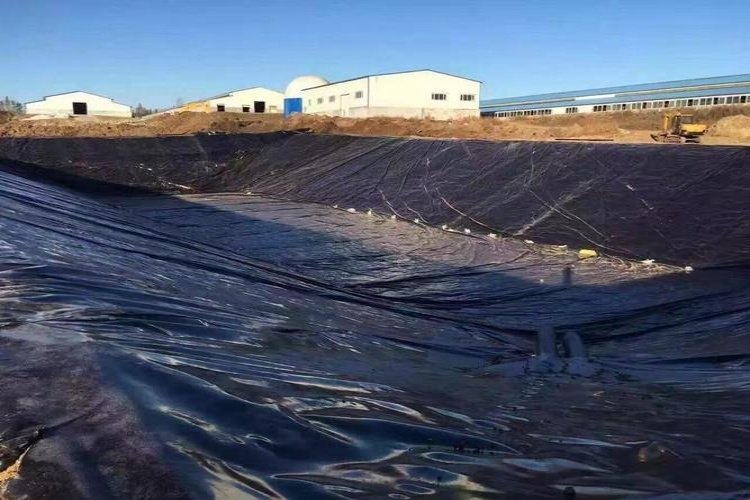
Advantages of HDPE Geomembrane in Heap Leach Applications
HDPE remains the most widely used geomembrane in the world for good reason. It has a long and successful history in mining.
- Excellent Chemical Resistance: HDPE's dense, highly crystalline structure provides a superior barrier against a broad range of chemicals, making it exceptionally reliable for long-term containment of both acidic and alkaline solutions.
- High Puncture and Tear Resistance: Its inherent stiffness and high tensile strength give it excellent resistance to punctures and tears from sharp rocks or construction traffic.
- Superior Performance Under High Compressive Loads: The material's high modulus means it doesn't deform easily under the immense weight of an ore stack.
- Proven Track Record: For decades, HDPE has been the go-to liner for large-scale mining projects. It is a known quantity with a vast database of successful case histories, making it a "safe" and trusted choice for engineers.
Advantages and Limitations of LLDPE Geomembrane
LLDPE is the challenger, gaining significant market share in recent years, particularly for specific heap leach challenges.
Advantages
- High Flexibility and Elongation: This is LLDPE's standout feature. It can stretch over 700% before breaking. This allows it to conform easily to uneven subgrades and, more importantly, to absorb strains from differential settlement without failing.
- Superior Stress Crack Resistance (ESCR): Its flexible molecular structure makes it inherently more resistant to cracking under long-term stress, a critical advantage for liners at the bottom of very deep heaps.
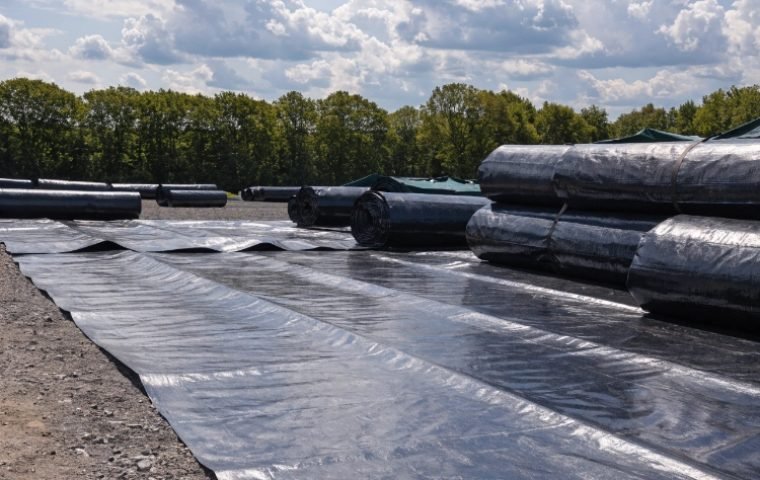
- Easier Installation: Its flexibility makes it easier to handle and deploy on complex terrain. It can also be factory-fabricated into larger panels, reducing the number of field seams required.
Limitations
- Lower Puncture Resistance (in Lab Tests): In standardized lab tests, LLDPE shows lower puncture strength than HDPE of the same thickness.
- Reduced Performance Under High Compressive Loads: Its lower stiffness means it can deform more easily under direct point loads.
- Perceived Shorter Service Life: Historically, there have been concerns about LLDPE's long-term durability in very aggressive chemical or high-UV environments compared to HDPE.
HDPE vs LLDPE: Key Performance Comparison for Heap Leach
This is where the choice gets interesting. It's not just about a list of pros and cons; it's about how the materials perform under heap-specific stresses.
Chemical Resistance
Winner: HDPE (Slightly). Both materials offer good chemical resistance, but HDPE's denser structure gives it a slight edge in resisting chemical diffusion over very long periods, making it the preferred choice for solution ponds and other areas of permanent, direct chemical contact.
Puncture Resistance
Winner: LLDPE (in the field). This is counterintuitive. While HDPE wins in a lab test, real-world performance is different. LLDPE's flexibility allows it to deform and "absorb" the energy of a sharp point, distributing the stress over a larger area. HDPE's stiffness causes it to resist, concentrating stress at the point of impact, which can lead to a puncture. For the complex, multi-axial stresses at the base of a heap, LLDPE's flexibility often provides more practical puncture resistance.
Stress Crack Resistance
Winner: LLDPE (Clearly). The single greatest risk for a liner under a 150-meter ore stack is long-term stress cracking. LLDPE was engineered to solve this problem. Its ability to relax and elongate under sustained stress makes it far superior to HDPE in preventing the formation and propagation of stress cracks.
UV and Weathering Resistance
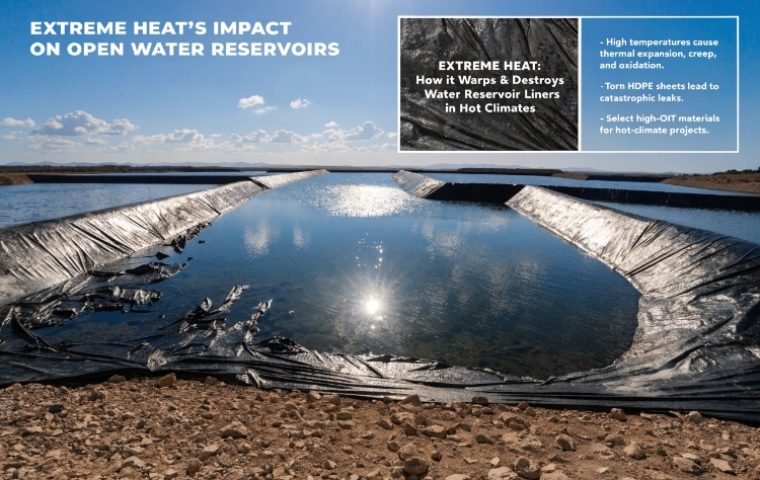
Winner: HDPE. Standard carbon-black-formulated HDPE has a proven, superior track record for long-term resistance to UV degradation. This makes it the better choice for any application with prolonged sun exposure, such as solution ponds or dam facings.
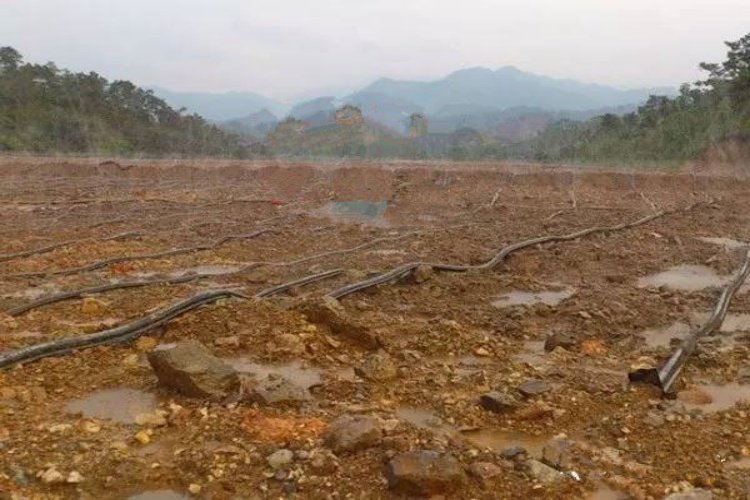
Cost Considerations: Initial Cost vs. Life-Cycle Cost
Initial material costs for HDPE and LLDPE are often comparable, fluctuating with market conditions. However, the true cost is the life-cycle cost.
- Installation Costs: LLDPE's flexibility can sometimes lead to faster installation and fewer field seams, potentially lowering labor costs.
- Long-Term Risk: This is the most important factor. In a deep heap leach pad, a liner failure is catastrophic. If stress cracking is the primary failure risk, using LLDPE—even at a slightly higher initial cost—dramatically lowers the life-cycle cost by mitigating the risk of future repairs or replacement. Conversely, in a fully exposed application, HDPE's UV resistance can lead to a longer life and lower overall cost.
Typical Application Scenarios and Recommendations
So, which do you choose? It depends entirely on the application.
- Standard Gold or Copper Heap Leach Pads (Heap Height < 100m): HDPE is a proven and reliable choice. Its chemical resistance and long history make it a solid default.
- Deep Heap Leach Pads (Heap Height > 130m): LLDPE is increasingly the recommended material. At these extreme loads, its superior flexibility and stress crack resistance become critical for long-term performance.
- Temporary, Pilot, or On/Off Pads: LLDPE is an excellent choice. Its flexibility allows for faster installation and better conformity to subgrades that may be less perfectly prepared than in a permanent facility.
- Exposed Solution Ponds and Channels: HDPE is the clear winner due to its superior UV resistance.
- Composite Liner Systems: This innovative approach uses the best of both worlds. A common design is a primary LLDPE liner placed directly under the ore to handle the mechanical stress, with a secondary HDPE liner beneath it for maximum chemical containment assurance.
Conclusion: Which Geomembrane Is Better for Heap Leach?
There is no single "better" geomembrane. The right question is, "Which is better for my specific application?"
HDPE remains the trusted workhorse for a wide range of standard mining containment applications, especially where chemical and UV resistance are the top priorities. Its decades-long track record provides unparalleled confidence.
LLDPE has emerged as the modern solution for high-stress applications. For new, deep heap leach pads where extreme loading and potential settlement pose a significant risk of stress cracking, LLDPE's superior flexibility and durability under strain make it the more advanced engineering choice.
Ultimately, your selection should be a deliberate decision based on heap height, subgrade conditions, climate, and operational life. By understanding the core strengths of each material, you can engineer a liner system that is not only cost-effective but also safe and reliable for the entire life of your mine.