

Choisir la bonne géomembrane pour une plateforme de lixiviation en tas est l’une des décisions les plus critiques dans un projet minier. Le revêtement est la principale barrière contenant des solutions de processus précieuses et empêchant la contamination de l'environnement. Un échec n’est pas seulement une fuite ; cela a un impact direct sur vos résultats financiers et constitue un passif environnemental majeur.
Ce guide fournit une comparaison équilibrée et directe des deux principaux géomatériaux : le polyéthylène haute densité (HDPE) et le polyéthylène linéaire basse densité (LLDPE). Je détaillerai les avantages et les limites de chacun pour vous aider à sélectionner le revêtement adapté aux exigences uniques de votre opération de lixiviation en tas.
Introduction : Importance de la sélection du revêtement dans l’exploitation minière par lixiviation en tas
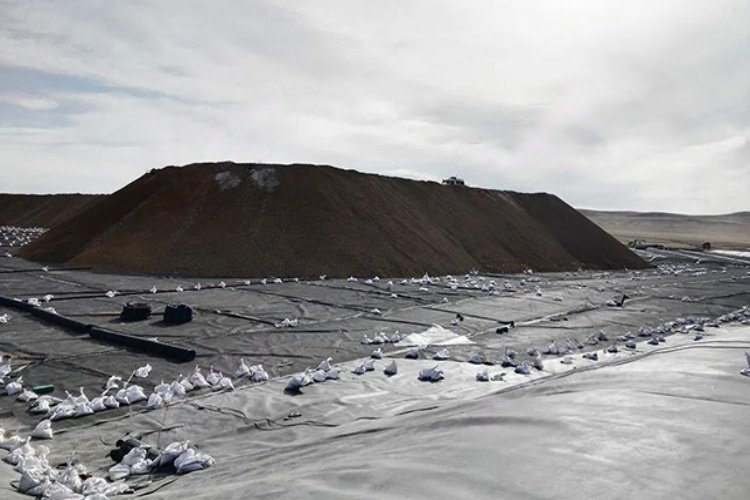
First, let's set the stage. Heap leaching is a process where a chemical solution, such as cyanide for gold or acid for copper, is irrigated over a large pile or "heap" de minerai concassé. La solution dissout les métaux cibles au fur et à mesure qu'elle s'infiltre dans le tas, est collectée par un système de revêtement à la base, puis traitée pour extraire le métal.
Le revêtement de géomembrane est le cœur de ce système. Son rôle est d'être un bassin parfaitement étanche, garantissant que chaque goutte d'une solution précieuse et riche en métaux soit collectée. Les risques de défaillance d'un revêtement sont immenses, y compris la perte de revenus due à des fuites de solution, des réparations coûteuses, des temps d'arrêt du projet et de graves dommages environnementaux si des contaminants atteignent le sol et les eaux souterraines.
Aperçu des matériaux de base : HDPE vs LLDPE
Bien que tous deux soient du polyéthylène, le HDPE et le LLDPE ont des structures moléculaires distinctes qui leur confèrent des propriétés physiques très différentes.
- PEHD (Polyéthylène Haute Densité) : Fabriqué à partir d'un polymère avec une structure moléculaire plus linéaire, résultant en une densité plus élevée. Cela rend le matériau plus rigide, plus solide et plus résistant aux produits chimiques. Il s'agit de la norme traditionnelle pour les applications de confinement.
- LLDPE (Polyéthylène Linéaire Basse Densité) : Incorpore des branches à chaîne courte dans sa structure moléculaire, empêchant les chaînes polymères de se tasser étroitement. Il en résulte une densité plus faible, ce qui confère au matériau une flexibilité et un allongement (étirement) bien plus importants.
Cette différence fondamentale est à l’origine de tous leurs avantages et inconvénients respectifs.
| Propriété | PEHD | PEBDL |
|---|---|---|
| Densité | Plus élevé (par exemple ≥0,941 g/cm³) | Inférieur (par exemple, 0,920 à 0,939 g/cm³) |
| Rigidité | Haut (rigide et fort) | Moyen à faible (très flexible) |
| Flexibilité | Modéré | Haut |
| Résistance aux fissures sous contrainte (ESCR) | Bien | Excellent |
| Épaisseur typique dans l'exploitation minière | 1,5 à 2,5 mm (60 à 100 mils) | 1,0 à 2,0 mm (40 à 80 mils) |
Exigences de performance pour les revêtements de lixiviation en tas
Avant de les comparer, il faut comprendre ce que l’on attend d’un paquebot dans cet environnement rude.
- Résistance chimique: Il doit résister à une exposition constante à des solutions agressives comme un acide à faible pH ou un cyanure à pH élevé pendant des décennies.
- Capacité de charge : Elle doit supporter une pression immense. Les cheminées de lixiviation en tas modernes peuvent dépasser 150 mètres de hauteur, créant des pressions supérieures à 2 500 kPa, soit dix fois plus élevées que dans une décharge classique.
- Résistance aux fissures de contrainte : Il doit résister à la fissuration sous la contrainte à long terme causée par la charge massive de minerai et tout tassement inégal du sol en dessous.
- Durabilité à long terme : Il doit maintenir son intégrité contre l’exposition aux UV lors de l’installation et tout au long de sa durée de vie opérationnelle.
Avantages de la géomembrane HDPE dans les applications de lixiviation en tas
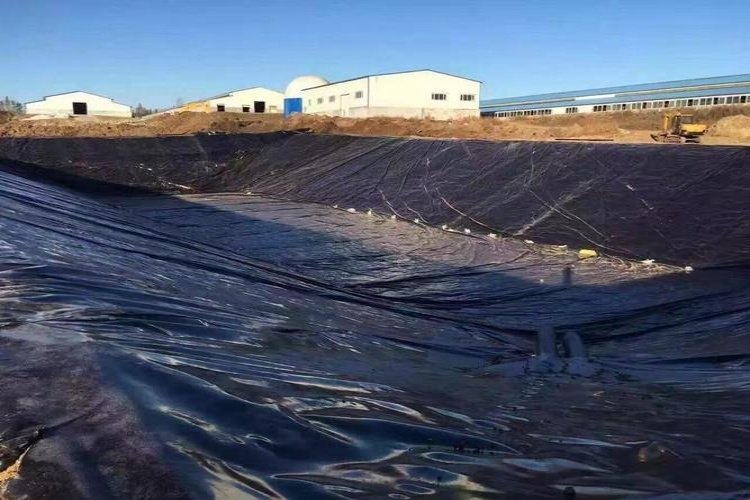
Le PEHD reste la géomembrane la plus utilisée au monde pour de bonnes raisons. Elle a une longue et fructueuse histoire dans le secteur minier.
- Excellente résistance chimique : La structure dense et hautement cristalline du PEHD offre une barrière supérieure contre une large gamme de produits chimiques, ce qui le rend exceptionnellement fiable pour le confinement à long terme de solutions acides et alcalines.
- Haute résistance à la perforation et à la déchirure : Sa rigidité inhérente et sa haute résistance à la traction lui confèrent une excellente résistance aux perforations et aux déchirures causées par les roches pointues ou la circulation des travaux de construction.
- Performance supérieure sous des charges de compression élevées : Le module élevé du matériau signifie qu'il ne se déforme pas facilement sous le poids immense d'un empilement de minerai.
- Expérience éprouvée : For decades, HDPE has been the go-to liner for large-scale mining projects. It is a known quantity with a vast database of successful case histories, making it a "safe" et choix de confiance pour les ingénieurs.
Avantages et limites de la géomembrane LLDPE
Le LLDPE est le challenger, gagnant une part de marché significative ces dernières années, en particulier pour les défis spécifiques de lixiviation en tas.
Avantages
- Haute flexibilité et allongement : C'est la caractéristique remarquable du LLDPE. Il peut s'étirer à plus de 700 % avant de se briser. Cela lui permet de s'adapter facilement aux inégalités du sol de fondation et, plus important encore, d'absorber les contraintes dues aux tassements différentiels sans se briser.
- Résistance supérieure aux fissures sous contrainte (ESCR) : Sa structure moléculaire flexible le rend intrinsèquement plus résistant à la fissuration sous contrainte à long terme, un avantage essentiel pour les revêtements au fond des tas très profonds.
- Installation plus facile : Sa flexibilité facilite sa manipulation et son déploiement sur des terrains complexes. Il peut également être fabriqué en usine en panneaux plus grands, réduisant ainsi le nombre de joints requis sur le terrain.
Limites
- Résistance à la perforation inférieure (lors des tests en laboratoire) : Lors de tests de laboratoire standardisés, le LLDPE présente une résistance à la perforation inférieure à celle du HDPE de même épaisseur.
- Performances réduites sous des charges de compression élevées : Sa moindre rigidité signifie qu’il peut se déformer plus facilement sous des charges ponctuelles directes.
- Durée de vie perçue plus courte : Historiquement, la durabilité à long terme du LLDPE dans des environnements chimiques très agressifs ou à UV élevés par rapport au PEHD a suscité des inquiétudes.
HDPE vs LLDPE : comparaison clé des performances pour la lixiviation en tas
C'est là que le choix devient intéressant. Il ne s’agit pas seulement d’une liste d’avantages et d’inconvénients ; il s'agit de la façon dont les matériaux se comportent sous des contraintes spécifiques au tas.
Résistance chimique
Gagnant : HDPE (légèrement). Les deux matériaux offrent une bonne résistance chimique, mais la structure plus dense du PEHD lui confère un léger avantage en termes de résistance à la diffusion chimique sur de très longues périodes, ce qui en fait le choix préféré pour les bassins de solution et autres zones de contact chimique direct et permanent.
Résistance à la perforation
Gagnant : LLDPE (sur le terrain). This is counterintuitive. While HDPE wins in a lab test, real-world performance is different. LLDPE's flexibility allows it to deform and "absorb" l'énergie d'une pointe acérée, répartissant la contrainte sur une plus grande surface. La rigidité du PEHD lui permet de résister, concentrant les contraintes au point d'impact, ce qui peut entraîner une perforation. Pour les contraintes multiaxiales complexes à la base d'un tas, la flexibilité du LLDPE offre souvent une résistance à la perforation plus pratique.
Résistance aux fissures de contrainte
Gagnant : LLDPE (Clairement). Le plus grand risque pour un revêtement placé sous une pile de minerai de 150 mètres est la fissuration sous contrainte à long terme. Le LLDPE a été conçu pour résoudre ce problème. Sa capacité à se détendre et à s'allonger sous une contrainte soutenue le rend de loin supérieur au PEHD pour empêcher la formation et la propagation des fissures de contrainte.
Résistance aux UV et aux intempéries
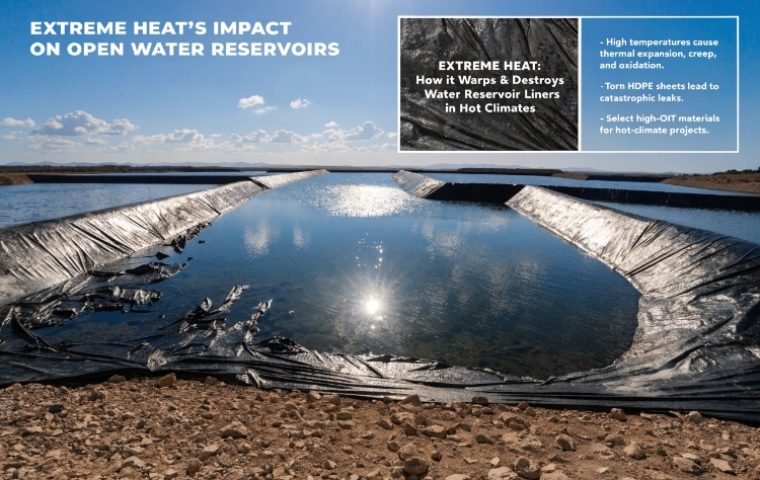
Gagnant : PEHD. Le PEHD standard formulé au noir de carbone a fait ses preuves en matière de résistance à long terme à la dégradation par les UV. Cela en fait le meilleur choix pour toute application avec exposition prolongée au soleil, comme les bassins de solution ou les revêtements de barrage.
Considérations relatives aux coûts : coût initial par rapport au coût du cycle de vie
Les coûts initiaux des matériaux pour le PEHD et le PEBDL sont souvent comparables et fluctuent en fonction des conditions du marché. Cependant, le véritable coût est le coût du cycle de vie.
- Coûts d'installation : La flexibilité du LLDPE peut parfois conduire à une installation plus rapide et à moins de joints sur le terrain, réduisant potentiellement les coûts de main-d'œuvre.
- Risque à long terme : C'est le facteur le plus important. Dans une plate-forme de lixiviation en tas profonde, une défaillance du revêtement est catastrophique. Si la fissuration sous contrainte constitue le principal risque de défaillance, l'utilisation du LLDPE, même à un coût initial légèrement plus élevé, réduit considérablement le coût du cycle de vie en atténuant le risque de réparations ou de remplacements futurs. À l’inverse, dans une application entièrement exposée, la résistance aux UV du PEHD peut conduire à une durée de vie plus longue et à un coût global inférieur.
Scénarios d'application typiques et recommandations
Alors, lequel choisissez-vous ? Cela dépend entièrement de l'application.
- Tampons de lixiviation en tas standard en or ou en cuivre (hauteur du tas < 100m) : PEHD est un choix éprouvé et fiable. Sa résistance chimique et sa longue histoire en font un solide défaut.
- Tampons de lixiviation en tas profonds (hauteur du tas > 130m) : PEBDL est de plus en plus le matériau recommandé. À ces charges extrêmes, sa flexibilité supérieure et sa résistance aux fissures sous contrainte deviennent essentielles pour des performances à long terme.
- Pads temporaires, pilotes ou marche/arrêt : PEBDL est un excellent choix. Sa flexibilité permet une installation plus rapide et une meilleure conformité aux supports qui peuvent être moins parfaitement préparés que dans une installation permanente.
- Bassins et canaux de solution exposés : PEHD est le grand gagnant en raison de sa résistance supérieure aux UV.
- Systèmes de revêtement composite : Cette approche innovante utilise le meilleur des deux mondes. Une conception commune est une priorité PEBDL liner placé directement sous le minerai pour gérer les contraintes mécaniques, avec un revêtement secondaire PEHD doublure en dessous pour une assurance maximale de confinement des produits chimiques.
Conclusion : quelle géomembrane est la meilleure pour la lixiviation en tas ?
There is no single "better" geomembrane. The right question is, "Which is better for ma demande spécifique?"
Le PEHD reste le cheval de bataille de confiance pour une large gamme d'applications standard de confinement minier, en particulier lorsque la résistance aux produits chimiques et aux UV sont les principales priorités. Son expérience de plusieurs décennies procure une confiance sans précédent.
Le LLDPE est devenu la solution moderne pour les applications à fortes contraintes. Pour les nouvelles plateformes de lixiviation en tas profonds où des charges extrêmes et des tassements potentiels posent un risque important de fissuration sous contrainte, la flexibilité et la durabilité supérieures du LLDPE sous contrainte en font le choix d'ingénierie le plus avancé.
En fin de compte, votre sélection doit être une décision délibérée basée sur la hauteur du tas, les conditions du sol de fondation, le climat et la durée de vie opérationnelle. En comprenant les principales forces de chaque matériau, vous pouvez concevoir un système de revêtement qui est non seulement rentable, mais également sûr et fiable pendant toute la durée de vie de votre mine.