

A tiny valve failure in a million-barrel tank farm can trigger catastrophic soil contamination and massive regulatory shut-downs. Without a secure barrier, minor spills quickly become multimillion-dollar ground remediation disasters.
This guide explains how HDPE geomembrane liners function as the ultimate secondary containment solution for oil storage tanks. Professional buyers will learn the proper system structure, critical material selection factors, and common installation mistakes to avoid when procuring tank farm containment systems.
Introduction: Why Secondary Containment Matters in Tank Farms
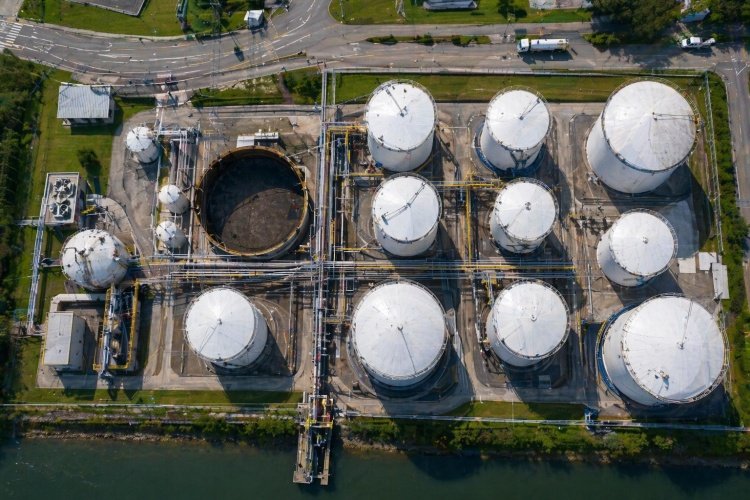
A modern tank farm consists of massive primary storage vessels holding millions of gallons of crude oil, diesel, or refined chemical products. While these steel primary tanks do the heavy lifting of storing the liquid, they are not immune to failure. Over decades of operation, pipes shear, pump seals blow out, rust compromises tank floors, and human error leads to overfilling.
When hydrocarbons escape the primary tank, the facility faces immediate environmental, financial, and legal peril. If oil permeates the bare earth, it rapidly travels down into the local groundwater supply. The resulting cleanup operations can bankrupt an operator, not to mention the severe regulatory fines and catastrophic public relations damage.
To prevent this, an effective barrier must be placed between the tank and the surrounding environment. Historically, facilities relied on compacted clay or thick poured concrete walls. However, clay dries and cracks, and concrete inherently fractures under shifting earthen loads. Among all available solutions globally, engineered HDPE geomembrane liners have become the undisputed industry standard for capturing spills before they ever touch the soil.
What Is Secondary Containment?
To understand how geomembranes are used, we must clearly define confinement secondaire. Primary containment is the tank itself. Secondary containment refers to the external engineered structure—usually an earthen berm, a concrete bund, or a diked area—designed to temporarily hold the entire volume of the tank's contents in the event of a catastrophic rupture.
A properly designed secondary containment area must achieve three fundamental engineering goals. First, it must provide absolute impermeability. The barrier cannot allow even trace amounts of hazardous liquids to seep through its matrix. Second, it must offer adequate spill volume capacity. Regulatory bodies mandate that the bund area must be large enough to hold 100% of the largest tank's volume, plus an allowance for heavy rainwater.
Third, the barrier must maintain extreme chemical resistance. It does no good to build a containment area if the spilled liquid will dissolve the barrier in hours. High-level environmental guidelines laid out by the U.S. Environmental Protection Agency (EPA) and the American Petroleum Institute (API) explicitly state that operators must implement spill prevention controls that are continuously effective against the specific chemicals stored on-site.
Why HDPE Geomembrane Liners Are the Preferred Solution
When I advise international EPC contractors and facility owners on containment procurement, they often ask why we specifically supply Polyéthylène haute densité (PEHD) instead of other plastics or concrete. The answer comes down to a unique combination of chemical and physical properties that match the exact risks of petroleum storage.
Excellent Impermeability
HDPE has an incredibly dense molecular structure. It provides an exceptionally low permeability rate, meaning acts as a near-perfect barrier against liquids and gases. When properly welded, an HDPE liner securely traps oil, giving emergency response teams ample time to pump out the spilled product without losing a single drop into the subgrade.
Chemical Resistance to Hydrocarbons
Different plastics react poorly to petroleum. For example, some PVC materials will degrade when exposed to certain solvents or fuels. HDPE, however, is chemically inert to a massive spectrum of hydrocarbons, crude oils, refined fuels, and aggressive process chemicals. It does not swell, rot, or dissolve when a tank ruptures.
Long Service Life and UV Stability
Tank farms are permanent facilities intended to operate for thirty to fifty years. Heavy-duty HDPE liners are formulated with premium carbon black and specific antioxidant packages to resist ultraviolet (UV) degradation. Even when left completely exposed to the harsh Middle Eastern or African sun, a high-grade HDPE liner can maintain its tensile strength for twenty years or more without becoming brittle.
Cost-Effectiveness vs Concrete
Poured concrete is outrageously expensive, requires massive labor, and will inevitably crack when the ground freezes or settles. HDPE covers massive square meterage rapidly and for a fraction of the cost. More importantly, because the plastic is flexible, it safely bridges minor subgrade settlement cracks that would instantly compromise a rigid concrete floor.
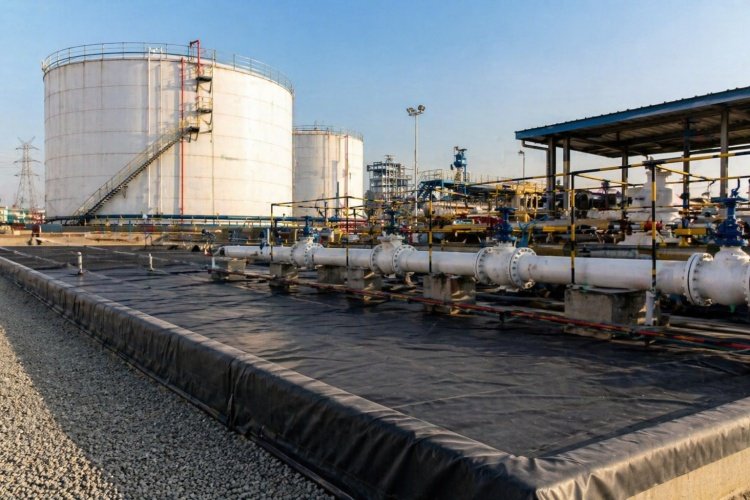
Typical Liner System Structure (HDPE + Geotextile)
A common mistake overseas purchasing teams make is assuming that buying a roll of geomembrane solves their containment problem. In reality, geomembranes are used as part of a multi-layer engineered system. Installing the plastic sheet alone directly on raw earth is incredibly dangerous.
Here is the typical cross-section of a high-performance oil containment liner system:
Compacted Subgrade:
This is the raw earth beneath the containment zone. Before any material is applied, contractors must grade and heavily compact this soil. It provides the foundational structural support for the weight of millions of gallons of liquid.
Nonwoven Geotextile Protection Layer:
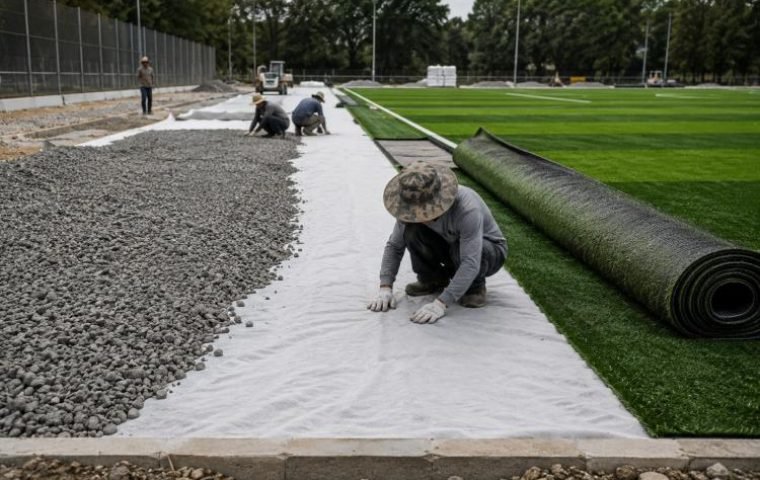
This is a mandatory layer. A heavy, needle-punched nonwoven geotextile (acting as a thick synthetic felt) is rolled out over the soil. The geotextile acts as a crucial cushion. Subgrades are rarely perfect; they contain sharp pebbles, roots, and debris. Without a geotextile, the weight of standing oil will push the plastic liner down onto these sharp objects, creating hundreds of microscopic puncture leaks.
HDPE Geomembrane Carrier:
The impermeable plastic liner is installed directly on top of the geotextile cushion. For oil and gas tank farms, this is usually 1.5mm or 2.0mm thick HDPE.
Optional Protection Sub-Layer:
In facilities where heavy trucks must drive inside the bund area for maintenance, an additional layer of geotextile and a top layer of crushed stone or poured concrete may be placed over the geomembrane to shield it from heavy mechanical vehicle damage.
Installation Process of Geomembrane Liners
Procurement decisions heavily impact the installation phase on-site. The barrier is only as secure as its weakest welded seam. Understanding how these liners are placed helps buyers allocate the right budget for skilled contractor labor.
Préparation des surfaces :
The contractor clears all sharp debris and jagged rocks. The surface must be flat and unyielding before the geotextile is unrolled.
Liner Deployment:
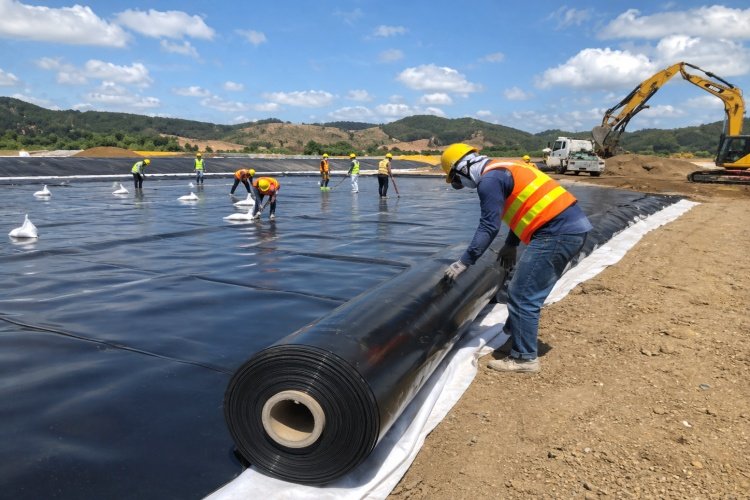
Large rolls of HDPE are unspooled across the bund area using spreader bars and heavy machinery. The panels are overlapped by approximately 10 to 15 centimeters to prepare for welding. Since HDPE expands in the heat, crews must strategically lay the panels to allow for thermal expansion without creating extreme wrinkles.
Seaming and Welding:
This is the most critical phase. The long, straight overlaps are joined using a dual-track hot wedge welding machine, which melts the two plastic layers together, leaving an empty air channel in the middle for pressure testing. For complex corners, vertical walls, and pipe boots where the hot wedge welder cannot fit, technicians use handheld extrusion welding guns to fuse the plastic with a continuous bead of melted polymer.
Anchoring System:
To prevent high winds from lifting the vast sheets of plastic, the edges of the geomembrane are buried in an anchor trench dug into the top perimeter of the earthen berm. The trench is then backfilled with soil, locking the liner securely into the ground.
Leak Testing (QA/QC):
Before the facility is commissioned, every single meter of the weld must be tested. Air pressure is pumped into the channel created by the hot wedge welder. If the pressure drops, there is a leak. Extrusion welds are tested using vacuum boxes or spark testing.
Key Design Considerations for Tank Farm Containment
When supplying liners to international petroleum operators, we guide them through a specific set of design criteria. You cannot take a one-size-fits-all approach to secondary containment.
First, you must address thickness selection. For standard diesel or crude oil tank farms laid over well-cushioned sand, 1.5mm (60 mil) HDPE is the standard baseline. However, if the subgrade is rough, or if the stored liquid consists of highly aggressive industrial solvents, upgrading to a 2.0mm (80 mil) sheet provides the necessary sacrificial thickness and puncture resistance to ensure safety. Thin 1.0mm materials should be actively avoided for heavy industrial containment.
Second, operators must consider slope and drainage design. Containment areas act like massive bathtubs. When heavy torrential rains occur, the bund fills with water. The subgrade must be subtly sloped toward a designated sump pit where rainwater can be safely pumped over the berm wall, ensuring the containment capacity is not compromised by stagnant floodwater.
Finally, temperature and climate factors dictate project lifespan. In freezing Northern Canadian climates, stiff HDPE becomes incredibly difficult to unroll and weld, frequently requiring heated tents for the crews. In the Middle East, immense thermal cycling from scorching days to cold nights causes the material to expand and contract violently. Installers must account for this by rarely welding the liner drum-tight, ensuring enough slack exists to prevent seam tearing at night.
Compliance and Industry Standards
For most corporate buyers, purchasing an HDPE geomembrane is not a luxury; it is a strict legal requirement. Government environmental agencies show absolutely no leniency regarding hydrocarbon leaks.
In the United States, the Environmental Protection Agency (EPA) enforces the Spill Prevention, Control, and Countermeasure (SPCC) rules. Facilities holding oil in massive quantities must have secondary containment that is both adequately sized and sufficiently impervious to contain spilled oil until it can be cleaned up indoors.
Similarly, the American Petroleum Institute (API) provides strict guidelines regarding tank farm layouts and bund designs. Incorporating an HDPE liner that meets the Geosynthetic Institute's GRI-GM13 specification—the global standard for high-density polyethylene sheet properties—ensures that the storage facility will easily pass stringent regulatory audits and maintain valid environmental insurance coverage.
Risks, Limitations, and Common Mistakes to Avoid
While HDPE is the premier barrier material, it possesses strict physical limitations. It is inherently rigid. As a supplier, I must warn buyers that utilizing HDPE incorrectly leads to disastrous, invisible leaks beneath their tanks.
Not Using a Protective Geotextile:
The most common and devastating mistake is placing stiff HDPE directly onto jagged, uncompacted crushed stone to save a few dollars. When the tank leaks, the massive weight of the oil immediately punches the stones straight through the plastic. Always invest in heavy nonwoven geotextile underlayment.
Ignoring Subgrade Settlement:
Because HDPE is rigid, it cannot stretch significantly in multiple directions at once. If your tank farm is built on soft, swampy land that is guaranteed to sink unevenly over time (differential settlement), HDPE is not recommended. It will bridge across the sinking gaps and eventually stress-crack. In highly settling or immensely uneven terrain, a more flexible LLDPE liner is often required over HDPE.
Welding in Extreme Weather:
Accepting poor weld quality destroys the entire investment. Subcontractors attempting to extrusion-weld HDPE during rainstorms or in freezing conditions without proper wind shields will create brittle, porous seams. A 2.0mm sheet is useless if the liquids easily escape through poor corner joints.
Choosing Inadequate Thickness:
Using a thin 1.0mm agricultural liner for industrial chemical storage guarantees failure. Thinner liners cannot withstand dropped wrenches, dragging hoses, and the heavy foot traffic inherent to oil storage facility maintenance.
Conclusion: Why HDPE Liners Are Essential for Modern Tank Farms
Secondary containment is the ultimate safety net for industrial fuel storage. Relying on naturally porous bare earth or rigid, crack-prone concrete is an outdated engineering strategy that exposes facilities to catastrophic financial and environmental risks.
By integrating a properly specified HDPE geomembrane with a protective geotextile cushion, operators create a flawless, chemically resistant barrier. When subgrade conditions are properly prepared and strict welding QA/QC is enforced, an HDPE liner system allows tank farms to operate reliably for decades while remaining fully compliant with global environmental spill prevention regulations.
Partner With a Global Containment Solution Provider
Looking for a reliable HDPE geomembrane supplier for your next tank farm project? Material selection dictates your project's safety and budget. Do not leave your regulatory compliance to chance.
At Waterproof Specialist, we supply high-performance geosynthetic barrier systems to industrial containment projects worldwide. Contact our team today for dedicated technical support, comprehensive product data sheets, and expert thickness recommendations customized for your specific tank farm requirements.