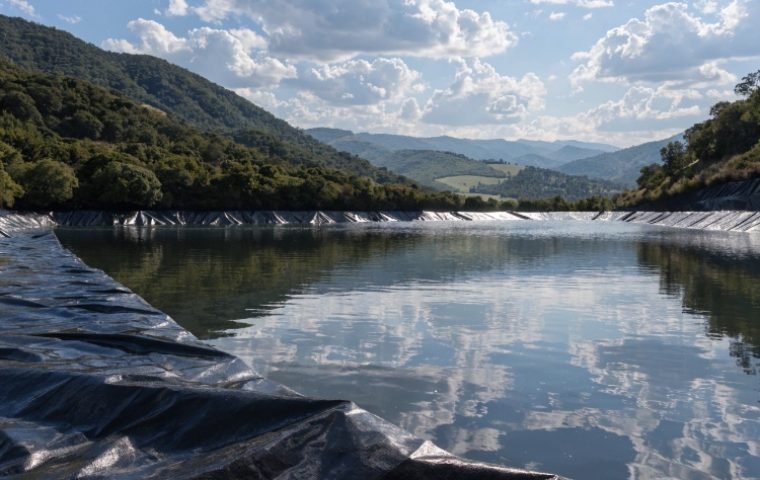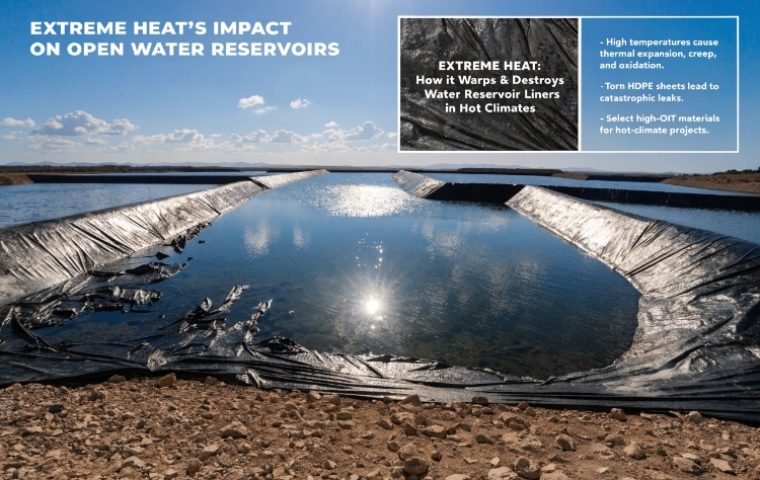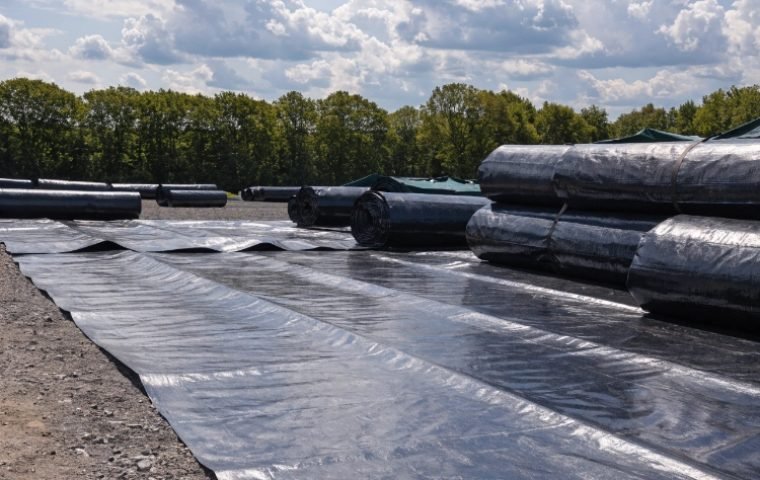


Un revestimiento de vertedero es más que una lámina de plástico; es la barrera más importante que protege nuestro medio ambiente de la contaminación. Cuando se traspasa esta barrera, las consecuencias pueden ser catastróficas y permanentes, provocando aguas subterráneas contaminadas, masas terrestres inestables y costos de limpieza que pueden eclipsar el presupuesto inicial de construcción. Comprender por qué fallan los transatlánticos es el primer paso para prevenir un desastre.
La contención eficaz es la piedra angular de la ingeniería moderna de vertederos. Sin embargo, todavía se producen fracasos y rara vez son causados por un único acontecimiento dramático. Más a menudo, son el resultado de una reacción en cadena de cuestiones más pequeñas e interconectadas. Esta guía desglosa los tipos comunes de fallas en los revestimientos de vertederos, explora sus causas fundamentales y proporciona un marco integral para la prevención a través de un diseño, materiales y diligencia operativa superiores.
First, let's establish a clear definition of what constitutes a "failure."
¿Qué es una falla en el revestimiento de un vertedero?
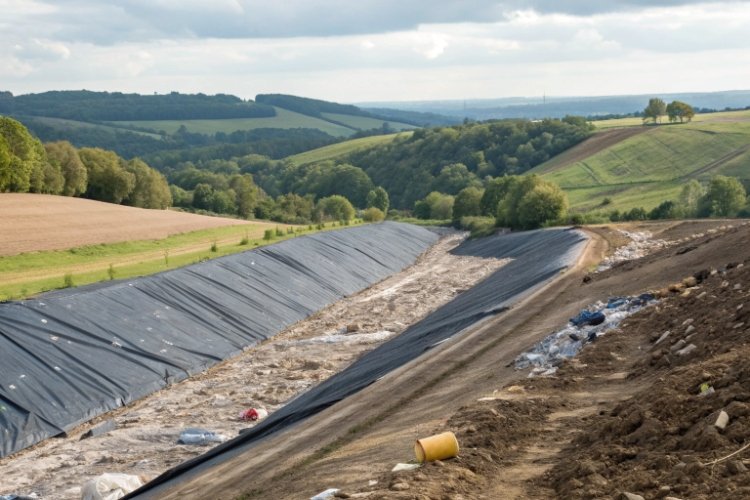
Una falla del revestimiento de un vertedero es cualquier ruptura, degradación o rendimiento deficiente del sistema de contención que permite que el lixiviado (el líquido contaminado que se drena de los desechos) escape al suelo y al agua subterránea subyacente. Esto puede variar desde un pequeño agujero hasta una falla masiva en la estabilidad de la pendiente. Los sistemas de revestimiento de vertederos suelen ser estructuras complejas de varias capas diseñadas para ser redundantes.
Materiales de revestimiento comunes
- Geomembrana de HDPE: El polietileno de alta densidad es el estándar de la industria debido a su excelente resistencia química, durabilidad y baja permeabilidad. Normalmente se utiliza en espesores de 1,5 mm a 2,0 mm.
- GCL (Revestimiento de arcilla geosintética): Un GCL consiste en una fina capa de arcilla de bentonita de sodio intercalada entre dos geotextiles. Cuando se hidrata, la arcilla se hincha para crear una barrera hidráulica muy eficaz.
- Sistemas de revestimiento compuesto: Los vertederos modernos utilizan un sistema compuesto, colocando una geomembrana de HDPE directamente sobre un GCL o una capa de arcilla compactada. Esta combinación proporciona un nivel de protección significativamente mayor que cualquiera de los componentes por separado.
Fallas comunes en los revestimientos de vertederos
Estos son los síntomas directos y observables de un sistema de revestimiento defectuoso.
Punción y daño mecánico
Este es el tipo de falla más sencillo. Ocurre cuando la geomembrana se rasga o perfora físicamente. Los culpables comunes incluyen:
- Rocas afiladas, raíces o escombros dejados en la subrasante.
- Colocación descuidada de la capa de drenaje de grava con bordes afilados.
- Equipo pesado conduciendo directamente sobre el revestimiento.
- Perforaciones de objetos de desecho durante las operaciones iniciales de llenado.
Fallas en costuras y soldaduras
Las uniones donde se unen los paneles del liner son los puntos más vulnerables de todo el sistema. Las soldaduras pueden fallar debido a:
- Parámetros de soldadura inadecuados: Usar una máquina de soldar a temperatura, velocidad o presión incorrecta para las condiciones ambientales.
- Contaminación: Soldar sobre superficies contaminadas con polvo, humedad o barro, lo que impide que se forme un enlace molecular adecuado.
- Falta de Control de Calidad: No realizar pruebas rigurosas en el 100% de las uniones en campo para identificar y reparar soldaduras defectuosas.
Degradación química de materiales de revestimiento
Si bien el HDPE es muy resistente, no es completamente inmune a todas las sustancias químicas durante una vida útil de varias décadas. Los flujos de desechos agresivos y atípicos que contienen ciertos solventes industriales o hidrocarburos aromáticos pueden hacer que el polímero se ablande, se hinche o se vuelva quebradizo con el tiempo, comprometiendo su integridad.
Agrietamiento por tensión y falla por tracción
Se trata de un mecanismo de fracaso más insidioso y de largo plazo.
- Liquidación Diferencial: A medida que los desechos se descomponen y se consolidan, se depositan de manera desigual. Esto puede estirar la geomembrana en puntos altos y bajos, creando una inmensa tensión de tracción en el material.
- Expansión térmica: El revestimiento se expande con el calor del día y se contrae por la noche. Este ciclismo diario puede fatigar el material, especialmente en zonas donde está bajo tensión. Con el paso de los años, estas tensiones pueden conducir a la formación de grietas de crecimiento lento, un fenómeno conocido como Environmental Stress Cracking (ESC).
Principales causas detrás de las fallas del revestimiento de vertederos
Si bien las fallas mencionadas anteriormente son síntomas, las causas fundamentales casi siempre son sistémicas. Las averías más catastróficas rara vez se deben a un simple pinchazo; son provocados por una falla en los sistemas operativos fundamentales del sitio.
El desencadenante principal: Cabeza excesiva de lixiviado
The single most dangerous condition in a landfill is allowing the level of leachate—the "leachate head"—to become too high. According to EPA regulations, the leachate head on top of the liner should never exceed 30 cm (1 foot). When this level is exceeded, a cascade of disastrous events is set in motion.
Estudio de caso: El fracaso del vertedero de Shenzhen (2008)
Este evento es una dura lección sobre las consecuencias de fracasos manejo de lixiviados.
- La acumulación: Las tuberías de recolección de lixiviados del vertedero se obstruyeron, impidiendo un drenaje adecuado. Durante varios meses, el nivel de lixiviado dentro del vertedero aumentó hasta apenas 2 metros de la superficie de la pendiente.
- El gatillo: A period of heavy rain rapidly added more liquid to the already full "bathtub."
- El fracaso: The immense weight and hydrostatic pressure of the high leachate level reduced the friction between the geomembrane liner and the underlying layers to almost zero. This caused a massive section of the slope to fail, resulting in a landslide. The integrity of the entire containment system was compromised in a single event.
The Root Cause: Leachate Collection System (LCS) Clogging
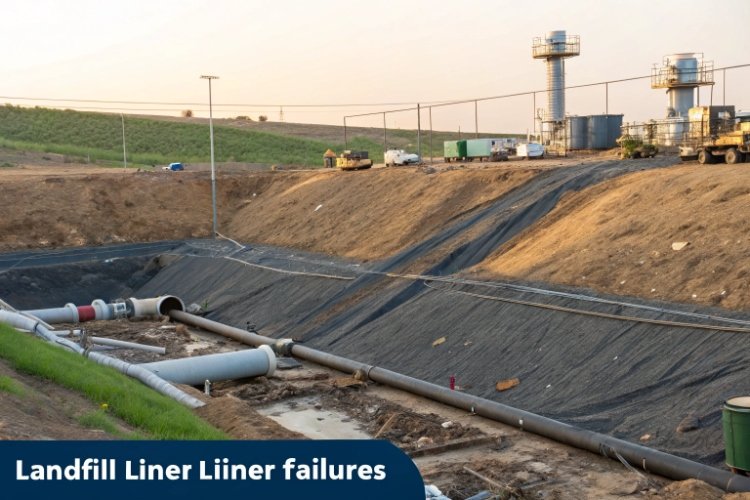
The Shenzhen failure was triggered by high leachate head, but it was caused by a clogged LCS. LCS pipes, typically surrounded by a gravel drainage layer, can become blocked through several mechanisms:
- Sedimentation Clogging: Fine soil particles from overlying layers wash into the drainage gravel and pipes, physically restricting flow.
- Biological Clogging: Microorganisms thrive in the nutrient-rich leachate, forming thick "biofilms" on the surfaces of the gravel and inside pipes, eventually choking off flow.
- Obstrucción química: If the drainage layer uses carbonate-based stone (like limestone), a chemical reaction with the leachate can cause calcium carbonate (CaCO₃) to precipitate, forming a rock-hard scale that completely blocks pipes.
- Poor Design: Pipe slopes less than 2%, small pipe diameters, and poorly designed junctions create "dead zones" where solids can settle and initiate a blockage.
Geotechnical Instability and Interface Shear Failure
A landfill liner system is a stack of different geosynthetic materials. The friction at the interface between these layers is critical for slope stability.
- Steep Slopes: Slopes designed steeper than 1V:3H (Vertical:Horizontal) are inherently less stable and rely heavily on interface friction to remain in place.
- Low Friction Interfaces: The interface between two smooth geomembranes, or between a smooth geomembrane and a GCL, can have a very low friction angle. When high leachate pressure lubricates this interface, the driving forces of gravity can exceed the frictional resistance, leading to a slippage failure. This can be mitigated by using textured geomembranes, which significantly increase interface friction.
Long-Term Material Degradation
Even a perfectly installed liner will not last forever. Research shows that after approximately 8-10 years of operation, the antioxidants blended into the HDPE resin become depleted. Following this point, the polymer begins to oxidize at an accelerated rate, becoming more brittle and permeable over time. A liner that leaks a few gallons per day when new could leak thousands of gallons per day after 20 years of degradation, even without any obvious tears.
How to Avoid Landfill Liner Failures: A Multi-Layered Strategy
Preventing failure requires a holistic approach that begins at the design stage and continues through the entire operational life of the facility.
1. Robust Design and Engineering
- Conservative Leachate Management: Diseñe el LCS con un enorme factor de seguridad. Utilice pendientes de tubería de al menos 2 %, especifique agregados de drenaje químicamente estables (por ejemplo, grava a base de sílice) e incluya una capa de filtro geotextil resistente para evitar que entren finos del suelo.
- Diseño de pendiente estable: Diseñe las pendientes para que no sean más pronunciadas que 1V:3H. Para vertederos muy altos (>30 m), una pendiente más suave de 1V:3,5H es aún más segura.
- Anticipar la liquidación: Modele el asentamiento esperado del 20 al 40 % de la masa de desechos y diseñe el revestimiento y el LCS para acomodar este movimiento sin crear tensión excesiva o puntos bajos donde el lixiviado pueda acumularse.
- Seleccione los materiales adecuados: Specify a high-quality HDPE geomembrane with a proven resin, a strong antioxidant package, and a thickness of at least 1.5 mm (2.0 mm is recommended for the base and high-stress areas). Always use textured membranes on slopes.
2. Professional Installation with Rigorous CQA
Construction Quality Assurance (CQA) is a non-negotiable process for verifying that the design is implemented correctly.
- Certified Installers: Only use experienced, certified technicians for geomembrane installation and welding.
- Meticulous Subgrade Preparation: The surface beneath the liner must be smooth, uniform, and free of any stones or objects that could cause a puncture. A protective, non-woven geotextile should always be placed first.
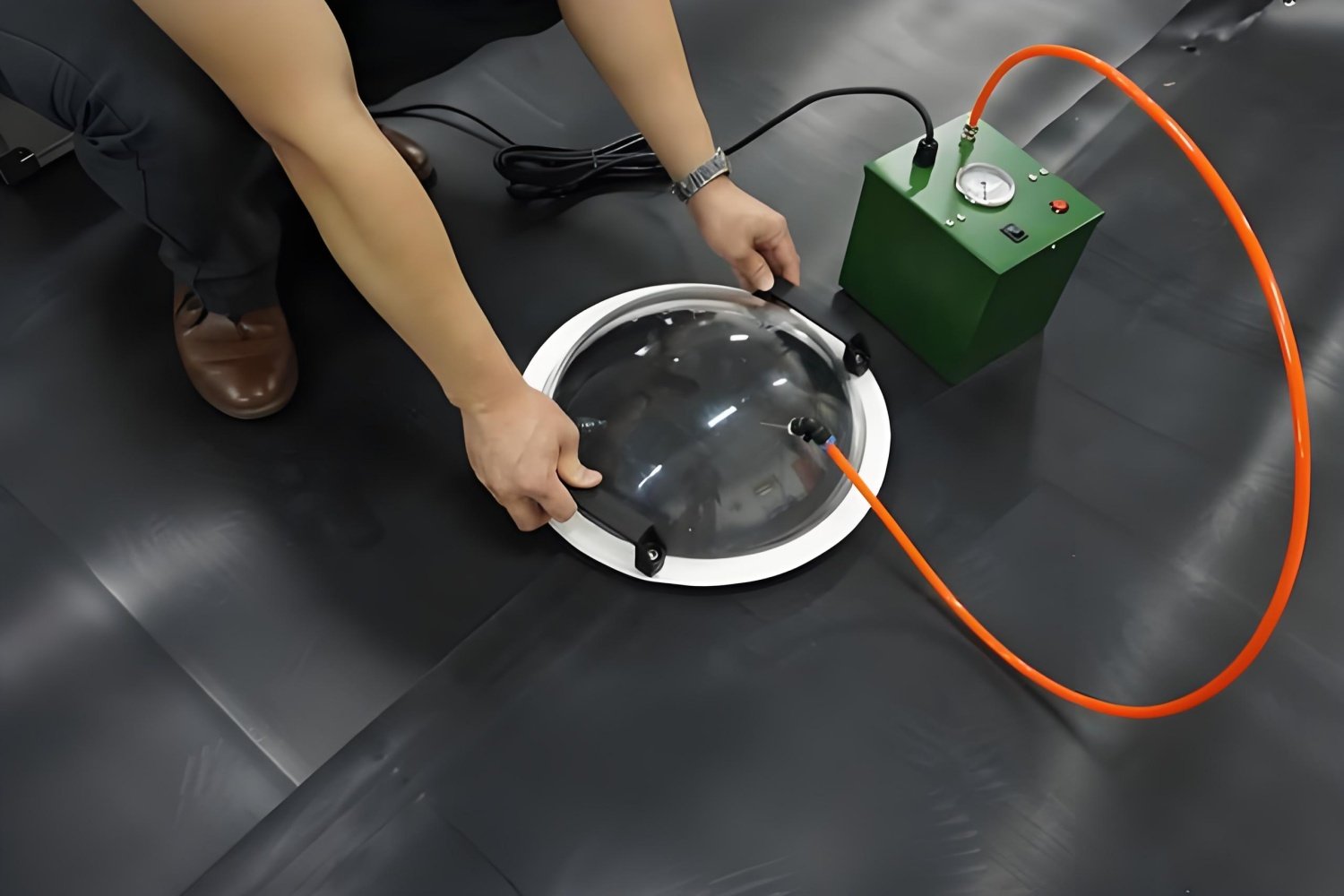
- 100% Seam Testing: Every meter of field seam must be non-destructively tested, typically with a vacuum box or air channel test. Destructive peel and shear tests must also be performed on samples at regular intervals to verify that the weld is as strong as the parent material.
3. Proactive Operational Management
Once the landfill is operational, the focus shifts to monitoring and maintenance.
- Real-Time Leachate Level Monitoring: Install monitoring wells with sensors to provide continuous data on the leachate head. Set alarm levels well below the 30 cm regulatory limit.
- Preventive LCS Maintenance: Implement a schedule for regular high-pressure jet cleaning of the LCS pipes to remove sediment and biofilm before they can form a hard blockage.
- Geotechnical Monitoring: Use inclinometers and survey points to monitor for any signs of slope movement or excessive settlement that could indicate an emerging problem.
4. Emergency Preparedness
Even with the best systems, problems can occur. An emergency action plan is essential.
- Redundant Pumping Capacity: Have backup pumps and power sources ready to be deployed if primary systems fail or if leachate levels begin to rise unexpectedly.
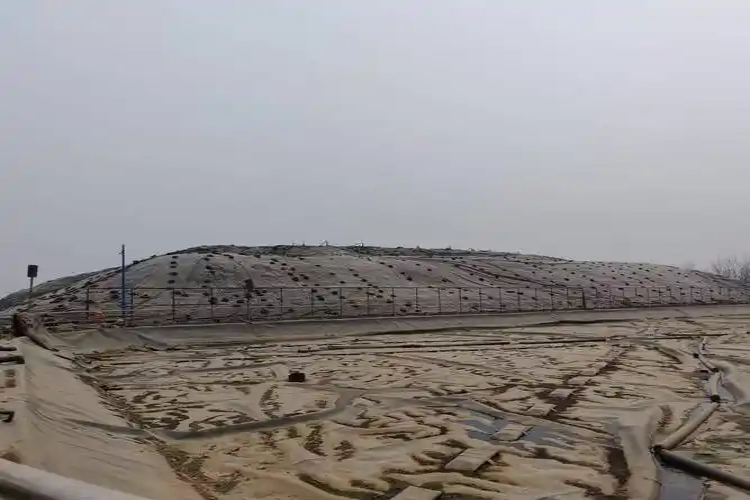
- Emergency Response Plan: The measures used to save the Shenzhen landfill—drilling emergency drainage wells, covering the site to reduce rainwater infiltration, and placing counterweight berms at the toe of the slope—are a model for an effective emergency response.
Regulatory Requirements and Industry Standards
Adherence to established standards is fundamental to liner system success. Key guidelines are provided by organizations like ASTM International and the Geosynthetic Research Institute (GRI). These standards define everything from material properties (e.g., GRI-GM13 for HDPE geomembranes) to proper welding and testing procedures. Compliance is not just a best practice; it is essential for meeting environmental regulations and ensuring long-term liability protection.
Conclusión
Landfill liner failures are complex events, but they are not random. The vast majority are preventable. They are less often the result of a single faulty weld or puncture and more frequently the outcome of a systemic failure to manage leachate. By embracing a multi-layered prevention strategy—starting with a conservative design focused on robust leachate management, enforced by rigorous CQA during construction, and sustained by proactive monitoring and maintenance during operation—we can ensure that engineered containment systems perform their critical function of protecting our environment for decades to come.