

In omgewingsingenieurswese, die behoefte aan betroubare ondergrondse inperkingsversperrings groei voortdurend. Vir stortingsterreinuitbreidings, besoedelde terreinremediëring en grondwaterbeskerming, was tradisionele afsnymure gemaak van gekompakteerde klei of sement-bentoniet dikwels die standaard. Hierdie metodes kan egter stadig, duur wees, en die bereiking van 'n eenvormige, lae-deurlaatbaarheid versperring onder veldtoestande is berug moeilik.
Dit is waar moderne geosintetika 'n voortreflike alternatief bied. Vertikale Geosintetiese Kleivoering (GCL) saamgestelde afsnymure kombineer die fabrieksbeheerde kwaliteit van 'n GCL met 'n lae-permeabiliteit opvul om 'n hoogs effektiewe, deurlopende ondergrondse versperring te skep. Hierdie stelsel is nie net meer betroubaar nie, maar is ook aansienlik vinniger en meer koste-effektief om te installeer, wat dit 'n voorkeuroplossing maak vir baie gevorderde inperkingsprojekte.
Hierdie gids verskaf 'n gedetailleerde uiteensetting van die konstruksiemetodes, sleutel tegniese oorwegings en gehaltebeheermaatreëls wat noodsaaklik is vir die suksesvolle installering van 'n vertikale GCL saamgestelde afsnymuur. Ons sal deur die proses loop van werfvoorbereiding tot finale kwaliteitkontroles, en insigte uit ons veldervaring deel om jou te help om jou projek korrek uit te voer.
Struktuur en Werksbeginsel van 'n Vertikale GCL-muur
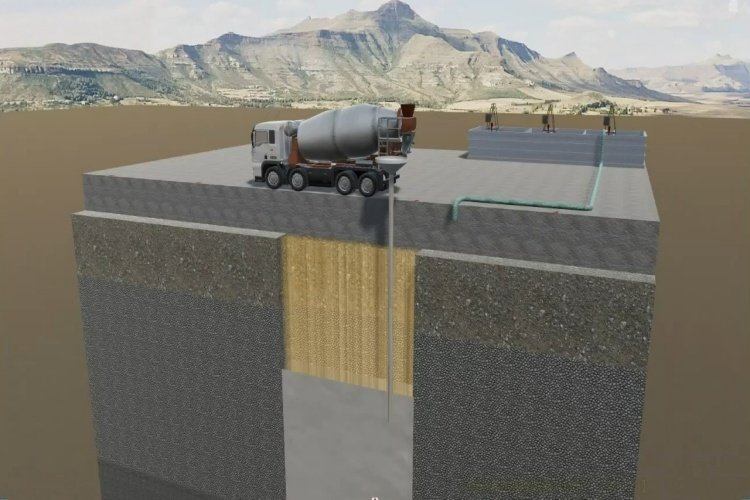
Voordat jy in konstruksie duik, is dit belangrik om die komponente van die stelsel te verstaan en hoe hulle saamwerk. 'n Vertikale GCL-saamgestelde muur is basies 'n dubbele versperringstelsel wat uit drie hoofdele bestaan:
- Die Geosintetiese Kleivoering (GCL): Dit is die primêre waterdigtingselement. Dit bestaan uit 'n laag hoogswellende natriumbentonietklei wat fabrieksverseël is tussen twee geotekstiele.
- Die opvulling: This is a low-permeability mixture, typically composed of excavated soil blended with bentonite (a Soil-Bentonite or "SB" meng), wat die meerderheid van die sloot vul.
- Die ondersteuningstruktuur: Tydens uitgrawing word die sloot nie oopgelaat nie. Dit word ondersteun deur 'n bentoniet-mis, wat keer dat die slootmure ineenstort totdat die opvulling geplaas word.
Die waterdigtingsmeganisme is tweeledig. Die GCL verskaf 'n uiters lae deurlaatbaarheid membraan (dikwels ≤5×10⁻¹¹ m/s) wat swel om geringe gate self te genees. Die SB-opvulling verskaf 'n sekondêre, dikker versperring met 'n teikenpermeabiliteit van ≤1×10⁻⁹ m/s (≤1×10⁻⁷ cm/s). Saam vorm hulle 'n robuuste, deurlopende en buigsame ondergrondse versperring. Die stelsel se werkverrigting hang geheel en al af van die GCL se kontinuïteit, sy intieme kontak met die omliggende grond, en sy vermoë om ten volle te hidreer onder opsluiting.
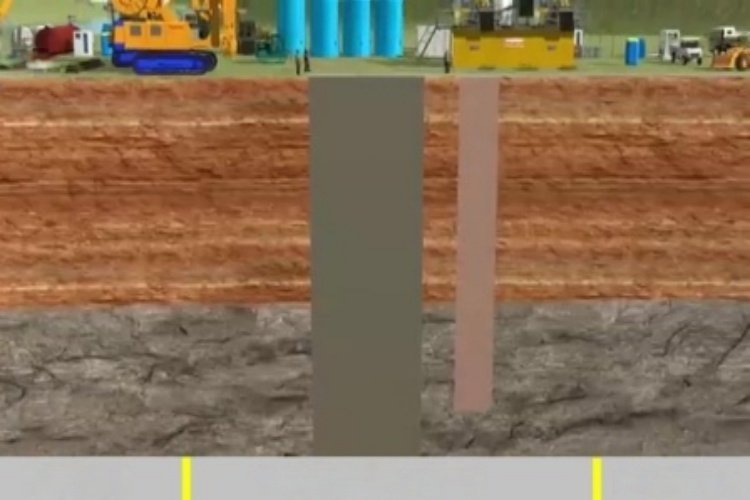
Konstruksiemetode vir vertikale GCL-saamgestelde mure
Dit is 'n sistematiese, multi-stadium proses waar elke stap voortbou op die laaste. Presisie en beheer in elke stadium is van kritieke belang.
1. Terreinvoorbereiding en slootgrawe
Die proses begin met standaard opmeting en terrein skoonmaak. Die middellyn van die muur is uitgesteek, en 'n werkplatform word voorberei vir die swaar toerusting. Die kern van hierdie stadium is die slootuitgrawing self.
- Uitgrawing: Die sloot word gegrawe met 'n langbereikgraaf vir matige dieptes of 'n meganiese klapdop vir diep mure (dieptes kan 50 meter oorskry). Die slootwydte is tipies tussen 0,6 en 1,2 meter.
- Misondersteuning: Soos die sloot uitgegrawe word, word dit dadelik gevul met 'n bentoniet suspensie. Hierdie suspensie dien 'n deurslaggewende doel: sy hidrostatiese druk counteracts the pressure from groundwater and soil, preventing the trench from collapsing. It is not just "muddy water"; it is an engineered fluid.
- Mis kwaliteit: Die flodder eienskappe moet streng beheer word. Sleutel parameters sluit in:
- Viskositeit: ’n Marsh-tregterviskositeit van 35-50 sekondes vir vars flodder verseker dat dit gronddeeltjies kan opskort sonder om te dik te wees om te pomp.
- Digtheid: 'n Eenheidsgewig van 13-15 kN/m³ verskaf die nodige hidrostatiese krag vir slootstabiliteit.
- Sand inhoud: Moet onder 4% gehou word om te verhoed dat sand uitsak en deurlaatbare sones skep.
- Miskop: Die floddervlak in die sloot moet ten minste gehou word 1 meter (3,3 voet) te alle tye bokant die omliggende grondwatertafel om positiewe druk teen die slootmure te verseker.
2. Vertikale plasing van die GCL
Sodra 'n gedeelte van die sloot tot die teikendiepte uitgegrawe is en die flodder gestabiliseer is, word die GCL-paneel geïnstalleer.
- Ontplooiing: Die GCL word in groot rolle afgelewer. Dit word aan 'n geweegde staalraam of strooistaaf vasgemaak en versigtig met 'n hyskraan in die slootgevulde sloot laat sak.
- Belyning: Die GCL moet vertikaal laat sak en in kontak gehou word met een muur van die sloot. Die doel is om te verseker dat die paneel glad, deurlopend en vry van voue of plooie is. Afhangende van die ontwerp, kan GCL's aan die een kant of albei kante van die sloot geplaas word vir verbeterde sekuriteit.
- Kontinuïteit: Meticulous records must be kept to track the position of each panel and ensure there are no gaps between them. The top of the GCL is secured at the surface until backfilling is complete.
3. Panel Overlaps and Sealing
The connection between two adjacent GCL panels is the most critical point for potential leakage.
- Oorvleueling breedte: 'n Minimum oorvleueling van 150 mm to 300 mm (6 to 12 inches) must be achieved between adjacent vertical panels.
- Seal Enhancement: To ensure a waterproof seal, a bead of pure bentonite paste or granular bentonite is applied along the edge of the first panel voor the second panel is lowered and overlapped. This creates a bentonite-rich zone at the seam, promoting a monolithic seal upon hydration.
- Verification: Terwyl direkte visuele inspeksie onmoontlik is binne die flodder, word behoorlike plasing bevestig deur noukeurige metings, kraanoperateurbeheer, en soms onderwaterkameras in kritieke toepassings.
4. Hervulvermenging en -plasing
Die opvulling is tipies 'n Grond-Bentoniet (SB) mengsel. Dit is nie net ontwerp om 'n lae-deurlaatbaarheid versperring te wees nie, maar ook om vloeibaar genoeg te wees om die flodder in die sloot te verplaas.
- Meng Ontwerp: The mix consists of excavated soil, bentonite (typically 3-5% by dry weight), and water. The goal is to create a homogenous mixture with a "wet concrete" konsekwentheid. Vir hoër sterktevereistes kan 'n Grond-Sement-Bentoniet (SCB) mengsel gebruik word.
- Insinking beheer: Die konsekwentheid word gemeet deur a insinkingstoets. This is the most critical parameter for backfill placement.
- Ideal Slump: 75-150 mm (3-6 inches). This makes the mix flowable enough to displace the lighter slurry but cohesive enough to prevent its components from separating.
- Too Low (<50 mm): The mix is too stiff and will not flow correctly, potentially trapping pockets of slurry (known as "slurry inclusions"), which create weak, permeable zones.
- Too High (>150 mm): The mix is too wet. Sand and gravel can segregate and settle at the bottom of the trench, forming a highly permeable "sand lens."
- Plasing: The backfill is placed into the trench using a tremie pipe or by carefully discharging it from an excavator bucket at one end of the trench. The heavier backfill flows down and along the trench bottom, displacing the lighter slurry, which is pumped out from the far end of the trench and recycled.
Key Considerations During Construction
Success lies in managing details and anticipating problems.
- Prevent Premature GCL Hydration: The GCL rolls must be kept dry on site before installation. While the GCL will be submerged in the slurry during placement, prolonged exposure of the overlaps to rain before installation can compromise the bentonite.
- Avoid Mechanical Damage: Handle the GCL panels with care. Do not drag them. Ensure the deployment frame has no sharp edges. Any damage to the geotextile can lead to bentonite loss.
- Ensure Continuity at All Costs: The entire barrier is only as good as its weakest point. Double-check overlap procedures, monitor panel alignment, and ensure no gaps are left between panels.
- Manage Groundwater and Weather: In areas with a high water table, the dewatering and slurry head management system must be robust. Avoid excavation during heavy rain, as it can dilute the slurry and increase the risk of trench collapse.
Quality Control and Testing Methods
A rigorous quality control (QC) program is not optional; it is essential.
- Pre-Construction: Laboratory tests should be performed on the proposed backfill mix design using site-specific soil and water to confirm it can achieve the required permeability (≤1×10⁻⁹ m/s).
- During Construction - Slurry: The viscosity, density, and sand content of the bentonite slurry must be tested multiple times per shift.
- During Construction - Backfill: The slump of every batch of backfill mix must be tested before it is placed in the trench. Samples should also be taken regularly (e.g., every 500 cubic meters) to cast cylinders for laboratory permeability and strength testing.
- Post-Construction: After the wall has cured, core samples can be taken from the finished wall to verify its in-situ properties and confirm that the permeability meets the design specification.
Common Problems and How to Avoid Them
| Problem | Cause | Prevention / Solution |
|---|---|---|
| Trench Collapse | Insufficient slurry head; low slurry viscosity or density. | Maintain slurry level >1m above groundwater; rigorous and frequent slurry testing. |
| Slurry Inclusions | Backfill slump is too low; improper placement method. | Strict slump control (75-150 mm); continuous placement from one end. |
| Sand Lenses | Backfill slump is too high, causing material segregation. | Strict slump control; ensure a well-graded backfill mix, not just sand. |
| Seam Failure | Insufficient overlap; GCL panels misaligned. | Use a weighted deployment frame; careful crane operation; robust overlap procedure with ancillary bentonite. |
To further enhance performance, especially in aggressive chemical environments, consider using polymer-modified GCLs. Integrating a long-term monitoring system with piezometers can also provide valuable data on the wall's ongoing performance.
Gevolgtrekking
The construction of a vertical GCL composite cutoff wall is a sophisticated geotechnical process that offers unparalleled performance when executed correctly. While the technology is advanced, the formula for success is based on fundamental principles: meticulous preparation, strict process control, and continuous quality assurance. By managing the trenching slurry, ensuring proper GCL placement and sealing, and rigorously controlling the backfill mix and placement, you can build a durable and effective underground barrier that provides reliable environmental protection for decades to come.