

Choosing the right material for a landfill liner isn't just an engineering decision—it's a long-term environmental commitment. A liner failure can lead to catastrophic contamination of soil and groundwater. That's why, when we're asked which material we trust for primary containment, our answer is almost always the same: High-Density Polyethylene (HDPE).
This guide explains the engineering and compliance reasons why HDPE geomembrane has become the global standard for landfill liners. We will cover the performance criteria it excels at, its unmatched durability and chemical resistance, and how it compares to its flexible counterpart, LLDPE, helping you select the right material for your project's specific needs.

A liner system is the heart of a modern landfill's environmental protection strategy. Let's start by defining what we expect this critical system to do.
Landfill Liner System Requirements
A landfill liner isn't just a simple sheet of plastic; it's the primary barrier in a highly engineered system. To be effective, it must meet three fundamental requirements:
- Absolute Containment: It must be virtually impermeable, preventing toxic leachate from escaping. The goal is to achieve an impermeability rate exceeding 99.9%.
- Langtermyn Duursaamheid: It must withstand chemical attacks, physical stress from waste loading, and environmental factors like temperature changes for a design life of 50 years or more.
- Regulatory Compliance: It must meet strict local and international standards (like GRI-GM13) that have been established over decades of research and field applications.
Any material considered for this job is judged against these three demanding pillars.
Why Chemical Resistance and Durability Are Critical
The environment inside a landfill is incredibly harsh. Leachate is a corrosive soup of acids, alkalis, heavy metals, hydrocarbons, and organic solvents. A liner material must be able to resist this chemical cocktail without degrading.
This is where HDPE truly shines. Its molecular structure is highly stable and non-polar, making it exceptionally resistant to a wide range of chemicals. It maintains its physical and chemical properties even after decades of exposure, ensuring the integrity of the containment system. Furthermore, its durability is enhanced with a 2–3% carbon black additive, which provides excellent UV resistance. While a liner should always be covered, this protects the material during installation and in any exposed applications, giving it a 15–20 year lifespan even when uncovered.
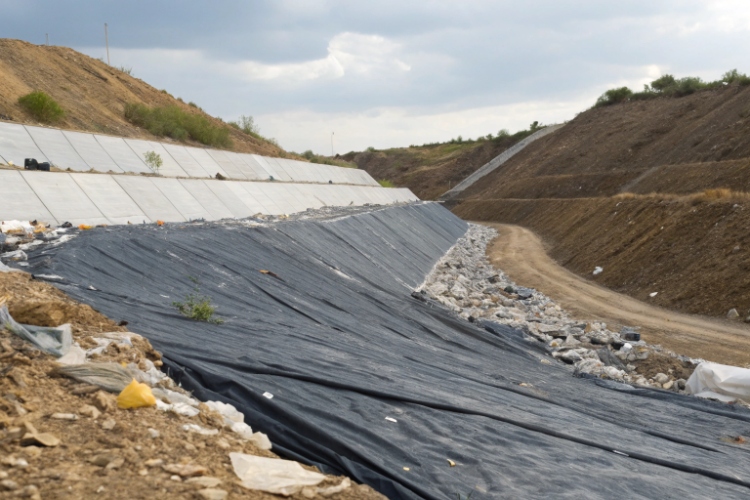
HDPE Geomembrane Performance Under Landfill Loading
A landfill is a dynamic environment. The liner must endure immense pressure from the waste above and accommodate ground movement and settlement below. HDPE is engineered to handle these stresses.
It possesses a unique combination of high tensile strength (typically ≥27 MPa) and high elongation (≥700%). This means it is strong enough to resist being pulled apart but flexible enough to stretch and conform to differential settlement without cracking. Its superior puncture resistance (≥480 N for a 1.5mm sheet) ensures it can withstand sharp objects and the stress of installation equipment. The seams, created by thermal fusion welding, are a critical component. This technique melts the parent material together, creating a permanent bond that is often stronger than the sheet itself (testing at over 90% of the base material strength), effectively eliminating the risk of leaks at the joints.
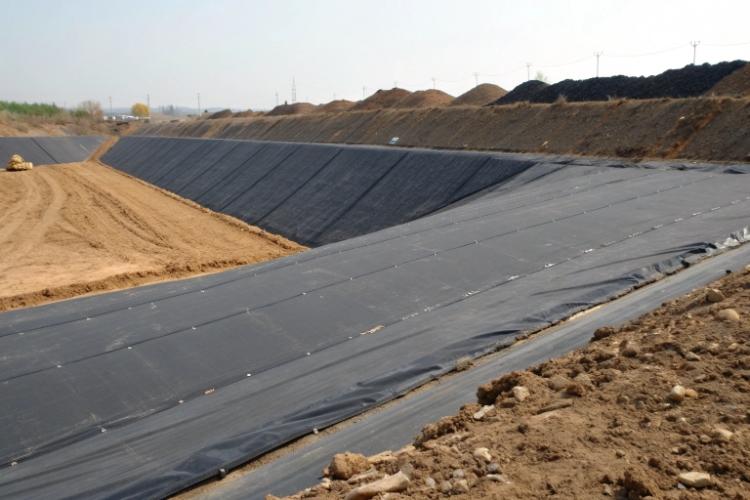
When LLDPE Is Considered: Flexibility Needs
While HDPE is the go-to for primary base liners, its more flexible cousin, Lineêre lae-digtheid poliëtileen (LLDPE), has important applications within landfill design. LLDPE's molecular structure gives it greater elongation and flexibility compared to HDPE.
We specify LLDPE in situations where exceptional flexibility is the most critical property:
- High Differential Settlement Zones: For areas where significant and uneven ground settlement is anticipated, LLDPE's ability to stretch without failing provides an added margin of safety.
- Steil hellings: Textured LLDPE offers high interface friction, making it an excellent choice for lining steep side slopes where stability is a primary concern.
- Landfill Caps and Closures: When closing a landfill cell, the final cover must conform to the irregular shape of the settled waste mass. LLDPE's flexibility makes it easier to install in these complex geometries.
However, LLDPE generally has slightly lower resistance to high temperatures and a less extensive history in primary hazardous waste containment compared to HDPE, which is why HDPE remains the default for the most critical base liner applications.

Project-Specific Comparison: HDPE vs. LLDPE
The choice between HDPE and LLDPE is not about which is "better" overall, but which is right for a specific application. This table summarizes where each material typically excels.
| Toepassing | Key Property Needed | Preferred Material | Hoekom |
|---|---|---|---|
| Landfill Base Liner | Maximum Chemical Resistance & Duursaamheid | HDPE | Offers the best combination of stiffness, strength, and proven long-term chemical resistance. |
| Steep Side Slopes | High Friction & Buigsaamheid | Textured LLDPE | Superior flexibility and interface friction angle provide stability. |
| Landfill Cap/Closure | High Flexibility & Conformability | LLDPE | Easily conforms to irregular shapes of settled waste mass. |
| Leachate Ponds | Chemiese weerstand & UV Weerstand | HDPE | The gold standard for primary containment of aggressive liquids. |
Regulatory and Testing Requirements
The decades-long track record of HDPE in successful landfill projects has made it the default specification for regulators worldwide. Its performance is well-understood, predictable, and codified in universally accepted standards like GRI-GM13. This simplifies the design, specification, and approval process for engineers and asset owners.
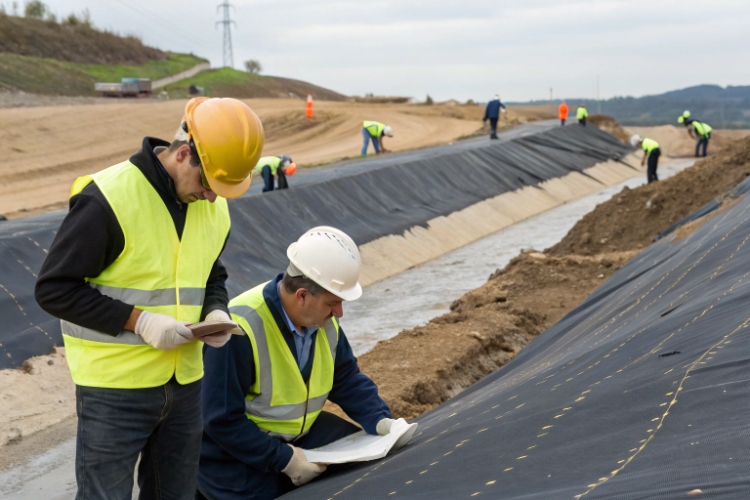
The proven reliability of termiese samesmelting, backed by rigorous on-site quality control and testing, gives regulators confidence that the installed system is monolithic and free of leaks. This extensive history and regulatory trust are powerful reasons why HDPE remains the preferred choice for primary containment in both municipal solid waste and hazardous waste landfills. From a lifecycle cost perspective, this reliability far outweighs any minor initial material cost differences.
Gevolgtrekking
When designing a system to protect our environment for the next century, you choose the material with the most proven record of reliability and durability. HDPE geomembrane's unmatched chemical resistance, physical strength, and regulatory acceptance make it the clear choice for the critical task of primary landfill containment. While LLDPE provides essential solutions for high-flexibility applications like caps and steep slopes, HDPE remains the bedrock of modern, safe landfill design.