


Seleksie van Geogrids vir verskillende tipes stortingsterreine

Choosing the wrong geogrid can compromise an entire landfill, leading to costly instability. Many products look similar on a spec sheet, but in the field, application-specific performance is what truly matters. How do you ensure you have the right one? This guide explains how to select the right geogrid for different types of landfills, from […]
Beste bekostigbare vullisterreine vir kleinskaalse afvalfasiliteite: 'n Praktiese kopersgids

Operating a small-scale waste facility comes with a unique set of challenges. You face the same environmental responsibilities as a large municipal landfill but must meet them with a fraction of the budget and resources. Selecting the right liner system is often the biggest financial and regulatory hurdle. The good news is that "affordable" does […]
Algemene Stortingsvullisfoute en hoe om te vermy

A landfill liner is more than a plastic sheet; it is the single most critical barrier protecting our environment from contamination. When this barrier is breached, the consequences can be catastrophic and permanent, leading to polluted groundwater, unstable landmasses, and cleanup costs that can dwarf the initial construction budget. Understanding why liners fail is the […]
Paneelnaadrigting: Waarom naatoriëntasie belangrik is in geomembraanprojekte

When installing a geomembrane liner, it’s tempting to think of panel layout as a simple puzzle: how to cover an area with the fewest pieces. This approach is dangerously wrong. The direction of your seams is not an installation shortcut; it’s a critical engineering decision that directly impacts stress distribution, leak resistance, and the long-term […]
Waarom kreukel HDPE-voerings tydens installasie—en hoe kan dit voorkom word?
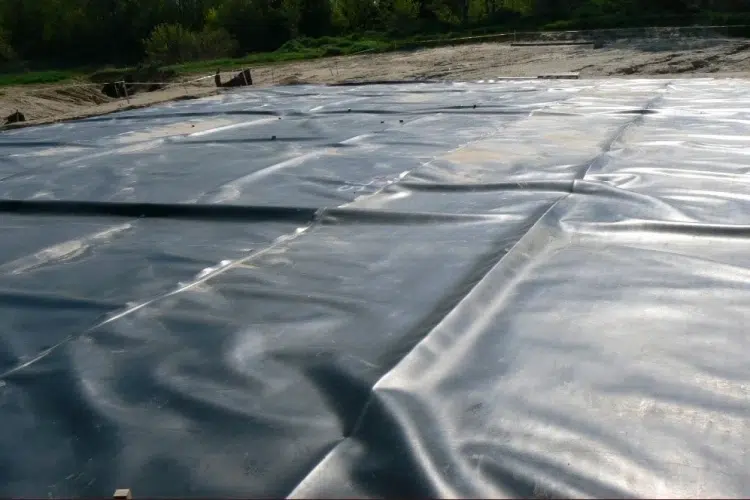
Ignoring wrinkles on your new HDPE liner is a huge mistake. These folds are stress points that will eventually crack, causing catastrophic leaks and project failure. HDPE liners wrinkle primarily due to thermal expansion—the material expands in the heat and contracts in the cold. Prevention involves installing during cooler temperatures, allowing for calculated slack, and […]
Waarom Geonet + Geotekstiel die beste oplossing is vir die ontwerp van vullisgasontluchtingslaag?

Landfill gas is a powerful, unavoidable byproduct of waste decomposition. If left uncontrolled, this methane-rich gas can build pressure beneath the final cap, causing liner "whales" or bubbles, compromising slope stability, and creating uncontrolled emission points. Simply put, managing this gas is not optional; it’s a critical safety and environmental requirement. The solution is an […]
Watter ballas- en tydelike bedekkingsmetodes kan windopheffing op geomembraanvoerings voorkom?

You’ve just unrolled a massive panel of geomembrane. The wind picks up, and suddenly that expensive liner turns into a giant, uncontrollable kite, threatening to undo hours of work and damage the material. To prevent wind uplift, immediately secure exposed geomembranes using temporary ballast like sandbags at calculated intervals or a thin layer of soil […]
Watter bindingsmetodes word gebruik om geomembrane aan beton te verbind?

You’re at a critical point in your project: connecting a flexible geomembrane to a rigid concrete structure. A failed connection at this interface is a primary source of leaks and project failure. The most common methods are mechanical batten strips for existing concrete and embedded anchor strips for new concrete. For new construction, embedding and […]
Benodig 'n geomembraan grondbedekkingsbeskerming na installasie?

You’ve just completed a geomembrane installation and are looking at a vast, black surface. Skipping the soil cover seems like an easy way to save time and money, but this decision could haunt you. Yes, in over 90% of applications, a geomembrane requires soil cover. This cover acts as a crucial protective shield against UV […]