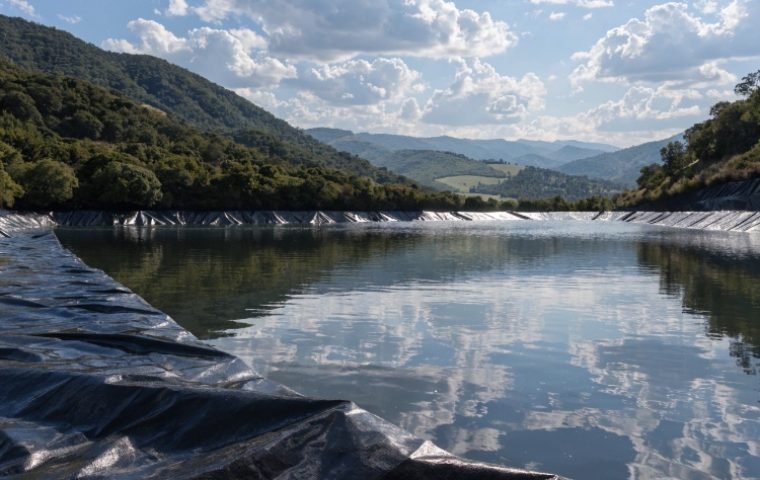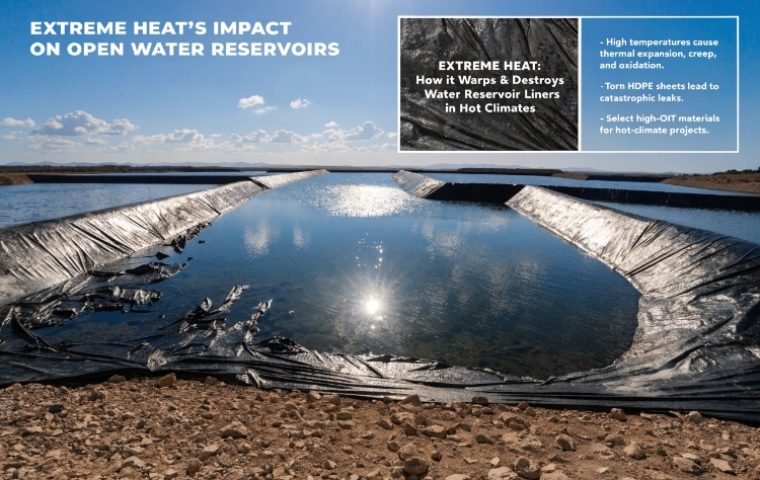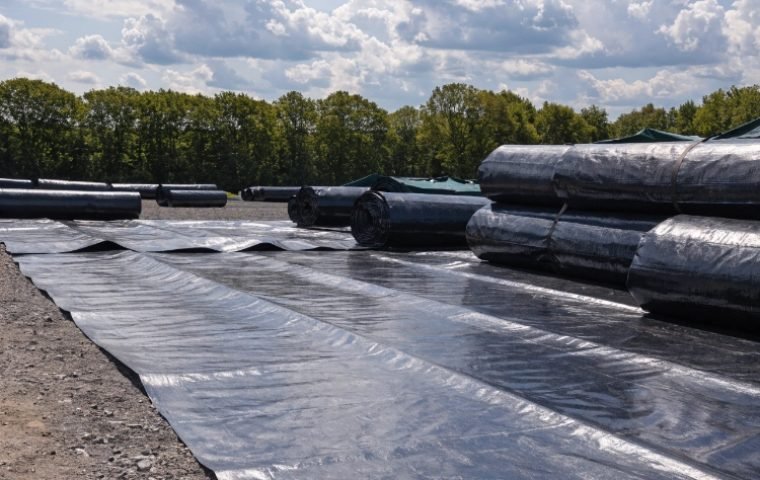


Copper mine operators constantly fear that their heap leach pads will leak PLS (Pregnant Leach Solution). A liner failure means losing valuable copper yield to the soil and facing massive environmental fines.
High-quality HDPE geomembranes perform exceptionally well in standard copper heap leaching, with field data proving over 16 to 30 years of integrity. However, performance depends entirely on distinguishing between standard dilute sulfuric acid environments and aggressive concentrated acid precuring methods.
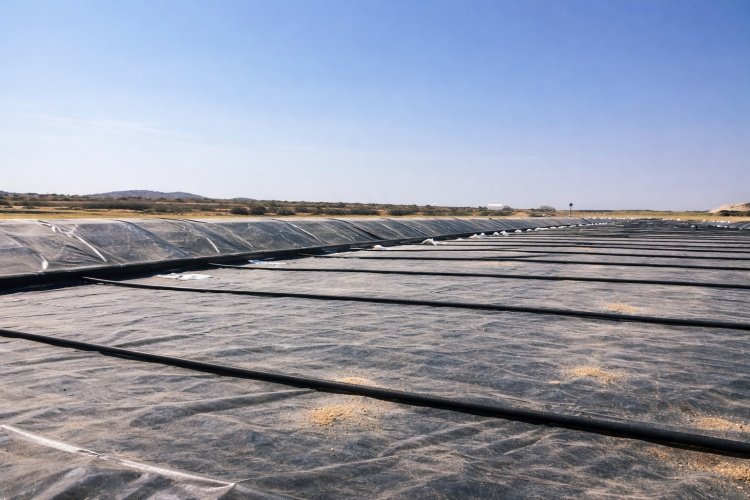
Many buyers assume that "acid-resistant" is a simple checkbox on a specification sheet. But in my experience exporting to mining projects in Mongolia, Congo, and Chile, the reality is more complex. The lifespan of your liner is dictated by how the material handles the specific oxidation stress from the sulfuric acid concentration you use.
What acidic conditions exist in copper heap leaching?
Buyers often request a "chemically resistant liner" without specifying the exact chemical load. This vague definition is dangerous because a liner that survives standard leaching may degrade rapidly under modern precuring processes.
In copper extraction, the liner faces two distinct environments: standard dilute sulfuric acid (5-20% concentration) and concentrated sulfuric acid (~96%) used in precuring. The liner must handle massive variations in pH and chemical aggression depending on the extraction stage.
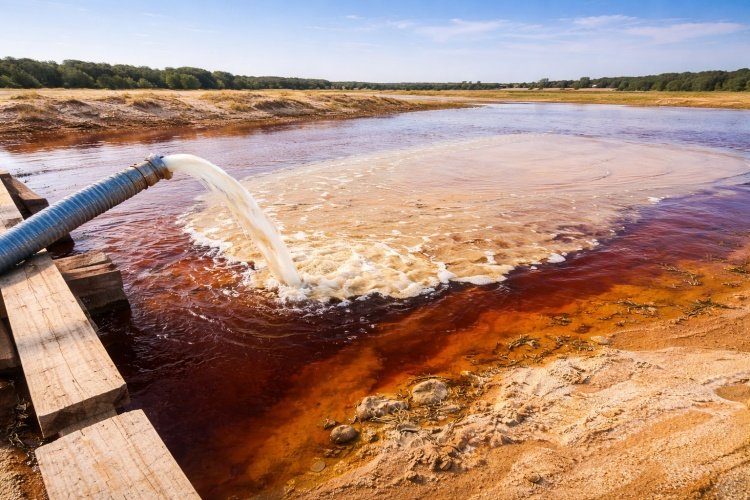
Validating the Chemical Environment
From my perspective as a supplier, we cannot recommend a material until we see the fluid design parameters. In the last two decades, the industry has shifted.
1. Standard Leaching (The Safe Zone)
This is the traditional method. The PLS generally contains dilute sulfuric acid (5-20% w/w) with a pH between 1.4 and 2.0.
In these conditions, HDPE is incredibly stable.
For example, in a long-term project we monitored in Mongolia (Erdmin Copper Mine), the liner was exposed to 15-16% sulfuric acid for 16 years. The groundwater monitoring wells showed near-neutral pH (5.85-7.66) and negligible copper traces. This proves the liner did not fail.
2. Concentrated Precuring (The Risk Zone)
Since the early 2000s, many miners have adopted "precuring." They soak the ore in ~96% concentrated sulfuric acid for 24-72 hours before stacking to boost recovery rates.
This is where I see problems.
While HDPE handles <30% acid effortlessly, concentrations above 70%—and specifically 96%—place immense stress on the antioxidant package. If you plan to use precuring, you cannot just use a standard 1.0mm or 1.5mm liner intended for water containment. The chemical attack at this concentration accelerates "OIT depletion" (the consumption of stabilizers), meaning you need a thicker, higher-grade resin to ensure the barrier survives the initial acid shock.
How do acid-resistant geomembranes withstand low pH solutions?
Engineers often worry that acid will physically "eat" the plastic over decades of burial. They fear that after 20 years under a 100-meter heap, the bottom liner will dissolve or crack.
Acid does not "eat" the polymer chains of HDPE; rather, it depletes the antioxidants that protect the plastic from becoming brittle. As long as the antioxidants remain, the physical strength of the liner actually tends to improve or stabilize over time.
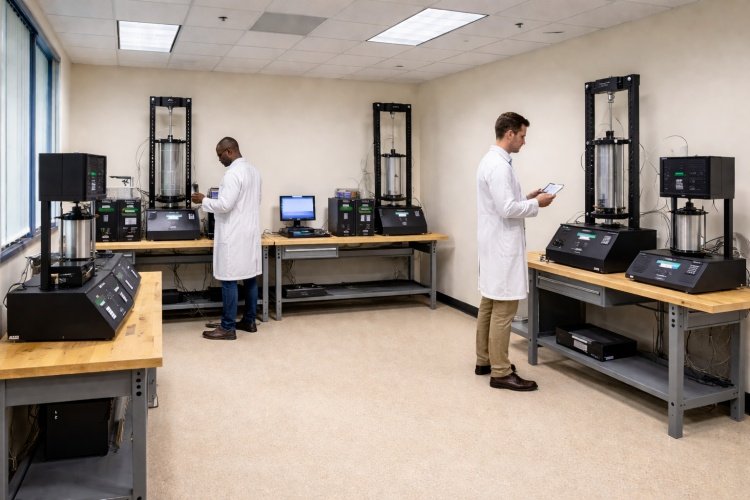
The Mechanism of Resistance: OIT
The most critical data point we track is OIT (Oxidative Induction Time. This measures how much "protection" is left in the plastic.
In the case of the 16-year-old Mongolian project using dilute acid, we saw incredible results:
- Standard OIT: Dropped from ~150 min to 84 min (56% retained).
- High-Pressure OIT: Retained about 70%.
This is the key insight: A 50% drop does not mean failure. It means the stabilizer is doing its job. With 56% retention after 16 years, the liner effectively has decades of life remaining before the plastic itself begins to degrade.
Mechanical Properties After Long-Term Burial
A common misconception among my clients is that old liners become weak. Real-world sampling contradicts this.
When we test exhumed liners from acid environments, we often find that the mechanical properties meet or exceed the original GRI-GM13 specifications.
Looking at the field data:
- Yield Strength: Measured 43 N/mm² (vs. the required 29 N/mm²).
- Puncture Strength: Measured 800 N (vs. the required 640 N).
- Tear Strength: Measured 306 N (vs. the required 249 N).
Why did the numbers go up? The polymer chains often realign and stiffness increases slightly. This confirms that the dilute sulfuric acid did not chemically sever the polymer chains. The physical barrier remains intact. The only "loss" is the invisible consumption of the antioxidant additives, which happens very slowly in dilute acid.
Which geomembrane materials are suitable for copper heap leach liners?
Project managers frequently try to cut costs by asking if they can use thinner materials or cheaper polymers like PVC or LLDPE. This is the wrong place to save money.
For copper heap leaching, Hoë-digtheid poliëtileen (HDPE) is the only scientifically valid choice, specifically manufactured to GRI-GM13 standards. The decision isn't about the polymer type—it is about selecting the correct thickness and resin package for your specific heap height and acid concentration.
Material Selection Strategy
We approach material selection based on the zone of application. A "one size fits all" approach is inefficient and risky.
1. The Heap Leach Pad Base (Under the Ore)
- Recommendation: 1.5mm to 2.0mm HDPE (Smooth or Textured).
- Reasoning: This liner will be buried forever. It faces high pressure but zero UV.
- My Insight: For heaps lower than 150m, 1.5mm is technically sufficient. However, most of our international mining clients (like recent projects in DRC/Congo) opt for 2,0 mm. Why? It provides a greater "sacrificial thickness" for scratches during installation and a larger reservoir of antioxidants. When you are building a mountain of ore, the cost difference between 1.5mm and 2.0mm is negligible compared to the risk of a leak.
2. Solution Ponds (PLS/Raffinate)
- Recommendation: 2.0mm HDPE (Smooth).
- Reasoning: These areas face the "triple threat": Acid, UV radiation (sunlight), and temperature fluctuation (-40°C to +40°C).
- Data: In the Mongolian monitoring cases, exposed liners showed excellent UV resistance (Carbon black ~2.5%) with physical properties retaining >110% of standard requirements after 16 years.
- Warning: Never go below 2.0mm for exposed acid ponds. The extra thickness acts as a buffer against surface oxidation caused by the sun.
3. Concentrated Acid Pre-Curing Pools
- Recommendation: 2.5mm HDPE or Specialized Double Lining.
- Reasoning: If you are using the 96% sulfuric acid precuring method, standard 1.5mm liner is risky. The aggressive depletion of OIT means you need more mass (thicker liner) to ensure the stabilizers last the duration of the mine life. We often recommend upgrading to 2.5mm HDPE for these specific, high-risk process tanks.
What performance indicators should be checked for acid resistance?
Importers often send me a generic "Technical Data Sheet" (TDS) and ask, "Is this good?" A standard fresh-material datasheet tells you almost nothing about how the liner will behave in an acid heap five years from now.
To ensure performance in copper mining, you must look beyond density and tensile strength. You need to verify the formulation's stability, specifically the High-Pressure OIT en Spanningskraakweerstand (SCR). These are the indicators that separate average plastic from mining-grade engineering materials.
The Truth About OIT (Oxidation Induction Time)
Many suppliers boast high "Standard OIT" numbers (>100 minutes). However, in acid environments, High-Pressure OIT (HPOIT) is a more realistic predictor of longevity.
- Standard OIT measures how fast antioxidants burn off at 200°C.
- High-Pressure OIT measures stability under pressure, which correlates better to chemical leaching resistance.
- Buyer Tip: Ask your supplier for their HPOIT values. If they don't test for it, they are likely not producing genuine mining-grade geomembranes.
Spanningskraakweerstand (SCR)
Acidic environments can accelerate environmental stress cracking, especially at weld seams or wrinkles.
- The GRI-GM13 standard requires 500 hours of resistance.
- For copper leaching, specifically with high heaps (>60m), we prefer supplying resins that achieve >3000 hours or even >9000 hours in NCTL tests.
- Why? Because when the antioxidant package eventually depletes (decades later), the resin's natural resistance to cracking becomes the last line of defense. Higher SCR means the liner stays intact even after the additives are gone.
Installation Quality: The Hidden Indicator
Finally, the best lab specs fail if the installation is poor. Acid finds every pinhole.
- Vacuum Box Testing: Must be done on 100% of extrusion welds and patches.
- Air Pressure Testing: Must be done on 100% of double-track fusion welds.
- Electric Leak Location (ELS): I strongly advise running an arc testing survey after the drainage gravel is placed. In copper projects, we usually find damage is caused during the cover material placement, not during liner manufacturing.
Gevolgtrekking
Acid-resistant geomembranes, specifically premium HDPE, are the proven solution for copper heap leaching.
For standard dilute acid (pH 1.4+), a 1.5mm-2.0mm HDPE liner will last decades, provided the installation is sound. However, if your process involves 96% concentrated acid precuring, you must treat this as a high-aggression environment: upgrade to 2.5mm thickness and demand high SCR resin values to offset accelerated antioxidant depletion.