Choosing the right geomembrane is only half the battle; ensuring a perfect, leak-free installation is what guarantees project success. While HDPE liners are common, flexible PVC geomembranes present unique advantages and require a distinct welding approach that many engineers overlook.
This guide provides a definitive overview of the PVC geomembrane welding process. We will cover material specifics, step-by-step procedures, quality control, and a detailed comparison against HDPE and LLDPE, giving you the technical confidence to manage your next lining project effectively.

Understanding the nuances of welding different polymers is critical. A method that works perfectly for rigid HDPE can easily damage or destroy a PVC seam. This article breaks down the science behind the processes, helping you avoid costly mistakes and ensuring the long-term integrity of your containment system.
Material Properties That Influence PVC Welding Behavior
Before we can weld PVC, we must understand its fundamental nature. Unlike the semi-crystalline structure of High-Density Polyethylene (HDPE) and Linear Low-Density Polyethylene (LLDPE), Polyvinyl Chloride (PVC) is an amorphous polymer. Its properties are heavily influenced by plasticizers—additives that make it soft and flexible.
These unique characteristics directly impact its welding behavior:
- Lower Melting Temperature: PVC softens and becomes weldable at a much lower temperature (typically 250–400°C for hot air welding) compared to the high heat required for HDPE/LLDPE fusion (350–450°C). This makes it easier to handle with smaller equipment but also makes it more susceptible to overheating.
- Plasticizer Content: The presence of plasticizers means we must be careful with heat. Excessive temperature can cause these plasticizers to migrate or "boil off" from the surface, making the material brittle and compromising the weld's long-term flexibility and strength.
- Chemical Weldability: PVC’s molecular structure allows it to be softened and fused using chemical solvents. This "solvent welding" or adhesive seaming is a method entirely unique to PVC, as the non-polar chemistry of HDPE and LLDPE prevents any form of chemical bonding.
This inherent flexibility makes PVC ideal for projects with complex geometries, like decorative ponds, canals, and tunnels, where the liner must conform to intricate shapes without high stress.
Preparation Steps Before PVC Geomembrane Welding
In my experience, over 90% of welding failures can be traced back to poor preparation. A perfect weld is impossible on a contaminated or improperly aligned surface. Before any heat or solvent is applied, a strict preparation protocol must be followed.
- Cleaning the Seam Area: The overlap zone (typically 10-15 cm or 4-6 inches) must be impeccably clean. Use a clean, dry, lint-free cloth to wipe away all dust, moisture, mud, or oils. If necessary, a mild solvent approved by the manufacturer can be used, but you must ensure it fully evaporates before welding begins.
- Panel Alignment and Overlap: Lay the two panels of PVC geomembrane flat, ensuring they are free of wrinkles or tension. The overlap must be consistent along the entire length of the seam. Inconsistent overlap can lead to weak spots or cause the welder to run off track.
- Trimming and Smoothing: Any rough or uneven edges on the sheets should be trimmed to create a smooth, straight line for the welding machine to follow. Sharp cuts or jagged edges can interfere with the pressure rollers and create channels for leaks.
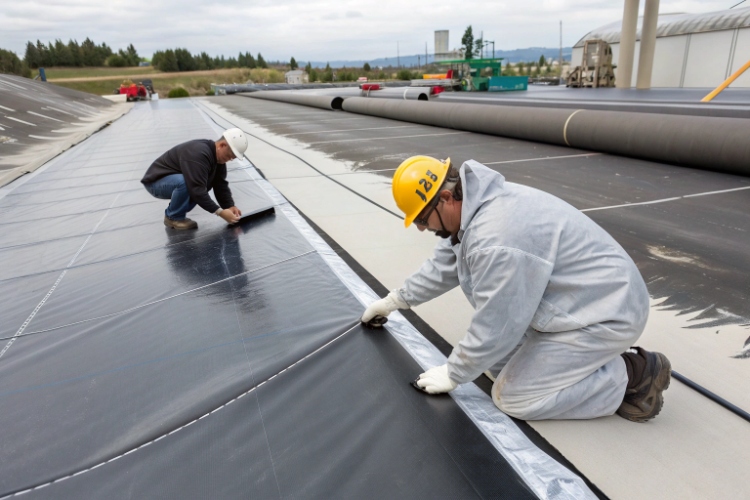
Main Welding Methods for PVC Geomembranes
PVC offers more versatility in seaming methods than polyolefins like HDPE. The three primary methods used in the field each have specific applications.
- Hot Air Welding: This is the most common method for field seaming PVC. A handheld or automated welder blows a jet of superheated air between the two overlapped sheets, melting their surfaces. A silicone pressure roller immediately follows, pressing the molten surfaces together to create a homogenous bond. It is excellent for detail work, patches, and pipe boots.
- Hot Wedge Welding: For long, straight seams, a hot wedge welder is more efficient. This automated machine uses a heated metal wedge to melt the material surfaces, followed by drive wheels that also act as pressure rollers. Modern PVC wedge welders can create a dual-track seam with a central air channel for non-destructive testing, which was traditionally only associated with HDPE.
- Solvent Welding (Chemical Fusion): This method uses a chemical solvent or bodied adhesive to soften the surfaces of the PVC sheets. The molecules of the two sheets intermingle and, once the solvent evaporates, a strong, fused bond is formed. This technique is often used for repairs, details, or in situations where power for thermal welders is unavailable. It is unique to PVC and cannot be used on HDPE or LLDPE.
Step-by-Step PVC Geomembrane Welding Procedure (Hot Air Method)
Here is a simplified, step-by-step field procedure for a typical hot air weld, the most common technique for PVC geomembrane.
- Perform a Test Weld: Before starting on the main liner, always perform a trial weld on a scrap piece of the same PVC material. This allows you to dial in the correct temperature, speed, and pressure for the current ambient conditions (temperature, humidity, wind). The test weld should be destructively tested (peel and shear) to confirm it meets project specifications.
- Set Welding Parameters:
- Temperature: Set the welder to the optimal temperature, typically between 250°C and 400°C. Thicker material requires higher temperatures.
- Speed: Adjust the travel speed. Moving too fast results in a "cold weld" that won't bond properly. Moving too slow will overheat and burn the PVC. A typical speed is 1.5 to 3.5 meters per minute.
- Pressure: Ensure consistent, firm pressure is applied with the hand roller immediately behind the hot air nozzle. This is critical for fusing the molten layers together and eliminating air pockets.
- Execute the Weld: Insert the nozzle of the hot air welder into the overlap. As you move the welder along the seam, the hot air melts the material. Follow immediately with the pressure roller, applying firm, even pressure in a smooth motion.
- Visual Inspection: As the weld is completed, visually inspect the seam. A good weld will have a small "bleed-out" of molten material along the edge of the seam, indicating proper fusion. There should be no signs of charring (overheating) or discoloration.

Quality Control and Testing After Welding
A completed weld is not a confirmed weld until it has passed quality control testing. This verification step is crucial for CQA documentation and provides peace of mind that the seam is watertight.
- Air Channel Test (for Dual-Track Welds): This non-destructive test is the preferred method for long seams created by a hot wedge welder. The air channel between the two parallel welds is sealed at both ends, and an air pump with a pressure gauge is attached via a needle. The channel is inflated to a specified pressure (e.g., 25-30 PSI). After a stabilization period, the pressure should not drop more than a specified amount (e.g., 2-4 PSI) over 5 minutes. A significant drop indicates a leak in the seam.
- Vacuum Box Test: This test is used for extrusion or single-track hot air welds, especially on patches and around details. A test box with a clear viewing window and a soft rubber gasket on the bottom is placed over the seam. A soap-and-water solution is applied to the seam. A pump creates a vacuum inside the box. If there is a leak in the weld, bubbles will form in the soap solution, pinpointing the exact location of the flaw.
- Destructive Testing (Peel and Shear): Periodically, a sample is cut from the installed seam (the hole is later patched) and sent to a lab or tested on-site with a field tensiometer. The sample is tested for peel strength (pulling the two sheets apart) and shear strength (pulling along the seam). The results must meet project specifications, which typically require the bond to be strong enough that the failure occurs in the parent material, not the weld itself (known as a Film Tearing Bond or FTB).
Key Differences Between PVC, HDPE, and LLDPE Welding
Understanding the distinctions between welding these three common materials is essential for any project manager or engineer. The wrong assumptions can lead to critical failures.
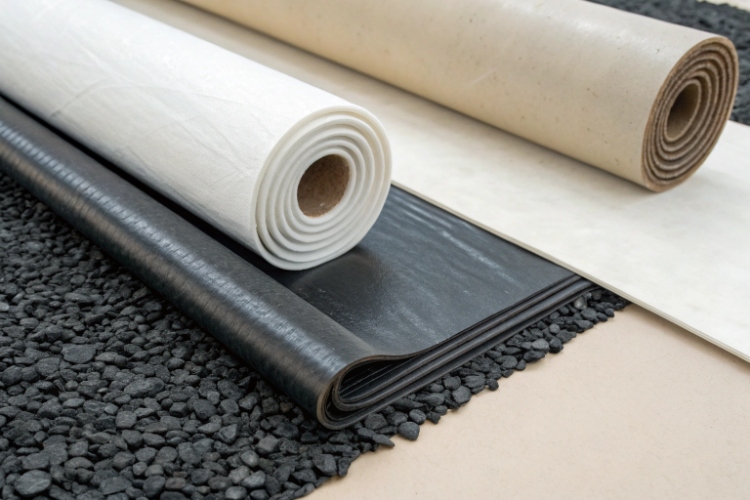
Here is a summary comparison table highlighting the most critical differences:
| Feature | PVC Geomembrane Welding | HDPE / LLDPE Geomembrane Welding |
|---|---|---|
| Primary Method | Hot Air, Hot Wedge, Solvent/Adhesive | Hot Wedge (primary), Extrusion (detail) |
| Welding Temperature | Lower & more critical range (250–400°C) | Higher & broader range (350–450°C) |
| Material Flexibility | Very High. Easily conforms to subgrade and details. | Low (HDPE) to Medium (LLDPE). More rigid, requires relief cuts. |
| Temperature Control | Critical. Narrow window to avoid plasticizer burn-off. | Less sensitive due to stable crystalline structure. |
| Seam Type | Historically single track. Modern welders offer dual-track. | Dual-track with air channel is the industry standard. |
| Seam Strength | High, typically achieving 80-90% of parent material strength. | Very high, achieving 100%+ of parent material strength via fusion. |
| QC Testing | Vacuum Box, Air Channel, Peel/Shear | Air Channel (primary), Vacuum Box, Peel/Shear |
| Weather Dependency | Can be welded at low temperatures, but sensitive to moisture. | Less sensitive to humidity, but requires higher ambient temps (>5°C). |
The key takeaway is that PVC welding is a process defined by finesse and careful heat management, whereas HDPE welding is a process of brute-force thermal fusion.
Common PVC Welding Problems and How to Avoid Them
Even with the best equipment, problems can arise. Here’s a quick troubleshooting guide for the most common issues we see in the field.
Problem 1: Overheating, Discoloration, or Smoke
- Cause: The welder temperature is too high, or the travel speed is too slow. This is burning the PVC and its plasticizers.
- Prevention: Always perform a test weld to establish the correct parameters. Reduce the temperature in 10°C increments or increase travel speed until the weld is clean.
- Solution: Cut out the damaged section and re-weld with a patch. The burned material has lost its structural integrity and cannot be repaired.
Problem 2: Weak Bond or "Cold Weld"
- Cause: The welder temperature is too low, travel speed is too fast, or insufficient pressure was applied. The materials softened but did not fully fuse.
- Prevention: Ensure the test weld passes a destructive peel test. Clean the surfaces thoroughly, as a thin layer of dust can prevent proper fusion.
- Solution: This can sometimes be repaired by re-welding over the seam at a higher temperature, but the best practice is to install a cap strip (a new layer of PVC welded over the entire failed seam).
Problem 3: Wrinkles and "Fishmouths" in the Seam
- Cause: The geomembrane was not laid flat and tension-free before welding, or the welder was not steered correctly. As the material heats and cools, this stress creates a wrinkle or channel at the seam edge.
- Prevention: Ensure panels are relaxed and have no wrinkles before starting a seam. For large thermal wrinkles ("bridging"), wait for cooler temperatures when the sheet lays flat.
- Solution: A small fishmouth can be cut along its length, laid flat, and patched. A large one may require cutting out the entire wrinkled section and welding in a new panel.
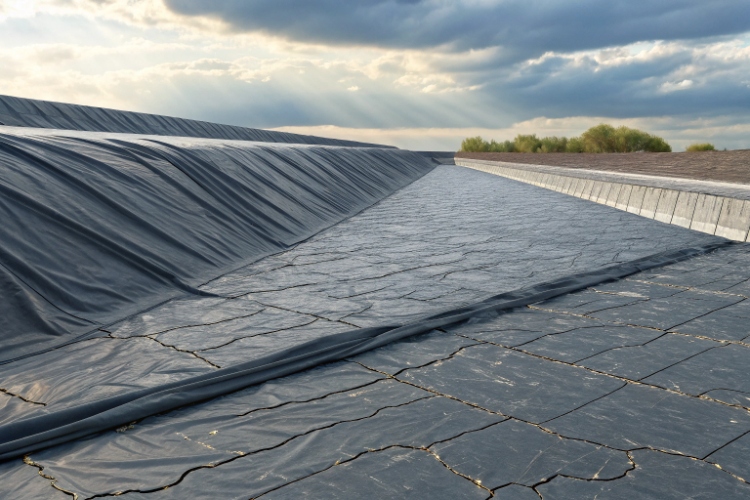
Best Practices to Ensure Long-Term Performance of PVC Liners
A successful installation goes beyond just good welds. It involves a holistic approach to material handling and site management.
- Proper Storage: Keep PVC rolls covered and protected from direct sunlight until deployment. Prolonged UV exposure before installation can degrade the material's surface.
- Surface Protection: Ensure the subgrade is smooth and free of sharp rocks or debris. A protective nonwoven geotextile underlayment is highly recommended.
- Environmental Awareness: While PVC can be welded in cooler temperatures than HDPE, avoid welding during rain or in extremely humid or dusty conditions, as these can compromise seam quality.
- Thorough Documentation: Maintain a detailed log for every seam. Record the date, welder ID, technician's name, machine settings, and the results of all QC tests. This creates an invaluable CQA record.
By following these best practices, you can ensure that your flexible PVC liner provides reliable, long-term containment.
Conclusion
PVC geomembrane welding is a distinct skill set, separate from the techniques used for HDPE and LLDPE. Its lower temperature requirements and option for solvent welding make it a versatile choice, but its sensitivity to overheating demands greater operator precision. Understanding these material-specific differences is not just a technical detail—it is fundamental to ensuring the safety, durability, and success of your engineering project.