

Choosing a geomembrane for a mining project is often focused on thickness and material type. But there's another crucial property that is often overlooked: color. A standard black liner can become dangerously hot under the sun, leading to wrinkles, stress, and premature aging. This is where a simple change can make a massive difference.
This guide explains the specific conditions where white geomembrane is not just a minor upgrade, but a critical engineering choice for mining projects. We will cover the key applications, performance benefits, and long-term value that a reflective liner brings to heap leach pads, tailings facilities, and process ponds.
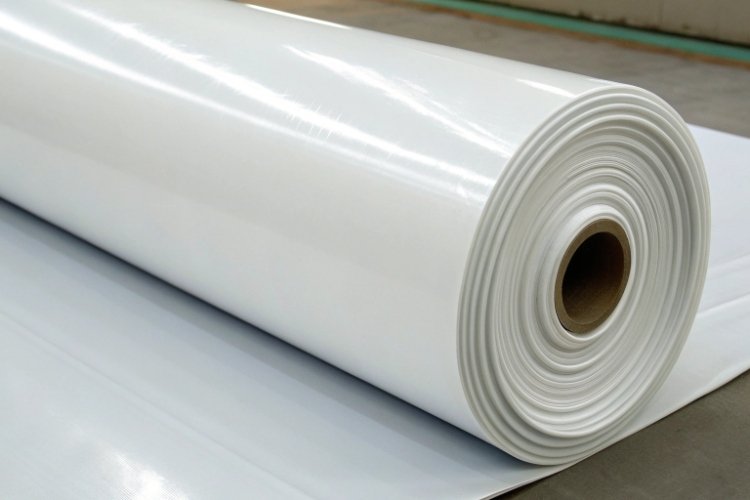
Understanding this simple switch from black to white can help you improve installation efficiency, extend the service life of your containment system, and reduce long-term operational risk.
What Is White Geomembrane in Mining Applications?
A white geomembrane is typically a co-extruded High-Density Polyethylene (HDPE) liner that features a brilliant white, UV-stabilized surface layer over a standard black core. While the core provides the bulk of the material's strength and chemical resistance, the white layer serves one primary, critical function: reflecting solar radiation.
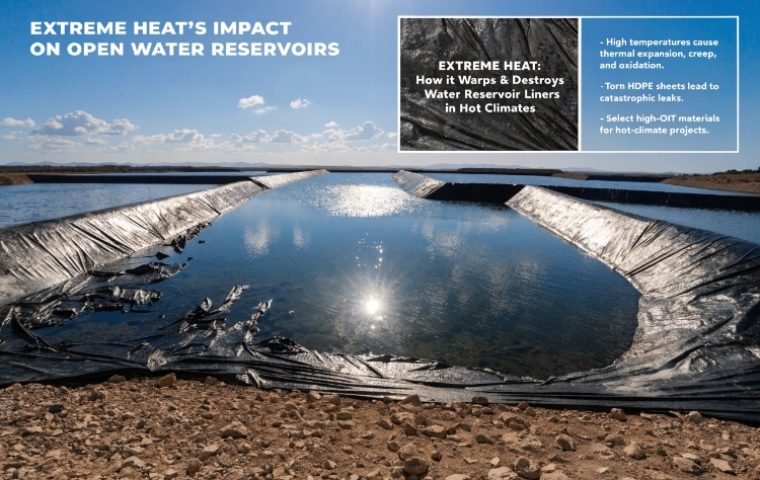
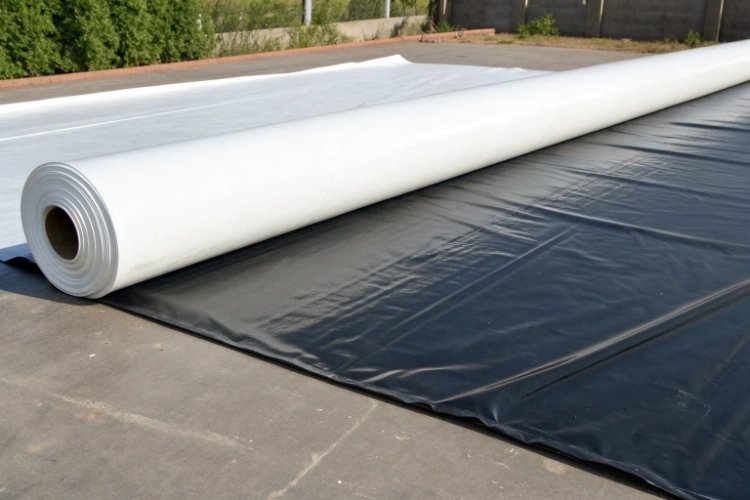
In exposed mining environments, color matters immensely. A standard black geomembrane is an excellent absorber of solar energy. On a sunny day, its surface temperature can soar to 70-80°C (160-175°F), even when the ambient air temperature is a mild 25°C (77°F). This extreme heat induces significant thermal expansion, causes large wrinkles, and accelerates the aging of the polymer.
A white geomembrane, by contrast, reflects the majority of this solar energy. This keeps the liner's surface temperature dramatically lower, which is the key to all of its subsequent advantages in demanding mining applications.
Key Conditions That Require White Geomembrane in Mining Projects
The decision to use a white geomembrane is driven by specific environmental and operational conditions where heat is a primary adversary.
High-Temperature Mining Environments
For any mining project located in a hot, arid, or high-altitude region, a white geomembrane should be the default choice. These environments are characterized by intense solar radiation. As mentioned, a black liner can reach temperatures that are stressful for the material, while a white liner under the exact same conditions will remain 20-30°C (36-54°F) cooler. This massive temperature reduction is the single most important benefit, as it directly mitigates heat-related damage and degradation. This is especially true for large open-pit mines where vast areas of liner may be exposed for extended periods.
Projects Requiring Thermal Stability
Extreme surface temperatures cause significant thermal expansion and contraction. During the heat of the day, a black liner expands and forms large wrinkles. As it cools at night, it contracts. This daily cycle of movement creates several problems:
- Stress Concentration: Wrinkles become points of concentrated stress, making the liner more susceptible to cracking over time.
- Installation Damage: The movement can abrade the liner against the subgrade or overlying materials.
- Poor Contact: Wrinkles create voids between the liner and the subgrade, which can compromise the stability of the entire system and create potential pathways for leaks.
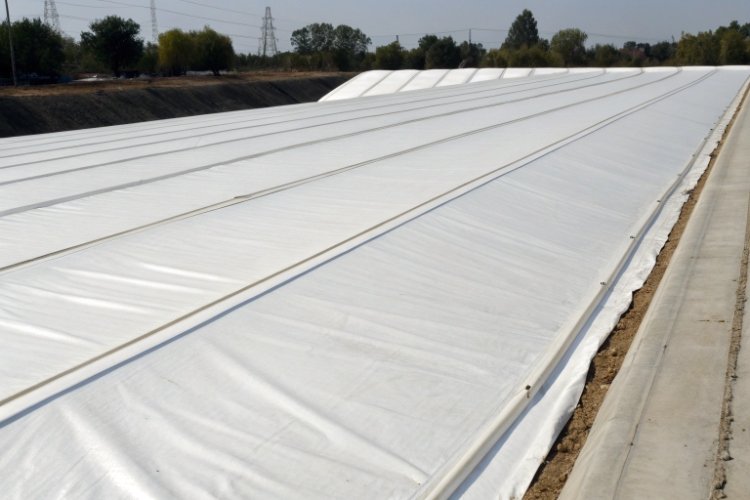
A white geomembrane, which may expand up to 60% less than a black liner, remains significantly flatter and more dimensionally stable. This stability is critical for the long-term integrity of heap leach pads and pregnant leach solution (PLS) ponds.
Applications with Strict Environmental Monitoring
The bright, uniform surface of a white geomembrane offers a significant advantage for visual inspection. Any damage, such as a tear or puncture, is immediately obvious. Similarly, any potential leaks of dark-colored process solutions or oils create a high-contrast stain that is easy to spot during routine inspections. This makes it far easier to identify and repair issues before they become serious environmental problems, helping projects maintain compliance with strict environmental regulations.
Typical Mining Applications of White Geomembrane
Given these advantages, white liners are becoming the standard for several specific mining applications.
Heap Leach Pads
This is arguably the most critical application for white geomembrane. Heap leach pads are often located in hot, sunny climates and can have exposed slopes for long durations. The temperature control provided by a white liner does two things:
- Reduces Mechanical Stress: It minimizes the wrinkle formation that can compromise the stability of a 150-meter-high ore stack.
- Slows Chemical Degradation: Heat is a catalyst for chemical reactions. In a copper acid leach environment (pH < 2), the combination of high heat and aggressive chemicals can severely shorten a liner's life. By keeping the liner cool, a white surface helps preserve the material's chemical resistance and slows the rate of polymer aging.
Tailings Storage Facilities
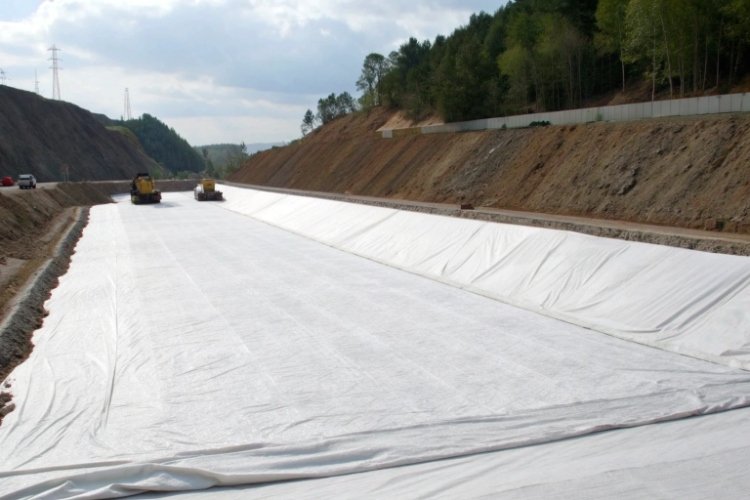
For traditional slurry tailings ponds where the liner is quickly submerged, color is less important. However, the industry is moving towards "dry stack" tailings, where filtered tailings are compacted in place. In these facilities, large areas of liner on the dam slopes remain exposed to the sun for years. In this scenario, a white liner is essential to manage thermal stress and ensure the long-term stability and safety of the tailings dam.
Process Water and Solution Ponds
Evaporation ponds, stormwater ponds, and process solution containment ponds all benefit from a white liner if they have large, exposed surface areas. The reduced temperature not only extends the liner's life but can also help reduce the evaporation rate of the contained solution in some instances and makes visual leak detection far more reliable.
White Geomembrane vs. Black Geomembrane in Mining Projects
Let's break down the direct comparison on key performance metrics.
Heat Absorption and Surface Temperature
There is no contest here. A white liner is consistently 20-30°C cooler than a black liner under direct sun. This isn't just a comfort issue for installers; it's a fundamental performance advantage. Heat accelerates oxidation, depletes the antioxidant package, and reduces the time to brittle failure. By lowering the operating temperature, a white liner directly contributes to a longer, more reliable service life.
Installation and Inspection Efficiency
This is a hidden but significant benefit.
- Longer Workday: On a hot day, black liners can become too hot to weld properly, forcing crews to stop work or confine installation to early mornings and evenings. A cooler white liner often allows for a full day of continuous work, which can shorten project schedules by weeks.
- Faster Welding: Welds on a white liner cool down faster, allowing for quicker QC testing and movement of the next panel.
- Better Weld Quality: A more stable, wrinkle-free surface leads to more consistent and reliable field seams. Visually inspecting the finished weld for any imperfections is also much easier on a white surface.
Cost and Long-Term Value
A white geomembrane typically has an initial material cost premium of 10-15% over its black equivalent. However, this upfront cost is often recovered multiple times over the project's life. The long-term value comes from a lower total cost of ownership, which includes:
- Reduced construction schedule delays.
- Lower risk of premature failure and costly repairs.
- Extended service life, delaying the massive capital expense of relining a facility.
- Lower risk of environmental fines or cleanup costs.
When White Geomembrane Is Not the Best Choice
Despite its many advantages, a white liner is not the universal solution. There are situations where a standard black geomembrane is perfectly adequate and more cost-effective:
- Underground Mining Applications: Where there is no sunlight, there is no thermal benefit.
- Fully Submerged or Buried Applications: If the liner is to be immediately and permanently covered by water, tailings, or soil, its color is irrelevant.
- Cool, Overcast Climates: In regions with low solar radiation and mild temperatures, the thermal benefits of a white liner may not be significant enough to justify the additional cost.
- Cost-Sensitive, Short-Term Projects: For a temporary project where long-term durability is not the primary concern, a standard black liner may suffice.
How to Select the Right White Geomembrane for Your Mining Project
Once you've decided that a white geomembrane is right for your project, the selection process is similar to that for any high-performance liner.
- Thickness: The same mechanical principles apply. Thicknesses from 1.5 mm (60 mil) to 2.5 mm (100 mil) are common, with thickness selection driven by heap height, subgrade conditions, and puncture risk.
- Smooth vs. Textured: For flat areas, a smooth liner is used. For slopes, a textured white geomembrane is necessary to provide the friction required for slope stability.
- Chemical Compatibility: The HDPE core must still be compatible with your specific mining chemicals (e.g., cyanide, sulfuric acid). Always verify the liner's chemical resistance data.
- Quality Standards: Ensure the geomembrane is manufactured from 100% virgin resin and meets or exceeds industry standards like the GRI-GM13 specification for HDPE geomembranes.
Conclusion: Key Scenarios for Using White Geomembrane in Mining Projects
In summary, white geomembrane has moved from a niche product to an essential engineering material for specific, high-risk mining applications. While the initial cost is slightly higher, the investment pays for itself through improved safety, longer service life, and greater installation efficiency.
You should strongly recommend or specify a white geomembrane for your mining project if it involves:
- High temperatures, intense sun, or high-altitude locations.
- Long-term exposed applications like heap leach slopes or dry stack tailings dams.
- A design where thermal expansion, wrinkles, and long-term stability are primary concerns.
For engineers and project owners, making the switch to white in these scenarios is one of the most effective decisions you can make to lower risk and maximize the long-term value of your containment system.