

In the sterile environment of a design office, a heap leach pad is a perfect geometric plane. In the rugged reality of a mine site, the ground is alive—it shifts, compresses, and settles under the immense weight of millions of tons of ore. When that settlement happens unevenly, it turns your containment system into a ticking time bomb. I have seen projects where the liner passed every QA spark test during installation, only to suffer catastrophic leaks three years later because the foundation subsided, stretching the geomembrane beyond its yield point.
The following guide analyzes the mechanics of settlement-induced failure in heap leach operations. It explains why differential settlement is the primary enemy of liner integrity, how multi-axial strain degrades HDPE and LLDPE over time, and practical strategies—from subgrade preparation to polymer selection—that mining engineers and procurement officers must use to prevent environmental disasters.
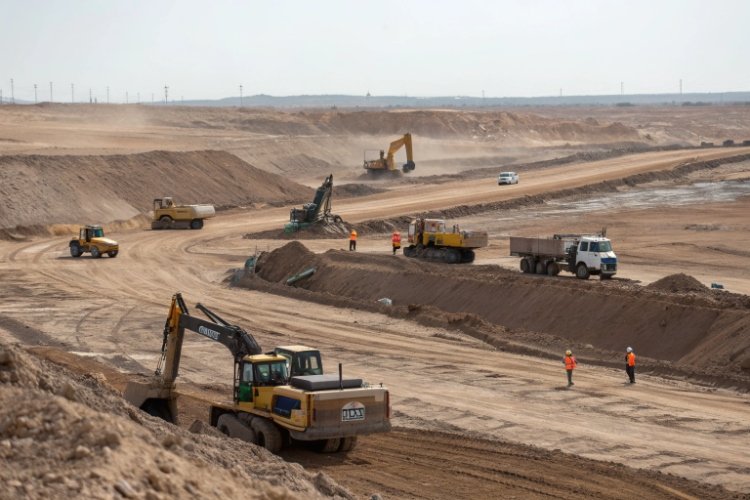
The failure of a heap leach liner due to settlement is rarely an event that happens overnight. It is a slow-motion crisis that begins the moment the first truckload of ore helps compress the subgrade. To prevent it, we have to understand exactly what is happening beneath the black plastic.
1. What Is Settlement in Heap Leach Operations?
When we supply geomembranes for mining projects, specifically heap leach pads, the first technical question shouldn't just be about the chemical resistance of the HDPE; it should be about the soil mechanics of the foundation. Settlement, in this context, is the vertical downward movement of the ground supporting the pad caused by a reduction in the volume of the soil voids.
In large-scale mining, settlement is not an anomaly; it is an inevitability. You are placing a localized load that can exceed 100 meters in height, exerting massive pressure on the subgrade. From a liner integrity perspective, we categorize this into three distinct phases:
Immediate Settlement
This happens almost instantly as the ore is stacked. It is an elastic deformation of the dry soil and rock. For the liner, this is usually manageable because the material can elongate slightly to accommodate the shape change as it happens.
Primary Consolidation
This is the dangerous phase for saturated clay subgrades. As the weight of the heap presses down, water is squeezed out of the soil voids over a period of weeks or months. This volume reduction causes the ground to sink. If the soil drainage is uneven, the sinking is uneven, creating localized stress points on the liner.
Long-Term (Secondary) Settlement
Often called "creep," this occurs over years a constant load reshapes the soil structure itself. I have consulted on cases where a liner failed five years into operation. The operators were baffled because "nothing changed." But down below, the soil had been slowly creeping, eventually pushing the geomembrane past its yield point.
Effective export and supply of these materials require us to ask: "What is your calculated settlement timeline?" If the buyer doesn't know, they are buying a liability, not a liner.
2. Why Settlement Is a Critical but Often Underestimated Risk
The most dangerous aspect of settlement is its invisibility. Once a heap leach pad is active, the liner is buried under tons of crushed ore, drainage pipes, and solution. You cannot visually inspect the liner for stress cracks or thinning once operations begin.
The "Lag Time" Trap
In my experience dealing with mine procurement, there is a heavy focus on installation quality—weld testing, destructive testing, and air pressure tests. These are vital, but they only confirm the liner is intact at time zero. Settlement develops slowly. A liner might be performing perfectly in Year 1, accumulating strain in Year 2, and rupturing in Year 3.
Repair is Not an Option
If a liner fails due to mechanical damage during installation, you patch it. If a liner fails due to settlement under a 50-meter heap, you have no easy way to fix it. You cannot lift the mountain of ore. The only solution is often to construct a new emergency catchment area or accept that you are losing pregnant solution (and gold/copper yield) directly into the environment.
This puts the onus heavily on the design phase and material selection. We often tell our clients: You are not just buying a barrier; you are buying a membrane that must survive a changing topography.
3. Types of Settlement That Affect Heap Leach Liners
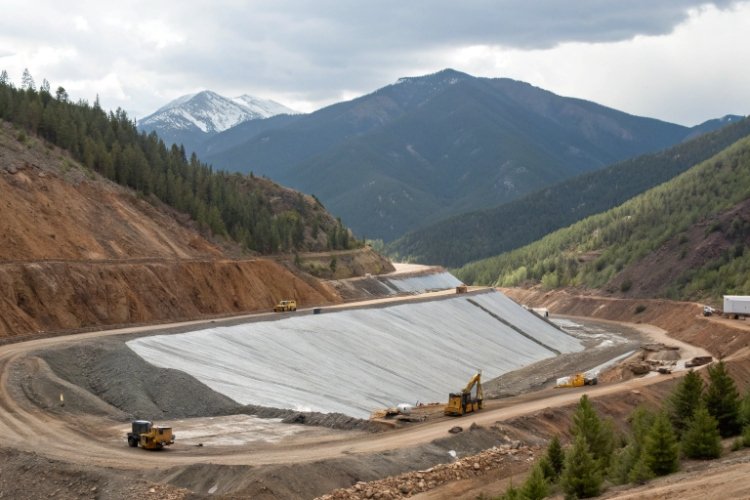
Not all sinking is created equal. Understanding the geometry of the settlement determines whether your liner will survive or fail.
Uniform Settlement
If the entire heap leach pad sinks 50cm evenly, the geomembrane is generally fine. The liner moves with the ground as a single unit. There is very little tensile stress generated because the surface area of the foundation hasn't significantly increased; it has just lowered in elevation.
Differential Settlement: The Liner Killer
This is the condition that keeps engineers up at night. Differential settlement occurs when one part of the foundation sinks more than the adjacent part.
- Example: One side of the pad sits on bedrock, and the other sits on a filled valley of compacted soil.
As the fill settles and the bedrock doesn't, a "transition zone" creates a steep slope or step. The liner bridging this gap is forced to stretch. If the strain required to bridge that gap exceeds the liner's yield elongation, it will rupture.
Localized Collapse (Cavities)
In some regions, particularly where we export to mining belts with karst topography or soluble subgrades, voids can open up underneath the pad. This creates a circular depression—a "sinkhole" effect. The liner is then forced to act as a suspended hammock supporting the ore above. No standard geomembrane is designed to bear the structural load of an ore stack over a void.
4. How Settlement Causes Geomembrane Liner Failure
To select the right material, you must understand the failure mechanism. It is rarely a simple "snap." It is a progressive exhaustion of the material's capabilities.
Development of Tensile Strain
Geomembranes, specifically Полиэтилен высокой плотности (HDPE), are semi-crystalline polymers. They have a distinct "yield point." In a lab tensile test, HDPE yields at around 12-15% strain. Once it passes that yield point, it enters a plastic deformation range where it thins out irreversibly (necking).
In a settlement scenario, the ground pulls the liner. If the liner is anchored continuously by the friction of the ore above it, it cannot slide to relieve the tension. Instead, it stretches locally. If that local stretch exceeds the yield point, the polymer structure breaks down.
Stress Concentration at Anchor Trenches
The anchor trench is where the liner is buried to hold it on the slope. When the pad settles, the liner wants to move down into the depression. But the anchor trench holds it tight. The result is massive tension at the crest of the slope—right where the liner exits the trench. We often see failures at the top of the berm, not the bottom, because the liner was essentially "hung" by the settling mass.
Multi-Axial vs. Uni-Axial Strain
Standard data sheets show "Elongation at Break" based on pulling a strip in one direction (uni-axial). But settlement creates multi-axial strain—pulling the material in 3D directions simultaneously like a drum skin. HDPE behaves much more brittle-y under multi-axial stress than it does in a linear pull test. This is a critical distinction that many buyers overlook when reading datasheets.
5. Common Settlement-Related Failure Modes Observed in Heap Leach Pads
From our export cases and post-failure analyses, specific patterns emerge when settlement is the culprit.
Longitudinal Liner Tearing
This looks like a long slash running parallel to the slope or the deformation zone. It occurs because the liner was stretched sideways until the polymer chains separated. These tears can be meters long and are devastating for containment.
Seam Separation and Cracking
A fusion weld (wedge weld) is actually thicker and stiffer than the sheet itself. When the ground settles and the liner stretches, the strain looks for the path of least resistance. Since the weld is stiff/rigid, stress concentrates right next to the weld in the Heat Affected Zone (HAZ).
We frequently see cracks running parallel to the weld bead. The weld didn't break; the liner broke because the weld wouldn't bend or stretch as much as the surrounding sheet.
Wrinkle Blocking ("Whale Mouths")
In hot climates, liners expand and create wrinkles during installation. If these wrinkles are flattened down by the ore load and then subjected to settlement, the folded plastic is pinched and stressed. This creates a "crease cracking" phenomenon, similar to bending a paperclip back and forth until it snaps.
6. Key Factors That Increase Settlement Risk in Heap Leach Projects
If you are currently planning a project, assessing these factors will tell you if you need to upgrade your liner specifications.
Compressible or Heterogeneous Subgrade
If your site requires significant "cut and fill" (cutting into a hill and using that soil to fill the valley), you are creating a heterogeneous foundation. The "cut" side is hard; the "fill" side is soft. This is the #1 recipe for differential settlement.
High Heap Heights
The relationship is linear: more height = more weight = more settlement. As mines move to "valley fill" leach pads that can be 100+ meters deep, standard 1.5mm HDPE is being pushed to its mechanical limits.
Poor Foundation Preparation
Sometimes timelines are tight. We have seen contractors skimp on the compaction of the subgrade layers, achieving only 85% Proctor density instead of 95% or 98%. As soon as the ore is loaded, that missing density is achieved through rapid, uncontrolled settlement.
Temperature Effects
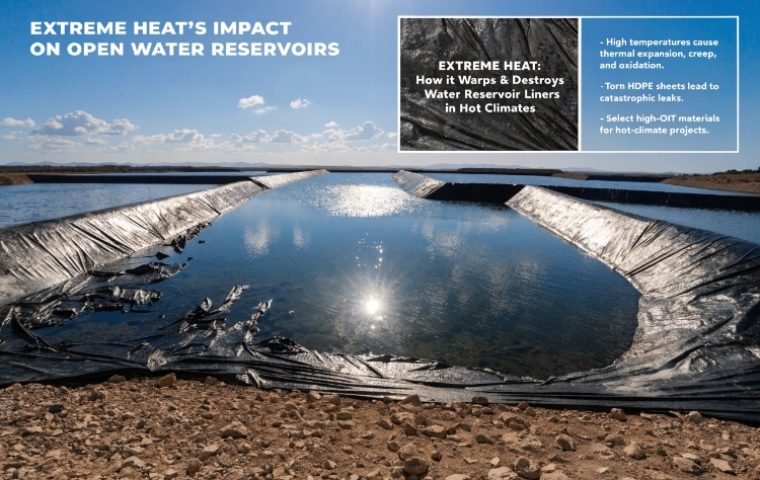
If a liner is installed at 40°C (expanded) and then covered with cold ore/solution at 10°C, it tries to shrink. This creates "thermal tension." Add settlement tension on top of thermal tension, and the safety factor of the material evaporates.
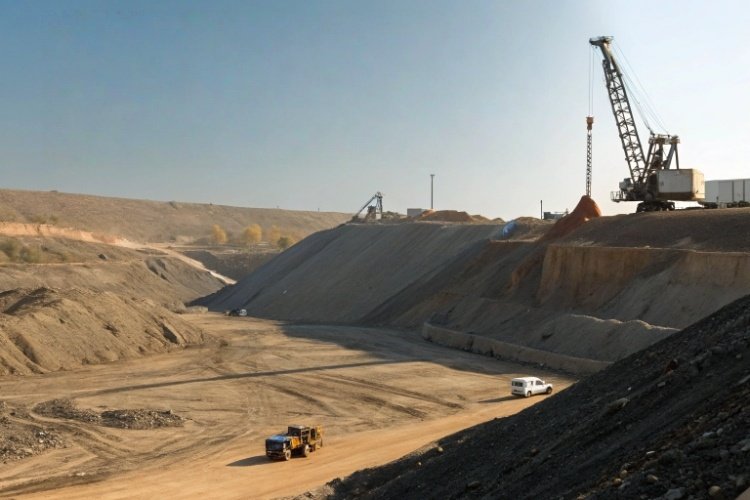
7. Design Strategies to Reduce Settlement-Induced Liner Failures
As a solution provider, we emphasize that you cannot solve a geotechnical problem purely with a plastic sheet. The solution starts with design.
Subgrade Improvement and Preloading
The most effective method is to ensure the settlement happens до the liner is installed. This often involves "surcharging" or preloading the soft areas with soil to force consolidation, then removing it to install the liner.
Controlled Heap Stacking Rates
Loading the pad too fast generates excess pore water pressure in the subgrade, leading to rapid slips and settlement. By slowing the stacking rate, you allow the subgrade to drain and settle gradually, reducing the shock to the liner system.
Slope Geometry Optimization
Sharp transitions are failure points. If the design calls for a vertical step or a sharp change in grade, we always advise smoothing it out. A 3:1 slope allows the liner to elongate much more safely than a near-vertical drop.
Designing "Slip Layers"
In areas of high anticipated settlement, we sometimes recommend a low-friction interface. By placing a specific geotextile or geonet under the geomembrane, we reduce the friction angle between the soil and the liner. This allows the liner to slide slightly to relieve tension, rather than being locked in place and forced to stretch.
8. Selecting Geomembranes for Settlement-Prone Heap Leach Pads
Here is where the procurement decision directly impacts the risk profile. Not all geomembranes handle settlement equally.
HDPE vs. LLDPE: The Flexibility Trade-off
Standard HDPE (High-Density Polyethylene) is the industry standard for chemical resistance and UV stability. However, it is stiff. It has a high yield point but low multi-axial strain tolerance.
LLDPE (линейный полиэтилен низкой плотности) is more flexible. It behaves more like a rubber band. It does not have a distinct yield point and can elongate significantly more under multi-axial stress without thinning catastrophically.
- Our Recommendation: For pads with high predicted differential settlement, we often recommend using LLDPE for the base liner, or specific modified-HDPE resins that offer higher ductility.
Thickness and Asperities
While 1.5mm is standard, increasing to 2.0mm provides more material cross-section to resist tensile forces. However, thicker is also stiffer. The focus should be on resin quality. We look for resins with high "Устойчивость к растрескиванию под напряжением" (ESCR > 500 hours or even > 1000 hours). High ESCR prevents the micro-cracks that form during settlement from propagating into full tears.
Importance of Asperities (Texture)
Textured liners provide slope stability (holding the ore on the slope). However, in high-settlement zones, extreme texture locks the liner to the subgrade, preventing strain relief. It is a balancing act. Sometimes a single-sided textured liner is the correct technical choice—textured side up (for ore stability), smooth side down (to allow slip/strain relief against the subgrade).
9. Why Settlement-Resistant Liner Design Requires Technical Expertise
This is where dealing with a "commodity trader" vs. an "industry specialist" makes a difference.
Settlement is a System Problem
You cannot buy a "settlement-proof" liner. You must design a settlement-resistant system. This involves the interaction of the soil, the geotextile cushion, the geomembrane, and the drainage layer. If we see an order for 1.5mm HDPE but no specification for a cushion geotextile (which protects the liner from puncture и allows strain distribution), we flag it immediately.
The Risk of Under-Designing
I have seen buyers save $0.20/m² by choosing a lower-grade resin or skipping the geotextile underlay. If that pad settles and tears, the cost of solution loss and environmental remediation will exceed the initial liner cost by 1000x.
Vendor Consultation
Experienced suppliers can look at your subgrade reports and suggest modifications. For example, in a recent project with soft clay foundation, we recommended a specific high-elongation co-extruded geomembrane that combined the chemical resistance of HDPE on the surface with a flexible LLDPE core. This hybrid approach provided the chemical barrier required by law but the flexibility required by the geology.
Risk, Limitations, and When Liners Are NOT the Solution
It is mandatory to state this clearly: A geomembrane liner is not a structural bridge.
If your site runs the risk of sudden, catastrophic collapse (such as sinkholes larger than 1-2 meters in diameter), no amount of liner thickness or polymer engineering will save you.
- Tensile Limits: Even the best LLDPE can only bridge small voids. Large voids will cause the liner to strain until rupture.
- Сдвиговое разрушение: If the settlement causes a slope failure (landslide) of the subgrade, the liner will be shredded by the moving earth.
In these extreme cases, the solution is not "better plastic." The solution is Geogrid reinforcement or civil engineering intervention (grouting, concrete slabs) to stabilize the ground before any liner is unrolled. Do not rely on the geomembrane to hide a bad foundation.
Заключение
Settlement in heap leach operations is a challenge of geology, physics, and chemistry colliding. The failure of a liner due to settlement is almost always a failure of prediction and preparation, not just a failure of the plastic itself.
For mining buyers and engineers, the takeaway is clear: Do not treat the liner as a static barrier. It is a dynamic component that must move and flex with your heap. By assessing the subgrade risks honestly, choosing resins with high multi-axial strain tolerance (like LLDPE or high-grade HDPE), and designing for slip and strain relief, you can ensure that your containment system handles the heavy burden of the ore without breaking under the pressure.
If you are currently evaluating liner options for a site with difficult ground conditions, contact us. We don’t just sell rolls; we help you configure the layers to survive the settle.