

You're building a road over soft, swampy ground. You know that if you just lay down gravel and asphalt, it will quickly turn into a rutted, sinking mess. The traditional solution—digging out all the weak soil and replacing it—is incredibly expensive and slow.
Geocells are used in road construction to create a strong, three-dimensional foundation that confines the base material. This confinement dramatically increases the load-bearing capacity of weak soils, reduces the amount of expensive fill material needed, and extends the road's service life.
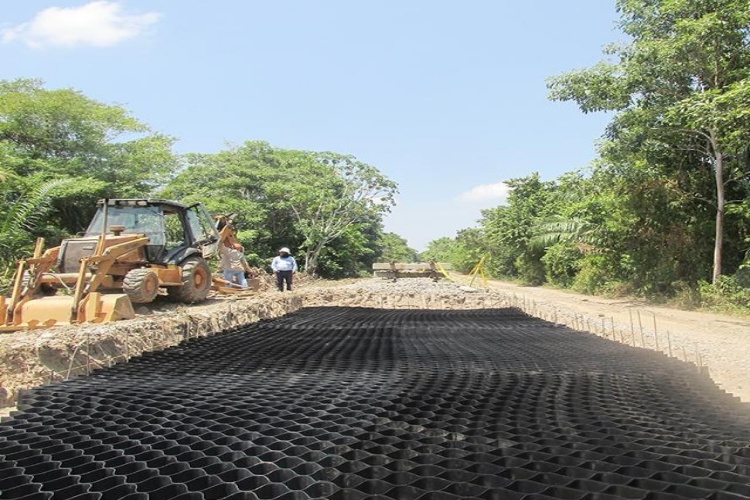
Как поставщик геосинтетики, I often explain to contractors that geocells are not a standard feature for every road. They are a powerful problem-solving tool. Think of them as a specialized reinforcement for when you face tough conditions: weak soil, heavy trucks, or a need to build a strong road without a thick base. When used in the right situations, they save a huge amount of time, money, and future maintenance headaches.
What functional mechanisms enable geocells to improve roadbed stability?
It’s hard to believe that a plastic honeycomb structure can support a heavy truck. Loose gravel on its own just shifts and sinks under the weight, so how does putting it inside a geocell change things so dramatically?
Geocells work through three main mechanisms: they confine the infill material, they distribute the load over a wider area, and they create a stiff, semi-rigid slab that resists bending and rutting.

Let's dive deeper into how these three functions turn a weak pile of gravel into a powerful road base. Imagine stepping on a soft mattress. Your weight is spread out, so you don't sink. A geocell system works in a similar way, but with more active reinforcement.
| Functional Mechanism | How It Works | The Benefit for a Road |
|---|---|---|
| Lateral Confinement | The strong, welded cell walls prevent the gravel or soil infill from spreading sideways under a load. This is the primary function. | Loose gravel fails by moving laterally. By stopping this movement, the geocell dramatically increases the shear strength and stiffness of the base material. |
| Load Distribution (The Mattress Effect) | The tension in the cell walls and the friction between the walls and infill create a large, semi-rigid mat. This mat spreads vertical loads over a much wider area of the weak subgrade beneath. | Instead of a concentrated wheel load punching into the subgrade, the pressure is reduced significantly. This prevents the subgrade from failing and causing ruts. |
| Increased Beam Stiffness | The entire geocell-and-infill system acts like a thick concrete slab, even though it's flexible. It resists bending under the load. | This "beam effect" further reduces deflection and settlement, leading to a smoother, more durable road surface that requires less maintenance over its lifetime. |
In which road construction applications are geocells most effectively used?
Geocells are an excellent tool, but using them on a road with perfect ground conditions is a waste of money. The key to using them effectively is to identify the specific problems that they are designed to solve.
Geocells are most effective in challenging situations: reinforcing roads over soft soils, stabilizing the base for heavy-load routes, building durable roads with limited base thickness, and controlling erosion on roadside slopes.
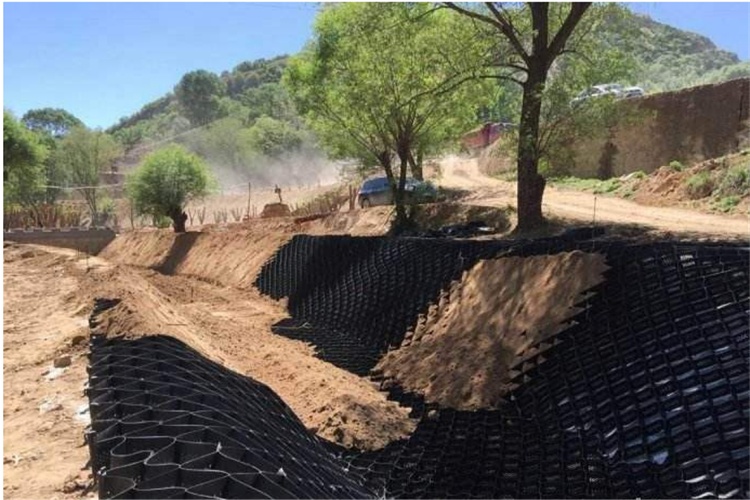
I always tell my clients that if their road project fits one of the scenarios below, a geocell is likely a very smart investment. Conversely, if their project fits into the "standard conditions" list, traditional methods are probably sufficient.
| Problem Scenarios (Where Geocells Excel) | Standard Scenarios (Where Geocells Are Not Needed) |
|---|---|
| Weak Subgrade: Building over clay, silt, mud, or loose sand that is prone to rutting and settlement. | Good Subgrade: The existing ground is firm, has high bearing capacity, and can be easily compacted to meet design standards. |
| Heavy & Repetitive Loads: Mine haul roads, port access routes, and construction site entrances where heavy trucks cause rapid road deterioration. | Light Traffic Loads: Rural roads or residential streets with low traffic volume and mostly light vehicles. |
| Limited Base Thickness: You can't dig deep due to underground utilities, a high water table, or budget constraints. Geocells can reduce the required fill depth by 30-50%. | No Depth Restrictions: There is plenty of space and budget to excavate weak soil and bring in large quantities of high-quality aggregate. |
| Harsh Environments: Areas with frequent flooding, significant freeze-thaw cycles, or steep roadside slopes that are prone to erosion and failure. | Stable, Well-Drained Environments: Flat terrain with good drainage where erosion and environmental damage are not major concerns. |
How do geocell properties and cell geometry influence performance?
Once you decide to use a geocell, you'll see a lot of options: different heights, cell sizes, and materials. Choosing the wrong one can compromise the entire system. A cell that is too short won't create a strong enough base, while one that is too large won't provide enough confinement.
The performance of a geocell is directly controlled by its height, which determines the stiffness of the "beam," and its cell aperture (weld spacing), which controls the level of confinement. Material properties like texture and perforations enhance the interaction with the infill.
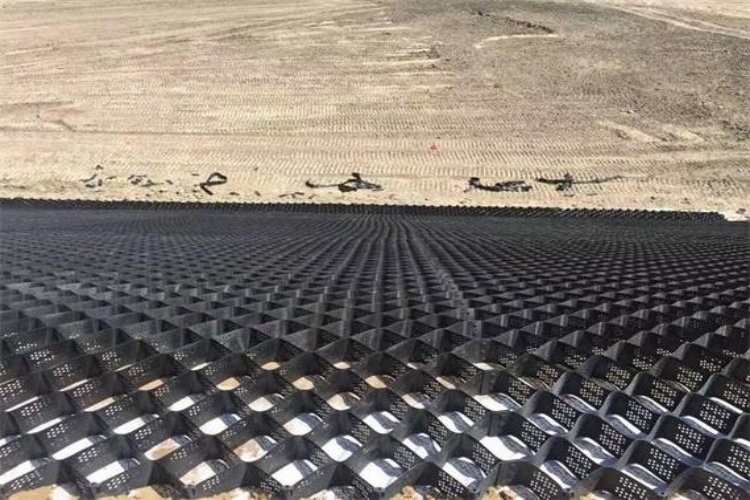
Matching the geocell's specifications to your project's needs is crucial for success. Here’s a breakdown of the most important parameters and what they mean for your road.
| Geocell Specification | Its Influence on Performance | How to Choose |
|---|---|---|
| Высота ячейки | This is the most critical dimension. Taller cells create a thicker, stiffer "beam," providing much better load distribution. A 150mm tall geocell is significantly stronger than a 75mm tall one. | For very soft subgrades, use taller cells (150mm or 200mm). For stabilizing a decent base layer, shorter cells (75mm or 100mm) may be sufficient. |
| Cell Aperture (Weld Spacing) | This is the size of the individual honeycomb cells. Smaller cells provide tighter confinement for the infill material, which is better for heavy, concentrated loads. | For very heavy loads from large truck tires, choose a smaller aperture. For general subgrade improvement, a standard aperture is usually fine. |
| Material Properties | This includes the type of plastic (always insist on 100% virgin HDPE for durability), the texture of the cell walls, and whether they are perforated. | Textured and perforated walls increase the friction between the geocell and the infill, locking them together more effectively and improving overall performance. |
How can I determine the appropriate geocell specification for my road?
You've identified a problem with your road project, and a geocell seems like the right solution. Now, how do you make the final go/no-go decision and select the right type without needing a complex engineering analysis?
You can make a quick initial assessment by answering four simple questions about your project: Is the ground weak? Are the loads heavy? Are you limited on space or budget? And is the environment harsh?
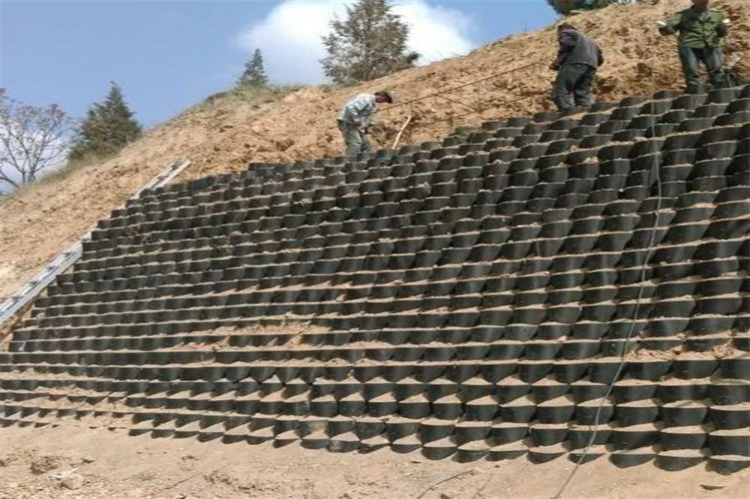
This is the thought process I walk my clients through. It helps them quickly determine if a geocell is a technically and economically sound choice for their specific situation.
1. Is the ground weak?
If you are building on soft clay, swampy areas, or loose sand where you expect rutting, settlement, or failure, then a geocell should be a primary consideration. If your ground is naturally firm and compacts well, you probably don't need one for the base.
2. Are the loads heavy and frequent?
If your road will be used by heavy mining trucks, logging vehicles, or constant port traffic, geocells will drastically reduce maintenance costs and extend the road's life. If it's just for light cars and occasional trucks, traditional road construction is often sufficient.
3. Are you facing thickness or cost pressures?
If you cannot dig deep to create a thick foundation or the cost of high-quality gravel is very high, geocells are an excellent solution. They allow you to build a stronger road with a thinner, less expensive base. If you have plenty of space and cheap materials, simply making the base thicker might be easier.
4. Is the environment trying to destroy your road?
If your road is on a steep slope, in an area with lots of rain and erosion, or in a region with severe freeze-thaw cycles, a geocell system offers superior protection against [environmental damage in addition to its load-bearing benefits.
If you answer "yes" to one or more of these questions, a geocell is very likely the right choice for your project.
Заключение
Geocells are a targeted solution for problem roads. They reinforce weak ground, support heavy loads, and control erosion, helping you build better, longer-lasting roads with less material and less maintenance.