

In any major containment project, the geomembrane is the most critical component. A failure is not just an inconvenience; it can be an environmental disaster and a financial catastrophe. This is why selecting the right geomembrane manufacturer is one of the most important decisions you will make—one that directly impacts project performance, safety, and longevity.
But with so many suppliers on the market, how do you separate the world-class partners from the high-risk vendors? This guide provides a detailed framework for vetting a geomembrane manufacturer. We will go beyond surface-level checks to give you the questions and criteria you need to secure a reliable, long-term supply partner and ensure your project's success.

Choosing a manufacturer is not a simple procurement task; it is an exercise in risk management. The right partner provides more than just a product; they provide quality assurance, technical expertise, and peace of mind.
The Foundation: Verifying Core Standards and Certifications
Certifications are the first and most basic filter in your selection process. They are non-negotiable indicators of a manufacturer's commitment to quality. Any reputable supplier should be able to provide clear documentation for the following:
- ИСО 9001:2015: This is the absolute minimum requirement. It certifies that the manufacturer has a documented Quality Management System (QMS). It means their processes for production, inspection, and delivery are standardized and subject to independent audits. A manufacturer without ISO 9001 likely has inadequate process controls, posing a significant risk to product consistency.
- GRI-GM13 (for HDPE): While ISO 9001 covers the process, standards from the Geosynthetic Research Institute (GRI) cover the продукт. GRI-GM13 is the globally recognized specification for HDPE geomembrane quality. A manufacturer must not only claim compliance but also provide a Сертификат соответствия with every batch, documenting specific test results that prove the material meets or exceeds these stringent requirements.
A supplier who is hesitant or unable to provide these certificates immediately should be removed from your list.
Independent Proof: Demanding Third-Party Test Reports
Claims of compliance are easy to make; independent verification is what builds real trust. A top-tier manufacturer will voluntarily invest in third-party testing to validate the quality of their products.
When you evaluate a supplier, ask for test reports from recognized, independent geosynthetic laboratories. Some of the most respected labs include:
- GAI-LAP (Geosynthetic Accreditation Institute - Laboratory Accreditation Program) in the USA
- SKZ (Das Kunststoff-Zentrum) in Germany
- TRI Environmental
These labs provide unbiased confirmation of a material's physical, mechanical, and endurance properties. Additionally, for specialized applications, look for specific certifications like НФС/АНСИ 61 for products used in potable water containment. A manufacturer that proudly displays these third-party reports demonstrates transparency and confidence in their product quality.

Under the Microscope: Raw Material and Formulation Transparency
The final geomembrane is only as good as the raw materials that go into it. A manufacturer’s policy on raw materials is a clear indicator of their commitment to long-term performance versus short-term cost savings.
Ask direct questions about their formulation:
- Resin Type: Do they use 100% virgin resin, or do they blend in recycled materials? Virgin resin provides predictable, consistent properties. Recycled content, while cheaper, can introduce contaminants and inconsistencies that lead to premature failure. A quality-focused manufacturer will always use 100% prime virgin resin.
- Additive Package: A geomembrane isn't just polyethylene. It contains a carefully balanced additive package. Insist on knowing the details, such as the percentage of high-quality carbon black (for UV resistance) and the antioxidant/HALS package (for long-term thermal stability and resistance to chemical attack). Manufacturers who are secretive about their formulation may be cutting corners.
A trustworthy partner will be transparent about their raw material sourcing and be able to provide traceability for every batch.
Inside the Factory: Evaluating Production Technology and Capacity
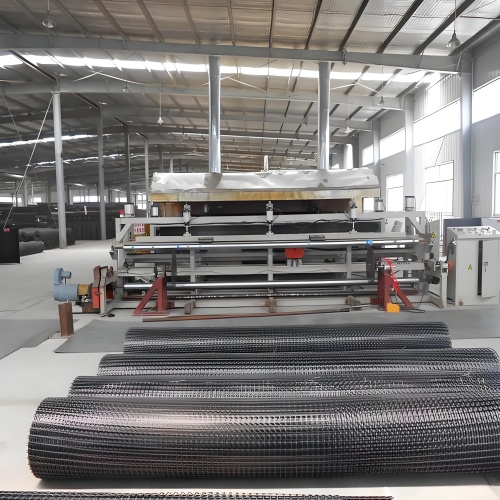
The most advanced raw materials can be undone by outdated or poorly controlled production processes. A modern geomembrane factory should have:
- State-of-the-Art Extrusion Lines: Look for flat-die cast or blown-film extrusion technology that can maintain exceptional thickness consistency (dimensional tolerance).
- In-Line Quality Assurance: Advanced systems like automated thickness scanners provide real-time feedback, ensuring every square meter of the sheet meets specification.
- Comprehensive In-House Laboratory: Beyond simple visual checks, a manufacturer must have a well-equipped lab to perform routine batch testing for key properties like tensile strength, tear resistance, puncture resistance, and oxidative induction time (OIT).
- Sufficient Production Capacity: A manufacturer with multiple production lines and strategic stockpiles offers greater supply chain resilience. This reduces lead times and minimizes the risk of project delays compared to a single-facility supplier vulnerable to disruptions.
Proven Track Record: Assess Experience and Project Case Studies
A manufacturer’s experience is their resume. You want to see proof that their materials have performed successfully in applications and environments similar to your own.
Request a detailed portfolio of project references. Don't just accept a list; ask for specifics:
- Application Type: Have they supplied liners for landfills, mining leach pads, aquaculture ponds, or reservoirs? Each application has unique challenges.
- Geography and Environment: Do they have successful projects in climates similar to yours (e.g., high UV exposure, extreme cold, or aggressive chemical environments)?
- Client Contacts: A confident manufacturer will not hesitate to provide contact information for past clients so you can conduct your own independent verification.
A deep portfolio of completed projects is concrete evidence of a manufacturer's capability and the long-term reliability of their products.

Beyond the Product: Evaluate Technical Support
One of the biggest differentiators between a simple vendor and a true partner is the level of technical support they provide. A top-tier manufacturer understands that their responsibility doesn't end when the product ships.
Evaluate their technical support capabilities:
- Do they offer assistance with material selection?
- Can they provide guidance on panel layout design to minimize waste and field seams?
- Do they offer on-site installation training or welding support for your crew?
- Do they have experienced engineers available to help troubleshoot issues that may arise during or after installation?
A manufacturer that invests in technical support is investing in your project's success. This service is invaluable and can save significant time and money by preventing costly installation errors.
Logistics Matter: Assess Packaging and Export Capabilities
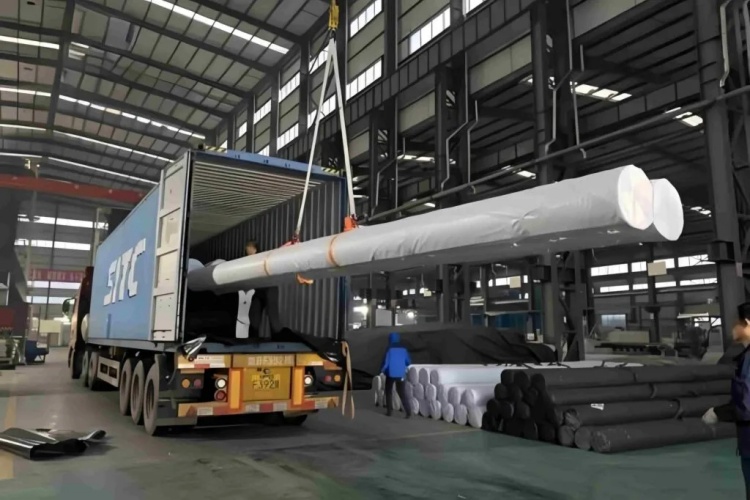
For international projects, logistics are just as important as product quality. A manufacturer’s inability to deliver on time and in good condition can bring a project to a halt.
Consider the following:
- Упаковка: Are the rolls packed securely with strong cores and durable wrapping to prevent damage during transit and handling?
- Roll Labeling: Does each roll have clear, durable labels with batch numbers, roll dimensions, and material type for easy identification and traceability on site?
- Export Experience: Do they have a proven track record of shipping to your region? Are they familiar with the required customs documentation and logistics channels?
- Flexible Solutions: Can they provide custom roll widths or lengths to fit container dimensions and optimize shipping costs?
The Financial Reality: Look Beyond the Price Tag
It is tempting to choose a manufacturer based on the lowest unit price, but this is often a critical mistake. In geosynthetics, an unusually low price is almost always a red flag.
A price that is 30-40% below the market average typically indicates that corners are being cut in one or more areas:
- Use of cheap, recycled resin
- An insufficient or low-quality additive package
- Poor manufacturing process control
- Lack of proper quality testing and certification
Think in terms of Total Cost of Ownership (TCO). The small initial savings from a cheap product are insignificant compared to the enormous potential costs of premature failure, including remediation, environmental fines, and reputational damage. A high-quality geomembrane from a reputable manufacturer is an investment in long-term security.
The Mark of a Modern Leader: Ethical and Sustainable Production
Finally, a truly leading manufacturer demonstrates a commitment not just to their product, but to their people and the planet. Look for certifications that demonstrate operational maturity and corporate responsibility:
- ISO 14001 (Environmental Management): Shows they have systems to minimize their environmental impact, manage waste, and improve resource efficiency.
- ISO 45001 (Occupational Health & Safety): Shows they are committed to providing a safe and healthy workplace for their employees.
These certifications offer additional confidence that you are partnering with a mature, ethical, and sustainable organization that operates with integrity.
Заключение
Choosing the right geomembrane manufacturer is a process of careful vetting that goes far beyond a simple price comparison. It requires a deep dive into their quality systems, material transparency, technical expertise, and proven track record. By prioritizing quality, demanding independent proof, and viewing the supplier as a long-term partner, you can mitigate project risk and ensure your containment system performs safely and reliably for decades to come.