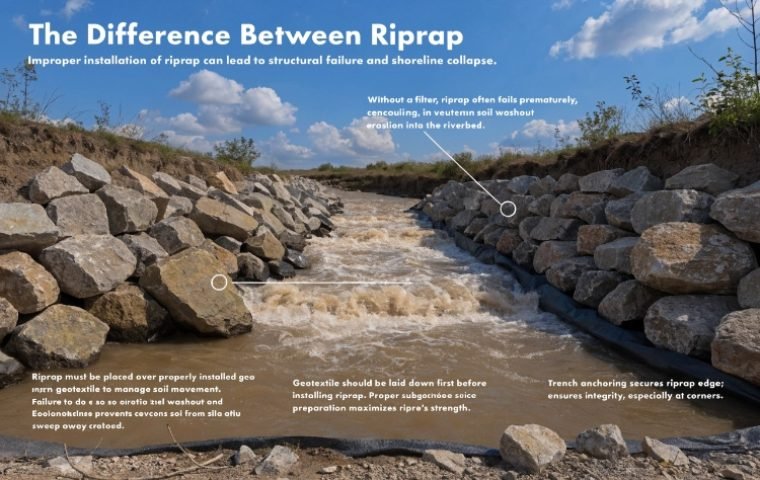


A ruptured valve in a petrochemical facility does not just spill oil; it bleeds money. Without immediate containment, toxic hydrocarbons seep into groundwater, triggering massive regulatory fines. The right secondary containment materials stop this disastrous chain reaction instantly.
This guide explains why containment systems are critical in oil and gas operations. Professional buyers will learn how to evaluate secondary containment requirements, navigate strict environmental compliance, and choose the right liner materials to prevent catastrophic financial losses.
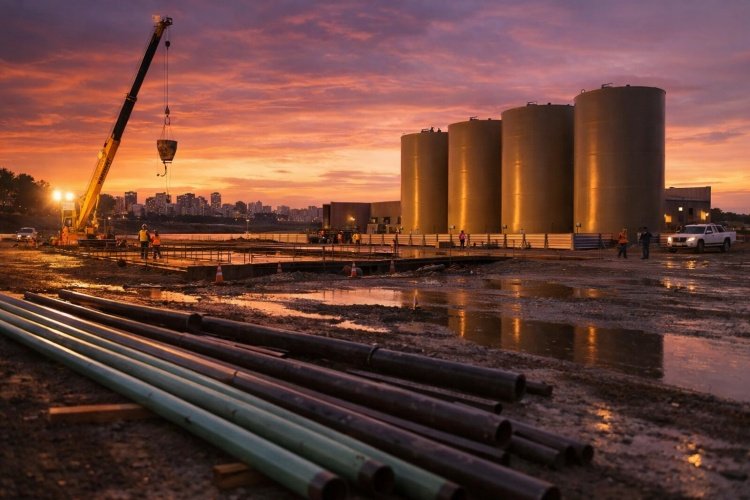
In my years of exporting geosynthetic liners to overseas B2B projects, I have noticed that some procurement managers treat containment as a mere regulatory checklist item. However, when millions of gallons of aggressive hydrocarbons are in play, that physical barrier becomes your only reliable defense against environmental ruin and operational bankruptcy.
What Are Containment Systems?
To effectively protect a site, you must distinguish between primary and secondary defenses. Primary containment refers to the primary vessels holding the liquids—the steel storage tanks, pipelines, and chemical silos. Secondary containment is the dedicated backup system designed to capture leaks, spills, and contaminated runoff when those primary vessels inevitably fail.
In field applications, these backup systems take several structural forms. You will commonly see:
- Bund walls and dikes: Large earthen or concrete ridges built around tank farms to hold massive liquid volumes.
- Spill pallets: Portable catchment bases used for drum storage.
- Drainage systems: Networked channels that direct chemical runoff into holding ponds.
- Liners and geomembranes: High-density polyethylene (HDPE) sheets used to line earthen ponds, dikes, and subgrades to make them completely impermeable.
These systems are not just theoretical safety nets. They are rigorous, engineered barriers designed to isolate hazardous hydrocarbons from the native soil and local water tables until the spill can be pumped out and properly treated.
The Real Risks Without Proper Containment
When a facility tries to cut corners on material procurement or operates with compromised barriers, the fallout from an accident multiplies exponentially. A single containment failure can cost millions in cleanup and downtime.
Environmental Damage
Hydrocarbons and processing chemicals are incredibly aggressive. If an uncontained spill reaches the ground, the liquids quickly saturate the soil matrix and travel downward. If they reach local groundwater, the pollution becomes a permanent ecological disaster. The long-term remediation costs of excavating and treating deep, oil-soaked soil are staggering.
Fire & Explosion Hazards
Many industrial liquid spills consist of highly volatile fluids. If a pipeline leak is allowed to spread uncontained across a broad surface area, the fumes evaporate rapidly, creating an massive explosive vapor cloud. By confining the liquid to a small, controlled area, containment systems significantly reduce the risk of secondary fires and explosion hazards.
Regulatorne kazne & Shutdowns
Environmental protection agencies, such as the EPA, aggressively enforce compliance. If an inspector identifies an undersized or leaking containment bund, the penalty is severe. Often, it goes beyond monetary fines; regulators will issue immediate stop-work orders until the site is brought into compliance.
Financial Loss & Reputation Damage
Beyond cleanup expenses, the true cost of an uncontained spill is the downtime. Shutting down a high-capacity refinery for weeks destroys project margins. Furthermore, public environmental disasters lead to soaring insurance premiums and a permanent loss of trust with government stakeholders and local communities.
Key Application Scenarios in Oil & Gas
Geosynthetic containment materials are integrated across the entire supply chain. Based on export cases we handle at Waterproof Specialist, here is where these systems are most heavily utilized.
Tank Farms
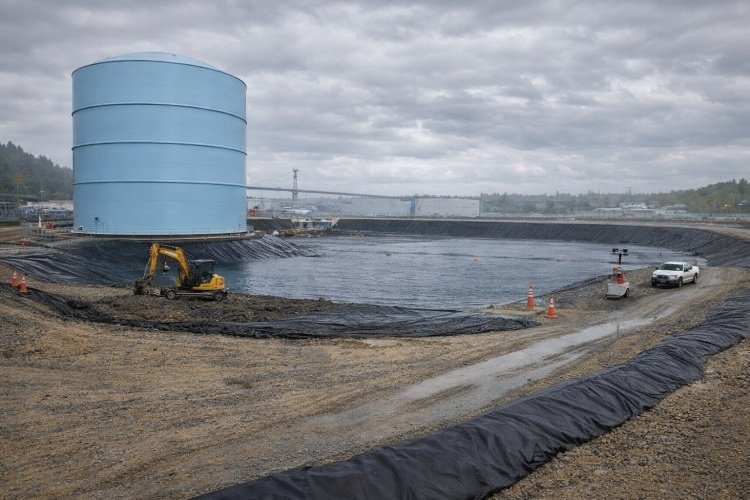
Bulk storage facilities present the highest volume risk. If a massive crude tank ruptures, the surrounding area must hold the tidal wave of oil. Design standards universally mandate the "110% rule"—the bund capacity must be able to contain 100% of the largest tank's volume, plus an extra 10% allowance for heavy rainfall. Heavy-duty HDPE geomembrane are used to line these vast earthen dikes to guarantee zero seepage.
Chemical Storage Areas
Drilling operations and petrochemical plants rely on harsh chemicals, including distinct acids and caustic alkalis. When different chemicals leak and mix, the resulting reaction can be highly corrosive. The containment system in these areas requires highly specialized, chemically resistant liners that will not melt or degrade upon contact with aggressive solvents.
Refineries & Processing Plants
Refineries involve a high frequency of human interaction, pressurized pipelines, and constant fluid transfer. Spills here are often smaller but occur much more frequently. Containment systems in these zones capture localized drips from pipeline manifolds, pump stations, and loading docks, constantly routing the hazardous runoff into secured holding ponds.
How Containment Systems Mitigate Risks
Containment materials fundamentally change the timeline of an industrial accident. Based on practical field operations, these systems mitigate risk by doing four specific things.
First, they provide localized spill control. By catching the oil immediately beneath the source, the barrier stops the fluid from spreading laterally across the facility grounds.
Second, they prevent environmental dispersion. An impermeable geomembrane halts the vertical migration of chemicals. The toxins hit the liner and stop, completely protecting the natural soil beneath.
Third, they buy critical emergency time. When an alarm sounds, emergency response teams need time to mobilize. A properly lined pit or bund safely holds the toxic liquids for days or weeks without leaking, allowing crews to work methodically rather than in a panic.
Finally, they support safe recovery. Because the oil pools on top of an uncontaminated liner, it can often be pumped back up, filtered, and salvaged. Containment systems don’t prevent leaks — they prevent disasters.
Compliance & Industry Standards
Project managers and procurement officers must understand that containment is legally mandatory. Purchasing the right materials is the only way to satisfy international industrial regulations.
In the United States, operations are governed by the EPA's Spill Prevention, Control, and Countermeasure (SPCC) rules. Facilities must have documented, engineered secondary containment systems for any significant oil storage. Similarly, the American Petroleum Institute (API) provides strict guidelines, such as API 650 and API 653, regulating how storage tanks and their surrounding containment areas must be designed and maintained.
Local environmental regulations in export markets—from the Middle East to South America—are becoming equally stringent. Regulators do not just want to see a wall; they demand proof of impermeability. Using certified, lab-tested geomembrane liners provides the exact documentation inspectors require to keep your site open and operational.
Cost vs Risk: Why Containment Is a Smart Investment
Buyers sometimes hesitate at the upfront cost of premium HDPE liners, heavy nonwoven geotextiles, and professional welding. But when you compare the procurement cost against the alternative, containment is the highest-ROI investment on a site.
The initial expense of lining a tank farm is a fraction of the cost of a single cleanup operation. When heavily contaminated soil must be dug up, transported as hazardous waste, and replaced, the bills instantly climb into the millions. Furthermore, an integrated containment system drastically lowers facility insurance premiums, as underwriters recognize the sharply reduced risk profile.
| Financial Parameter | Without Proper Containment | With Geomembrane Containment |
|---|---|---|
| Spill Trajectory | Spreads rapidly into soil and groundwater | Confined locally on an impermeable surface |
| Cleanup Cost | Millions (soil excavation, water filtration) | Minimal (vacuum pumping from the liner surface) |
| Downtime | Weeks to months due to regulatory shutdown | Hours to days for standard maintenance cleanup |
Risk, Limitations, and When Certain Materials Are NOT Recommended
As a supplier, I always advise buyers that no single material is invincible. You must understand the limitations of your selected containment approach to avoid catastrophic failures in the field.
The Failure of Exposed Clay: We strongly advise against relying solely on compacted clay liners (CCL) in extreme climates. If a project is in an arid region, exposed clay will quickly suffer from desiccation—baking in the sun and forming deep cracks. When a spill occurs, the oil flows right through the cracked clay. Clay also reacts poorly with certain aggressive petrochemicals, losing its density and becoming porous.
The Vulnerability of Thin Plastics: Buyers often try to save budget by purchasing thin agricultural-grade plastics (under 1.0mm) for industrial bunds. This is a severe mistake. In a busy oil and gas operation, falling tools, heavy boots, and dragging hoses easily puncture thin films. Once punctured, the containment is useless.
Proper Subgrade Dependency: Even the best 2.0mm HDPE geomembrane will fail if installed over a poor foundation. If contractors place the liner directly over sharp rocks or jagged gravel without a thick, protective nonwoven geotextile cushion layer beneath it, the weight of the water or oil will push the sharp stones right through the plastic.
Choosing the Right Containment System
To avoid the failures mentioned above, material selection must be matched exactly to the physical realities of the site. Selecting the wrong system can be as risky as having none at all.
When evaluating an order, professional buyers must account for the specific liquid type. Crude oil requires different chemical resistance than harsh fracking acids. You must also calculate the maximum volume capacity to ensure the containment area is large enough to handle a total tank failure.
Temperature and climate play a huge role. If the containment system is completely outdoors and exposed to intense desert sun, the geomembrane must be formulated with premium carbon black and anti-aging UV stabilizers. If it is in a freezing environment, the liner must retain its flexibility to prevent shattering when the ground heaves.
Future Trends in Containment Solutions
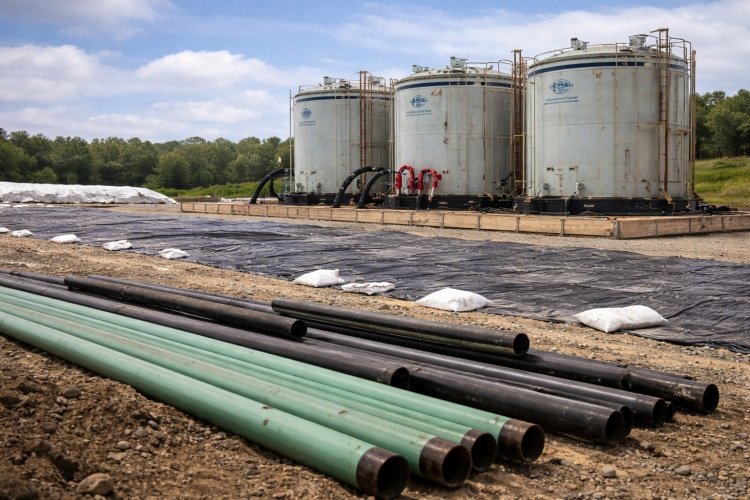
The oil and gas industry is constantly seeking ways to improve safety margins while reducing long-term maintenance costs. Modern containment procurement is shifting toward more intelligent, verifiable systems.
One major trend is the use of advanced geomembranes. We now see an increased demand for textured HDPE liners that prevent fatal slip-and-fall accidents on steep bund slopes. More advanced still are electrically conductive liners. These specialized geomembranes allow inspectors to run spark tests across the entire installed surface, instantly detecting pinhole leaks that the naked eye would miss.
Additionally, temporary drill pads are shifting toward modular containment solutions. Instead of building massive earthen berms for a short-term fracking job, operators use quick-deploy steel or composite walls lined with flexible custom-fabricated geomembrane panels. This sustainability focus allows materials to be quickly rolled out, recovered, and recycled with minimal footprint.
Zaključak
Containment systems are not just a safety feature—they are a critical investment in operational continuity, strict regulatory compliance, and environmental responsibility. A high-quality impermeable barrier ensures that when the unexpected happens, an isolated incident does not evolve into a headline-making disaster.
Selecting the correct geomembrane thickness, chemical resistance profile, and UV durability is vital for long-term project success. If you are sourcing materials for a new tank farm, upgrading an active refinery, or setting up a temporary drill site, contact us at Waterproof Specialist. We provide tailored containment solutions and competitive, factory-direct export options to protect your most critical infrastructure.