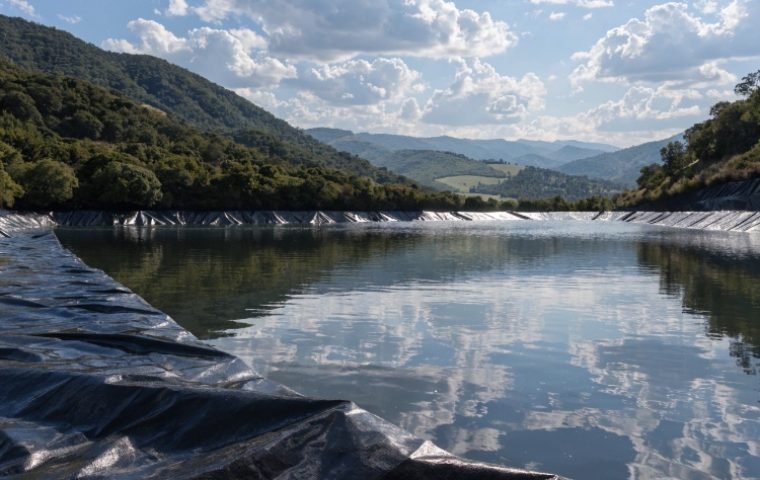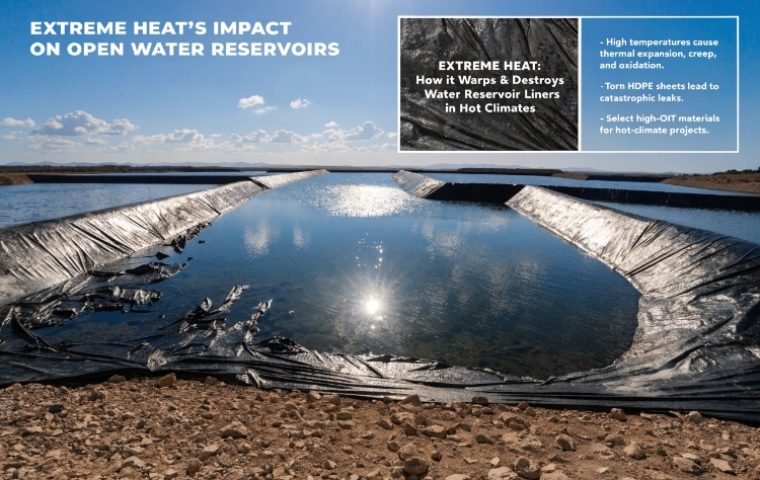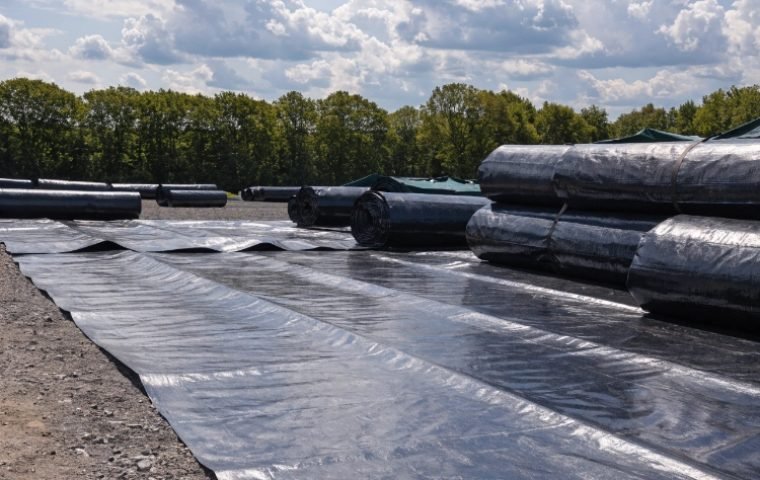


Biogas lagoons often lose valuable methane due to uncontrolled emissions, leaks, and poor sealing—significantly reducing energy recovery and project returns.
Floating covers improve biogas collection in anaerobic lagoons by sealing the gas surface, reducing methane losses, stabilizing pressure, and enabling controlled gas recovery—but real efficiency depends heavily on membrane material and sealing quality.
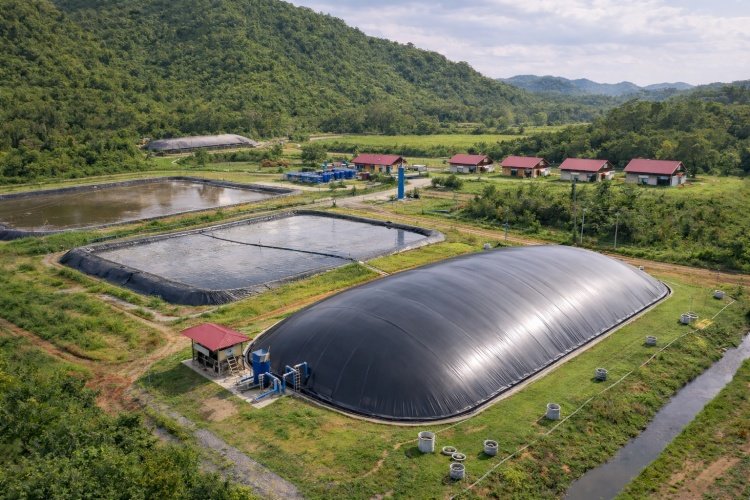
While floating covers are widely adopted in anaerobic lagoons, not all systems deliver the same biogas collection performance. Understanding why some covers work far better than others is critical for long-term project success.
Why Is Biogas Collection Efficiency Low in Uncovered Anaerobic Lagoons?
Uncovered lagoons suffer from uncontrolled gas escape, wind disturbance, and surface turbulence that drastically reduce methane capture.
In my experience visiting older wastewater treatment plants or agricultural digesters, you can often smell the inefficiency before you see it. An open lagoon is essentially a massive surface area dedicated to venting potential energy into the atmosphere.
Methane Diffusion and Surface Losses
The primary mechanism of loss is simple physics: diffusion. Methane ($CH_4$) is a light, volatile gas. In an open lagoon, distinct bubbles rise to the surface and burst. Without a barrier, 100% of this gas mixes with ambient air. Even if you have a partial collection system (like a hood), the vast majority of the surface area remains exposed.
Wind-Induced Stripping Effects
This is a factor many engineers underestimate. Wind blowing across the surface of a lagoon creates a pressure differential (Bernoulli's principle). This lower pressure actually "pulls" gases out of the liquid phase faster than they would release in calm air. I have seen data indicating that wind stripping can increase passive emissions by over 30% compared to calm days. This is gas that an open system can never recover.
The Myth of the "Natural Crust"
There is a prevailing belief in some agricultural sectors that a natural crust formed by solids and scum acts as a "lid." While a thick crust does reduce odors slightly, it is not gas-tight. Methane molecules are small enough to permeate through porous organic matter with ease. Furthermore, reliance on a natural crust makes it impossible to regulate gas pressure; the gas simply finds the path of least resistance (cracks in the crust) and escapes. To achieve measurable ROI from biogas, you need a gas-tight containment barrier, not a layer of dried sludge.
How Do Floating Covers Improve Biogas Capture Mechanically?
Floating covers create a sealed barrier that traps biogas above the digesting slurry, allowing controlled extraction and pressure regulation.
The mechanics of a floating cover are deceptively simple, but they transform a passive treatment pond into an active biological reactor.
Creating a Gas Plenum
Unlike a rigid roof, a floating geomembrane rests directly on the liquid surface. As biogas is generated by the anaerobic bacteria, bubbles rise and hit the underside of the membrane. Since they cannot escape, they coalesce and travel laterally toward the high points of the cover or dedicated collection pipes. The cover essentially acts as a flexible lung; it inflates slightly as gas production peaks and deflates when gas is withdrawn.
Pressure Balancing
One of the critical operational benefits is pressure stabilization. A properly ballasted floating cover applies a small, constant positive pressure to the lagoon surface. This forces the gas into the withdrawal system rather than allowing it to stagnate. We typically design weight tubes or sand ballasts into the cover layout to direct gas flow to specific collection ports, effectively channeling the energy where we want it.
The Interface: Slurry, Membrane, and Gas
The space between the liquid surface and the membrane is where the magic—and the danger—happens. This gap creates an isolated anaerobic zone that accelerates digestion efficiency by maintaining stable temperatures and preventing oxygen intrusion (which kills methanogens). However, this interface is also a harsh chemical environment, saturated with hydrogen sulfide ($H_2S$) and organic acids that attack materials.
What Determines Real Biogas Collection Efficiency in Floating Cover Systems?
In practice, biogas losses still occur under floating covers—primarily due to membrane permeability, seam leakage, and material aging.
This is the B2B reality that many glossy brochures gloss over. You can install a floating cover and still lose 20% of your gas if the system isn't designed for "zero leakage."
Gas Permeability vs. "Nominal Coverage"
Just because a lagoon is covered doesn't mean it is sealed. Methane is a very small molecule. Low-quality plastics or membranes with low density have relatively high gas transmission rates. Over a 5-hectare lagoon, a material with poor barrier properties can allow a significant volume of methane to diffuse slowly through the membrane itself, especially under the beating sun. We always calculate the permeation coefficient of the specific resin to ensure it meets the containment requirements.
Seam Integrity and Welding Quality
The weakest link in any floating cover is the weld. A typical lagoon cover consists of hundreds of panels welded together.
- The Reality: If your installation team uses inconsistent welding speeds or temperatures, you get "cold welds." These hold water but leak gas.
- Posljedica: Gas seeks the path of least resistance. Under pressure, methane will hiss out of microscopic pinholes in a bad weld. I have inspected covers where a bubble test revealed leaks every few meters along a seam. That is not a capture system; that is a sieve.
Edge Sealing and Anchoring
The perimeter is where most mechanical failures occur. The cover must accommodate fluctuating water levels—rising during heavy rain or high influent rates, and falling during sludge removal. If the "slack" design is incorrect, the cover pulls tight against the anchor trench. This tension breaks the gas seal at the concrete interface. A mechanical batten bar seal with strict gasket specifications is non-negotiable for biogas integrity.
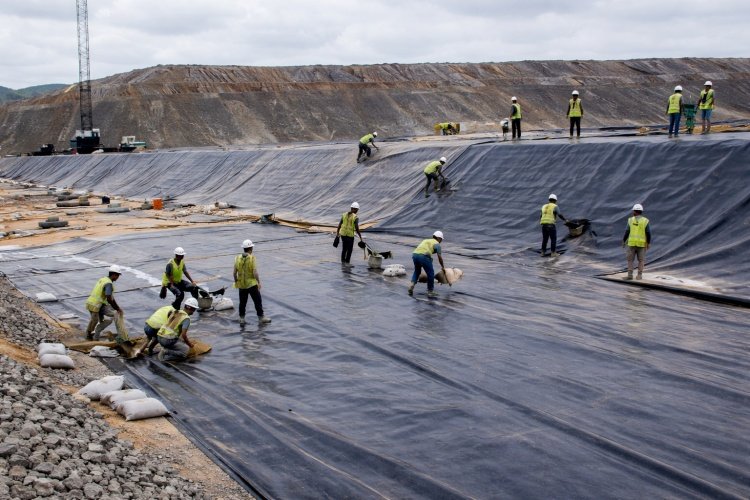
Most efficiency losses are material-related or installation-related, not design-related. The best engineering drawing cannot compensate for a membrane that cracks or a weld that peels.
How Does Floating Cover Material Selection Affect Biogas Performance?
Floating cover materials directly influence gas-tightness, durability, chemical resistance, and long-term methane recovery rates.
When we supply materials for these projects, we don't just ask for the dimensions; we ask for the chemical makeup of the sludge. The choice of polymer dictates the lifespan of the asset.
HDPE (polietilen visoke gustoće)
- Prednosti: The gold standard for chemical resistance. It is impermeable to methane and resistant to the aggressive UV rays found in open lagoon environments. Its rigid molecular structure resists swelling from hydrocarbons.
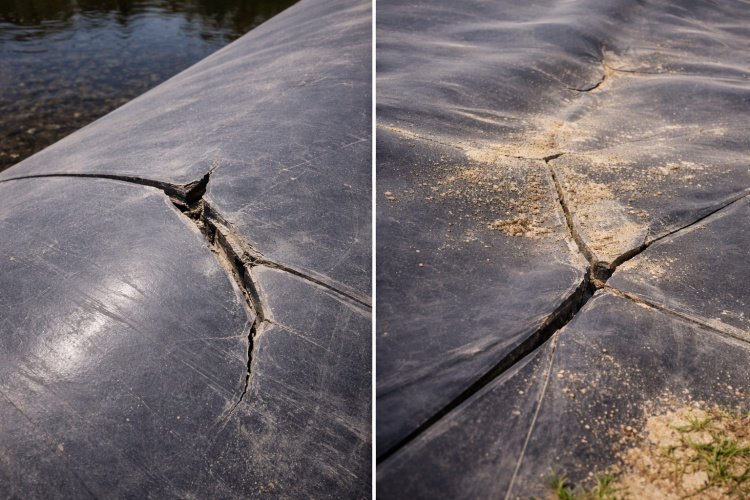
- Protiv: It is stiff. In applications with frequent liquid level changes, HDPE can suffer from stress cracking at folds and wrinkles if the Stress Crack Resistance (ESCR) isn't high enough.
LLDPE (linearni polietilen niske gustoće)
- Prednosti: Much more flexible. It handles the "inflation/deflation" cycles of a biogas cover better than HDPE without fatigue. It lays flatter, making welding easier in complex geometries.
- Protiv: Slightly lower chemical resistance and higher gas permeability than HDPE.
- The Practitioner’s Choice: For biogas covers, we often recommend a high-spec LLDPE or a specialized bimodal HDPE that combines flexibility with chemical resistance.
Reinforced Membranes (fPP / RPP)
Reinforced Polypropylene is often marketed for its high strength. However, in biogas applications, I am cautious. The scrim (reinforcement mesh) can wick gas or liquid if the edges aren't encapsulated perfectly (wicking effect). Furthermore, delamination between the layers caused by thermal cycling effectively destroys the gas barrier.
Resistance to $H_2S$ and Condensate
Biogas isn't just methane; it contains hydrogen sulfide ($H_2S$) and moisture. When this cools at night, it forms a corrosive acidic condensate on the underside of the cover. Cheap geomembranes contain fillers (calcium carbonate) that react with acid, causing the material to swell, soften, and eventually degrade. A proper biogas specifications must call for virgin resin with <2% carbon black and minimal fillers.
Why Do Some Floating Covers Underperform Despite Proper Installation?
Many underperforming floating covers fail not during installation, but after prolonged exposure to chemical, mechanical, and environmental stresses.
I have seen projects that passed the initial air lance test with flying colors, only to fail three years later. Why? Because the environment of a biogas lagoon is hostile.
Pukotine uzrokovane stresom u okolišu (ESC)
This is the silent killer. Polyethylene naturally wants to relax. When you crease it (wrinkles) and then expose it to a surfactant (soaps or fatty acids in the wastewater), the polymer chains snap. This creates microscopic cracks that look like a spiderweb.
- Proizlaziti: The cover loses its gas-holding ability.
- Prevencija: You must specify a resin with an ESCR (Environmental Stress Crack Resistance) of >1500 hours, or ideally >3000 hours. Standard "pond liner" specification is often only 500 hours—this is insufficient for biogas.
Thermal Fatigue and "Pumping"
A black cover in the sun can reach 70°C. At night, it drops to 15°C. This constant expansion and contraction creates a "thermal pumping" action. Over thousands of cycles, this fatigues the welds and the material at the anchor trench. If the cover was installed too tight (without slack), the contraction in winter can literally rip the anchor bolts out of the concrete or tear the liner.
Scum Accumulation and "Whaling"
If the mixing in the lagoon is poor, solids float to the top and create "islands" under the cover. The cover gets stuck on top of these islands. As gas builds up elsewhere, the cover stretches unevenly. We call this "whaling." The localized stress on the plastic over the scum island exceeds the material's yield point, leading to thinning and eventual rupture.
What Should Engineers Consider When Procuring Floating Covers for Biogas Lagoons?
Selecting a floating cover requires more than specifying thickness—it demands careful evaluation of material performance and fabrication quality.
When I sit down with EPC contractors or farm owners, I advise them to look past the price per square meter and look at the "price per cubic meter of gas collected" over 10 years. Here is the checklist I recommend:
1. Gas-Tightness Standard
Do not accept a generic "geomembrane." Specify a maximum gas permeability rate (e.g., measured per ASTM D1434). Ensure the material is formulated specifically for gas containment, not just liquid containment.
2. Welding QA/QC Protocol
How will the seams be verified?
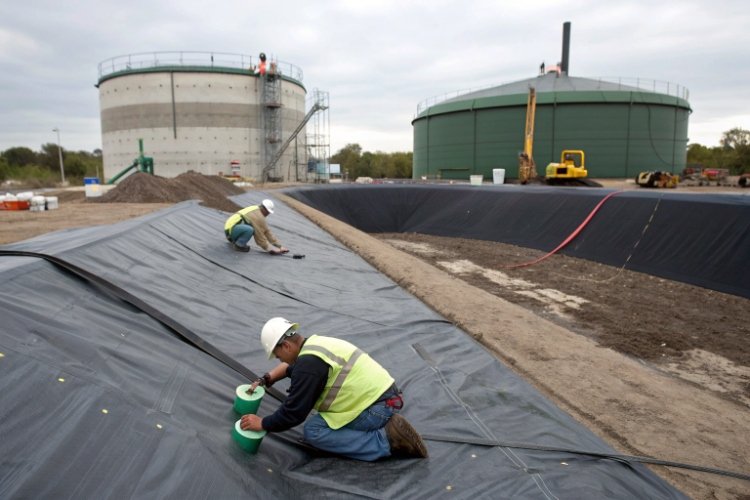
- Air Channel Testing: Dual-track wedge welding allows you to pump air into the channel between welds to verify integrity. This is mandatory for biogas.
- Destructive Testing: Ask for peel and shear tests on site, not just in the factory.
3. Service Life and Warranty
Be careful with prorated warranties. A 20-year warranty that covers 5% of the cost in year 15 is useless. Ask for a warranty that covers material integrity against chemical degradation. If the liner dissolves because of the lagoon chemistry, a standard UV warranty won't help you.
4. Compatibility with Agitators
If you plan to use submerged mixers (to prevent crusts), the cover must be designed with reinforced "rub sheets" or protection zones. We have seen mixers drift and slice through covers in seconds. The procurement spec must include these protective layers.
5. Maintenance Access
How will you service pumps or remove scum? Does the design include weighted access hatches or ports? Cutting a hole in a tensioned gas cover to fix a pump is a nightmare scenario. Plan the penetrations prije you order the material.
Risks, Limitations, and Safety Considerations
It is vital to acknowledge that a floating cover turns a wastewater lagoon into a biogas storage vessel. This introduces significant risks that must be managed.
Explosion Risk:
The gas under the cover is flammable. If air (oxygen) leaks u through a bad seal, you create an explosive mixture. Static electricity on the surface of the dry HDPE can theoretically ignite this mixture. Proper grounding systems and lightning protection are essential components of the cover design.
Rainwater Management:
A floating cover is a giant rainwater catchment tray. If you do not have an active pump system to remove rainwater from the surface, the weight of the water can submerge the cover, creating massive hydrostatic pressure that forces gas out or sinks the entire system. We have seen covers "drown" because the rainwater pumps failed during a storm.
Not a Walkway:
Unless specifically designed with buoyancy logs and non-slip walkways, a floating cover is not a working surface. It is slippery and unstable. Falling onto a floating cover can wrap the person in the liner, which is a severe safety hazard.
Summary Table: Material Selection for Biogas Covers
| Značajka | HDPE (High Density) | LLDPE (Linear Low Density) | Reinforced Polypropylene (fPP) |
|---|---|---|---|
| Otpornost na kemikalije | Izvrsno | Dobro | Umjereno |
| Fleksibilnost | Low (Rigid) | High (Flexible) | visoko |
| Gas Barrier | Izvrsno | Dobro | Umjereno |
| Otpornost na pucanje od naprezanja | Moderate (Depends on Resin) | Izvrsno | Dobro |
| Temperature Tolerance | visoko | visoko | Moderate (Risk of delamination) |
| Najbolji slučaj upotrebe | Large, stable lagoons; High chemical aggression | Lagoons with settling/movement; Cold climates | Smaller tanks; Prefabricated covers |
Conclusion: Floating Covers Improve Biogas Efficiency—When Materials Are Right
Floating covers are the single most effective intervention for turning a liability (emissions) into an asset (energy). However, the efficiency of that conversion is defined by the integrity of the plastic and the quality of the weld.
A floating cover is not a "set and forget" tarp. It is an engineered process equipment. If you choose the right resin (high ESCR, low permeability), insist on rigorous air channel testing for seams, and manage the rainwater and pressure balance, you can achieve upwards of 95% gas recovery. If you compromise on material quality to save money upfront, the leaks, cracks, and repairs will consume your project's ROI within the first five years.
At Waterproof Specialist, we have seen the difference between a cover that lasts 20 years and one that fails in 3. It always comes down to the details. Plan for the gas, plan for the stress, and build it tight.