

In the overall budget of a mining project, the geomembrane liner is a minor line item. It typically represents less than 5–10% of the total project Capital Expenditure (CAPEX). Yet, this thin layer of Polyethylene Mai Girma (HDPE) carries 100% of the environmental liability.
If a crusher fails, you lose production for a week. If a Heap Leach Facility (HLF) liner fails, you face environmental penalties, regulatory shutdown orders, massive remediation costs, and irreparable reputation damage.
This article provides a practical framework for mining engineers and procurement teams to decide when to optimize costs with standard-grade liners and when to invest in premium, high-performance barriers.
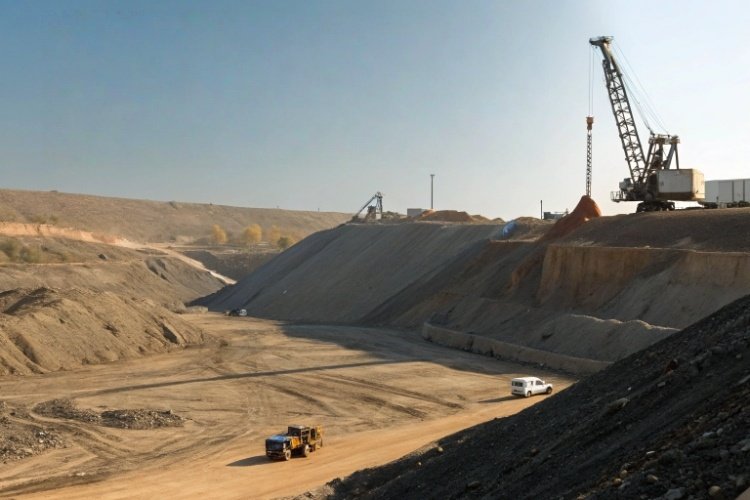
The uncomfortable truth in our industry is simple: Saving 10% on liner cost may increase lifetime risk by 300%. Here is how to navigate that trade-off without blowing your budget.
The False Economy in Mining Liners
Procurement teams are often incentivized to drive down the unit price per square meter. In many industries, this logic works. In mining containment, however, geomembranes are not commodities; they are engineered barriers.
The breakdown of a "cheap" liner often reveals a ticking time bomb.
- Re-lining Costs: You cannot easily re-line a Tailings Storage Facility (TSF) or a heap leach pad once it is loaded. The cost to repair a failure is not the cost of the plastic—it is the cost of moving millions of tons of earth.
- Operational Stoppage: The daily cost of a shutdown order due to groundwater contamination often exceeds the total value of the original liner contract.
Understanding the Real Risks Behind “Cheap” Liners
When we talk about "cheap" liners, we usually refer to materials made with blended resins (off-spec or recycled content) or insufficient antioxidant packages. These materials look identical to premium liners on the day of installation.
The real risks do not appear in the first year. Many liner failures occur after 3–7 years of exposure.
This timeframe is critical because it falls right in the middle of peak production, long after standard material warranties have expired.
Key Long-Term Risk Factors:
- UV Degradation: In high-altitude regions (like the Andes) or deserts (Australia/Africa), UV intensity can degrade standard HDPE carbon black dispersion within 5 years.
- Juriya na sinadarai: Cheap resin packages fail faster when exposed to aggressive acidic (copper) or alkaline (gold/cyanide) solutions.
- Stress Cracking (ESCR): Differential settlement in the subgrade puts the liner under constant tension. Low-quality resin cracks under this stress.
- Bad Welding: Variations in sheet thickness or resin melt index make field welding inconsistent, leading to seam failures.
PART 1 — When Safety Must Be the Priority
There are specific zones in a mine where "cost optimization" is actually "risk accumulation." In these scenarios, the consequence of failure is so high that the price of the material becomes secondary to its performance.
Scenario 1: Tailings Storage Facilities (TSF)
Tailings dams are permanent structures. They must contain toxic waste for decades, often in perpetuity.
- Hadarin: A leak here threatens local aquifers and communities. TSF failures are the most visible and damaging events in the mining industry.
- The Verdict: Failure risk is unacceptable. You must use high-specification, virgin resin HDPE (often GM13 compliant or higher) with verified long-term durability. We often recommend 2.0mm thickness as a baseline here.
Scenario 2: Heap Leach Pads (Gold / Copper)
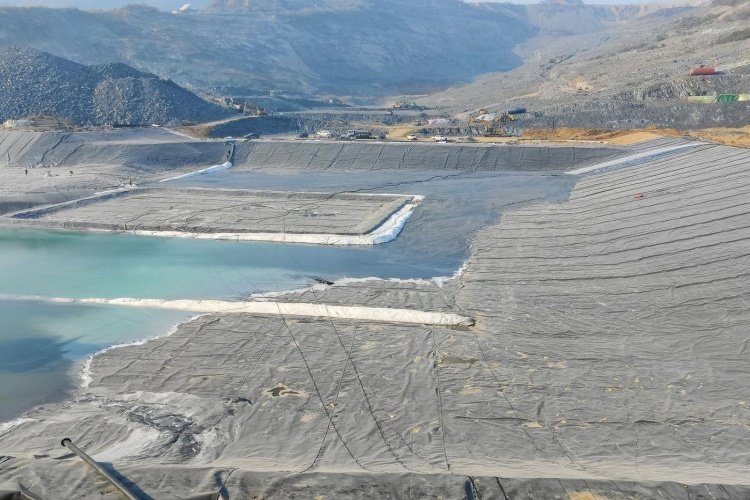
Heap leach pads subject the liner to a "perfect storm" of stress: high hydraulic head, aggressive chemical solvents (cyanide or sulfuric acid), and the physical weight of stacked ore.
- Hadarin: Once you stack 50 meters of ore, you cannot fix the liner. Any leak equates to lost Pregnant Leach Solution (PLS)—you are literally leaking gold or copper into the ground.
- The Verdict: Prioritize High ESCR (Environmental Stress Crack Resistance) performance. Standard testing requires 500 hours; for deep heaps, we recommend resins tested to >2000 hours.
Scenario 3: Projects in Strict Regulatory Countries
In jurisdictions like Australia, Canada, Chile, or the USA, environmental oversight is rigorous.
- Hadarin: These countries often mandate third-party CQA (Construction Quality Assurance) and long-term compliance audits. Usage of sub-standard material can lead to failed inspections and permit revocation.
- The Verdict: Cutting material costs here significantly increases compliance risk. The documentation trail of a premium liner is your insurance policy against regulators.
Scenario 4: High Sunlight / High Temperature Regions
For projects in the African mining belt, the Middle East, or high-altitude South America.
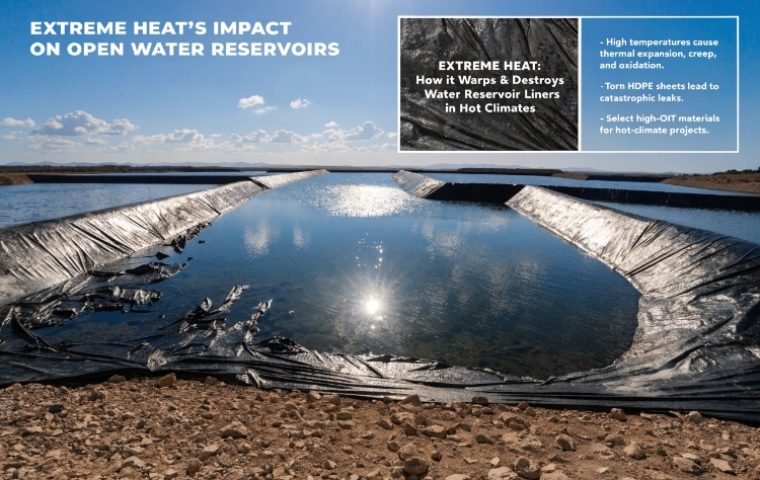
- Hadarin: Surface liners (like pond liners) are exposed to extreme UV and thermal cycling. Standard stabilizers will burn off, leaving the plastic brittle.
- The Verdict: You need a liner with a customized antioxidant package designed for high-UV/high-temp environments.
PART 2 — When Cost Optimization Is Reasonable
I am a supplier, but I am also a realist. Not every square meter of a mine needs to be lined with premium, virgin-resin HDPE. There are areas where budget control is smart and the risk is manageable.
Scenario 1: Temporary Mining Projects
If a satellite pit or temporary process pond has a mine life of fewer than 3–5 years.
- The Logic: The material does not need to last 20 years. The long-term degradation risk is irrelevant.
- Recommendation: A medium-grade liner (standard quality) is often sufficient and can save 15-20% on material costs.
Scenario 2: Secondary Containment Areas
These are backup ponds or emergency overflow areas that are dry 99% of the time.
- The Logic: They are not under constant chemical attack or hydraulic pressure.
- Recommendation: You can often downgrade thickness (e.g., from 1.5mm to 1.0mm) or use a standard specification without compromising safety.
Scenario 3: Low-Risk Non-Hazardous Water Storage
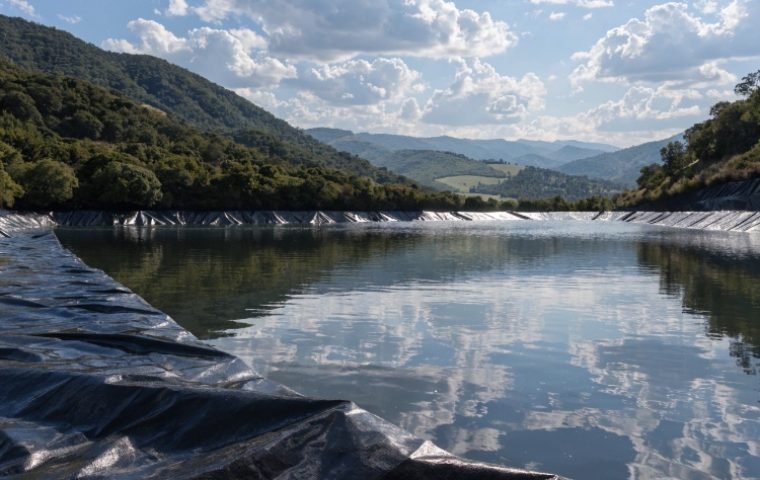
Raw water reservoirs, stormwater retention ponds, or clean process water storage.
- The Logic: A leak here results in water loss, not environmental toxicity. The liability is operational, not regulatory.
- Recommendation: Standard geomembranes work perfectly well here.
Scenario 4: Budget-Restricted Early Stage Exploration
Junior miners in the exploration phase often have very limited CAPEX.
- The Logic: The priority is getting to the "Proof of Concept" stage.
- Recommendation: Flexible investment is key. Using standard materials allows funds to be diverted to drilling and resource definition.
PART 3 — A Practical Decision Framework
How do you decide between Premium and Standard? We use a simple 5-question matrix with our clients.
A Simple Decision Matrix for Mining Liner Selection
Before you send out that RFQ (Request for Quote), ask these five questions.
- Service Life: Is the facility expected to operate for >5 years?
- Chemicals: Will the liner contact aggressive acids (pH <3) or bases (pH >11)?
- Consequence: If it leaks, will it contaminate groundwater or stop production?
- Regulation: Is the project subject to strict third-party environmental audits?
- Repairability: Is the liner buried (irreplaceable) or exposed (patchable)?
The Rule of Thumb:
If you answered "YES" to 3 or more of these questions, safety must outweigh initial cost. You are in the "High Risk" category. Do not buy the cheapest option.
PART 4 — Total Cost vs. Initial Cost
The biggest mistake I see in procurement is comparing "Price per Roll" instead of "Price per Lifecycle."
Let’s look at the math of risk:
| Factor | Low-Cost Liner (Economy) | Premium Liner (Virgin Resin) |
|---|---|---|
| Initial Material Cost | Ƙananan (Baseline) | Matsakaici (+10–15%) |
| Rayuwar Sabis | 3–7 Years | 20+ Years |
| Stress Crack Risk | Babban (Blended resins) | Very Low (High ESCR) |
| Weld Consistency | Variable (Slower installation) | Excellent (Faster installation) |
| Regulatory Risk | Matsakaici | Ƙananan |
| Replacement Cost | Extremely High (Stop production) | Zero (Maintenance only) |
The Bottom Line:
The savings on the "Low-Cost Liner" vanish the moment you have to repair a single major leak. The downtime alone wipes out the savings.
The most expensive liner is the one that fails.
PART 5 — Risks, Limitations, and When Material Isn't Enough
Even if you buy the most expensive, premium-grade HDPE liner on the market, it can still fail. It is important to acknowledge the limitations of the material.
Where Material Quality Cannot Save You:
- Poor Subgrade Preparation: If you place a liner over sharp rocks or uncompacted soil, it will puncture, regardless of whether it cost $2 or $10 per square meter. A geotextile cushion is mandatory in these cases.
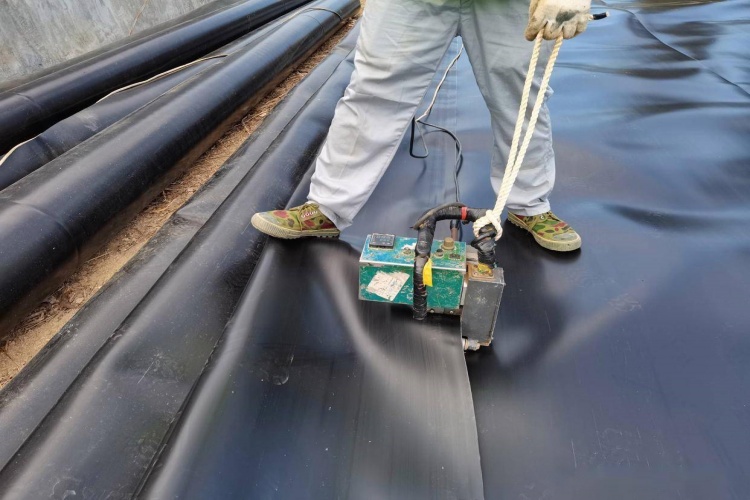
- Bad Installation: The best liner with bad welds is a sieve. 80% of leaks occur at the seams. Investing in a certified installation crew is just as important as the material choice.
- Thermal Expansion: HDPE expands and contracts significantly with temperature. If the design does not account for thermal wrinkles, the liner will bridge and tear at the toes of slopes.
A premium liner is a tool, not a magic solution. It requires correct engineering and installation to perform.
Ƙarshe
Mining is an exercise in risk management.
When selecting a geomembrane supplier, your goal should not be to find the lowest number at the bottom of a spreadsheet. Your goal should be to find the lowest total cost of ownership.
- Domin Tailings and Heap Leach Pads, spend the extra budget on high-spec, virgin resin liners. It is the cheapest insurance you will ever buy.
- Domin Temporary or Clean Water applications, optimize your costs with standard materials.
A responsible supplier should help you navigate this distinction, rather than pushing a "one size fits all" product.
In mining projects, cost optimization is smart. Risk ignorance is expensive. The key is not choosing the cheapest liner, but choosing the right liner for the right risk level.