

Building a biogas plant or an anaerobic digester is a massive financial commitment. You understandably worry that the toxic "soup" inside—full of gas and acids—will eat through the liner, causing leaks and destroying your investment.
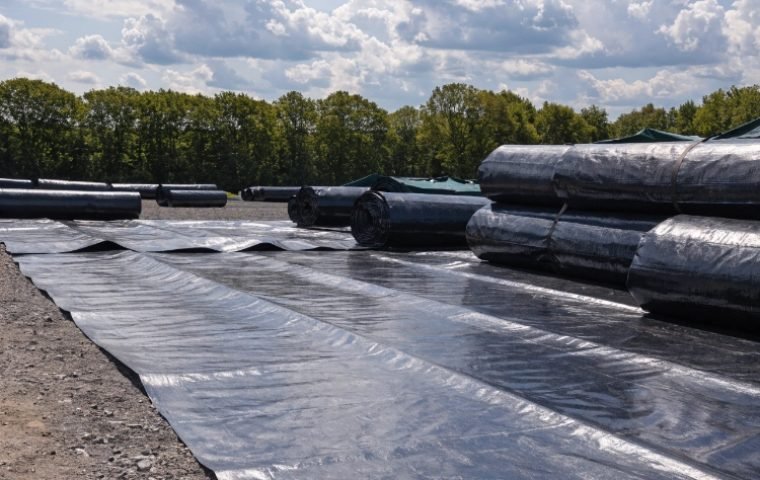
High-Density Polyethylene (HDPE) geomembranes are chemically inert and offer exceptional resistance to anaerobic digestion byproducts. They withstand high concentrations of H₂S (>10,000 ppm), ammonia, and organic acids without degrading. While concrete and steel corrode rapidly in these environments, HDPE liners provide a service life of 50 to 70 years.
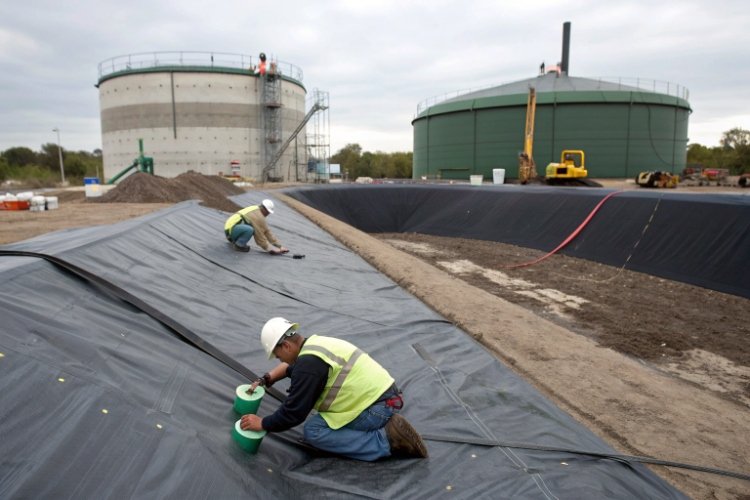
I have supplied liners for digesters in places ranging from dairy farms to industrial wastewater plants. The primary concern is always "corrosion." I often explain that the chemistry inside a digester is aggressive, but the right material makes it manageable.
How do H₂S and NH₃ affect geomembrane materials?
Hydrogen Sulfide (H₂S) and Ammonia (NH₃) are the most notorious byproducts of the breakdown process. If you use the wrong material, these gases can cause rapid failure.
H₂S and NH₃ can destroy metal and concrete, but they have almost no effect on HDPE geomembranes. Because of its non-polar molecular structure, HDPE does not react with these chemicals, maintaining its strength and flexibility even when gas concentrations are extremely high.
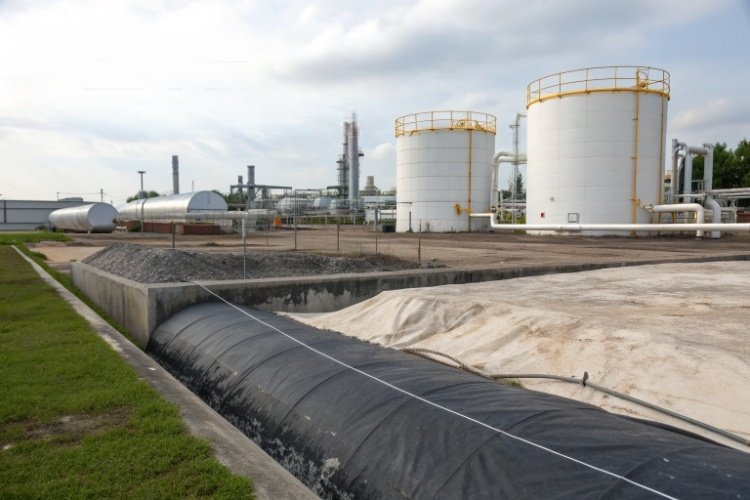
In my experience, H₂S is the biggest killer of traditional tank materials. I've seen steel tanks corrode at a rate of 3-5mm per year because of sulfuric acid attack. HDPE simply ignores it.
The resistance to these gases is determined by the material's chemical nature.
| Chemical Agent | Source in Digester | Effect on Steel/Concrete | Effect on Hdpe |
|---|---|---|---|
| Hydrogen Sulfide (H₂S) | Sulfate-reducing bacteria (SRB). Concentration: 100 - 17,000+ ppm. | Severe Corrosion. reacts to form sulfuric acid, eating metal and concrete. | Madalla. No chemical reaction. Resists concentrations >10,000 ppm easily. |
| Ammonia (NH₃) | Breakdown of proteins. Concentration: 700 - 900 mg/L. | Moderate Corrosion. Can damage concrete and strip protective coatings. | Madalla. Chemical stability prevents swelling or brittleness. |
| Ammonium (NH₄⁺) | Dissolved form of ammonia. | Variable. Can affect pH and concrete integrity. | Madalla. No absorption or degradation observed in long-term tests. |
The data is clear. While you might need to add iron salts to the digestate to protect your pumps da pipes from H₂S, the liner itself does not need protection. It is naturally immune.
How do organic acids influence long-term geomembrane performance?
The fermentation process creates Volatile Fatty Acids (VFAs) like acetic acid. These acids drop the pH and can act as solvents that soften lesser materials.
Organic acids like acetic, propionic, and butyric acid are aggressive solvents, but HDPE resists them effectively. Even in high-COD environments where acid concentrations are elevated, HDPE shows no significant swelling, softening, or loss of tensile strength over decades of service.
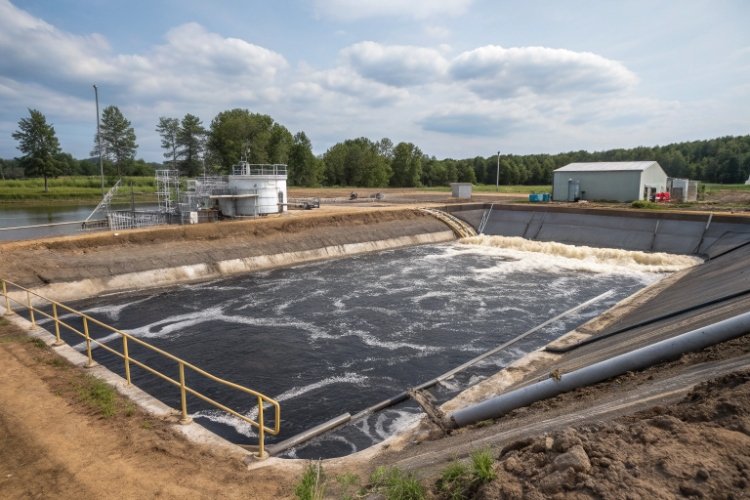
When the pH drops in a digester, it becomes an acid bath. Some plastics absorb these acids like a sponge, swelling up and losing their strength. This is common with lower-quality materials that are not designed for chemical containment.
HDPE is different because it is highly crystalline. This "tight" structure prevents the large acid molecules from penetrating the plastic.
- Resistance Rating: Excellent for acetic acid (>3,500 mg COD/L).
- Physical Changes: Zero to negligible swelling.
- Sakamako: The liner stays tough.
I always tell clients: The only thing that usually damages an HDPE liner in a digester is physical damage (like dropping a mixer on it), not the acid.
Which geomembrane materials offer better chemical resistance in digesters?
You have choices when designing a containment system: concrete, steel, PVC, or HDPE. Comparing them side-by-side reveals why one dominates the market.
HDPE is the superior choice for anaerobic digesters due to its balance of chemical resistance, cost, and longevity. While PVC is good, it has a shorter lifespan, and concrete or steel require expensive coatings to survive the corrosive environment.
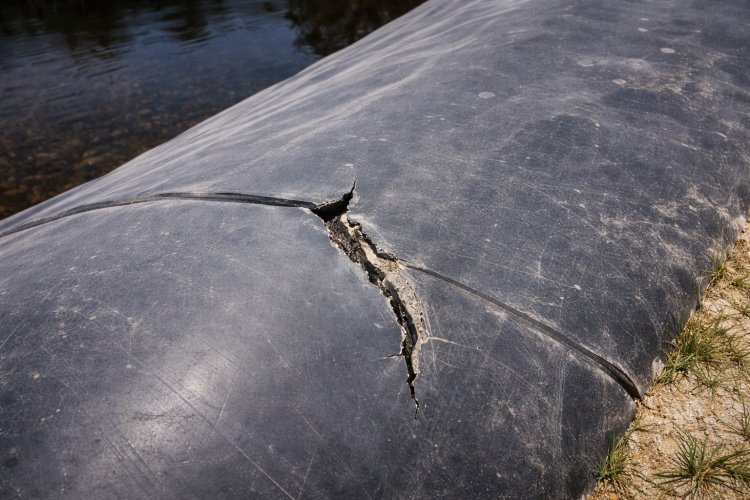
I have seen concrete tanks crumble in less than 20 years because the protective coating failed. Once the acid touches the concrete, the structural integrity is gone. HDPE is a homogenous barrier—the whole sheet is the protection.
| Kayan abu | H₂S/Acid Resistance | Estimated Lifespan | Common Failure Mode | Farashin |
|---|---|---|---|---|
| HDPE Geomembrane | Madalla | 50 - 70 Years | Physical puncture or bad welds. | Matsakaici |
| PVC Geomembrane | Yayi kyau | 30 - 40 Years | Plasticizer loss (brittleness). | Low/Medium |
| Concrete | Poor (needs coating) | 20 - 30 Years | Acid corrosion of cement/rebar. | Babban |
| Steel | Very Poor (needs coating) | 10 - 20 Years | Rapid corrosion/rusting. | Very High |
For a project meant to last generations, HDPE is the clear winner. It provides the best "cost per year" value because you don't have to replace it in 15 years.
What parameters should be checked for chemical-resistant geomembranes?
Knowing HDPE is the right material is step one. Step two is ordering the right specifications to ensure it handles the physical and chemical stress.
To ensure chemical resistance and longevity, you must specify the right thickness, check the resin range, and verify weld quality. A minimum thickness of 1.0mm-1.5mm and compliance with GRI-GM13 standards are the non-negotiable baselines for a secure digester.

You cannot just order "black plastic." I recently advised a farm cooperative that almost bought a standard pond liner for their digester. I stopped them and pointed out that for a chemically active environment, they needed to check specific parameters.
Here is your checklist for procuring the right liner:
- Kauri: Amfani 1.5mm (60 mil) for the bottom and slopes. You can use 1.0mm for walls if stress is low, but 1.5mm is safer against undetected scratches.
- Resin Type: Must be Virgin High-Density Polyethylene. Recycled material is too unpredictable for chemical containment.
- Standard Compliance: Ensure the data sheet meets GRI-GM13 or ASTM D6693.
- Ƙarfin Weld: The seam is the only potential weak point. Weld strength must be ≥95% of the sheet strength.
- Kariya: Always install a sand cushion (200-300mm) or a geotextile under the liner to prevent physical punctures from the ground.
Ƙarshe
The chemical soup in an anaerobic digester destroys concrete and steel, but HDPE geomembranes are built for it. chemically exempt from H₂S and acid attacks, a 1.5mm HDPE liner is your 50-year insurance policy against leaks.