

In the geosynthetics industry, specific failures are often hushed up. But as a solution provider who has visited project sites from Southeast Asian road bases to South American mining slopes, I believe that analyzing failure is the only way to guarantee future success.
Geocell (Cellular Confinement System) technology is robust, but it is not magic. I have seen geocell structures deform, rupture, and slide—not because the HDPE plastic was defective, but because the system design ignored basic soil mechanics.
This article analyzes the four most common failure modes of geocell reinforcement—structural deformation, seam rupture, infill migration, and anchorage failure. By understanding these root causes, engineers and procurement officers can identify risks in their current designs and prevent costly reconstruction.
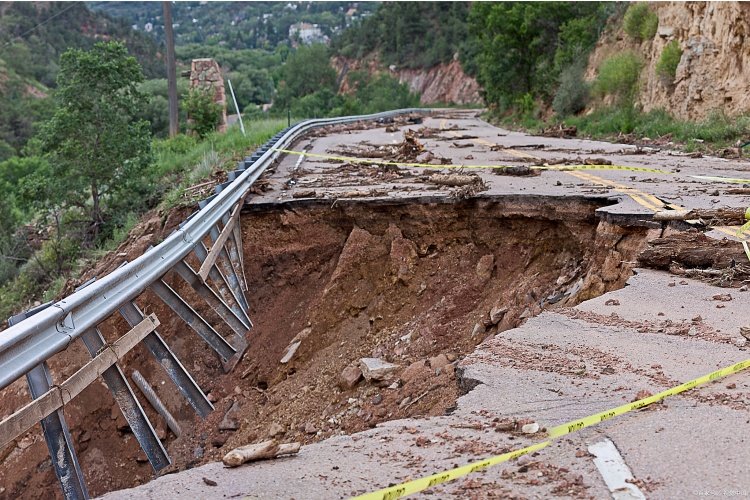
A successful project is not about buying the strongest sheet of plastic; it is about respecting the limits of the system.
Factor Overview: The Four Critical Failure Modes
When we investigate a failure on-site, we rarely find that the plastic strip itself snapped in the middle. The tensile strength of the HDPE sheet is almost never the limiting, weak link.
Instead, failures usually occur at the interfaces da connections. A geocell is a Composite System, meaning it relies on the interaction between the polymer matrix, the infill material (soil/stone), and the subgrade.
Through years of forensic analysis and export case studies, we have categorized the vast majority of failures into four controllable factors:
- Confinement Loss (The geometry fails to hold the soil).
- Seam Rupture (The connections burst under stress).
- Infill Instability (The material inside the cell washes out).
- Anchorage Failure (The entire system slides due to gravity).
By addressing these four specific areas, you eliminate 90% of the risk in your project.
Key Factor 1: Insufficient Confinement Leading to Structural Deformation
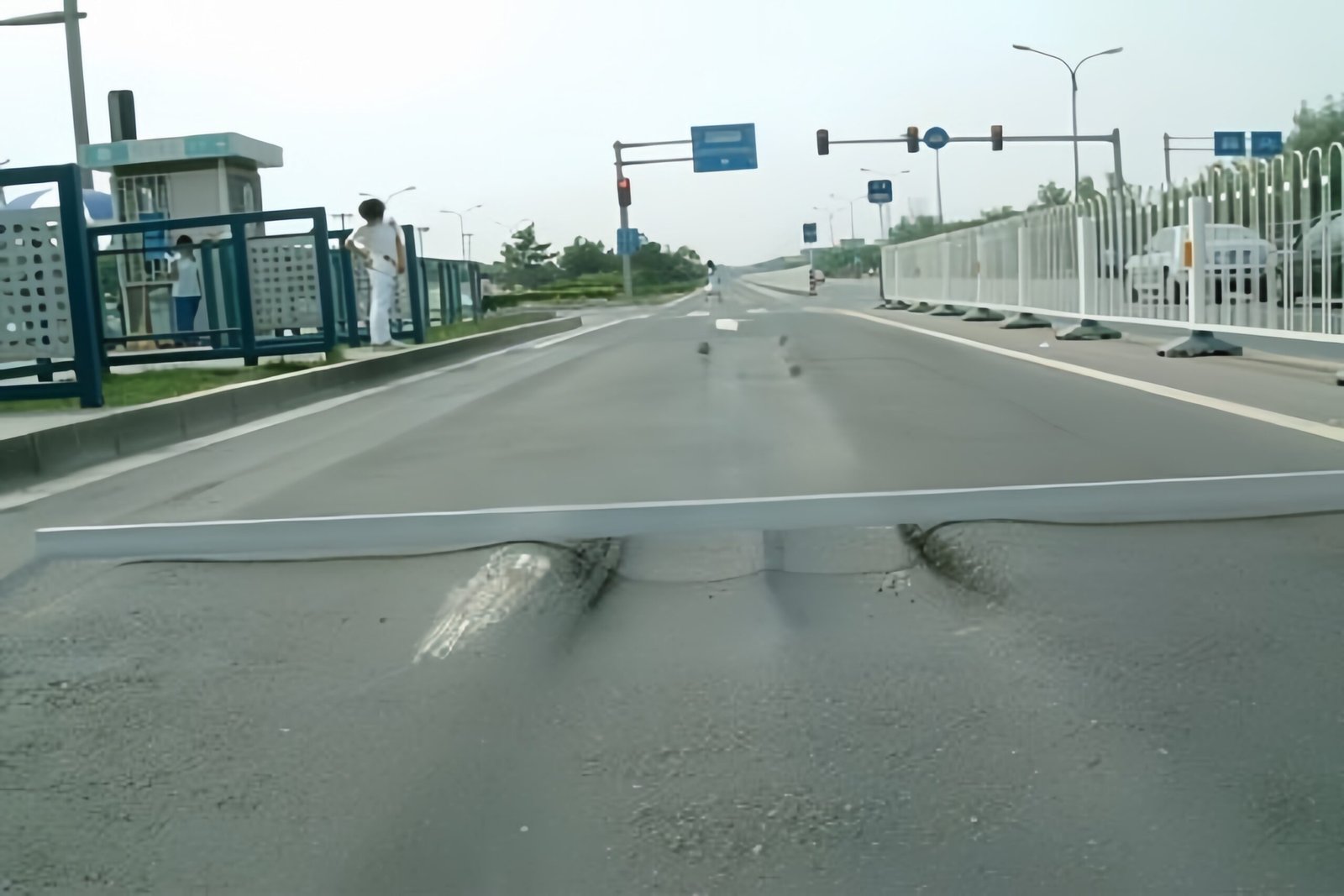
The most common "failure" isn't a catastrophic break, but a functional failure: the road develops deep ruts, or the platform settles unevenly. This is a failure of confinement.
1.1 What Happens on Site
In load support applications (roads, foundations), we see "mattress bending." The geocell layer, which is supposed to act as a rigid slab, flexes too much. Vehicles create permanent ruts. The sides of the road bulge out. The system has failed to distribute the load effectively.
1.2 Why This Factor Causes Failure
Geocells work by generating "Hoop Stress." When a vertical load is applied, the infill tries to spread sideways. The geocell wall resists this spreading, creating a stiff composite mattress.
Failure happens when the Aspect Ratio (Height/Width) or the stiffness of the wall is insufficient for the subgrade conditions.
- The "Cheapness" Tarko: I often see buyers requesting 50mm or 75mm geocells for soft clay roads to save on freight volume. A 50mm cell cannot create enough beam stiffness to bridge over soft spots. Under heavy load, the subgrade deforms, and the shallow geocell simply bends with it.
- Material Modulus: If the geocell creates confinement but the polymer wall stretches too much (low elastic modulus), the infill shifts, and the "lock-up" effect is lost.
1.3 Design Implications for Buyers
You cannot simply pick a standard height.
- For Soft Soil (CBR < 2): You generally need a minimum cell depth of 150mm to 200mm to create the necessary flexural stiffness.
- Traffic Load: Heavier trucks require smaller cell openings (higher weld density) to prevent the "bicycle wheel effect" where the tire sinks into the cell gap.
Key Factor 2: Inadequate Seam Strength and Stress Concentration
While the plastic sheet might be strong, the ultrasonic weld (the seam) is typically the weakest point in the network. A geocell is only as strong as its weakest weld.
2.1 Typical Failure Observations
This is the "Zipper Effect." We see a row of cells that have split open. Once one seam pops, the confinement is lost in that local area. The stress then transfers instantly to the neighboring cells, causing them to overload and pop in a chain reaction. The result is a total loss of structural integrity.
2.2 Mechanism Behind This Factor
The forces inside a geocell are not uniform.
- Stress Concentration: When expanding the geocell panel on-site, the installation team pulls hard to stake it down. If the weld is brittle or inconsistent, installation tension alone can initiate micro-tears.
- The "Peel" Matsala: In slope applications, the gravity of the infill pulls down. This puts the seam in a "peel" state (pulling apart like opening a bag of chips), which is the weakest loading direction for welded plastic.
2.3 Common Selection Mistakes
Many generic technical data sheets list "Seam Strength" as a single high number. However, buyers must check:
- Peel vs. Shear: A weld might be strong in shear (sliding sideways) but weak in peel. Real-world failures are often peel-driven.
- Weld Consistency: In mass manufacturing, if the workshop runs too fast, the ultrasonic horn doesn't dwell long enough to fuse the HDPE fully. We call these "cold welds." They look connected but snap under low pressure.
2.4 Design Implications
When sourcing, do not just ask for "Tensile Strength." Ask specifically for Ƙarfin Kwasuwar Kabu (e.g., >1420N for 100mm depth). For critical slopes, the seam direction and panel layout must be planned so that the seams are not fighting the primary direction of gravity or water flow.
Key Factor 3: Improper Infill and Drainage Causing Material Migration
A geocell without infill is just an empty honeycomb. One of the most frustrating failures I witness is when the geocell structure remains intact, but the contents disappear.
3.1 What Engineers Observe
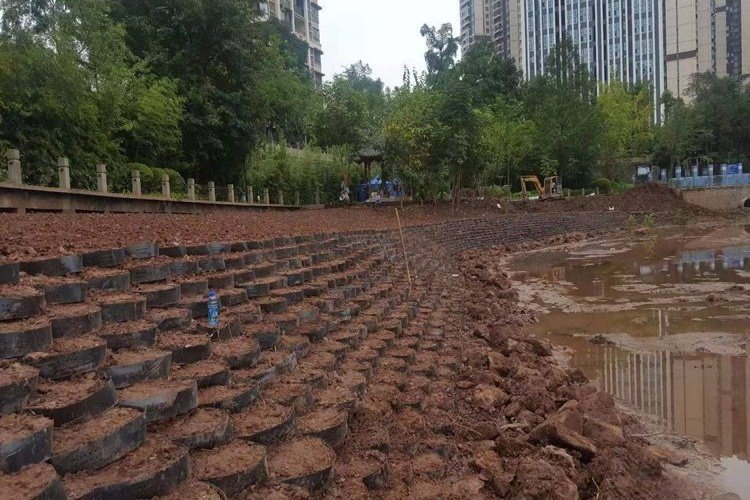
On slopes or channels, we see "empty cells." The stone or soil has washed out, leaving the plastic skeleton exposed to UV radiation (which eventually kills the plastic). On leads, we see "sinkholes" within the cells as fines pump up or wash down.
3.2 Why This Factor Leads to Failure
- No Interlock: Using rounded river pebbles (smooth stones) in a geocell is a mistake. Round stones act like ball bearings; they have no internal friction. Under water flow or traffic, they rotate and roll out of the cell.
- Hydraulic Ejection: If the subgrade is impermeable and it rains heavily, water builds up inside the cell. If the geocell wall is solid (non-perforated) or if the infill has no drainage path, the hydraulic pressure pushes the fill out of the top.
- Filtration Failure: Placing geocells directly on fines without a non-woven geotextile separator allows the subgrade mud to pump up into the stone, lubricating the fill and causing collapse.
3.3 Design Implications
- Angular Stone: Always use angular, crushed aggregate. The sharp edges lock together (interlock), and the geocell wall confines this interlocked mass.
- Drainage is Mandatory: We recommend perforated geocells for 90% of applications to allow lateral drainage.
- The Filter Layer: Never skip the geotextile underlayment. It is the "kidney" of the system, keeping the structure clean and stable.
Key Factor 4: Underdesigned Anchorage and Boundary Conditions
This is the catastrophic sliding failure. The geocell, the infill, and the vegetation are all perfect, but the entire "carpet" slides down the hill in one piece.
4.1 Typical Field Problems
This usually happens after a heavy rain event. The slope becomes saturated, the weight increases by 30-40%, and the friction with the subgrade decreases. The system detaches at the crest (top of the slope) and slides down, crumpling at the bottom.
4.2 Mechanism of Failure
Geocell on a slope is held in place by two forces:
- Interface Friction: The grip between the geocell/infill and the ground underneath.
- Anchorage: The steel J-hooks, tendons, or earth anchors holding it at the crest and across the face.
Failure occurs when the Driving Force (Gravity + Water Weight) exceeds the Resisting Force (Friction + Anchors).
4.3 Common Design Errors
- "Experience-Based" Tsayawa: Contractors often use standard 10mm J-hooks every 1 meter because "that's what we did last time." But if the slope is 45 degrees instead of 30, or if the soil is slippery clay instead of rough sand, that spacing is insufficient.
- Ignoring the Crest: The top row of the geocell takes the highest tension load. If the anchor trench at the top is too shallow or the top anchors are weak, the "zipper" starts opening from the top down.
- Tendon Neglect: On steep or long slopes, J-hooks are not enough. You need internal Polyester or Kevlar tendons tied to a deadman anchor at the top to carry the suspended weight.
4.4 Design Implications
We perform force equilibrium calculations for our clients. We calculate the sliding mass and determine exactly how many Newtons of resistance are needed. This dictates the anchor density (e.g., 1 anchor per m²) and whether high-strength tendons are required. Never guess the anchoring.
Risk, Limitations, and When This Is NOT Recommended
Understanding these factors also helps define when Geocells are NOT the right solution.
1. Deep-Seated Global Stability:
If your slope has a slip circle potential deep underground (5m+ deep), pinning a geocell to the surface provides false hope. Geocells protect the face (surficial stability); they do not act as soil nails or retaining walls for deep structural landslides.
2. High-Velocity Channels:
While geocells can handle significant water flow, there is a limit. If shear stress from water flow exceeds roughly 10-12 psf (depending on infill), concrete-filled geocells or articulated concrete blocks are needed. Vegetated or gravel-filled geocells will fail in flash-flood channels.
Summary of Failure Factors
| Failure Mode | Visual Indicator | Primary Root Cause | Dabarun Rigakafi |
|---|---|---|---|
| Nakasa | Rutting, bulging sides | Cell height too low, Stiffness too low | Increase height/density; Use higher modulus HDPE |
| Seam Rupture | Cells splitting open (zipper) | Weak peel strength, Cold welds | Specify Seam Peel Strength >1420N (100mm) |
| Infill Migration | Empty cells, sinkholes | Round stone infill, Poor drainage | Use angular stone; Use perforated cells + Geotextile |
| Anchorage Failure | System sliding downslope | Insufficient J-hooks/Tendons | Calculate Driving vs. Resisting forces |
Ƙarshe
Geocell failures are rarely mysterious. In my experience providing solutions for international projects, 95% of issues can be traced back to one of these four factors: Confinement geometry, Seam integrity, Infill selection, or Anchorage design.
Engineers and procurement managers must move beyond comparing simple datasheet numbers like "Yield Strength." A geocell is a structural system. It requires a holistic design approach that considers the soil, the water, and the forces of gravity.
Don't leave your project stability to chance or "standard" specifications.
If you are currently designing a slope or road project and want to verify your safety factors against these four failure modes, contact our technical team. We can review your boundary conditions and anchorage calculations to ensure your system stays in place.