

Geosynthetic Clay Liners (GCLs) look like the perfect solution—a fast, cost-effective, and powerful secondary barrier. But what if choosing this easy option for the wrong application leads to a slow, silent, and catastrophic failure?
Yes, GCLs are used, but only in very specific, low-risk scenarios. For most heap leach projects, especially those involving acid leaching or high heaps, standard GCLs present unacceptable risks of chemical and structural failure. They are a specialized tool, not a universal solution.
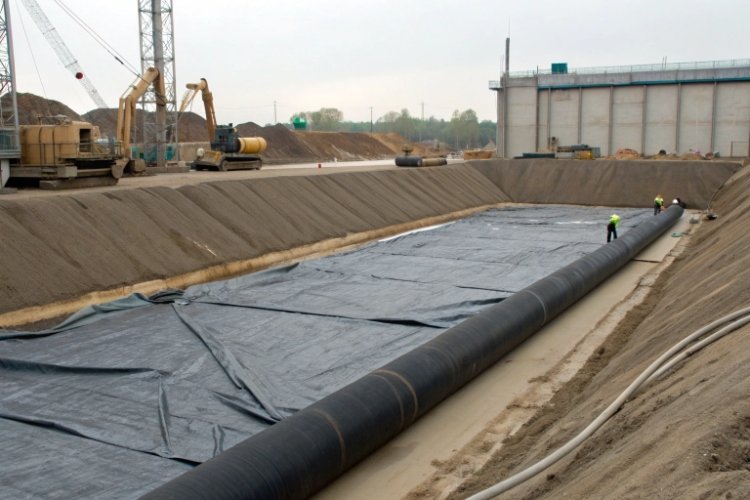
I've consulted on liner designs where the debate between a compacted clay liner (CCL) and a GCL was central. On paper, the GCL wins on logistics every time. But real-world performance isn't on a data sheet; it's under two million tons of ore soaked in aggressive chemicals. Experience has taught me that the most important question isn't "Can we use a GCL?" but "Should we?" The answer depends entirely on the specific conditions of your project.
What role can GCLs play in heap leach containment systems?
You need a robust secondary liner beneath your primary HDPE geomembrane. The traditional option is to haul and compact hundreds of truckloads of clay, a slow, expensive, and labor-intensive process.
A GCL acts as a highly efficient, self-healing secondary hydraulic barrier. It is laid beneath the primary HDPE liner to seal small punctures and provide a robust second line of defense against leaks, but with a fraction of the logistical effort of a compacted clay liner.
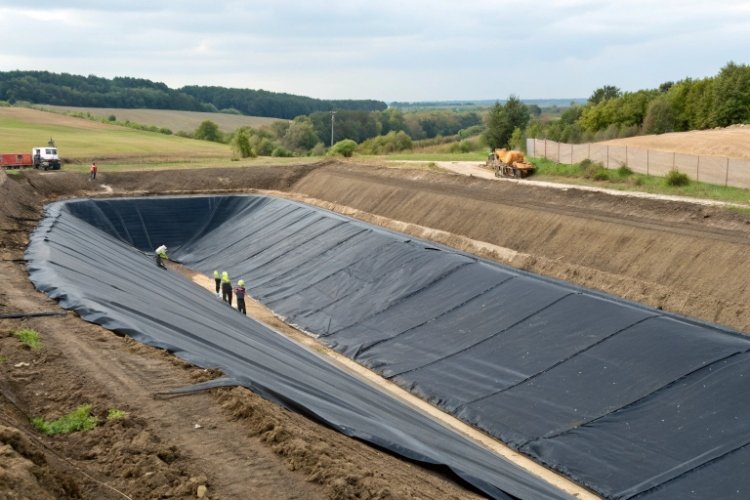
The primary value of a GCL is its efficiency. The core of the product is a thin layer of sodium bentonite clay, a natural material that swells dramatically on contact with water to form a low-permeability seal.
The Self-Healing Secondary Barrier
When used in a composite liner system with an HDPE geomembrane, the GCL provides active protection. If a small stone causes a puncture in the primary HDPE liner, the leaking solution will hydrate the bentonite in the GCL. The bentonite then swells to seal the leak from below.
The Logistical Advantage
This is the GCL's biggest selling point. A single truckload of GCL can provide the same containment performance as over 150 truckloads of compacted clay. For remote mine sites where suitable clay is not available locally, using a GCL can significantly reduce project timelines and transportation costs. This logistical benefit makes GCL an attractive option for the right kind of project.
Under what site and design conditions is GCL suitable for heap leach applications?
You see the massive logistical savings and want to specify a GCL for your project. But placing it in the wrong environment is like building a boat out of paper—it’s destined to fail.
GCLs are only suitable for low-risk applications: specifically, gold and silver heap leach projects using high-pH cyanide solutions, where heaps are low (<100m) and slopes are gentle (<30 degrees). In these conditions, chemical and physical stresses are within the GCL's limits.
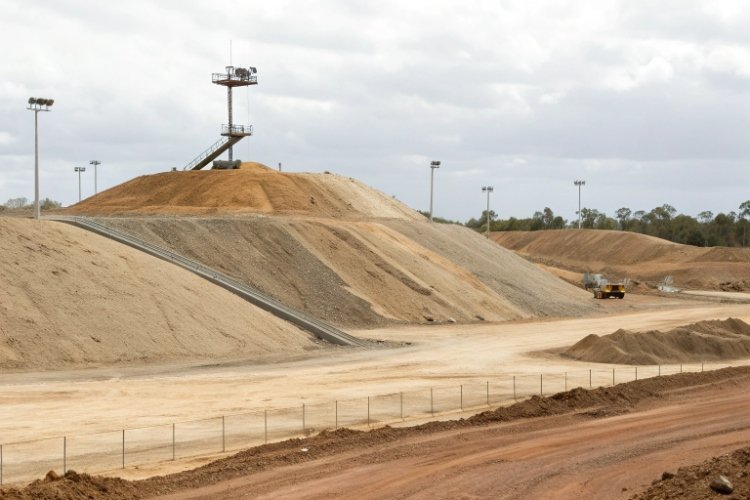
From a supplier's standpoint, I always advise my clients to run a simple checklist. If your project doesn't meet all of these "green light" conditions, you should avoid using a standard GCL.
Safe Operating Conditions for Standard GCLs:
- Chemical Environment: The leach solution must be non-aggressive to sodium bentonite. This primarily means high-pH solutions (pH > 8), like those used in cyanide leaching for gold and silver.
- Physical Stress: The weight of the ore heap must be low enough to not over-stress the GCL's internal shear strength or the GCL-HDPE interface. This typically means heaps under 100 meters high with gentle slopes.
- Site Logistics: The project is located far from a natural source of quality clay, making a GCL the more economical choice.
If your project involves low-pH acid, tall heaps, or steep slopes, a standard GCL is not the right choice.
How does GCL performance compare with HDPE geomembranes in heap leaching?
It’s tempting to compare GCL and HDPE as if they were interchangeable options for your liner system. They are not. Using one where you need the other is a fundamental design error.
HDPE is the tough, chemically inert primary barrier; GCL is the sensitive, water-activated secondary barrier. They are designed for completely different roles and are best used together in a composite system, not as competitors.
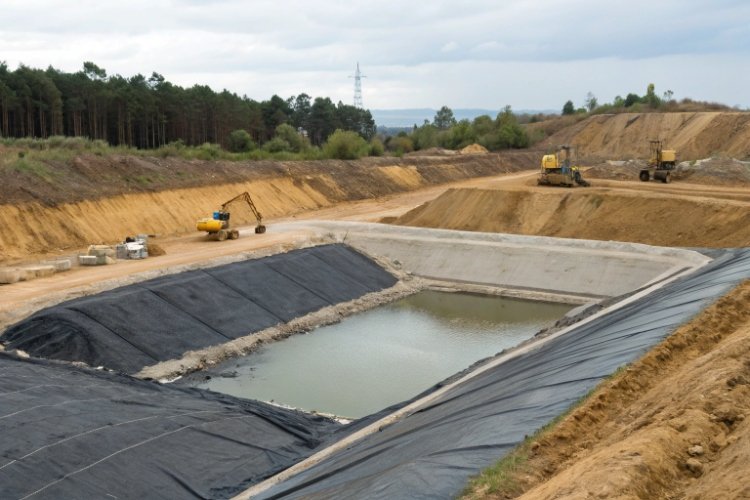
Thinking of them as partners rather than rivals is key to a successful design. Their properties are complementary, not equivalent.
| Siffar | HDPE Geomembrane (Primary Liner) | Geosynthetic Clay Liner (GCL) (Secondary Liner) |
|---|---|---|
| Aiki | Impermeable Primary Barrier | Low-Permeability Secondary Barrier |
| Juriya na sinadarai | Excellent across a wide pH range (acid and alkaline) | Very Poor in acidic or high-ion solutions |
| Karfi ƙarfin | High. Can be textured for excellent interface friction. | Ƙananan. The GCL-HDPE interface is often a critical weak point. |
| Resistance Huda | Good. Can be protected with geotextiles. | Poor. Relies on swelling to self-heal small punctures. |
| Primary Role | To provide the main, robust containment for the entire system. | To back up the primary liner and seal minor imperfections. |
The takeaway is clear: the HDPE geomembrane does the heavy lifting. The GCL provides a backup, but only if the conditions are right.
What limitations or risks should be considered when using GCLs in heap leach projects?
The data sheet for a GCL shows excellent low permeability. But that data was likely generated using fresh water, not aggressive, low-pH leachate under thousands of kilopascals of pressure.
The two fatal flaws of standard GCLs are catastrophic failure in acidic solutions and low interface shear strength. Acid destroys the bentonite's ability to swell and seal, while low shear strength can trigger landslides in high or steep heaps.
I cannot overstate these risks. They are the reason experienced engineers are extremely cautious about specifying GCLs outside of gold and silver mining.
1. Chemical Incompatibility Failure
This is the most serious long-term risk. Standard GCLs are made with sodium bentonite. When exposed to low-pH acid (used for copper, nickel, uranium) or other high-ion solutions, a process called "ion exchange" occurs. The aggressive solution replaces the sodium ions in the clay with calcium or magnesium ions. This permanently destroys the bentonite's ability to swell. Its permeability can increase by over 1,000 times, rendering it virtually useless as a barrier.
2. Shear Strength Failure
The interface between a smooth HDPE geomembrane and a GCL has low frictional resistance. Under the immense weight of a tall heap (>120m) or on a steep slope, this interface can act as a slip plane. This can lead to a catastrophic failure where the liner system tears apart and the ore heap slides, as has been documented in several high-altitude mining projects. While modified GCLs with improved chemical resistance exist, they do not solve this fundamental shear strength problem.
Ƙarshe
GCLs are a valuable tool, but only for the right job. They are an excellent choice for low-stress, high-pH gold projects, but they are a high-risk liability in acidic heap leach systems.